
Facebook Ads Scaling Strategies for B2B SaaS Growth

Many Facebook campaigns do not fail at launch or during creative testing. Problems usually start later, when the team wants to increase spend. CPA starts to rise, results become less predictable, and a campaign that seemed stable yesterday starts behaving differently.
Still, the channel’s potential remains high. According to HubSpot’s 2026 State of Marketing Report, Facebook remains the second-highest-ROI social platform, with a score of 43, behind only Instagram and ahead of YouTube.
At Aimers, we know the problem is not usually Facebook ads scaling itself. Mistakes happen when budget growth outpaces the data the algorithm learns from. This is particularly noticeable in B2B SaaS campaigns. Conversion volume is lower, and the cost of error is higher because the goal is not just clicks, but pipeline and revenue.
Why Scaling Starts With Meta’s Learning Phase
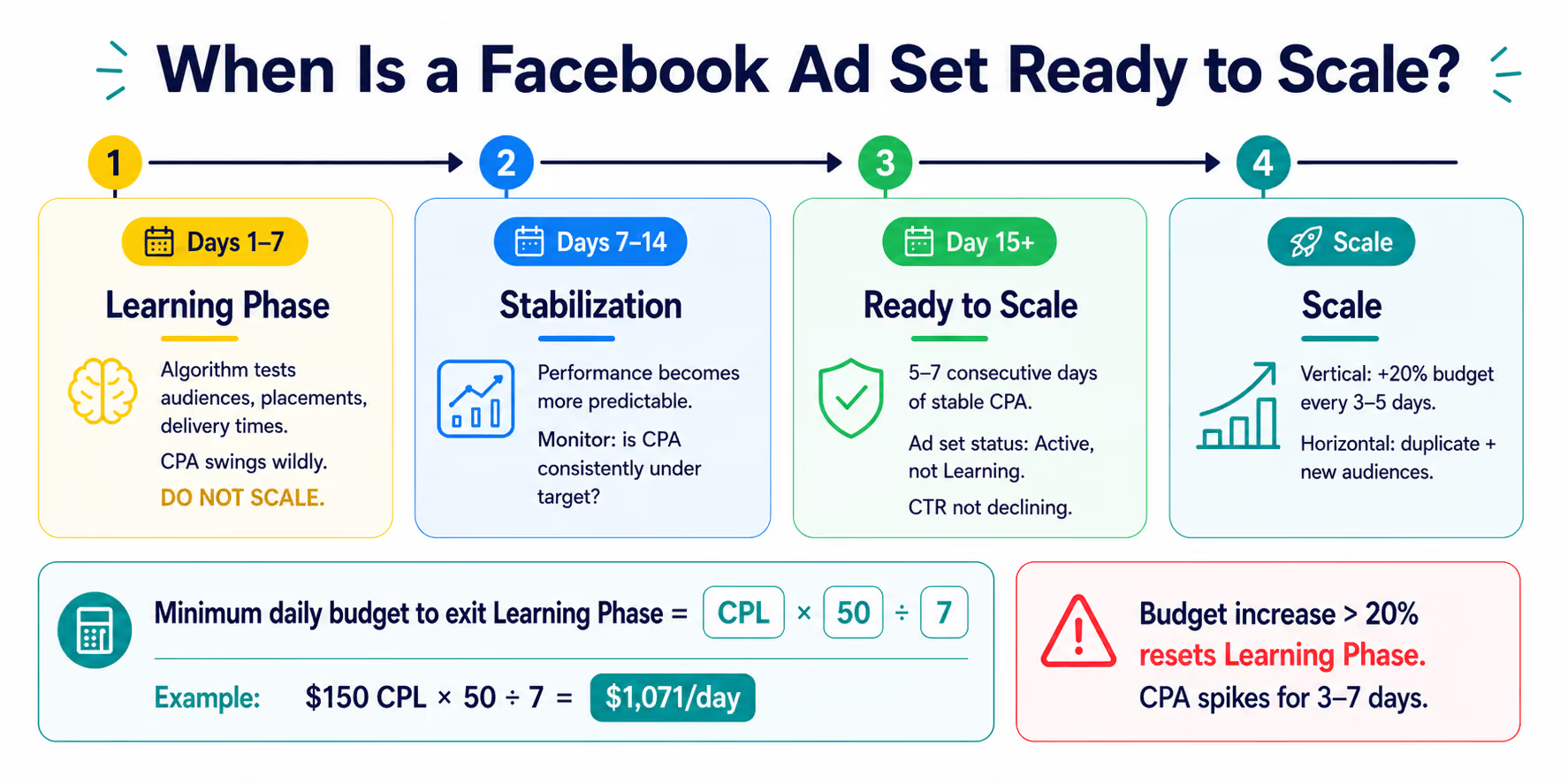
The first question in how to scale Facebook ads is whether Meta has enough data for stable delivery. If an ad set is still in the Learning Phase, increasing the budget may not scale results; it can reset the algorithm.
During the Learning Phase, Meta tests audiences, placements, and delivery timing to identify the most likely conversions. To exit this phase, an ad set should generate approximately 50 optimization events within seven days. Until this happens, CPA may fluctuate significantly. This is not always an issue with the campaign. Often, the algorithm simply lacks data. For B2B SaaS, Facebook ads budget scaling quickly becomes a data-volume issue. The minimum daily budget can be estimated as follows:
At a CPL of $150, you need about $1,071 per day. At a CPL of $300, that figure rises to approximately $2,143 per day. Campaigns with daily budgets of $100–$200 often remain unstable because they do not generate enough events for the algorithm to learn from.
Scaling before exiting the Learning Phase can reset accumulated signals and restart the learning process. This typically causes CPA to rise for three to seven days. A sharp budget increase after the first positive results can disrupt a campaign that has only just begun to stabilize.
As part of Meta ads best practices, these are the signals that an ad set is ready to scale:
- CPA remains below the target level for five to seven consecutive days
- The ad set status is Active, not Learning
- CTR is stable and shows no downward trend
- The budget is being spent predictably, without sharp drops or spikes
Vertical Scaling: How to Increase Spend Without Breaking Stability
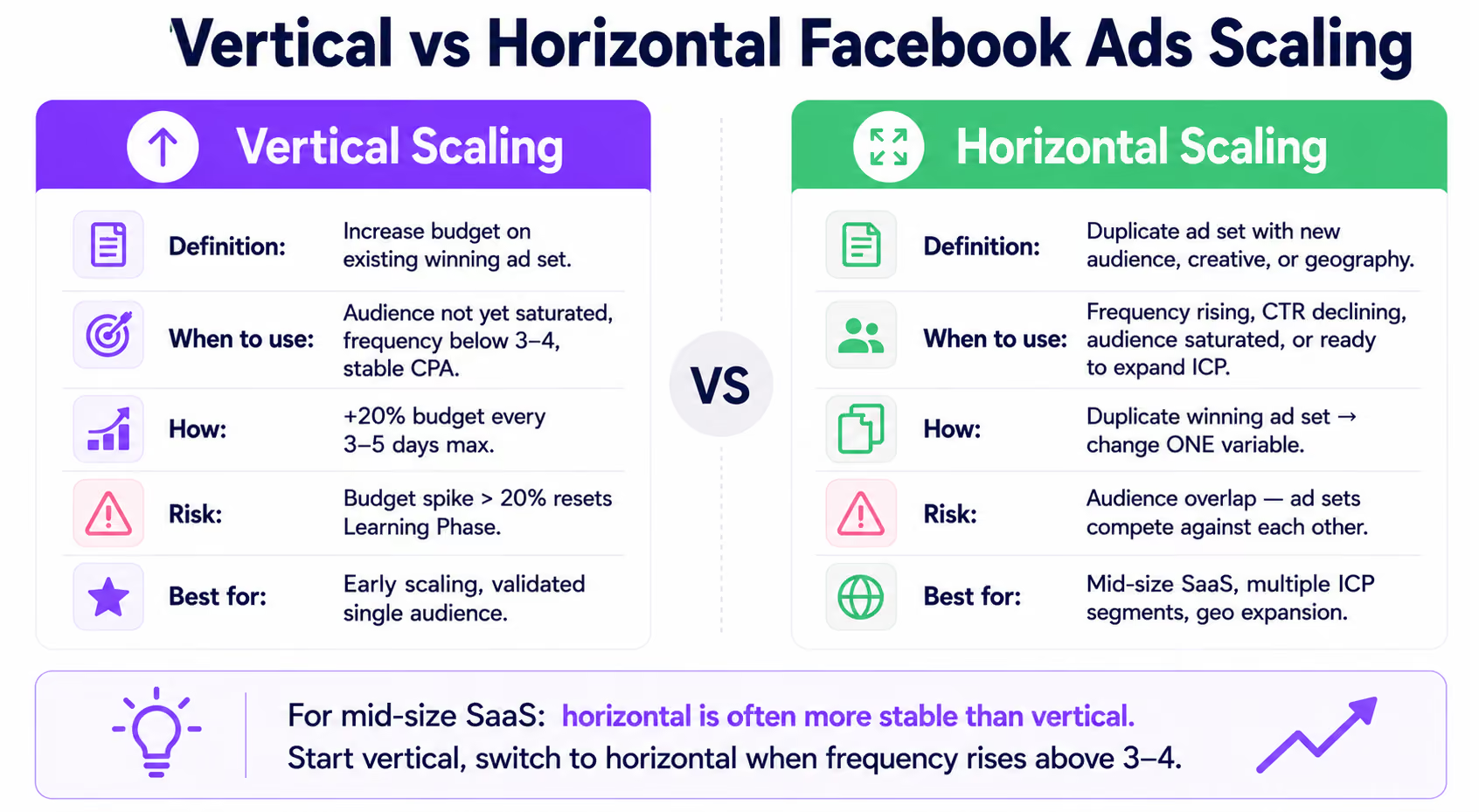
Before increasing spend, it is important to separate the logic behind horizontal vs. vertical scaling Facebook ads. Vertical scaling increases the budget within existing campaigns or ad sets. Horizontal scaling grows the account through new audiences, regions, formats, or replicated winning structures. One approach helps extract more from the existing system, while the other expands its limits.
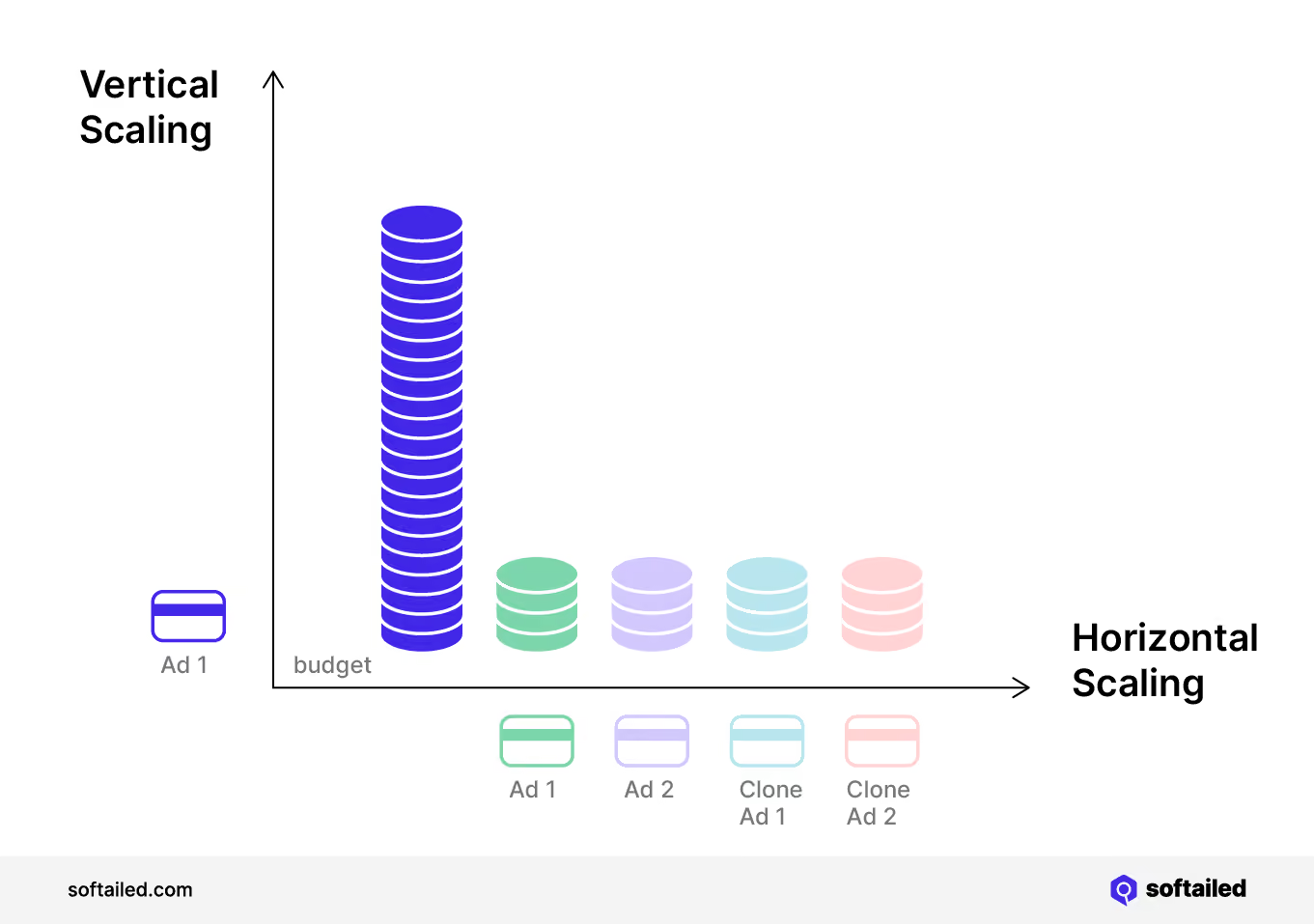
In practice, teams rarely use only one method. Still, vertical scaling is usually the first step because it is easier to implement and quicker to test.
Vertical scaling means increasing the budget of an existing ad set or campaign. It is the fastest way to increase spend, but it is also where teams most often break stable performance.
When you increase Facebook ads budget, we recommend moving by no more than 15–20% every three to five days. This pace allows Meta to adapt delivery without sudden changes. Increasing the budget too quickly can disrupt the algorithm, leading to higher CPA, lower ROAS, and faster audience saturation. Budget setup also affects scaling.
ABO (Ad Set Budget Optimization) provides more control. With ABO, the budget is set at the ad set level, so you can scale only the audiences that are already delivering results.
CBO (Campaign Budget Optimization) works differently. Meta automatically distributes the budget among ad sets and can shift spending to where it sees the best potential.
Based on our experience, ABO is more commonly used for testing and controlled scaling. This is where a paid social ads agency usually separates test control from scale automation. CBO, on the other hand, works better at a later stage, once several ad sets have already proven performance.
However, vertical scaling has its limits. When frequency rises above 3–4 and CTR stops growing or begins to decline, more of the budget is spent on repeated impressions to the same audience. In this situation, additional spend usually brings less new reach and signals the need to move toward horizontal scaling.
As the budget grows, Meta becomes more dependent on the quality of incoming signals. Lost conversions, incomplete data, and browser limitations become more noticeable during scaling because the algorithm makes decisions based on these signals. This is why the Conversions API (CAPI) becomes important. CAPI sends data directly from the server and helps compensate for losses that the browser Pixel does not always detect.
Horizontal Scaling: Growing Reach Without Disrupting Existing Campaigns
To scale Facebook ads campaigns without disrupting current performance, horizontal scaling expands the system through new audiences, formats, or regions without changing current settings. The main advantage of this approach is that it does not disrupt the learning or accumulated signals of active campaigns.
For many midsize B2B SaaS accounts, this approach is more stable than vertical scaling. Narrow ICP-based audiences rarely scale indefinitely. As spend increases, the algorithm quickly runs into audience-size limits. Horizontal scaling reduces this dependency through diversification.
There are three main approaches:
- Expanding Lookalike Audiences
- Geographic expansion
- Testing New Formats
Expanding Lookalike Audiences. It is best to start with 1%, where the overlap with the original audience is greatest. After validation, you can test 2–3%, and then 3–5%. Jumping straight to 10% often creates a segment that is too broad and less predictable.
Geographic Expansion: CPM in EMEA can be three to five times lower than in North America, so the same budget can provide significantly greater reach. At the same time, it is best to run regions as separate campaigns.
Testing New Formats. Video, image, and carousel ads do not always compete for the same users, even within a single audience. Adding a new format can sometimes help you find additional reach without changing targeting.
Before scaling through duplication, there is one more check that is often overlooked: Audience Overlap. When audiences overlap significantly, ad sets compete with each other for the same users. This can artificially increase CPM and reduce campaign performance.
7 Scaling Strategies for B2B SaaS
After choosing between vertical and horizontal scaling, the next question is what to scale next. In Aimers’ experience, SaaS teams most often lose efficiency at this stage. They increase budget too early, duplicate audiences, or scale campaigns that have not accumulated enough signals yet.
In practice, scaling Facebook ads campaigns rarely revolves around a single change. Effective scaling usually combines several decisions at once: budget reallocation, audience expansion, testing new formats, and campaign structure changes. Below are the Facebook ads scaling strategies most often used for B2B SaaS.
1. Gradual Budget Increases
This basic strategy is often overlooked. To scale up Facebook ads without resetting performance signals, increase the budget by no more than 15–20% every three to five days, but only after the ad set has exited the Learning Phase. This approach does not slow down scaling. It preserves accumulated signals and avoids repeated learning.
2. Advantage+ for High-Volume Conversion Campaigns
Advantage+ automates audience targeting and budget allocation. It performs best when the account generates a high volume of conversions. For PLG and self-serve SaaS companies with many trial sign-ups, Advantage+ can help the campaign exit the Learning Phase faster.
After four narrow ad sets were consolidated into a single broad Advantage+ setup, one account increased event volume to 56 conversions per week, which helped stabilize CPA. In enterprise SaaS, where demo requests occur less frequently, the opposite is often true: there may simply not be enough signal volume.
3. Lookalike Audience Expansion
Rather than using a single Lookalike source, it is helpful to test several seed audiences separately, such as paying customers, high-LTV accounts, trial users, and demo requesters. Each source gets its own ad set, and only the winners are scaled.
In Aimers’ experience, customer-based Lookalike audiences typically show lower CPL than broad website visitor Lookalike audiences. The algorithm learns from actual buyers, not random website visitors.
4. Retargeting Funnel Expansion
Facebook retargeting ads can be scaled as well. Rather than increasing spend, it is more effective to expand the segments themselves by adding 60-day windows, users who watched more than 75% of a video, or users who opened Lead Gen Forms.
For long B2B sales cycles, frequency becomes critical. With cycles ranging from six to eighteen months, aggressive retargeting can quickly cause fatigue, so frequency is often limited to one or two impressions per week.
5. Geographic Expansion
After validating the North American market, many teams move to Europe, the Middle East, and Africa (EMEA) or Asia-Pacific (APAC). CPM in EMEA can be three to five times lower than in North America, so the same budget can reach a significantly larger audience.
It is best to launch regions separately. When multiple markets sit inside a single campaign, Meta often shifts budget toward markets where it sees stronger delivery potential.
6. Budget Consolidation
Sometimes, scaling involves reducing the number of ad sets. Five ad sets at $100 per day may yield less data than two ad sets at $250 per day. When there are few conversions, the algorithm spreads the signals too thinly and does not push any ad set out of the Learning Phase. For B2B SaaS, consolidation can be a stronger Facebook ads growth strategy than launching new campaigns.
7. Creative Diversification
Even within a single audience, different formats resonate with different users. For example, some people may ignore a static image but watch a product demo video.
In Aimers’ experience, the strongest Facebook ads examples for SaaS often include video testimonials, case study carousels, and before-and-after comparisons. These formats help showcase product results that are difficult to visualize directly.
Creative diversification involves not only new formats but also regular content updates. Even strong creatives lose efficiency over time, especially with niche B2B audiences. For SaaS teams, a practical update cycle often looks like this:
- A new hook every two weeks
- A new format every month
- For audiences under 300K, content updates every week
Metrics to Monitor While Scaling
During Facebook ads performance scaling, issues rarely appear in just one metric. For example, CPA can remain stable for several days after the audience starts to burn out or lead quality declines. Individual daily values rarely provide a complete picture. It is much more useful to look at seven-day trends and track metrics together.
In Facebook ads campaign optimization, start with CPA trend, Learning Phase status, and frequency. Additional signals can help identify problems earlier. For example, a rise in CPM with unchanged targeting may indicate audience saturation, and a drop in CTR is often the first sign of creative fatigue.
For B2B SaaS, a Facebook ads scaling strategy cannot rely on in-platform metrics alone. CPL without SQL rate only shows lead cost and does not show whether those leads enter pipeline. A campaign can scale based on CPL while simultaneously degrading the quality of incoming demand. In Aimers’ experience, teams often mistake this for growth even when revenue impact is missing.
Early warning signs of problems tend to be similar:
- CTR starts to decline
- CPL increases
- Conversion rate stops improving
- Frequency continues to rise without creative updates
These changes usually mean that the current optimization cycle is losing effectiveness.
When Scaling Stops Working
Knowing how to scale Meta ads also means knowing when to stop. Scaling errors can undermine accumulated optimization data faster than almost any other issue in Facebook Ads management. In most cases, problems emerge gradually. CPA starts to rise, CTR drops, the audience burns out, and lead quality changes before they appear in reports. In Aimers’ experience, these early signals help stop performance degradation more often than attempts to fix campaigns after the fact.
Learning Phase Never Stabilizes
If an ad set has not yet accumulated around 50 conversion events per week, increasing spend can increase instability rather than improve results. Without enough signals, the algorithm continues to learn and adapts less effectively to new changes.
Budget Increases Trigger Repeated Learning
If every budget increase sends the campaign back into the Learning Phase and CPA worsens for three to seven days, scaling may be too aggressive. This typically occurs after increasing spend by more than 20% at once.
SQL Rate Falls While CPL Improves
For B2B SaaS teams trying to generate leads on Facebook, a lower CPL does not always mean higher efficiency. If leads become cheaper but SQL rate drops, the campaign may be scaling volume rather than quality. In our experience, this signal often creates the illusion of successful scaling.
Frequency Keeps Growing Without Creative Updates
Rising frequency with stable or declining CTR may indicate audience saturation. In this case, additional spend is more likely to increase repeat impressions than attract new audiences.
Audience Overlap Starts Creating Internal Competition
If multiple ad sets compete for the same audience, delivery costs can increase artificially. This usually appears as an unexplained increase in CPM and a decline in ROAS. A Facebook ads agency should check Audience Overlap before duplicating ad sets, especially when several winning audiences look similar on paper.
FAQs
How to Scale FB Ads Without Breaking Performance?

What Matters When Scaling Winning Campaigns in Facebook Ads?
When Should You Increase Your Facebook Ads Budget?
What Is the Difference Between Vertical and Horizontal Scaling in Facebook Ads?
What Metrics Should You Track When Scaling Facebook Ads?