

How to Generate Leads on Facebook: Tips and Best Practices

March 13, 2026

There's a version of Facebook advertising that feels like feeding a parking meter that never stops running. You set up a campaign, watch the spend climb, and your pipeline looks the same as before. Then there's the other version, where cost per lead drops 40% over three months, your sales team starts complaining about too many demos, and you're quietly expanding budget because the channel just works.
As SaaS digital marketing experts, we've managed Facebook campaigns for 100+ SaaS and tech companies like Mixpanel, ShipBob, Demio, and Orion Labs, and we've seen both scenarios play out more times than we can count. This is what we've learned about how to generate leads with Facebook ads without burning through the budget on the wrong audiences.
How to Generate Leads on Facebook: Tips and Best Practices
There's a version of Facebook advertising that feels like feeding a parking meter that never stops running. You set up a campaign, watch the spend climb, and your pipeline looks the same as before. Then there's the other version, where cost per lead drops 40% over three months, your sales team starts complaining about too many demos, and you're quietly expanding budget because the channel just works.
As SaaS digital marketing experts, we've managed Facebook campaigns for 100+ SaaS and tech companies like Mixpanel, ShipBob, Demio, and Orion Labs, and we've seen both scenarios play out more times than we can count. This is what we've learned about how to generate leads with Facebook ads without burning through the budget on the wrong audiences.
Why Facebook Lead Generation Is Non-Negotiable for SaaS Growth in 2026
What separates winning Facebook advertisers from the rest in 2026 comes down to three things: clean data, authentic creative, and smarter use of AI. According to WordStream, brands that feed the most accurate first-party data into Meta will have a measurable advantage over competitors, since the platform's optimization engine is only as good as the signals it receives.
On the creative side, authenticity is beating production value, real imagery and genuine brand stories are outperforming polished, AI-generated content that users increasingly tune out. And when it comes to testing, dynamic creatives are replacing manual ad experimentation, letting Meta's algorithm find the winning headline and copy combinations faster than any human could on their own.
What Makes Facebook Ads for Lead Generation Different in B2B
Facebook Lead Ads vs. Traditional Landing Page Campaigns
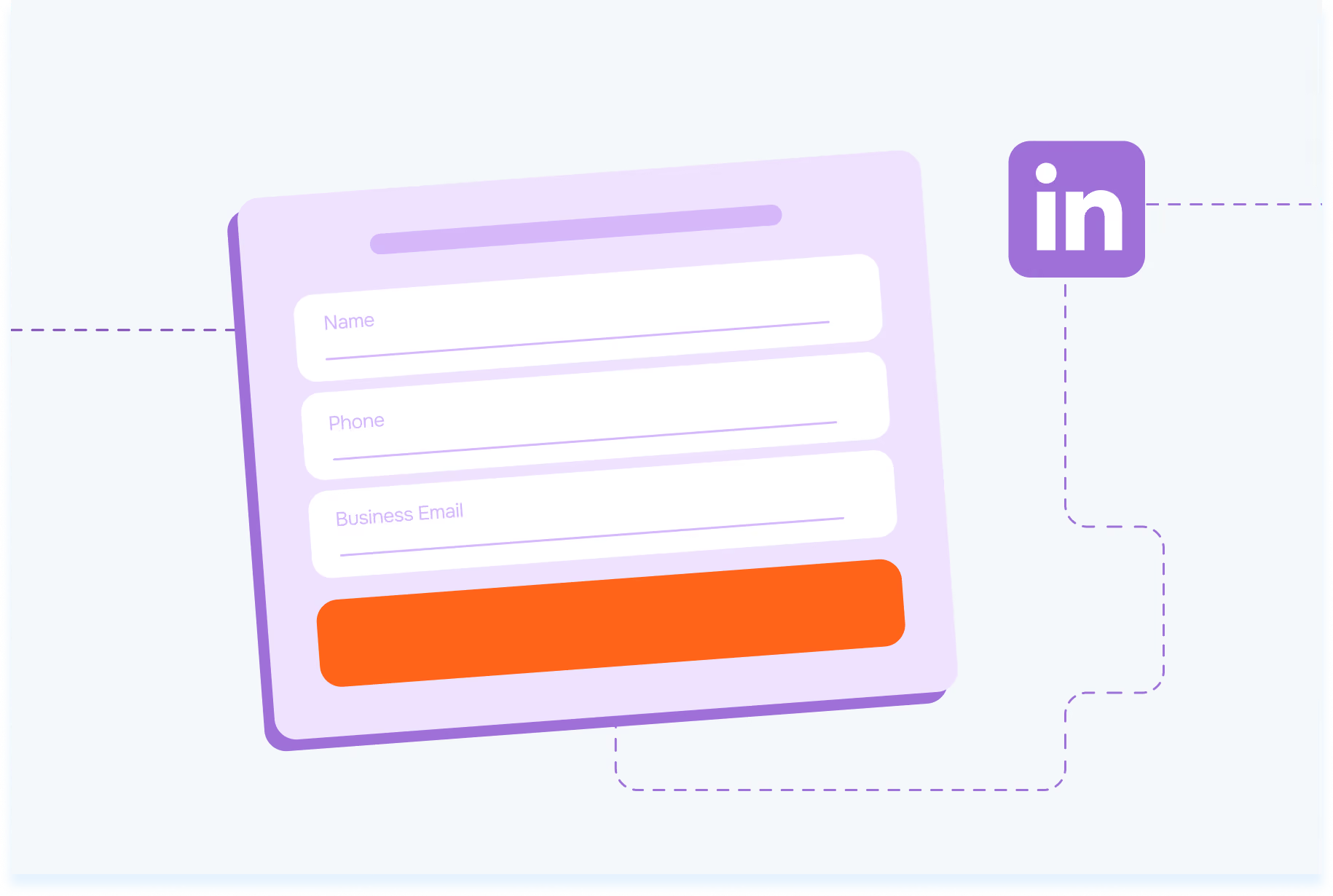
Most marketers default to sending paid traffic to a landing page. That's not wrong, but it's not always the most efficient path. Facebook lead ads, or instant forms, keep the entire conversion inside the platform. The form pre-fills with the user's profile data, removing the friction that wrecks most mobile conversions.
Here's the thing, someone scrolling through their feed at 7pm isn't filling out a six-field landing page form. But they might tap through a two-field instant form for a report that solves a real problem they're wrestling with right now. The barrier is just lower, and in lead gen, lower barriers mean more completions.
Why Facebook Form Leads Convert Differently Than You'd Expect
Lead quality can swing wildly based on how the form is set up, and this surprises many people the first time they run Facebook form leads. Too easy, and you drown in unqualified volume. One well-placed qualifying question, and suddenly you're getting leads your sales team actualy wants to call.
Why Your Facebook Leads Campaign Isn't Delivering
Before getting into strategy, it's worth naming what's actually broken. After auditing hundreds of ad accounts across SaaS companies at every growth stage, the same patterns keep showing up.
Wrong Objective, Wrong Signal
Running a lead generation Facebook campaign with a traffic objective tells Facebook's algorithm to optimize for clicks, not leads. The platform does exactly what you asked.That's the problem. Match your objective to your actual goal.
Audience Problems You're Probably Overlooking
Untested audience assumptions are where budgets go quiet. Targeting built on gut feeling and never revisited, that's a slow leak. Your highest-converting customer and your assumed target audience are often two different people. Let data, not instinct, shape the audience over time.
When the Creative Is the Real Bottleneck
Spend enough time running Facebook ads, and you develop a grudging respect for how ruthlessly the platform rewards good creative. We tell clients: 80% of campaign performance lives in the creative. Not the bid strategy, not the targeting, the creative. If an ad doesn't stop the scroll in the first two seconds, nothing downstream in the funnel matters. Nothing. Marketing rarely fails because of low traffic; the real leak is often much deeper, and creative is usually the first place to look.
Building a Facebook Funnel for Lead Generation That Maps to the SaaS Buyer Journey
Pushing bottom-of-funnel offers to cold audiences is a bit like asking someone to sign a contract on a first date. Technically possible; rarely effective. A proper Facebook funnel for lead generation maps to where your buyer actually is in their decision-making process, and that means thinking in stages.
TOFU - Warming Cold Audiences Before You Ask for Anything
Top-of-funnel content isn't about leads. It's about recognition. Short video ads, educational posts, thought leadership warm audiences up so that when you do ask for something, it doesn't land cold. Think of it as depositing goodwill before you spend it. A lot of SaaS teams skip this stage entirely and wonder why their lead gen ads feel like they're shouting into a room full of strangers.
MOFU - Where Facebook Lead Gen Ads Do Their Best Work
This is where native lead ads earn their place. Once someone has engaged with your brand - watched a video, visited your site, clicked through a post, they're ready to exchange contact info for something genuinely worth their time. Benchmark reports, ROI calculators, webinars, free audits. These work well here because the audience is warm enough to care.
BOFU - Turning Warm Leads Into Real Pipeline
Bottom-of-funnel is about the demo, the trial, the sales conversation. Your BOFU audience already knows who you are, your job is to remove the last remaining friction and make the next step feel like a natural one. Testimonials, case study ads, time-limited trial offers. These close the loop. And if you're wondering what that looks like in practice, when we rebuilt Orion Labs' paid social funnel this way, sales oportunities increased 4x overall.
Here's a quick breakdown of how each funnel stage should actually be set up in practice:
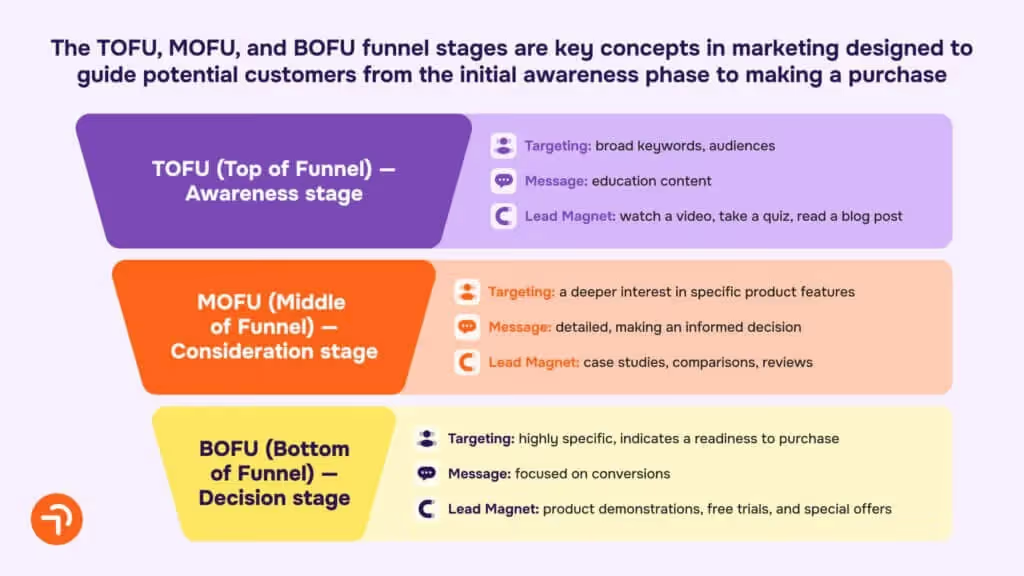
Most campaigns that underperform are either skipping TOFU entirely or running BOFU creative to TOFU audiences. Getting this table right before you spend a dollar is worth more than any bid strategy tweak later.
How to Generate Leads on Facebook: 8 Strategies That Work for SaaS
Understanding how to get leads from Facebook starts with the right foundation, not just the right budget.
1. Set Up Facebook Lead Ads the Right Way From the Start
Install the Meta Pixel before anything else. Set up event tracking for the actions that actually matter: trial starts, demo requests, and key feature activations. Without this foundation, you're spending money on guesswork, and the algorithm is learning from noise instead of signal. Even the best ad campaign can't save bad analytics, the data you feed the platform shapes everything it does next.
2. Add a Qualifying Question to Filter Out Low-Intent Submissions
One open-text question. That's often all it takes. Something like "What's your current team size?" or "Which tool are you looking to replace?" gives you usable context and filters out people who were never going to convert. Yes, form volume drops, and that's a feature, not a bug.
3. Build Lookalike Audiences From Your Best Customers
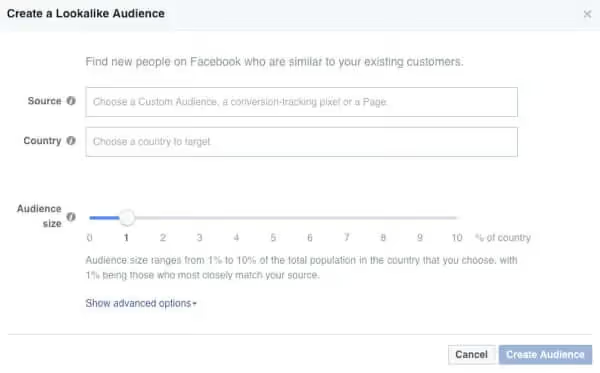
Not all customers, your best ones. Upload a list of highest-LTV accounts and build a 1% lookalike. This is, honestly, one of the most efficient targetting moves in any Facebook leads campaign. Test 3% and 5% lookalikes as you scale, and refresh the source list quarterly. A lookalike built on outdated data is just expensive guessing.
4. Use Retargeting on Facebook Ads to Recover High-Intent Visitors
Someone who visited your pricing page and left isn't a lost lead. They're a warm prospect who needed a different message at a different moment. Retargeting campaigns built around specific site behaviors consistently produce some of the lowest CPL numbers we see, across our client base, Facebook retargeting typically runs 40-60% cheaper per qualified lead than cold Facebook campaigns. The person who bounced from your trial signup page is closer to converting than any cold audience you'll ever build. We've covered Facebook retargeting ads for B2B SaaS in depth if you want to go further with this - including how we used it to help Mixpanel cut CPL by 67% while growing qualified lead volume by 164%.
5. Create Lead Magnets That Speak to a Specific Pain Point
"Free guide" is not an offer. "The 2025 SaaS CAC Report for Series A Companies" is an offer. Specificity drives both completion rate and lead quality, and the two are connected. Generic magnets attract generic leads, which waste your sales team's time and quietly erode confidence in the channel. Make the magnet specific enough that the wrong person self-selects out.
6. Test Ad Formats to Find the Best Converting Facebook Ads
Video tends to work well for product demos and testimonials. Carousels are strong for showing multiple use cases side by side. Single image ads can outperform both when the creative has genuine stopping power. The winner is rarely what you'd predict before testing, which is undoubtedly why testing matters. Looking at real Facebook lead gen ads examples before briefing your design team always helps - these winning Facebook ad examples for tech companies are a solid starting point.
7. Optimize for High-Value Actions, Not Just Raw Volume
Set custom conversions around actions that predict revenue. Trial completions, feature activations, demo bookings tell a more honest story than raw lead count. Feed Facebook these signals, and the algorithm starts finding better-fit prospects. CPL might tick up short-term.Cost per closed deal will fall. That trade is worth making, even if it feels counterintuitive at first.
8. Use Social Proof to Build Trust With Skeptical Buyers
B2B buyers are skeptical by default, and honestly, they've earned that skepticism. A concrete results stat or a short customer quote does more to shift their thinking than polished copy ever will. We've seen click-through rates jump from adding a single data point to an otherwise unchanged ad. The ad didn't change. The trust signal did. More on using social proof in PPC ads here.
Facebook Lead Generation Ads Best Practices - What Top Campaigns Get Right
How to Lower Cost Per Lead on Facebook Over Time
Campaigns that sustain low CPL over time share a few consistent traits: clean audience data, creative that gets refreshed before fatigue sets in, and conversion signals that actually correlate with revenue. Campaigns optimizing for raw email captures almost always plateau, or quietly get worse as the algorithm learns from low-quality conversions.
It's also worth knowing what "normal" looks like. HubSpot's B2B marketing research consistently shows that generating quality leads ranks as one of the top challenges for marketing teams, which means the bar for what counts as a "good" CPL varies wildly by industry and funnel stage. Compare your numbers against your own historical data first, then use external benchmarks as a loose reference point, not a hard target.
How to Generate B2B Leads on Facebook Without Burning Budget on Unqualified Traffic
Qualify earlier. Use ad copy to pre-screen by mentioning your ICP, pricing tier, or the specific problem you solve. Use the lead form to go deeper. The people who drop off at either point weren't going to convert regardless. Friction, used deliberately, is a filter, not a failure.
How to Get Leads From Facebook Groups
Organic community engagement in Facebook Groups can generate leads, but it's a slow burn. For most SaaS teams with stretched marketing resources, it rarely competes with paid ROI.
Where it does work: niche industry groups where your team can contribute genuine expertise rather than thinly veiled promotion. Answer real questions, share hard-won experience, join conversations as a practitioner, not a vendor. If you have the bandwidth to show up consistently and add real value, it's a worthwhile layer. If you're already stretched thin, focus on paid work first and come back to this later.
How to Get Leads From Facebook - Improving Quality, Not Just Volume
More leads isn't always better. A pipeline full of unqualified contacts just burns your sales team's time, and slowly erodes their trust in marketing.
Switch to Higher Intent Lead Ad Settings
Facebook offers a "Higher Intent" form configuration that adds a review step before submission. Volume drops; quality rises. For SaaS companies with long sales cycles and high acquisition costs, that trade almost always makes sense. It's one of those settings that gets overlooked because it's not flashy, but it quietly changes the character of the leads coming through.
Ask the Right Qualifying Questions in Your Forms
One question, answered manually. "What's your biggest challenge with [problem your product solves]?" gives your sales team a real conversation starter and tells the algorithm something useful about who's genuinely engaging. Don't overthink the question, just make sure it requires an actual typed answer, not a dropdown selection.
Craft Offers That Filter In Serious Buyers
A free trial ad attracts everyone. A "30-minute audit with our team" attracts people who are actually ready to have a conversation. The offer itself does quiet qualification work that most advertisers never stop to think about. It's worth reconsidering what yours is really attracting, and whether that matches who you actually want in your pipeline.
Your Landing Page Might Be the Real Problem
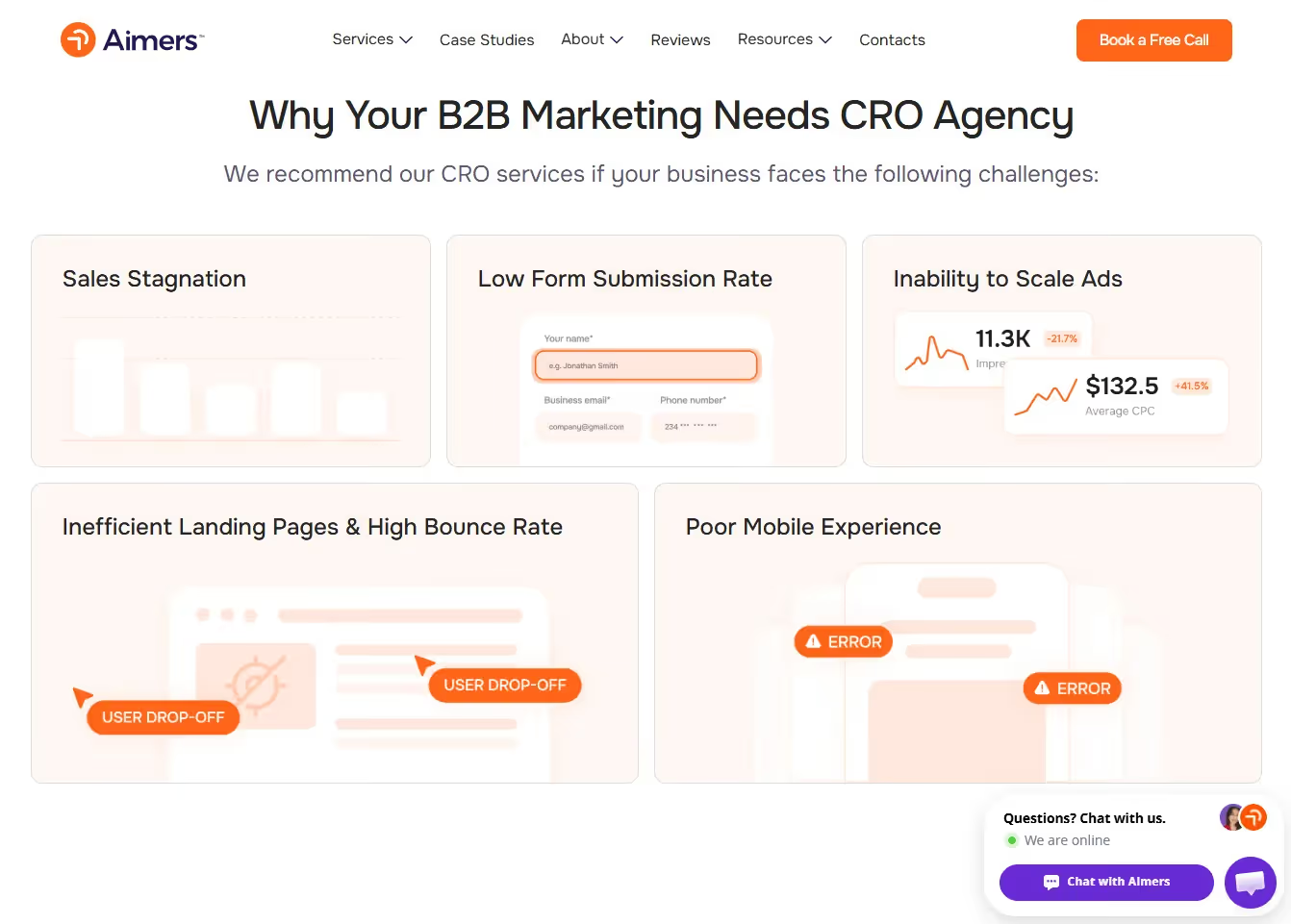
You can run solid Facebook ads and still see painful CPL if the landing page isn't doing its job. Honestly, this is one of the most common hidden issues we find during account audits, and one of the most frustrating, because it's so fixable.
We've seen accounts where the ads were genuinely well-built, the targeting was tight, the creative was strong, and results were still poor. Every click landed on a page with a vague headline, no social proof, and a seven-field form on mobile. The ads weren't the issue.
Why a CRO Audit Should Run Alongside Every Facebook Campaign
A CRO audit shows exactly where users drop off and why. For SaaS companies where acquisition costs are high and sales cycles are long, improving landing page conversion by even a few percentage points has an outsized effect on campaign returns. Working with one of the best conversion rate optimization agencies means your paid campaigns and landing pages are treated as one system, not two separate workstreams, and that's exactly how our Conversion Rate Optimization Agency approaches it. Treating them in isolation is where a lot of budget quietly disappears without anyone noticing until it's too late. As we often say internally, even the best ad campaign can't save a broken landing page.
Facebook Ads vs. Google Ads for Lead Generation - Which One Wins for SaaS
This is one of the questions we hear most often, and the honest answer isn't entirely satisfying: it depends on where your buyer is in the journey.
Google Ads captures existing demand, people actively searching for a solution right now. Facebook creates and nurtures demand earlier on. Think of Google as fishing where the fish are already biting; Facebook is more like building the pond. The real question for most SaaS companies isn't which channel wins, it's which one fits your current stage and budget and whether you're set up to run both well. Choosing the best Facebook ads for lead generation alongside the right Google strategy is ultimately what separates efficient SaaS growth from expensive trial and error.
Neither channel is better in isolation. The SaaS companies we see getting the most out of paid media run both, with Facebook doing the relationship-building work earlier in the funnel, and Google closing it. We've broken down the full strategic comparison in our guide, Facebook Ads vs Google Ads for Lead Generation if you want to go deeper.
A Pre-Launch Checklist Before Any Campaign Goes Live
Before any lead generation Facebook campaign goes live, run through these:
- Meta Pixel installed with all key events firing correctly
- Campaign objective set to Lead Generation or Conversion
- Separate ad sets for cold, warm, and retargeting audiences
- At least one qualifying question in the lead form
- Landing page loading under 3 seconds on mobile
- Creative tested across at least two formats
- UTM parameters configured for clean attribution
Our Facebook Ads optimization checklist has a more thorough version if you want to go line by line before launch.
When It Makes Sense to Bring in Outside Help
At some point, managing how to generate leads from Facebook in-house starts competing with everything else on the roadmap - creative testing, audience iteration, ongoing optimization. Campaigns run on autopilot, performance drifts, and nobody has the bandwidth to fix it.
As a Facebook PPC agency built exclusively for SaaS and tech companies, rated 4.9 across 100+ reviews on G2 and Clutch, we've run this playbook for companies like Mixpanel, Demio, and ShipBob. We know what drains budget and what's worth testing at your stage. Our list of best Facebook ad agencies for SaaS is a good place to see how we approach it.
If you're wondering where your ad budget is silently leaking, book a short strategy call with Aimers. We'll be straight with you about what we'd change.
FAQs
Facebook lead ads are a native ad format that lets users submit contact information without leaving the platform. The form pre-fills with their Facebook profile data, reducing friction, especially on mobile. For SaaS, they tend to work best mid-funnel, offering a useful resource or demo request to audiences already familiar with your brand.

A working minimum is around $3,000-$5,000 per month. Below that, the learning phase drags on, and the data is too thin to act on meaningfully. The smarter approach: back into your spend from a target cost per qualified lead rather than picking a number arbitrarily.
Refresh creative before fatigue sets in, tighten audiences based on actual conversion data, and work on landing pages in parallel with the ads. CPL reduction compounds, small improvements across each area add up faster than most teams expect.
Both earn their place. Lead ads work well for top-of-funnel offers where volume and low friction matter. Landing pages tend to attract higher-intent leads because they require a bit more effort from the user. We run both and let performance data guide the budget split.
Start with what you know, upload your best customer list, and build a lookalike from it. Layer in job title or industry filters if the audience size holds. Use your ad copy and offer to pre-screen so the people who convert are actually relevant. And put real budget into retargeting; people who've already visited your site are the warmest leads in your entire funnel, and reaching them on Facebook is often the most efficient spend in any B2B campaign.


.png)