
LinkedIn Conversation Ads for SaaS: Best Practices

A click on LinkedIn rarely explains what made someone interested in an ad. Did they request a demo? Were they looking for integrations, comparing pricing, or just recognizing a familiar brand? In most formats, all of these actions look the same.
At Aimers, when working with LinkedIn Ads for B2B SaaS teams, we regularly encounter this issue during pipeline analysis. A single account may include multiple decision-makers with different questions and different levels of purchase readiness. In feed-based or single-CTA campaigns, those interactions often look similar.
Conversation Ads add another layer of context. In LinkedIn Conversation Ads SaaS campaigns, users select the next step within the message, and marketing teams receive more than just a click; they also receive additional signals about what specifically interests each person.
How LinkedIn Conversation Ads Actually Work
.avif)
Conversation Ads appear only in the LinkedIn Inbox when the user is active on the platform. Unlike standard messages with a single button, the format is structured as a branching scenario with an introductory message, CTA buttons, and the next step based on the user’s choice. Advertisers can add up to five CTAs at each level, and each button can lead to a separate URL, Lead Gen Form, or new dialogue layer.
LinkedIn Conversation Ads operate on a CPS (cost per send) model. Advertisers pay for each delivered message, regardless of whether the user opens it. The cost is determined by LinkedIn’s auction and depends on the bid and expected engagement quality. More relevant ads can win impressions at a lower cost.
The main advantage of LinkedIn Conversation Ads for B2B SaaS is the data they generate. LinkedIn records not only the interaction itself but also the specific path within the conversation, including which button the user clicked and what content interested them.
This is particularly important when considering today’s B2B buying process. According to Dreamdata, the average B2B customer journey now takes 272 days, involves 10 stakeholders and 88 interactions, and spans four channels. Under these conditions, knowing that a company “showed interest” is no longer enough. It is crucial to understand exactly who showed interest and what they were interested in.
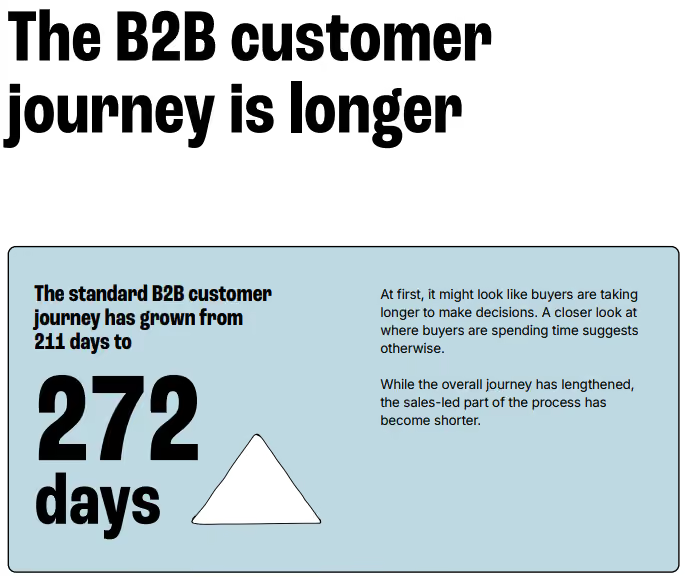
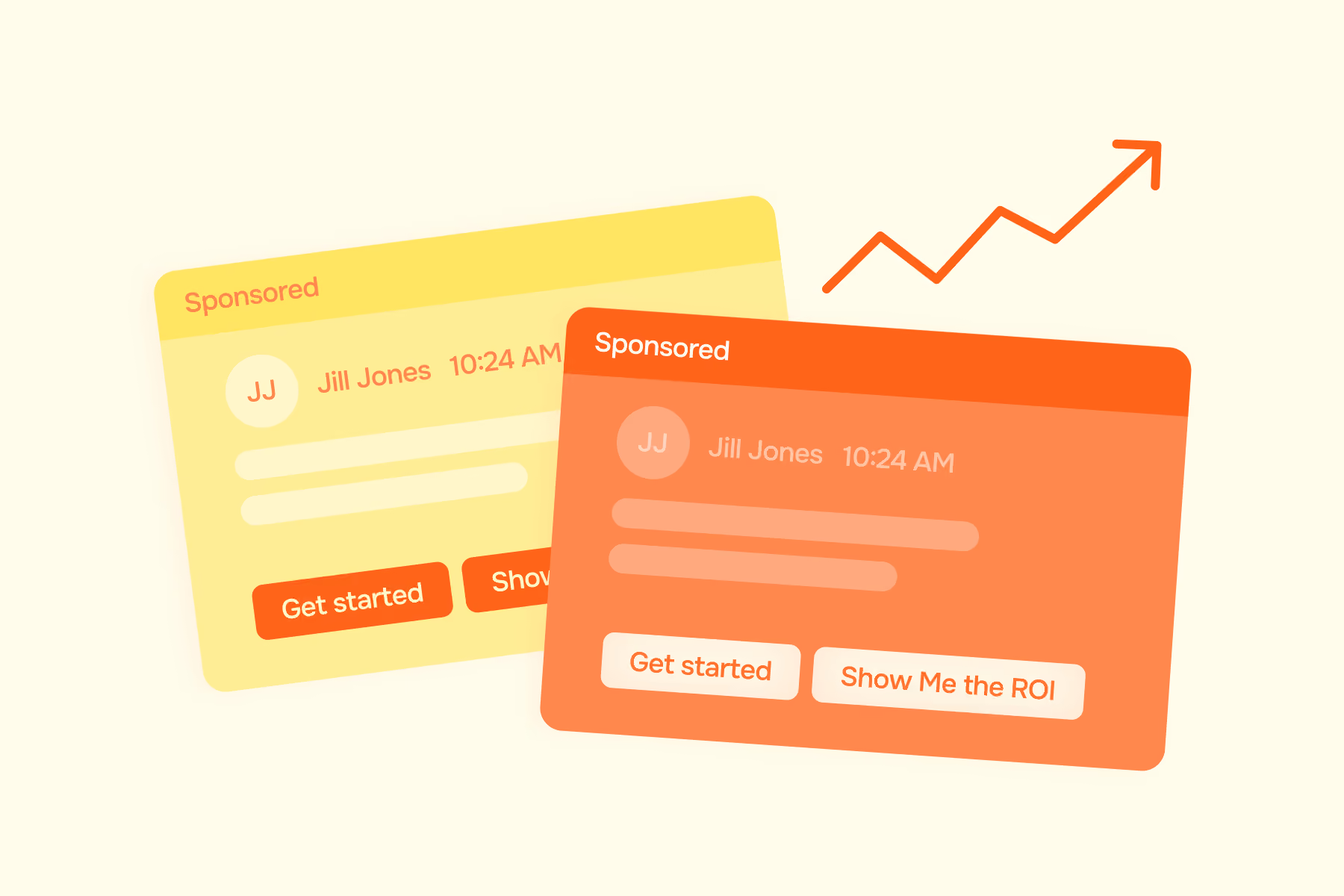
For example, a CFO might select the "Show Me the ROI" option, while a VP of Engineering might select “How Does It Integrate With Our Stack?” On paper, these are two interactions within a single campaign. In practice, however, they represent different signals of intent, different stages of the buying journey, and different follow-up scenarios.
For SaaS, Conversation Ads usually perform best as MOFU and BOFU tools. Broad, cold audiences typically lead to high opt-out rates and poor ROI. This format delivers the best results with Matched Audiences, retargeting, and other warm segments.
If you know exactly who you’re targeting and what offer you’re presenting, Message Ads may suffice. The core difference in LinkedIn Message ads vs Conversation ads is whether the campaign needs one direct action or several intent paths. However, if the campaign involves multiple roles, different levels of intent, or ABM scenarios, Conversation Ads provide more control and data. This is particularly relevant for enterprise SaaS. According to Dreamdata, 81% of the average B2B buying journey now happens before sales becomes involved, meaning marketing influences most of the path before revenue. During that stage, buyers are still researching, comparing options, and building internal alignment. Conversation Ads make it possible to support that process while revealing which topics and offers resonate with each stakeholder.
Conversation Ads Performance: Benchmarks and Cost Expectations
Conversation Ads typically have some of the highest open rates of all LinkedIn ad formats.Still, LinkedIn ads costs need to be evaluated through CPS, audience quality, and lead value, not open rate alone. Typical open rates range from 50% to 60%, though strong campaigns can exceed 70%. The CTR is usually between 2% and 5%, with top performers reaching 8% to 10%. While this is not SaaS-specific data, iit helps show which metrics matter for evaluation. A basic model shows how the economics work:
- 1,000 sends × $1 CPS = $1,000 budget
- 3% CTR = 30 clicks
- 20% click-to-lead conversion = 6 leads
- Estimated CPL = $166.67
This simplified example highlights an important feature of Conversation Ads: cost is driven by message delivery, not clicks. For teams using Conversion Rate Optimization services, the key question is whether the message path, Lead Gen Form, and follow-up can turn limited inbox demand into qualified pipeline. The answer to are LinkedIn Conversation Ads effective depends on audience quality much earlier than with feed-based formats.
For comparison, HubSpot reported a 6.1% conversion rate for LinkedIn Ads among clients in the U.S., which is higher than the average 2.58% for Google Search B2B campaigns.
Audience quality is critical here. According to a HubSpot study of more than 2,000 campaigns, LinkedIn Matched Audiences and retargeting via the Insight Tag increased CTR by 30%. This is why retargeting and CRM audiences often serve as the starting point for Conversation Ads.
From an economic standpoint, this format typically works best for SaaS companies with an ACV of $10K+. For self-serve products with a low ACV, the CPS model is often too expensive relative to the value of a single conversion. Based on our experience, a practical starting budget for most SaaS teams is approximately $3,000–$5,000 per month.
Conversation Ads Use Cases for B2B SaaS Teams
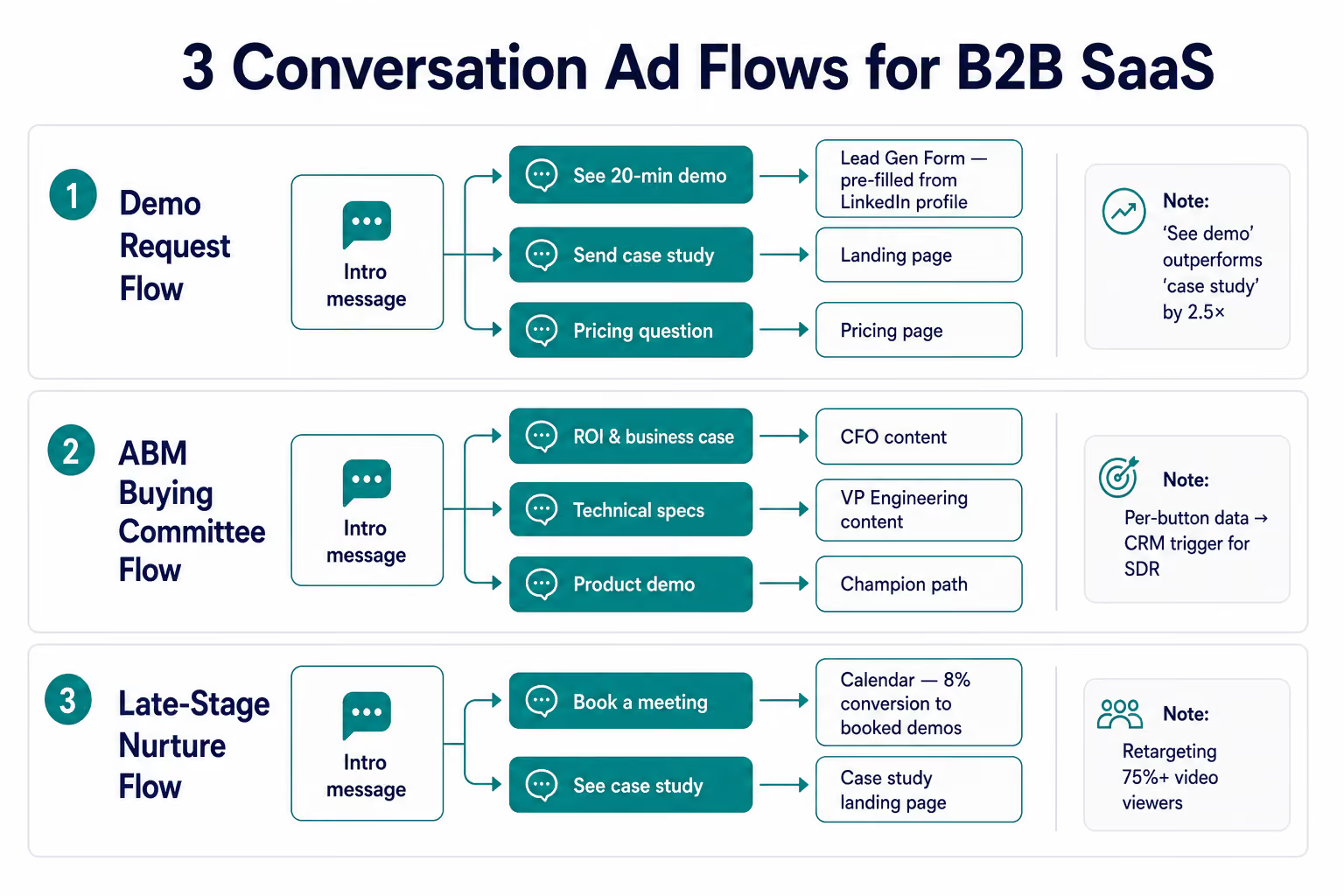
Although Conversation Ads appear to be a single format, within the SaaS ecosystem, they serve different purposes. A strong LinkedIn Conversation ads strategy maps the same mechanics to different funnel roles: lead generation, ABM, and pipeline nurturing.
Demo Requests: Qualifying Intent Before SDR Outreach
In demo campaigns, Conversation Ads are not usually used to generate the maximum number of clicks. Rather, they are used to segment the audience by level of intent before SDR outreach.
One of the clearest LinkedIn Conversation Ads examples for demo intent looks like this:
- See a 20-Minute Demo → Lead Gen Form
- Send Me a Case Study → Customer Case Page
- How Does Pricing Work? → Pricing Page or Next Stage of Conversation
This structure helps separate people who are ready to talk from those who are still gathering information.
In one SaaS marketing automation case study, a company targeted marketing directors at U.S. and Canadian companies with 50–500 employees. The "See Demo" CTA yielded results 2.5 times higher than the version with a customer case study. Using multiple CTA options increased the CTR to 2.1%, compared to a previous campaign with a single button. Additionally, retargeting users who watched 75% or more of the video resulted in an 8% conversion rate for booked demos.
Lead Gen Forms make this easier by removing unnecessary steps. Users do not need to visit the website and manually fill out a form. Their name, job title, company, and contact information are automatically pulled from their LinkedIn profile. For demo campaigns, warm segments typically work best, such as visitors to pricing and demo pages via the Insight Tag, as well as known CRM and pipeline contacts.
ABM: Reaching Different Stakeholders Inside Buying Committees
Enterprise SaaS companies face a structural challenge. The average B2B buying journey now takes 272 days, involves 10 stakeholders, and includes 88 interactions. Message Ads usually force one message path for the entire audience. Conversation Ads allow you to create different scenarios within a single campaign:
- Path A: CFO/VP of Finance → ROI calculator + business case
- Path B: VP of Engineering/IT Director → technical documentation + integration specs
- Path C: VP of Product/Head of Operations → demo + trial
This helps personalize content and generate intent data for SDR teams. The best LinkedIn ads agencies usually treat these paths as sales enablement signals, not just ad engagement. For example, if a person opens ROI materials, the follow-up will differ from what would be sent if they clicked through to the technical documentation.
In our experience at Aimers, narrower role-based audiences often perform better than broad targeting. In one SaaS case, CPL dropped from $778 to $412, and the conversion rate rose from 1.1% to 2.9% over eight weeks. In another LinkedIn project, qualified leads increased by 164%, and CPL decreased by 67%.
For ABM campaigns based on Conversation Ads, the audience is typically assembled using a combination of company lists, job function, and seniority. Account tiering also helps prioritize budget.
Late-Stage Nurturing and Pipeline Acceleration
Conversation Ads are frequently used to engage warm audiences. For instance, retargeting users who watched at least 75% of a video resulted in an 8% conversion rate for scheduled demos when the ad offered a meeting directly.
In later stages, content-based offers that demonstrate value tend to be more effective than direct product pitches. Among practical LinkedIn ads examples, this kind of message works because it offers data before asking for a meeting. For example, "Our research found that companies using intent signals generate 2.3 times more opportunities. Want the data?"
Users can then proceed to a resource, a lead generation form, or additional content. Frequency needs to stay controlled. A useful working guideline is about three messages over seven days before signs of fatigue appear, provided that each message uses a new angle.
What Actually Improves Conversation Ads Performance
The strongest LinkedIn Conversation Ads best practices are rarely about one isolated change. Open rates, CTR, and engagement depend on a combination of factors, including the structure of the message, the relevance of the sender, and conversation logic.
Keep the Opening Message Short
The first few lines act as the preview and the first screen. LinkedIn recommends keeping the introductory message to around 500 characters so the main point is clear without requiring the recipient to expand the message.
At the same time, specific claims usually work better than general promises. For example, the phrase "Reduce pipeline review time from 3 hours to 20 minutes" sends a stronger signal than the abstract "Save time and improve productivity."
Use Personalization Carefully
Personalization variables such as %FIRSTNAME% and %COMPANYNAME% make the message feel less like a bulk outreach. LinkedIn automatically inserts the recipient’s name or company from their profile, which can make the message appear more relevant.
This is especially important in Sponsored Messaging. Unlike feed ads, sponsored messages land directly in the inbox, so templated outreach feels much more obvious. Even basic personalization makes the communication feel more natural.
Sender Fit Matters More Than Teams Expect
Even before opening a message, recipients see the sender’s name, photo, and job title. Sender-audience fit directly affects open rate. Messages from VPs of Sales to peer-level buyers are perceived differently than messages from irrelevant profiles.
In our experience, a mismatch between the sender and the audience is one of the most common reasons for poor performance in Sponsored Messaging campaigns. A LinkedIn ads agency should test sender fit against audience seniority, offer type, and funnel stage instead of choosing the most senior profile by default.
Skip the “Not Interested” Option
LinkedIn explicitly recommends against including a “Not Interested” button. The button rarely provides useful information, but it can increase negative engagement and opt-out behavior.
Run Conversation Ads Alongside Sponsored Content
According to LinkedIn, advertisers who run Sponsored Messaging alongside Sponsored Content for the same audiences see a 19% increase in open rate and a 72% increase in CTR. If users have already seen the company in their feed, the message in their inbox is no longer perceived as a cold contact.
Treat Opt-Out Rate as an Early Warning Signal
Campaign Manager shows the percentage of users who have opted out of messages after receiving messages from an advertiser. An increase in the opt-out rate often appears before a drop in CTR and may indicate an issue with the audience, sender profile, or message itself. For a SaaS digital marketing agency, this is usually the point to review audience quality and message fit before CPL starts showing the damage. For smaller audiences (under 300K), HubSpot recommends updating messaging more frequently. Otherwise, CTR begins to decline more rapidly due to repetitive impressions and accumulated fatigue.
FAQs
How do LinkedIn Conversation Ads work?

How much do LinkedIn Conversation Ads cost?
Are LinkedIn Conversation Ads effective for B2B SaaS?
What audience works best for LinkedIn Conversation Ads?
When should you use Conversation Ads instead of Message Ads?