

7 Ways to Use Social Proof in Your PPC Ads

November 5, 2024

Data analysis and optimization are crucial for your PPC success; however, engaging your target audience with compelling ad creatives is equally important. One of the great ways to do so is incorporating social proof from your existing customers. In this article, we’ll explore 7 practical ways to include social proof in your PPC ads, helping you create more engaging and effective messages that resonate with your audience.
Advertising is a data-rich and analysis-based area. Your PPC results depend on the data analysis, optimizations, collecting new data, and assessing the impact of the applied changes. But there is another side to PPC – and that is effectively engaging with your target audience with the right ad creatives (both copy and visuals).
Your current customers hold a treasure trove of potential that can significantly elevate your PPC campaigns. Their endorsements, testimonials, and engagement are a powerful social proof that can sway your potential buyers. When prospective customers see that others like them are benefiting from your product or service, trust is established, and their decision-making process becomes a lot simpler.
In this article, we’ll give you 7 practical ways to incorporate social proof in your PPC campaigns.
1. Real-Life Photos From Customers
Consumers want a personal experience when they interact with brands, and therefore you should consider using client-generated visuals in your campaigns. Many brands are using content produced by their buyers, as they want to tell an authentic story, get closer to the audience and become more in touch with their community.
Thankfully, nowadays, customers post many photos on social media using various products and services, especially for the retailers of physical products and screenshots of programs or even with brand mentioning/tagging. So you can use this user-generated content in your marketing strategy.
You could incorporate these photos (with the permission from the owner) into graphics for ads, in addition to featuring them on landing pages.
Another tip is to use photos of a person. Faces often perform well in social media to “stop the scroll” and get people to take a second look at the offer being presented.
It’s better to incorporate a corresponding testimonial text or quote from the same person. The customers will consider such an ad as a personal view and not just another selling message.
2. User’s Feedback
Customer feedback and reviews are a perfect place to draw inspiration. It also allows PPC strategists to improve the performance of their biddable media campaigns. You can find attention-catching quotes to incorporate directly into ads or your landing pages.
Most B2C brands can draw from reviews on third-party sites like Google, Facebook, GoodFirms, etc. B2B brands might have reviews on sites like Capterra, G2 or TrustPilot.
Additionally, you may ask your customers to provide reviews for use specifically in PPC ads.
Moreover, analyzing reviews will help you better understand the customer’s needs and improve your ad copy. You can even pull out the advantages of the product/service that people mention and include this info in your ads.
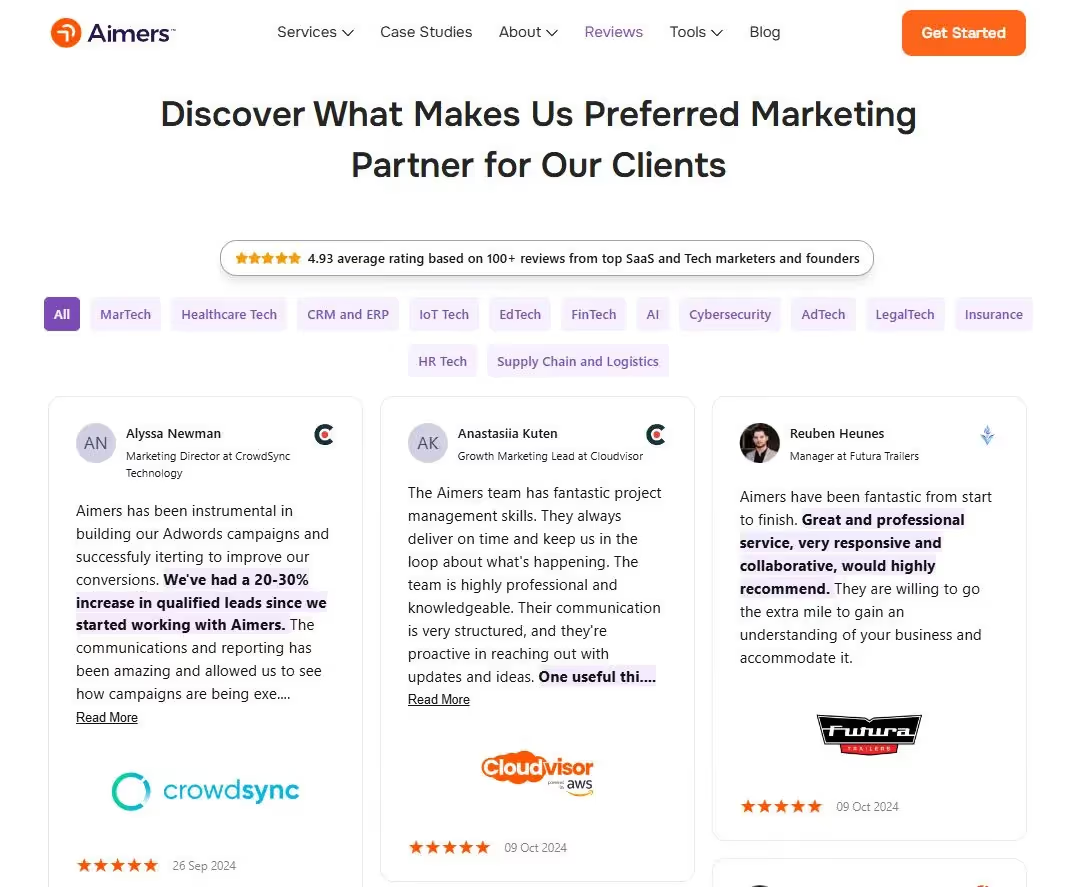
3. Star Rating
Star ratings are a great way to increase the conversion rate, improve quality scores, and draw visitors’ attention to your landing page.
You can directly quote customer reviews or include aggregated ratings to underline the overall brand credibility.
For example, if your product has a 5-star rating on review platforms, you can include that rating in display ad graphics or somewhere on your landing page. Make sure you add links to the original sources for ratings to provide extra proof. Some review sites allow you to directly embed their ratings.
4. Video Testimonials
Many brands use videos as a potent social proof and benefit from testing video ads as part of their PPC strategy. Video reviews have the potential to lift the conversion rate substantially. Our brains perceive visual content, especially videos, much faster than plain text, so visitors will catch more info in a shorter time. Visual examples of the product in use significantly raised the trust factor.You can test different videos based on the product or service, from studio-made production to a smartphone-recorded testimonial from a real customer. Real customers’ videos might outperform polished videos with scripts – use the data to see what works.
5. Customer Numbers
If you have an impressively large customer base for your industry, you can use it as a social proof and display the number of customers in your ads or website. You could even include a section on your landing page that auto-updates to show the current number of customers. Also, you can try including “300K Customers and Counting” as a headline in an ad. Depending on the product or service, you can set a period for the customer volume. For instance, “250,000 Satisfied Customers Appreciated Our Brand Last Year ” or “We Answered 50 Calls Each Day.”
6. Customer Demographics
You should regularly analyze the current customer database to get helpful insights about significant traits among active users. Such granular attributes as age, job title, and industry will compose the highly relevant ad copy with appropriate language and message that showcases unique features of your product and how it solves your customer pain points.
7. Survey Data
A customer survey is a method of collecting consumer opinion. It helps companies assess customer satisfaction, measure customer engagement, perform market research, and gauge expectations. The responses you receive will provide valuable insights into what motivates, excites, and frustrates your customers. All these can be successfully incorporated into your ad creatives.
Takeaways:
Your current customer base may be one of the best and most reliable sources to dig fresh ideas for PPC campaigns. Your customers are your most powerful marketing tool; their endorsement and engagement are gold.
Explore what your customers are saying about your brand, what media resources they could give you, and what demographic characteristics you can use to craft more engaging ads. You’ll likely find new creatives and ad copy ideas you haven’t previously thought about from your perspective.
Would you like our highly experienced PPC and design team to help you with your ads? We offer highly personalized full-cycle PPC management with flexible pricing. Drop a quick line to our team at aimers.io/contacts, and we’ll get back to you as soon as possible!
FAQs
What exactly counts as social proof in PPC campaigns?

Which type of social proof performs best in ads?
Do I need permission to use a customer's photo, review, or video in my ads?
Can adding social proof actually improve my Quality Score?
Where should I start if I don't have much customer content yet?



.avif)

.png)