
20 Facebook Ad Examples for SaaS and Tech Companies: 2026 Breakdown


Creating an amazing Facebook ad for your tech business can be a challenge. You need to ensure your message is on-point, stand out from your competitors, and create eye-catching visuals that encourage people to pay attention.
Most Facebook ads for software get scrolled past in under a second. The feed is full of people, pets, and holidays, and then a screenshot of a dashboard shows up. That is a hard place to sell from.
Facebook Ads for tech companies work when they carry one idea instead of a whole platform.
Key takeaways
- A Facebook ad for SaaS works when it carries one hook, one visual idea, and one CTA, not a feature list.
- Nine of the 20 live ads in this list are video, seven are static images, and one is a carousel.
- Learn More is the button on eight of them, so most of this spend sits at the top of the funnel.
- Seven of the 20 sell an AI feature rather than the core product, the clearest shift in SaaS creative this year.
- The fastest creative win is trading a feature list for one customer outcome and one number.
Below are 20 Facebook ad examples pulled from Meta Ad Library, with the format, the hook, the offer, and the button each brand actually used. We broke each one down the way we audit creative as a B2B Facebook Ads agency.
What Makes a Great Facebook Ad for SaaS and Tech in 2026
A great Facebook ad for SaaS and tech in 2026 does three things: it stops the scroll with a specific hook, it shows one visual idea built for mobile, and it backs the claim with proof a buyer can verify.
Hook: The First Line or First Frame That Stops the Scroll
The hook is the first line of primary text in a static ad, or the first frame in a video ad. It gets one second, with the sound off.
Three hook types show up across the ads below:
- Pain point hooks name a daily annoyance. Grammarly opens by asking whether you keep getting pinged.
- Number hooks lead with a statistic. Intercom quotes a Gartner figure before naming its product.
- Filter hooks speak to one role, so everyone else scrolls past. Canva addresses teachers.
If your hook could sit above any product in your category, rewrite it until only yours fits.
Visual Approach: UI Screenshots, Abstract Visuals, or Outcome-Led Images
- UI screenshots suit warm audiences who know the category. Zoom into one screen, one moment. A full dashboard in a square frame reads as noise.
- Brand-led visuals suit awareness, where recognition matters more than explanation.
- Outcome-led images suit products that are hard to show but easy to picture the result of.
When creating the visual, keep contrast high, on-image text short, and the CTA button obvious. Our guide to Facebook Ads best practices covers the specs.
Social Proof Formats That Work for B2B Tech
B2B buyers rarely trust a claim made by the business alone. Four proof formats earn a place in the feed:
- A third-party statistic from an analyst, the way Intercom uses Gartner.
- A named customer result paired with a logo.
- A recognizable name, which is what Slack does by putting MrBeast in the first line.
- A G2 or Capterra rating badge.
20 Facebook Ad Examples for Tech and SaaS Companies
Every ad example below was live in Meta Ad Library when we pulled it, so these are current Meta Ads examples.
Which ad you copy depends on what you are running. Story-led video suits demand generation campaigns at the top of the funnel, gated offers suit SaaS lead generation once an audience knows you, and product proof belongs in retargeting campaigns or remarketing services that finish the job.
What the sample shows
- Nine are video, seven are static images, one is a carousel.
- Learn More is the button on eight of them. Sign Up appears four times, then Download, Shop Now, and Install now once each.
- Seven sell an AI feature rather than the core product.
- Eight put something free or discounted in the ad: a trial, a free tier, a discount, or a gated guide.
- One runs entirely in Spanish, a reminder that language is part of the creative and not only of the targeting.
1. Adobe
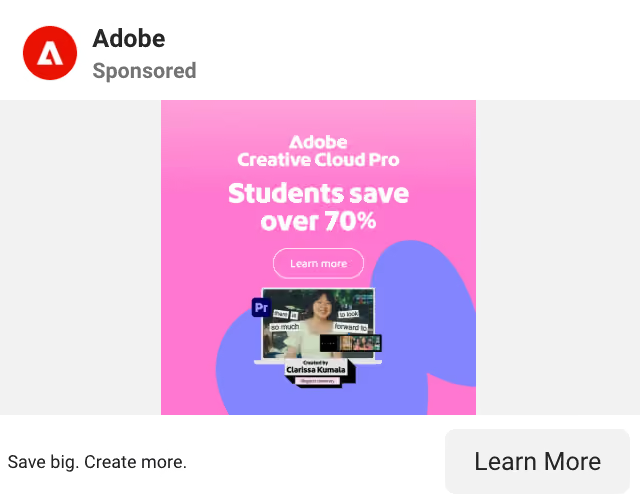
Facebook ad type:
Static image
Why we love this Facebook ad example:
Adobe puts a student discount in the middle of the frame and uses a named student's own project as the visual, so the offer and the proof share one image.
Key takeaway:
Pair a number-led offer with real customer work instead of stock art.
2. Mailchimp
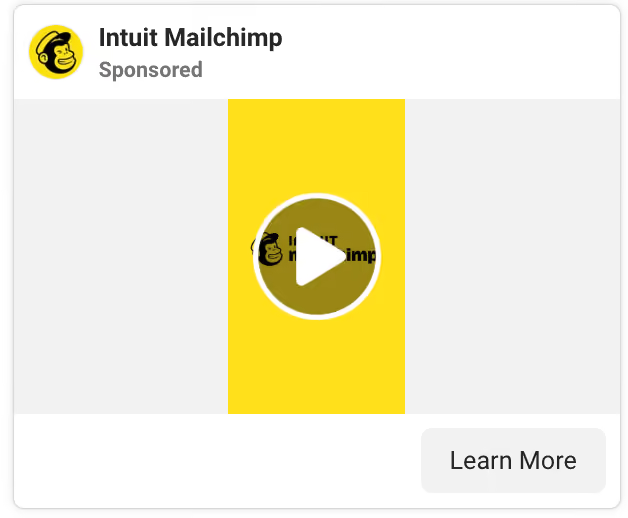
Facebook ad type:
Video
Why we love this Facebook ad example:
Mailchimp runs a video with no primary text at all, betting on a yellow frame and a logo that are unmistakable in the feed. It only works because the brand is already known.
Key takeaway:
Copy-free brand ads work when your logo already means something. Do not try this at Series A.
3. Apple
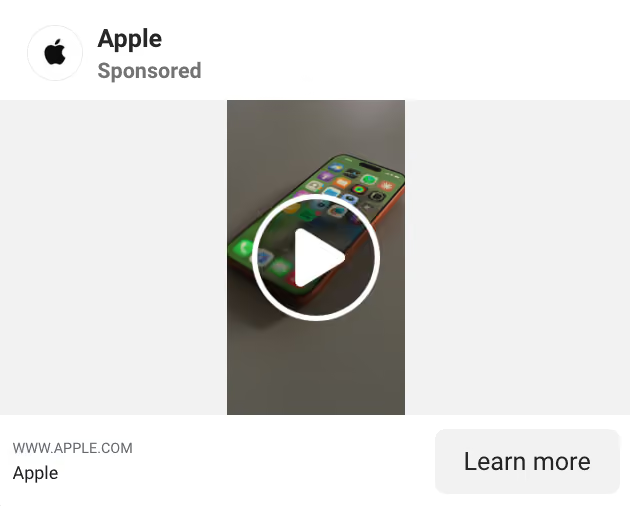
Facebook ad type:
Video
Why we love this Facebook ad example:
Apple ships an ad with no primary text and no headline beyond the brand name, which only works when the product is recognizable in a single frame.
Key takeaway:
The less copy you use, the more work the visual has to do.
4. Atlassian
.avif)
Facebook ad type:
Carousel
Why we love this Facebook ad example:
Atlassian writes for the buyer who already has the problem, and a narrow message beats a broad one in a crowded feed.
Key takeaway:
Write for one buyer profile, not the whole market.
5. Microsoft 365
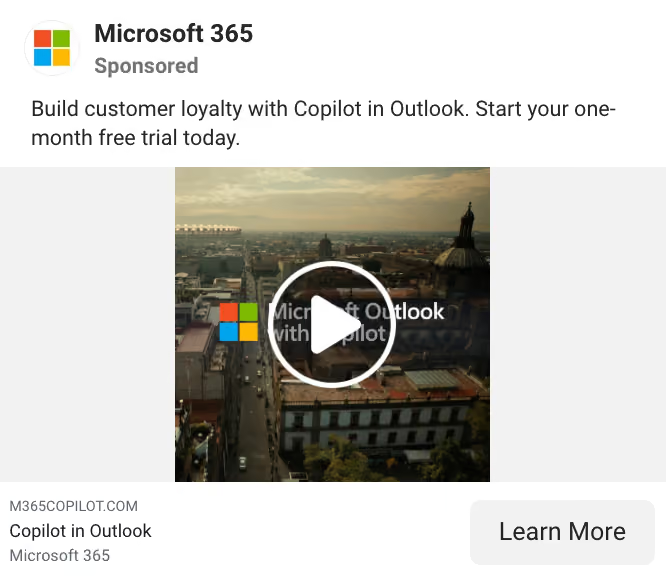
Facebook ad type:
Video
Why we love this Facebook ad example:
Microsoft leads with a business outcome, names Copilot in Outlook second, and closes with a one-month free trial. Two short lines carry benefit, product, and offer.
Key takeaway:
Outcome first, feature second, offer third.
6. HubSpot
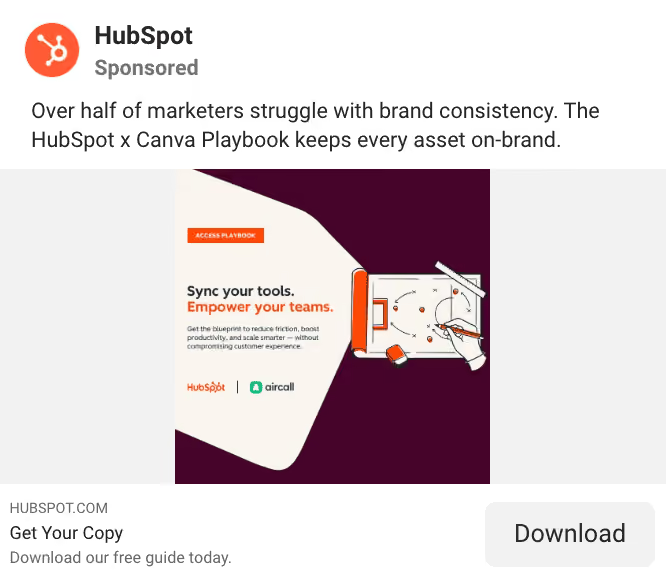
Facebook ad type:
Static image
Why we love this Facebook ad example:
HubSpot opens with a statistic about a problem marketers admit to, offers a gated playbook as the fix, and puts Download on the button. The same account runs several other resource offers at once: an AI prompt pack, an Instagram guide, a free certification.
Key takeaway:
One offer per creative, many offers per account. Test resource offers with Facebook lead ads before a demo page.
7. Notion
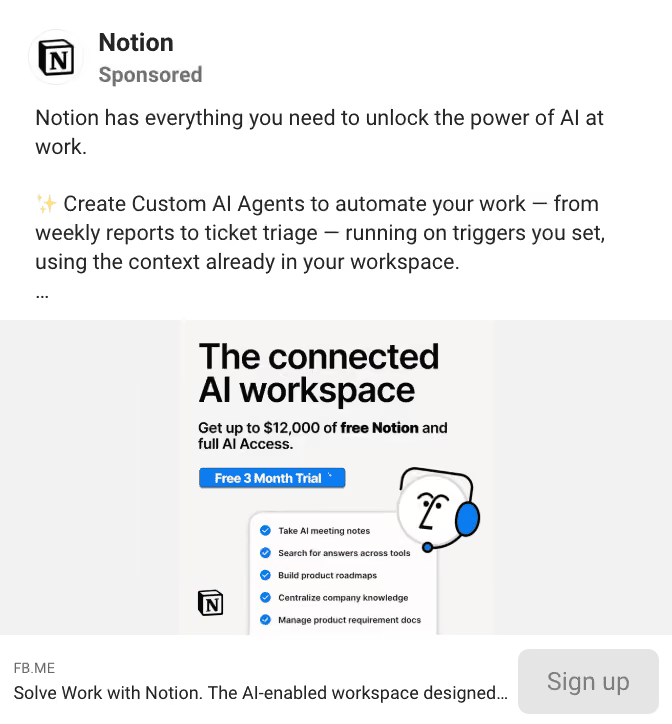
Facebook ad type:
Static image
Why we love this Facebook ad example:
Notion stacks a large offer on a five-item checklist of jobs, from meeting notes to product docs, so a reader who ignores AI agents still finds a task they recognize.
Key takeaway:
A checklist of jobs beats a description of the platform.
8. Slack

Facebook ad type:
Video
Why we love this Facebook ad example:
Slack borrows attention from a name the feed already knows, asks a question instead of making a claim, and sends the click to a campaign-specific landing page.
Key takeaway:
Borrowed credibility plus a question beats a feature claim.
9. Monday.com

Facebook ad type:
Video
Why we love this Facebook ad example:
Monday.com repositions a work platform around AI agents but keeps a person on screen, so an abstract promise still has a human face.
Key takeaway:
When the product story is abstract, put a person in the first frame.
10. Canva
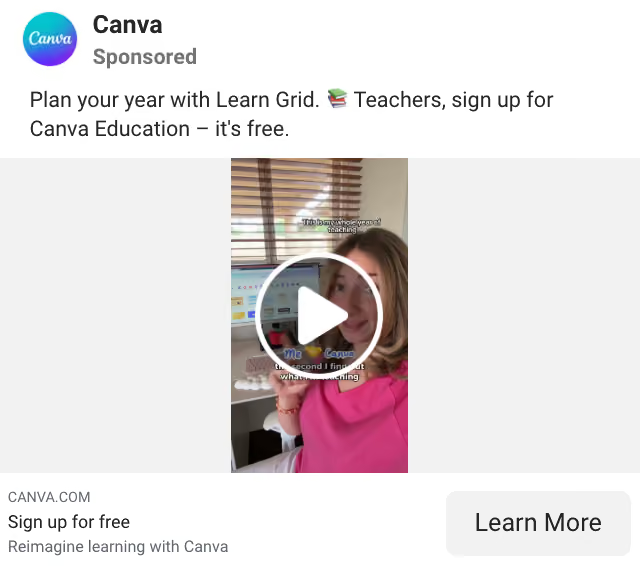
Facebook ad type:
Video
Why we love this Facebook ad example:
Canva narrows a product used by everyone down to teachers, hands the camera to a teacher instead of a studio, and makes the offer free.
Key takeaway:
Pick one audience, then let someone from that audience do the talking.
11. Figma

Facebook ad type:
Static image
Why we love this:
Figma sells a new AI feature with dense product UI rather than an abstract visual, so you see the output before you are asked to click.
Key takeaway:
For a new feature, show the interface, not the idea.
12. Salesforce

Facebook ad type:
Video
Why we love this Facebook ad example:
Salesforce advertises Dreamforce rather than software, promises role and industry relevance in one line, and removes the price objection by making the stream free.
Key takeaway:
Run event ads at the top of the funnel, then hand attendees to retargeting.
13. Semrush

Facebook ad type:
Video
Why we love this Facebook ad example:
Semrush turns keyword research into entertainment by comparing absurd search terms, and keeps the seven-day trial in the small print.
Key takeaway:
Sell the interesting part of the job, not the software.
14. Zoom

Facebook ad type:
Static image
Why we love this Facebook ad example:
Zoom pairs a feature launch with an outcome line and shows the actual notes panel, so the promise is visible instead of described. It also sets the button to Shop Now for a software feature, which is exactly the mismatch to catch before launch and a reminder that good remarketing still needs the right ask.
Key takeaway:
Show the panel, then check that the button matches the ask.
15. Grammarly
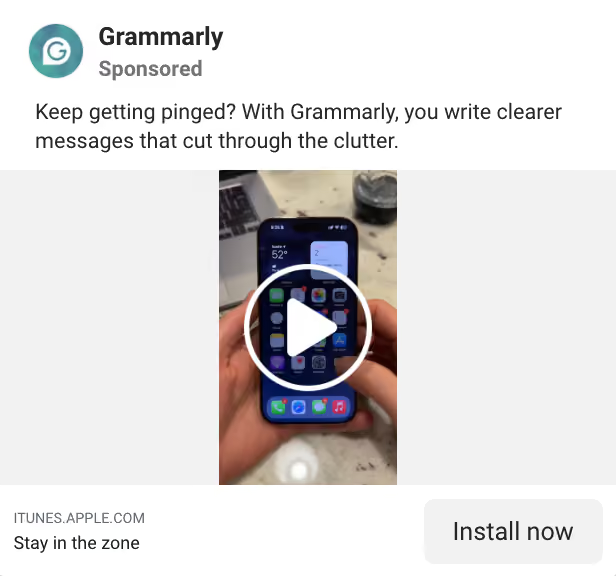
Facebook ad type:
Video
Why we love this Facebook ad example:
Grammarly opens with a question about a daily annoyance and shows the app on a real phone, filmed the way a friend would, which fits an install objective.
Key takeaway:
Match production value to the objective. App installs do not need a studio.
16. Intercom

Facebook ad type:
Static image
Why we love this Facebook ad example:
Intercom leads with an analyst statistic on how few enterprise AI agents are autonomous, which does credibility work no brand claim can, then frames the product around ROI.
Key takeaway:
Borrow a number from an analyst when you cannot yet cite your own.
17. Shopify
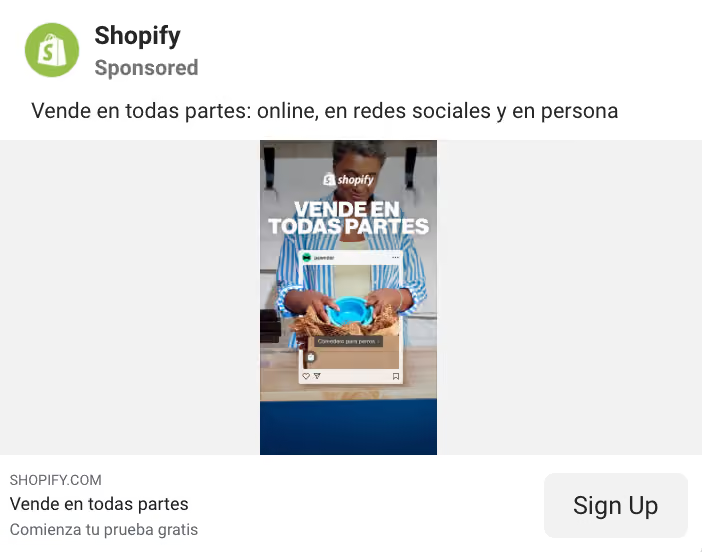
Facebook ad type:
Static image, vertical creative
Why we love this Facebook ad example:
Shopify runs the whole ad in Spanish and drops the product into a mock social post, so the creative shows the channel a merchant will sell in rather than just the merchandise. One line covers online, social, and in person, and the free trial sits in the link description.
Key takeaway:
Localize the creative, not only the targeting, and show the channel instead of naming it.
18. Asana

Facebook ad type:
Creator-led video / branded partnership
Why we love this Facebook ad example:
The ad turns an abstract AI-product claim into a recognizable marketing problem: briefs, feedback, approvals, launch timelines, and files named FINAL_final_v8. The creator-led format makes Asana AI Teammates feel like part of a real workflow rather than a feature announcement.
Key takeaway:
Specific operational details make AI claims more credible. Let a practitioner show the moment where the product removes friction.
19. Dropbox

Facebook ad type:
Video
Why we love this Facebook ad example:
Instead of explaining folders or sync features, Dropbox tells a short story about a musician sharing a track and seeing it become something bigger through collaboration. The emotional outcome makes a familiar product feel relevant again.
Key takeaway:
When the market already understands the product category, lead with the human result the product enables. This approach is especially useful for short-form Facebook video ads.
20. Zapier

Facebook ad type:
Carousel
Why we love this Facebook ad example:
The ad keeps one clear promise, scalable automation, while each carousel card gives it a different practical expression: automate tasks, boost productivity, explore workflows, or book a demo. That makes a broad platform easier to understand without crowding one frame.
Key takeaway:
Use carousel cards as connected proof points, not unrelated mini-ads. Keep the value proposition consistent and let each card answer a different use case or buying question. The same principle appears in these Facebook Ads best practices.
5 Patterns Worth Stealing From These Facebook Ad Examples
Across all 20 Facebook ad examples, five moves repeat: leading with a number, showing an outcome, naming the pain, reading ad longevity as data, and matching format to funnel stage.
Lead with a Number Before Explaining the Product
Numbers give a scrolling reader something concrete to hold. Intercom uses an analyst figure, HubSpot opens with the share of marketers who struggle with brand consistency, and Adobe leads with the size of its student discount. Any of them beats an adjective, as long as the figure is defensible.
Show the Outcome, Not the Feature List
Nobody buys a feature. They buy the state they get afterwards: a shorter sales cycle, a clean pipeline, notes that write themselves. Microsoft names the outcome before it names Copilot, and Zoom promises the customer will stop missing details before showing the panel.
Name the Pain Point Before Offering the Solution
The pain point hook earns agreement first, and a reader who nods keeps reading. Write the pain in your customer's words, from sales calls and support tickets, not your positioning doc. More angles live in our tips for B2B Facebook Ads.
Use Ad Longevity as a Signal of What Works
Meta shows a start date on every ad. If a competitor has run the same creative for six months, it is working, because ad spend does not stay behind a loser that long.
Match the Creative Format to the Funnel Stage
Top-of-funnel video and free resources are demand generation work, building the audience that converts later. Bottom-of-funnel creative asks for the meeting. The offer has to match the stage.
Mismatched offers are the most common reason a good creative underperforms, and they quietly break most scaling strategies too. At the bottom of the funnel, Facebook retargeting does the heavy lifting.
How to Find More Winning SaaS Ads Right Now
Meta Ad Library is a free public database of every ad currently running across Facebook and Instagram, searchable by advertiser. You never have to guess what other businesses in your category are doing.
Using Meta Ad Library to Spot Long-Running Campaigns
- Search by advertiser page, not by keyword. A keyword search returns unrelated advertisers who happen to mention the term.
- Filter by country and set the active status filter to active ads.
- Read the start date on each result and flag anything live for more than 60 days.
- Count the variations of one concept, since ten versions usually means they found a winner and are testing angles.
- Save the keepers to a swipe file sorted by format, so you have Meta Ads examples ready when creating a new batch.
What to Look for When Analyzing Competitor Ads
For each ad you save, record five things: the hook in the first line, the visual approach, the offer, the CTA button, and the destination. Then click through and check the landing page, because the ad and the page have to make the same promise to the same customer.
Our Ads optimization checklist runs the same review against your own account.
Final Thoughts
The best Facebook ad examples in tech are not the prettiest. They pick a single idea and commit to it: one hook, one visual, one CTA, one audience.
Start with three concepts from the list above, run them against the same audience, and let the data decide which to scale. Then keep creating variations of the winner.
Aimers is a B2B SaaS performance marketing agency and a Google Premier Partner managing more than $30M in ad spend for over 100 SaaS and tech clients. We plan, build, and manage paid social for tech businesses that want to generate leads without guesswork.
FAQs
What makes a Facebook ad effective for SaaS and tech companies?

What Facebook ad formats work best for SaaS companies?
How many Facebook ad creatives should a SaaS company test?
Should Facebook ad campaigns be long-term or short-term?
How important is brand consistency in Facebook advertising?