
LinkedIn Marketing for B2B SaaS: 5-Step Growth System

October 28, 2026
LinkedIn for B2B SaaS works best as a full funnel on one channel: research and positioning, messaging, founder-led content, outreach, and ads, all aimed at the same list of accounts. Most teams run one of those activities in isolation. The teams that win run the last 3 at the same time, so every prospect sees your ad, reads your post, and gets your DM in the same few weeks.
That order matters more in 2026 than it did two years ago. Gartner surveyed 646 B2B buyers and found that 67% prefer to buy without talking to a sales rep.
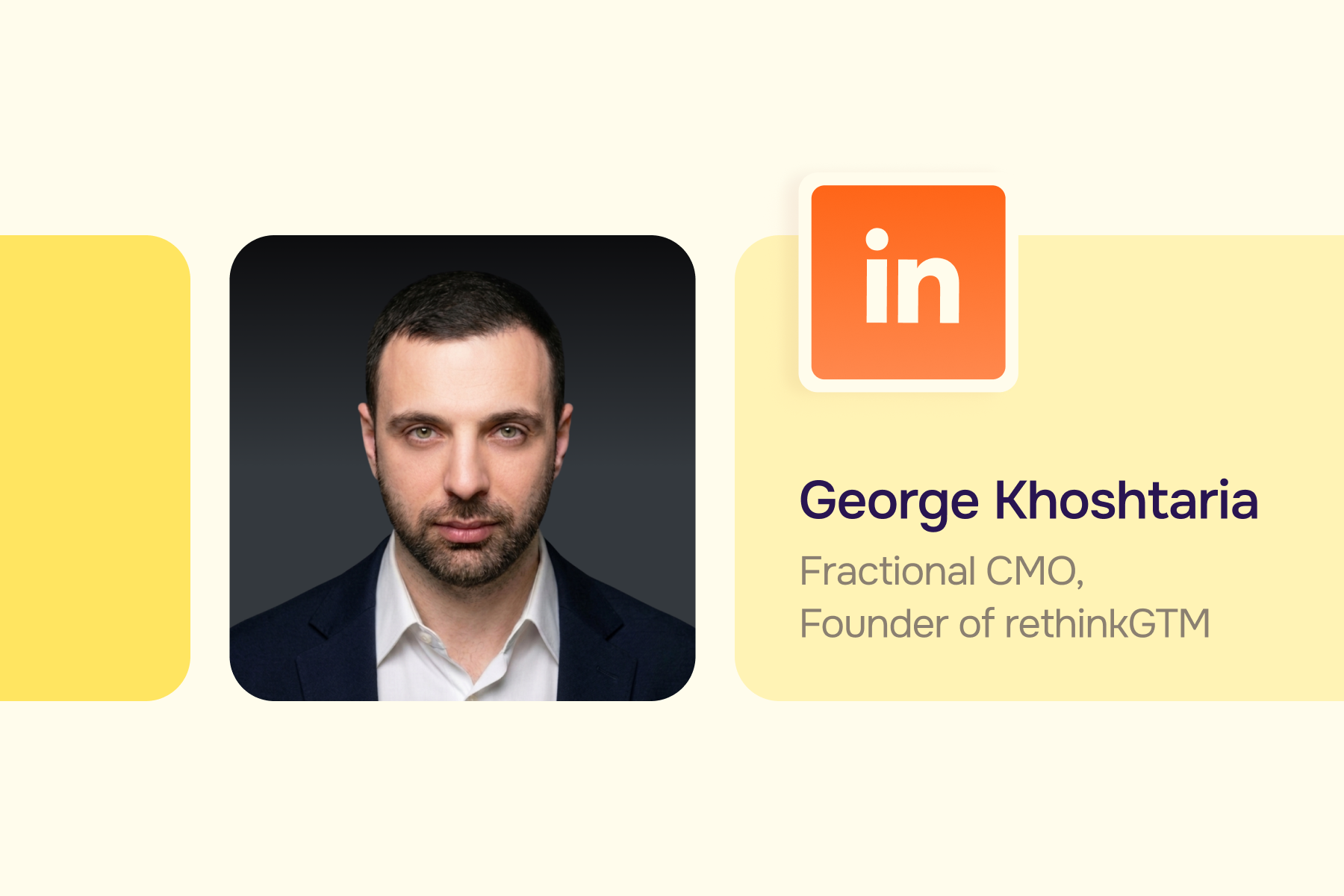
To show how this works in practice, we invited our friend and guest expert George Khoshtaria, fractional CMO and founder of rethinkGTM, to share his approach to connecting content, outreach, and ads into one LinkedIn strategy.
He has run B2B marketing for 8+ years across 50+ campaigns, and I post to 20,000+ followers on LinkedIn every week. This guide is the system he uses with B2B SaaS founders. You'll learn:
- the 5 steps, in the order they compound
- CONTENTmaxxing, the content system behind step 3
- how to choose a LinkedIn outreach tool
- how to target ads at the exact accounts you already DM
- the shiny object trap that kills most LinkedIn strategies inside a month
Key Takeaways
- Positioning comes before posting. Every post, DM, and ad inherits the angle you choose in step 1.
- Run founder content, outreach, and ads on one shared account list, at the same time. Ads make you familiar, content earns trust, and DMs start the conversation.
- One great post no longer survives the flood of AI-generated content. CONTENTmaxxing turns one research pass into posts, a newsletter, blogs, and landing pages.
- Pick the outreach tool that covers your whole motion. Feature count picks the wrong tool in most situations.
- Give any new tactic 30 to 60 days before you judge it. Chasing every trend resets your progress to zero.
Most B2B SaaS Teams Use a Third of LinkedIn
Most B2B SaaS companies treat LinkedIn as one activity. One team runs outreach. Another founder posts twice a month. A third company boosts a few ads and calls it a channel.
Each activity works better with the other two behind it. A cold DM from a stranger gets ignored. The same DM from a founder whose posts the prospect has read for 3 weeks, and whose ad they saw on Monday, gets a reply.
Here's the full system on one page. Each step below opens with its own infographic, so you can save the one you need.

The first two steps happen once and get revisited every quarter. Steps 3 to 5 run every week.
Step 1: Research and Positioning
Positioning is the decision about who you're for, which category you compete in, and why you win against the obvious alternative. Make it before you post anything, because every post, DM, and ad inherits it.
The fastest way to see why: open 3 competitor LinkedIn pages in your category. You'll find the same three claims on all of them. Buyers have learned to scroll past those claims, so a fourth company repeating them buys nothing.

3 inputs feed a position you can defend:
- Sales calls. Listen to 15 to 20 closed-won and closed-lost calls before you write a word. The phrases buyers repeat become your headlines and hooks.
- Competitors. Read every competitor homepage, pricing page, and case study. List the claims everyone makes, then stop using those words.
- ICP scoring. Score accounts on two axes: how much the problem hurts them, and whether they can pay to fix it. Rank three ICPs instead of writing one aspirational persona.
For example, OP Innovate sold cybersecurity services and sounded like every other consultancy in its category. I repositioned it around compliance-focused security for CISOs, then built LinkedIn content and SEO around that angle. Qualified lead volume rose 240%, because enterprise prospects identified themselves as compliance buyers before the sales call.
For the full method I use with clients, including market-maturity diagnosis and the segmentation, category, and differentiation equation, see the rethink™ Method for B2B positioning and messaging at rethinkGTM.
Step 2: Messaging
Messaging turns your position into the exact lines buyers read on your profile, posts, landing pages, and DMs. Build it on buyer pains and the outcomes buyers want, then give every offer its own landing page.
The trap is feature language. Founders know their product deeply, so they describe what it does. Buyers care about what changes for them.

Run every feature through three layers:
- Feature: what the product does ("every sales call transcribed and tagged").
- Capability: what it lets the buyer do ("search any call by the objection raised").
- Benefit: time saved, risk lowered, or money made ("reps walk into every call knowing the objection").
Lead with the benefit line in your headline and your hook. Use the capability and feature lines as proof underneath.
Then build one landing page per offer. A prospect who clicks a post about outbound should land on an outbound page, with one CTA and the same words as the post that sent them. This is where conversion-focused landing page design matters: the page should reinforce the message that brought the prospect there. Test it against the five-second rule: a visitor should know what you do, who you help, and how to buy before they scroll.
Sidenote. Wynter lets you test messaging with real buyers in your ICP before you publish it. It's the cheapest way to catch a headline that only makes sense inside your company.
Step 3: Founder-Led Content
Founder-led content is the engine of LinkedIn for B2B SaaS: educational posts your ICP can't find on Google, published from the founder's profile, plus intentional comments on prospects' posts. It keeps your name familiar with the 95% of your market that isn't buying this quarter.
Start with a list of the prospects you plan to engage. Comment on their posts with real insight. Publish on your own profile in parallel, so the people you comment on find something worth reading when they click your name.
It pays off in revenue, too. At Olifant Digital, daily founder publishing on LinkedIn helped the founder shorten sales cycles and build niche industry authority.
What is CONTENTmaxxing?
CONTENTmaxxing is the practice of maximizing the output and reach of every piece of content you create. You run one deep research pass, then turn it into LinkedIn posts, a newsletter, blog articles, and landing pages instead of publishing it once.
It matters because feeds are buried under AI-generated content, most of it generic. One good post doesn't survive that flood. Neither does a great post published once.
The content that survives comes from material no competitor has: a real sales call, a real competitor teardown, an insight from inside your industry.

Here's how the system runs:
- Ahrefs finds the keyword gaps worth writing about.
- Perplexity pulls competitor and market research.
- Apify scrapes what competitors already published.
- Granola captures the exact words a prospect used on last week's sales call.
- Claude Cowork, with skills trained on your brand, turns those four inputs into a single brief.
- The brief becomes a LinkedIn post, a newsletter in Kit, a landing page or blog post in Framer, and five AEO-ready pieces in AirOps.
How Often Should B2b Founders Post on Linkedin?
B2B founders should post as often as they have something real to say. For most, that means daily or close to it once a research system feeds them material, and at least two posts a week from day one.
I hear the same objection from founders every month: "I don't want to post more than three times a week. I don't want to be annoying."
The fear is aimed at the wrong thing. Posting daily annoys nobody. Posting daily with nothing to say annoys everyone. Frequency becomes a problem only when the research behind it runs out, which is the problem CONTENTmaxxing solves.
The 7-Stage AI Content System Behind Every Post
The 7-stage AI content system wires 13 tools together so every post starts from research. The first four stages produce content. The last three make it compound.

- Find what's already winning.
Apify, connected to Claude, scrapes top creator posts on LinkedIn, X, and YouTube. Perplexity runs weekly research on trending topics. You stop guessing which formats work in your niche. - Find what buyers ask Google and LLMs.
Ahrefs covers classic keyword data. Peec AI shows which prompts mention you in AI answers. - Train Claude skills on your brand.
Build one skill per format: hooks, posts, blogs, briefs. Research goes in and on-brand drafts come out, which retires the "write like my competitor" prompt. - Write blogs built to get cited by AI.
AirOps turns research into briefs and drafts. A bad brief says "write about cold email." A good brief says "answer the six questions buyers ask before buying a sending tool." Every article then splits into three to five LinkedIn posts. - Lock the visual system once.
Figma holds the brand templates. Google Flow generates the custom images. - Distribute where B2B buyers live.
Personal brands on LinkedIn, Substack or Kit for the newsletter, and Ordinal for scheduling and analytics. - Track content to pipeline.
Microsoft Clarity shows on-site behaviour. HubSpot, or any CRM, ties posts and articles to deals.
Step 4: LinkedIn Outreach
LinkedIn outreach means sending personal DMs to the same ICP list your content already reaches. Open with a value drop, such as a lead magnet or an ROI calculator, then nudge toward one clear next step.
A DM lands differently when the prospect already knows your face. That's why outreach sits after content in this system, and why both target the same list.
Track four numbers: connection acceptance rate, reply rate, booked meetings, and sales-qualified booked meetings. The last one tells you whether your positioning attracts buyers or just polite conversations.
How To Choose A Linkedin Outreach Tool
Choose the LinkedIn outreach tool that covers your whole outbound motion. Ask one question before you compare features: is LinkedIn your whole motion, or one channel inside it?
Founders usually ask the wrong questions first. Which tool has the most automation? Which has the best AI personalization? Which is cheapest per seat? All three skip the question that decides the right tool.
- LinkedIn is your whole motion: most tools on the list will do the job. Pick on price and safety.
- You run multichannel outbound: you need LinkedIn and cold email in one place, or your team works out of two inboxes.
I compared five tools, and each one wins something real:

- Dripify has the cheapest start, at $39 a seat.
- Expandi is the safest LinkedIn-only automation, at $99 a seat.
- HeyReach is cheapest for large teams, with unlimited senders.
- LaGrowthMachine covers LinkedIn, email, X, and calls.
- Woodpecker runs LinkedIn and full cold email infrastructure in one place: warm-up, domains, inbox rotation, and a lead finder, from $35 a month plus $29 for the LinkedIn slot.
For multichannel teams, my pick is Woodpecker, because profile visits, connection requests, DMs, InMails, and cold email all reply into one inbox. For LinkedIn-only teams, HeyReach, Aimfox, and SalesRobot are all solid options for multi-account outreach.
Step 5: LinkedIn Ads
Align your LinkedIn Ads strategy with the same accounts you already engage through content and outreach. Upload your ICP list as a matched audience, then run thought leadership ads and boosted organic posts at it, so your name hits the feed before your DM lands.
This is the opposite of broad awareness spend. You're paying to stay visible to a few hundred or a few thousand accounts you've already chosen.

Two ad types do most of the work:
- Thought leadership ads promote the founder's own posts. A face and a point of view earn more trust than a logo and a banner.
- Boosted organic posts put paid reach behind the posts that already earned the most organic impressions. You skip the guesswork, because the market already voted.
The targeting does more work than the creative. Synack already spent real money on LinkedIn, but its impressions missed the CISOs who sign the purchase orders. I rebuilt targeting with ZoomInfo data around in-market security buyers and rewrote the ad copy in their language. Cost per lead fell 35% and conversion rose 28%. Use matched audiences to stay visible to the right decision-makers, and refine your reach with the right LinkedIn Ads targeting options
Tip. Check LinkedIn's Ads Library before you launch. It shows every ad your competitors run, so you can avoid copying the claims your buyers already ignore.
Run Steps 3 to 5 on the Same List, at the Same Time
Steps 3, 4, and 5 compound only when they hit the same accounts in the same weeks. Ads make you familiar, content earns trust, and DMs start the conversation.
Run them in sequence and you lose the effect. A prospect who saw your ad in March has forgotten you by the time your DM arrives in June.
Here's the weekly rhythm:
- Content: publish from the founder's profile and comment on the list's posts.
- Outreach: DM the accounts that engaged, then the rest of the list, with a value drop first.
- Ads: keep thought leadership ads and your best organic posts running at the matched audience.
Shiny Object Syndrome Kills Linkedin Strategies in the First Month
Shiny object syndrome is the habit of abandoning a working content plan to chase every new trend, format, or viral post. It is the fastest way to kill a LinkedIn strategy, because each switch resets the consistency the plan needs to work.
The Day-by-Day Collapse
Here's how a typical month goes:
- Day 1: you plan your content, formats, and positioning.
- Day 2: you split the mix 70% education, 20% consideration, 10% offer.
- Day 5: a trend on agentic AI blows up your feed.
- Day 7: your mix flips to 80% offer-style hot takes to catch the wave.
- Day 12: a competitor's case study post goes viral, so you write only case studies.
- Day 14: your CEO asks for more posts on AI trends.
- Day 16: one post goes viral.
- Day 17: you chase more AI trends.
- Day 22: nothing gets traction.
- Month 1: the strategy is dead.

How to Avoid Shiny Object Syndrome
- Give every new tactic a real test window. Run it for 30 to 60 days, with the same angle, format, and schedule.
- Park new ideas on a list. Review the list once a week. Most ideas lose their shine by Friday, and the good ones survive the wait.
- Keep what works, even when it feels boring. Spend 80% of your time on the proven angle and 20% on testing something new.
Consistency works like a fireplace. It stays cold for the first ten minutes and warms the whole room by the second hour.
Sidenote. Consistency has a limit. If 30 to 60 days pass with no movement on a clear metric, fix the plan fast.
Final Thoughts
LinkedIn for B2B SaaS rewards the teams that nail their positioning first, then run content, outreach, and ads against one shared list at the same time. Choose your angle, write the messaging, build the research system, and give it 60 days before you change anything.
Not sure about the positioning step? Start with the rethink™ Method, a Fractional CMO service for B2B startups. And if you need a team to handle the paid LinkedIn ads, get in touch with Aimers.
FAQs
Yes. LinkedIn is where B2B buyers research vendors and the founders behind them, and it lets you target exact accounts with content, DMs, and ads. It works best as a full funnel: one positioned message, delivered through founder content, outreach, and matched-audience ads to the same account list.

Post at least twice a week from the start, and move toward daily once a research system feeds you material. Frequency annoys nobody when every post carries something real, such as a sales call insight or a competitor teardown. Posting without substance is the actual risk.
CONTENTmaxxing is the practice of maximizing the output and reach of every piece of content you create. One research pass, built from sales calls, competitor teardowns, and keyword gaps, becomes LinkedIn posts, a newsletter, blog articles, and landing pages, instead of a single post published once.
The best LinkedIn outreach tool is the one that covers your whole motion. For LinkedIn-only outreach, Dripify, Expandi, and HeyReach all work. For multichannel outbound, choose a tool that runs LinkedIn and cold email in one inbox, such as Woodpecker or LaGrowthMachine.
Give any LinkedIn tactic 30 to 60 days of consistent execution before you judge it, with the same angle, format, and schedule. Content and full-funnel programs usually need 60 to 90 days to build momentum. If a clear metric hasn't moved after that window, fix the plan.
October 7, 2026
October 6, 2026