

SaaS Ad Creative Strategy: Messaging Frameworks for Google, LinkedIn, and Meta

November 4, 2026
At Aimers, we often see SaaS teams refresh ads when the real bottleneck sits upstream: Google, LinkedIn, and Meta all receive the same vague promise, while success is judged by CTR before anyone checks lead quality. Activity continues, but sales gets weak-fit demos and the creative team keeps guessing what to change.
A strong SaaS ad creative strategy starts with one evidence-backed message architecture, then adapts it to each channel. Google begins with expressed intent, LinkedIn with professional relevance, and Meta with fast recognition and self-qualification. Test message angles before cosmetic variations, preserve message match after the click, and judge winners by qualified pipeline. The framework below applies that logic to one recurring RevOps SaaS example.
What Is a SaaS Ad Creative Strategy?
A SaaS ad creative strategy turns positioning, customer evidence, and campaign goals into channel-native messages, visuals, offers, and landing-page experiences. It defines what the ad should communicate, why the buyer should believe it, which next step fits their awareness, and how the team will evaluate performance beyond clicks.
At Aimers, we make those decisions before the design brief. Otherwise, teams test headlines, colors, and formats without knowing whether a weak result came from the audience, message, proof, offer, or execution. That planning connects creative to the broader SaaS PPC strategy.
The 7-Part SaaS Ad Message Map
Use the SaaS Ad Message Map before writing copy or opening a design file. RelayFlow, our fictional workflow automation platform for RevOps teams, keeps the example consistent across channels.
The map preserves one promise while the hook, proof, format, offer, and CTA change by channel. Define the B2B SaaS offer strategy here, not after the ad and landing page are written. Execution then follows: contextual hook + specific value + evidence + next step.
Google Ads Messaging Framework for SaaS
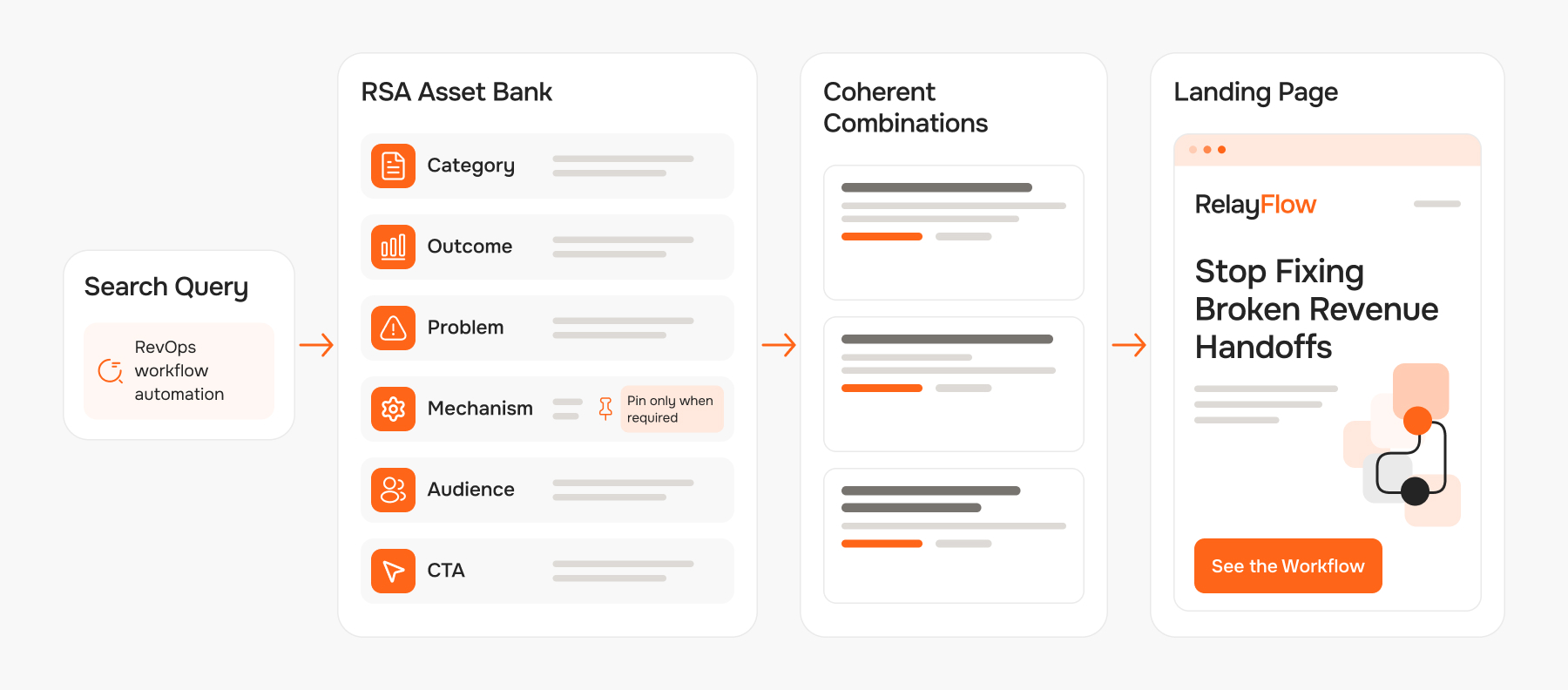
Google Ads copy for SaaS should answer the query before expanding the product story. In our Google Ads management for SaaS work, we give each responsive search ad asset a different job and continue the same intent, promise, and proof on the landing page.
Descriptions: “Automate CRM-to-billing handoffs without rebuilding your stack. See the workflow.” “Connect HubSpot and Stripe, reduce manual fixes, and book a focused walkthrough.”
Landing-page hero: “Stop Fixing Broken Revenue Handoffs.” Support it with the workflow, integration proof, and the same CTA: “See the Workflow.”
Google's RSA best-practice guidance recommends distinct assets and relevant sitelinks. Because unpinned assets may appear in different combinations and orders, each combination must remain coherent; pinning reduces available combinations and should be reserved for required sequence, compliance, or critical wording.
For more executions, see our B2B SaaS Google Ads examples. Diagnose with search terms, CTR, and landing-page CVR, but decide with qualified conversions, cost per opportunity, and pipeline.
LinkedIn Ads Messaging Framework for B2B SaaS
LinkedIn ad creative for B2B SaaS should begin with professional relevance: a role, workflow, account type, or business tension. In our LinkedIn Ads work for B2B SaaS, we make the opening useful before the reader expands the post, then match proof and offer to awareness.
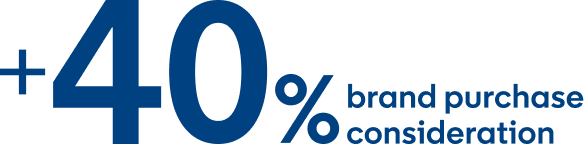
A 2024 LinkedIn and MAGNA Media Trials study tested 67 Sponsored Content ads among more than 1,700 LinkedIn users. Decision-makers were 40% more likely to consider a brand when they perceived its ad as creative. This is a consideration finding, not a pipeline guarantee.
Current Thought Leader Ads documentation supports awareness, engagement, and video-view objectives for eligible posts. Single-image and video versions lack CTA buttons, though intro text can include a URL. For Lead Gen Forms, compare MQL rate, SQL rate, cost per SQL, and pipeline, not form CPL alone. See more LinkedIn ad examples for B2B SaaS.
Meta Ads Messaging Framework for SaaS
Meta ads for SaaS need to create context before asking for action. The platform provides less expressed intent than Search and less professional context than LinkedIn, so the creative must help the right buyer recognize the workflow quickly. In our Facebook and Meta Ads work for SaaS, specificity doubles as qualification: “fix CRM-to-billing handoffs” filters better than “automate your business.”
Cold creative should demonstrate the use case; retargeting should add results, implementation proof, comparisons, or stronger offers. Meta is more plausible for PLG, SMB, broad categories, and retargeting. A narrow enterprise ICP usually makes Facebook and Instagram Ads supporting channels.
Build for the placement. Meta's current Reels guidance recommends placement-specific adaptation and A/B testing. Use thumb-stop rate, retention, CTR, and landing-page CVR diagnostically, then check MQL and SQL quality and cost per opportunity. Our Facebook Ads benchmarks for B2B SaaS explain why cheap engagement is not a SaaS target.
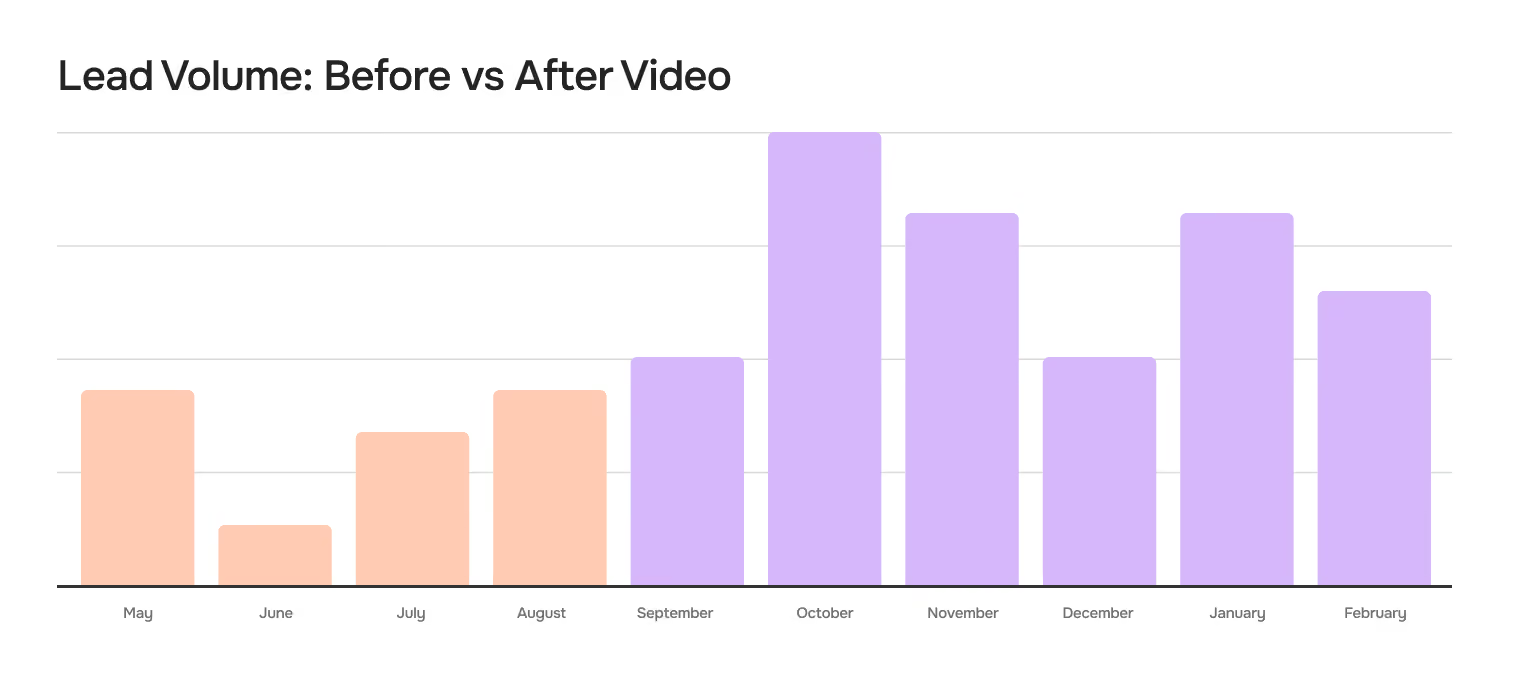
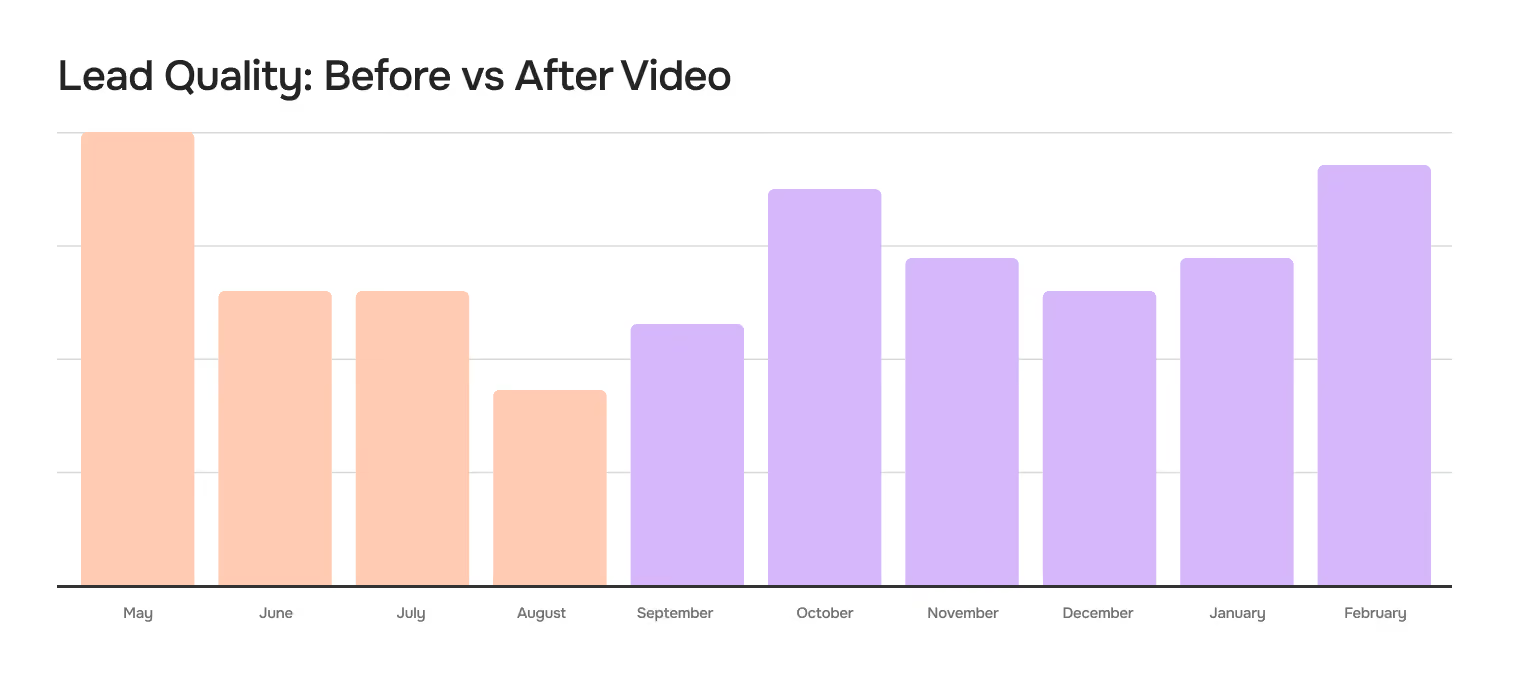
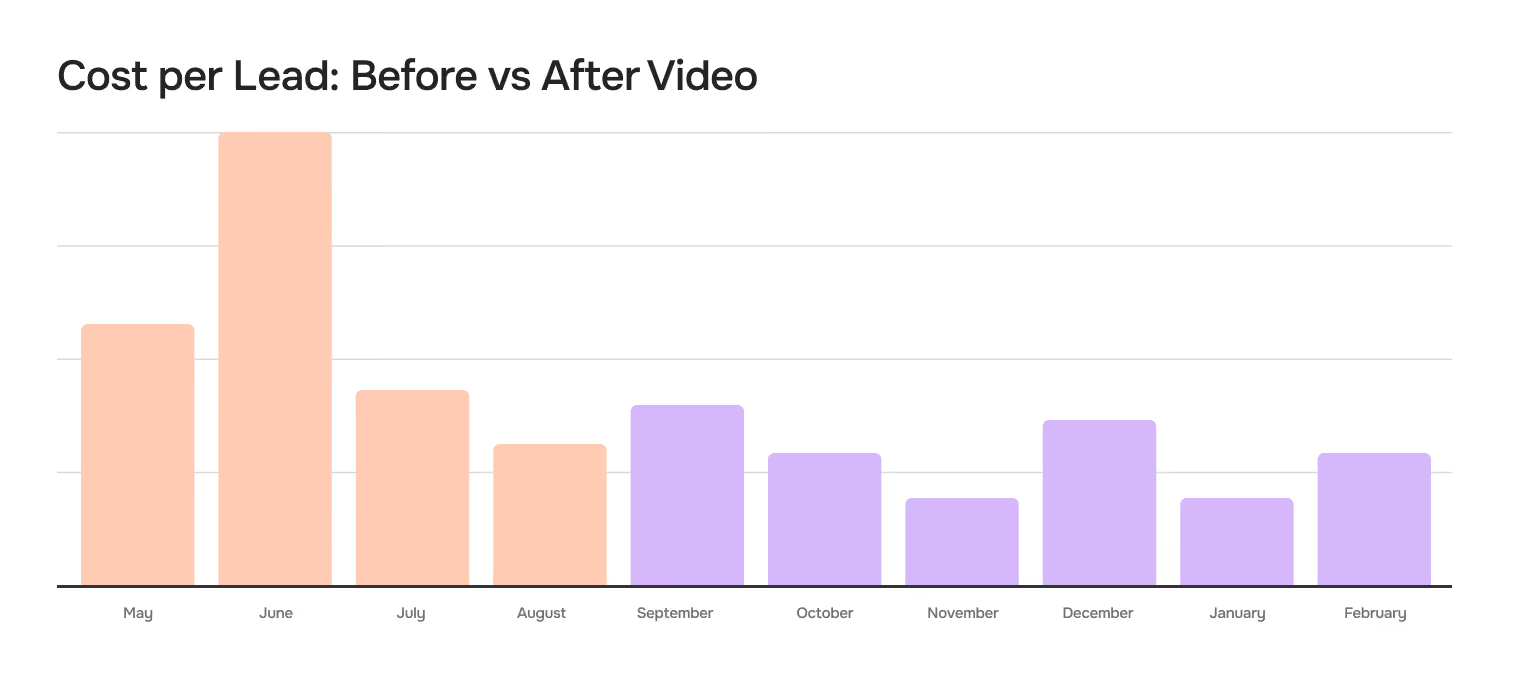
In our work with Upper Hand, we added video alongside static creative. From the first weeks, the video-creative program generated up to 2.5x more leads and cut average CPL by 50%; the qualified-lead share improved by up to 10% versus the pre-video period. We then scaled the strongest formats and kept testing hooks and messaging angles.
Cross-Channel Message and Testing Matrix
One promise can travel across channels, but the ad cannot. Adapt the hook, proof, offer, and KPI to the buyer's starting context.
The destination should repeat the problem, promise, proof, and next step above the fold. A workflow-review ad should not land on generic copy or a newsletter form.
Test the Message Before Cosmetic Variations
With limited budget, test the decision most likely to change who responds and why.
Hypothesis: For [audience and awareness], [angle, proof, or offer] will improve [downstream KPI] versus [control] because [evidence]. Hold major variables constant and decide using one primary metric plus a quality guardrail.
Change one meaningful variable for causal learning; multiple changes create a new concept. Set the KPI, guardrail, runtime, and spend ceiling before launch. A winner becomes the next control. Refresh execution when attention weakens; revisit the angle when qualified response declines.
Measure Creative Beyond CTR
Measure creative as a chain from delivery to revenue. Platform metrics diagnose where a concept loses momentum; qualification and pipeline determine whether it deserves more budget.
For long cycles, use qualification as a leading indicator while opportunities mature. Connect UTMs, GA4, platform IDs, and creative IDs to CRM records, segmented by channel, audience, offer, angle, and landing page. View-through and multi-touch attribution show presence, not proof that an impression caused an opportunity.
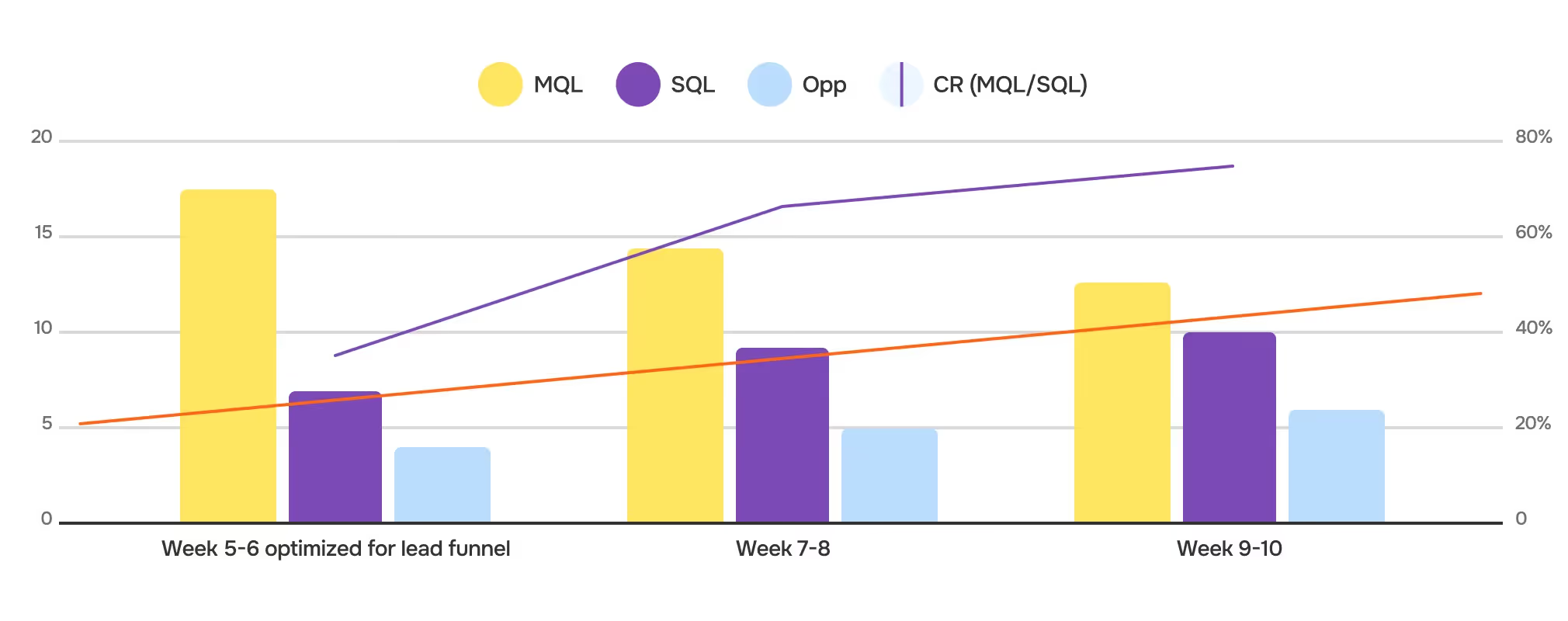
We used that downstream feedback logic with the Cloudvisor Performance Max program. After mapping Form → MQL → SQL → Opportunity → Closed-Won and returning HubSpot stages to Google Ads, MQL-to-SQL conversion was 130.3% higher four weeks after implementation than in the implementation week, while Opportunity volume grew 50%. Those were program-level outcomes, not the effect of one ad.
Five mistakes break the learning loop:
- Copying the same hook, visual, and CTA across channels.
- Designing before agreeing on audience, problem, proof, and offer.
- Using vague claims without a mechanism or evidence.
- Changing audience, offer, copy, and visual in one A/B test.
- Optimizing CTR or CPL while SQL rate and pipeline quality decline.
A connected media and CRM view makes those errors visible before the next budget decision.
Turn Your SaaS Message Into Qualified Pipeline
A strong SaaS ad creative strategy should make every campaign easier to diagnose: which signal, promise, proof, and offer produced qualified progression, and what should change next.
At Aimers, we connect channel strategy with creative production, landing pages, CRO, and CRM measurement. If your campaigns create activity but too little qualified pipeline, a free PPC audit can identify the message, channel, offer, post-click, or tracking constraint.
FAQs
A good B2B SaaS ad makes a specific problem recognizable, promises a credible outcome, supplies relevant proof, and asks for a next step that fits buyer intent. Strong design helps, but it cannot compensate for weak positioning or an offer aimed at the wrong awareness level.

No. Keep the strategic promise consistent, then adapt execution to context. Google responds to expressed intent, LinkedIn to professional relevance, and Meta to fast visual recognition. Reusing an unchanged headline, visual, offer, and CTA usually weakens relevance or attracts the wrong response.
Test the strategic angle first: problem, outcome, proof type, or offer. These choices change who responds and why. Once an angle produces credible downstream signals, test hooks, formats, visuals, or demos; leave wording, CTA, crop, layout, and color for refinement.
Measure delivery, attention, post-click behavior, qualification, and pipeline. CTR, view rate, and landing-page CVR diagnose execution. Scale only after checking MQL and SQL progression, cost per opportunity, pipeline per spend, CAC, and revenue from sufficiently mature cohorts.
SaaS companies should refresh ad creative when engagement weakens, audience response changes, or qualified lead performance declines. Refresh individual elements, such as hooks, visuals, and formats, when attention drops. Revisit the core messaging angle when SQL rates or pipeline quality decline. Use performance data to guide updates rather than changing creative on an arbitrary schedule.
October 7, 2026
October 6, 2026


