SaaS Marketing Funnel: How to Turn Paid Traffic Into Pipeline

November 9, 2026

Clicks are coming in. Forms are filling up. CPL is behaving itself. Sales is still asking the awkward question: where are the opportunities?
At Aimers, we see this when paid acquisition ends at the event the ad platform can count. If it sees only form submissions or trial starts, it will happily find more of them, whether or not they ever become pipeline.
A useful SaaS marketing funnel follows paid traffic further: qualified paid visit → meaningful conversion → MQL/PQL → SQL → opportunity → sourced pipeline. Let’s trace that path, find the handoff draining value, and decide what to fix before buying another click.
What Is a SaaS Marketing Funnel?
A SaaS marketing funnel is an operating and measurement model that connects acquisition with qualification, opportunity creation, and pipeline. Unlike awareness, consideration, and decision, its stages are observable handoffs that paid media, marketing, product, sales, and RevOps can define, timestamp, and improve. For teams investing in paid acquisition for SaaS, those checkpoints show whether media creates qualified opportunities or only surface-level conversions.
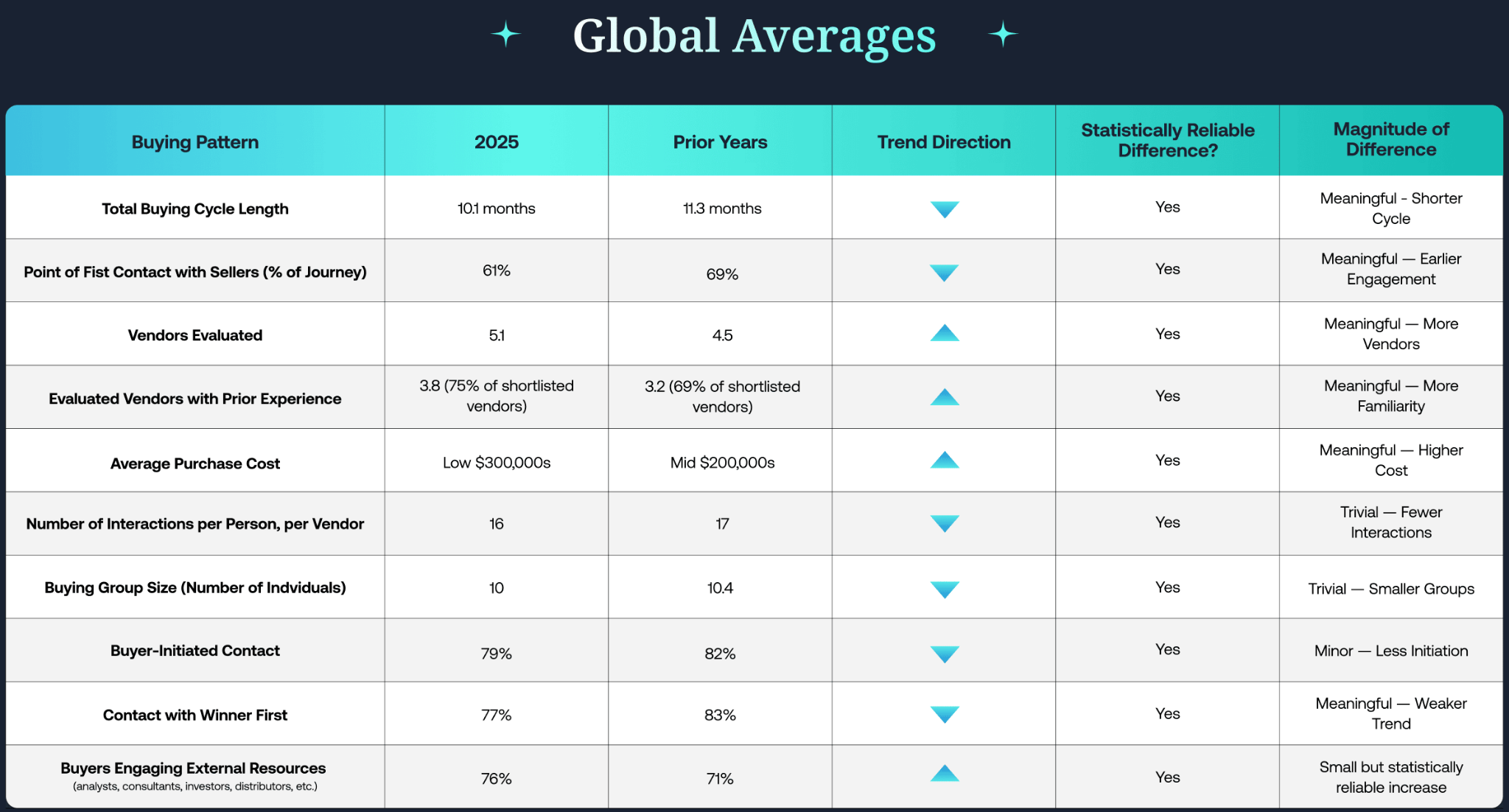
That distinction matters because buyers rarely move in a straight line. In 6sense’s 2025 study of nearly 4,000 B2B buyers, first seller contact occurred around 61% of the way through the journey, and the eventual winner appeared on the Day One shortlist in 95% of purchases. The funnel cannot recreate every hidden interaction, but it can give each team consistent checkpoints.
This operational view complements the broader distinction between demand generation vs lead generation. Demand may build before a buyer becomes identifiable; the paid funnel measures what happens once acquisition and conversion data enter the system.
The Paid Traffic-to-Pipeline Model
The model uses six stages. Each one should record a genuine increase in fit, intent, or commercial commitment, rather than another event that happens to be easy to count.
Paid traffic-to-pipeline funnel: volume declines as commercial evidence becomes stronger.
An MQL combines agreed account fit with marketing engagement. A PQL qualifies through product behavior associated with likely value, not any signup or login. An SQL is a lead that sales has accepted for active follow-up. An opportunity requires a documented commercial process. Sourced pipeline is opportunity value attributed to the channel under agreed rules. Influenced pipeline includes opportunities the channel touched without necessarily originating them.
Sales-led SaaS usually moves from a demo or audit through MQL, SQL, and opportunity. PLG replaces marketing engagement with activation and product-use signals. Hybrid companies may route high-value accounts to sales while smaller users remain self-serve. These paths can differ without changing the commercial definitions at the bottom of the funnel.
Directional SaaS Funnel Benchmarks
Benchmarks can show where to investigate, but only when the stage definitions match. In our audits, we use them as reference points, then narrow the comparison by traffic source, GTM motion, ACV, offer, and qualification rules. A 5% form rate on branded search and the same rate on cold paid social describe two very different jobs.
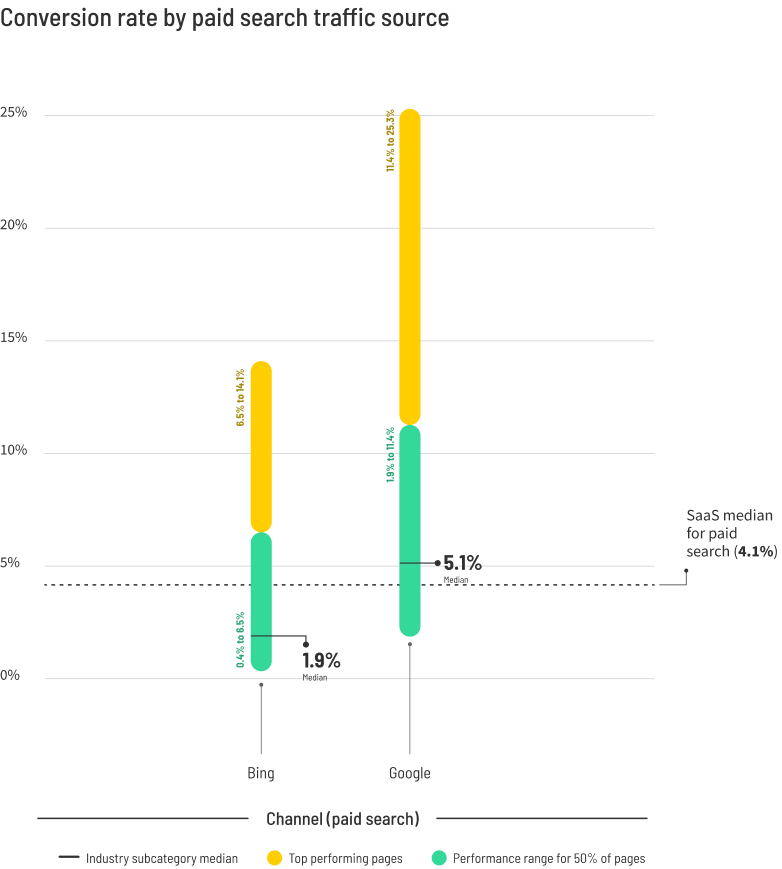
Unbounce calculated its SaaS landing-page medians from a wider dataset covering more than 41,000 landing pages, 464 million unique visitors, and 57 million conversions between July 2023 and July 2024. First Page Sage reports the sales-led ranges from more than 50 B2B SaaS clients, primarily in the $10M–$100M revenue band. The ChartMogul and ProductLed 2026 report covers 200 B2B software products. These datasets measure different motions and conversion events, so use each number only for the stage it actually describes.
How Funnel Costs Compound
The same conversion rate can hide very different acquisition costs. At a 5.1% landing-page CVR, a $5 CPC implies a CPL of roughly $98; at a $15 CPC, the implied CPL is about $294, before either lead reaches qualification.
Conversion rates become useful when they expose the economics behind a dashboard. Assume one monthly cohort starts with $10,000 in paid media at an average CPC of $5. With a 5% meaningful conversion rate, 40% lead-to-MQL rate, 35% MQL-to-SQL rate, 40% SQL-to-opportunity rate, and 30% win rate, the same budget moves through the funnel like this:
The $100 CPL becomes a $250 cost per MQL, about $714 per SQL, $1,786 per opportunity, and roughly $5,952 in paid-media CAC. This is the part many platform dashboards politely leave out: the spend stays fixed while the denominator shrinks at every handoff.
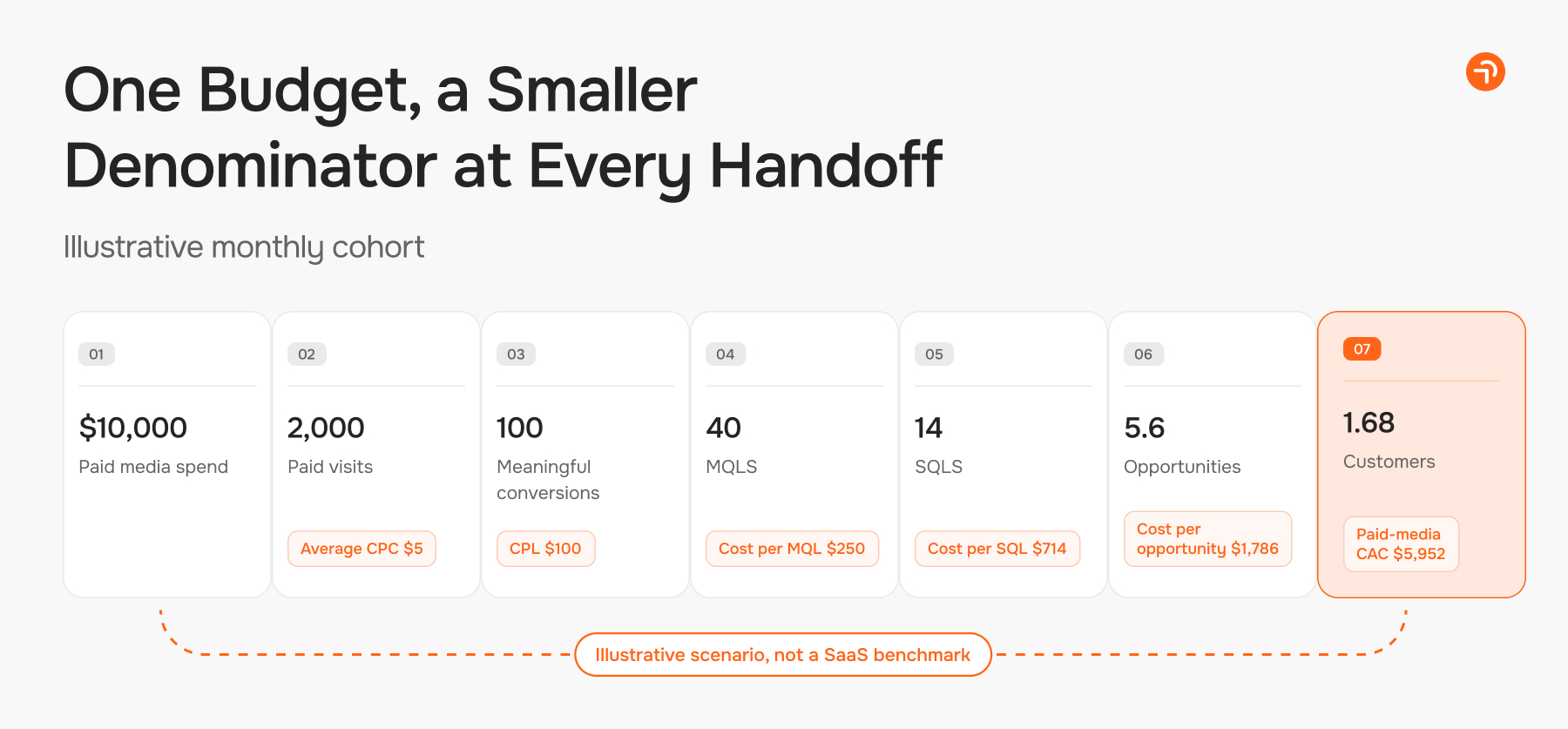
Those inputs are illustrative, not SaaS benchmarks. Replace them with mature cohort data before setting targets. The model earns its keep by showing where the economics break. A higher CPC can be acceptable when stronger qualification lowers cost per opportunity; a cheaper CPL is no bargain when sales rejects most of the volume.
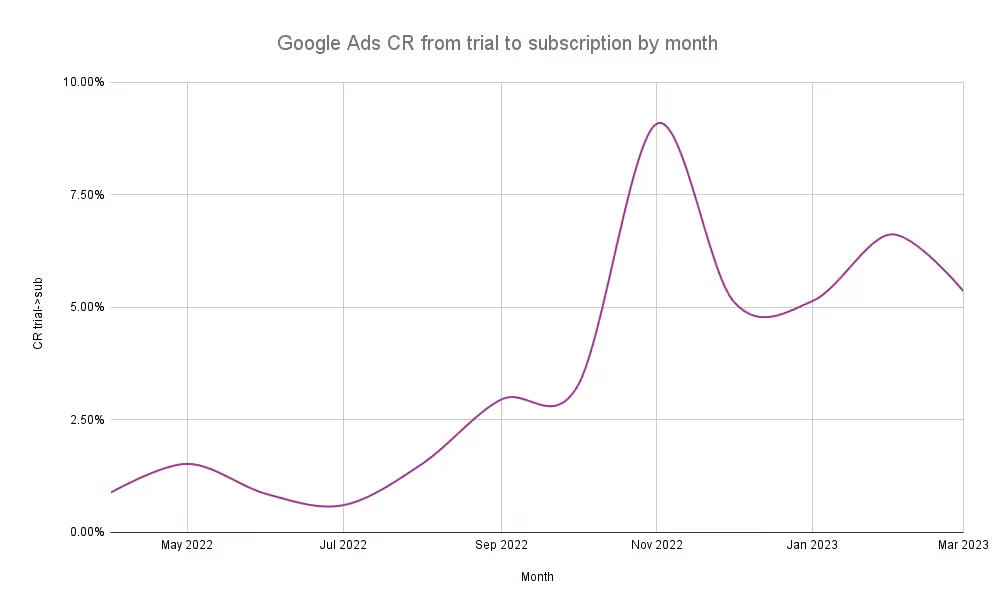
The same logic applies to product trials and PPC lead generation for SaaS. In our work with Knack, we connected acquisition to trial-to-subscription performance instead of treating every trial as success. Across the broader Google Ads and Microsoft Ads program, trial-to-subscription conversion increased by 317%, while subscription CPA decreased by 69%.
Four Jobs That Move Paid Traffic Into Qualified Pipeline
The funnel advances when teams attract commercially relevant visitors, match the conversion path to intent, qualify and route the response, and return downstream outcomes to the ad platforms.
1. Attract Qualified Paid Traffic
Qualified traffic comes from a buyer who can plausibly purchase and arrives with a relevant problem or evaluation context. At Aimers, we connect campaigns, queries, and audiences with CRM progression, then use that evidence to refine targeting and exclusions. CTR and CPC help diagnose delivery; neither proves that the visitor belongs in the pipeline.
Someone searching for a free template and someone comparing enterprise implementation options may click the same ad. Commercially, they are nowhere near the same lead.
For Google Ads, group the queries in the official Search Terms report by problem, category, competitor, and purchase intent. For LinkedIn Ads, combine company, function, seniority, skills, and Matched Audiences; LinkedIn’s targeting guidance recommends pairing relevant expertise with seniority when decision influence matters. Segment retargeting by behavior instead of sending every visitor the same message.
2. Match the Offer and Landing Page to Intent
A landing page converts qualified traffic when its promise, proof, and next step match what the visitor is ready to evaluate. Many SaaS funnels ask “Book a demo” to carry the entire conversion strategy. That is a lot of responsibility for one button. A practical B2B SaaS offer strategy gives earlier-stage visitors a useful diagnostic or product proof while preserving direct paths to pricing, trials, and sales for higher-intent buyers.
Carry the ad’s audience, problem, and promise into the landing-page hero. Place customer outcomes, product evidence, integration or security details near the decision, and collect only the information needed to deliver, qualify, or route the offer. Define the meaningful conversion before launch so a download, tour engagement, activation event, and demo request do not share one generic label.
Our work with Upper Hand shows why paid media and post-click experience belong in the same diagnosis. Within the broader three-month PPC and CRO program, website conversion rate increased by 345.34% in the first month, while cost per MQL across Google Ads and Facebook Ads fell by more than 50%. The result came from coordinated campaign and conversion work, not one headline or button change.
3. Qualify and Route Leads or Product Users
Qualification turns a response into a lead or product user the business can act on. Effective SaaS lead generation services make the criteria visible: company fit, use case, role, intent, product behavior, and explicit disqualifiers. A score may summarize the result, but it should not hide why someone qualified.
A trial becomes a PQL only after product behavior indicates meaningful value. Sales-led teams should route high-fit, high-intent actions with source, campaign, offer, page, and stated use case attached. Lower-intent contacts need an appropriate nurture or retargeting path rather than the same sequence as a demo request.
Sales often spots a traffic-quality problem before the dashboard does. Record structured rejection reasons and trace recurring patterns back to campaigns, queries, audiences, and pages. A higher CPL can still be healthier when MQL-to-SQL conversion and opportunity creation improve.
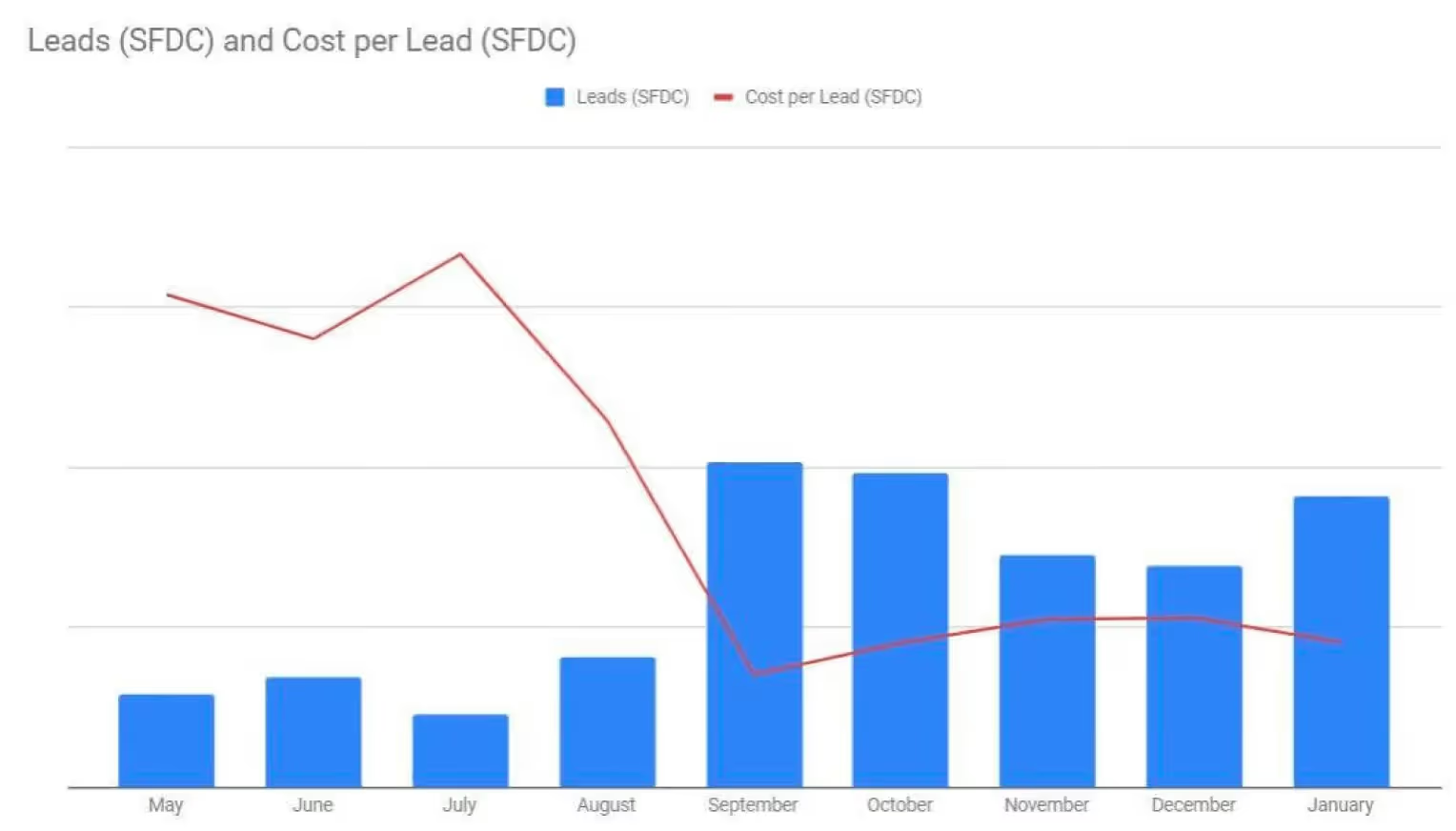
We saw that dynamic in our work with Mixpanel. The LinkedIn account spanned seven campaign groups and more than 60 campaigns, while inconsistent UTMs limited visibility into Salesforce lead quality. We standardized tracking, connected Lead Gen Forms with source data, and introduced weekly quality reviews. Across the broader first-six-month program, qualified leads increased by 164%, CPL fell by 67%, and total spend decreased. What made the CPL actionable was its connection to a qualified CRM outcome.
4. Return Qualified Outcomes to Ad Platforms
Ad platforms should receive outcomes that happen after the initial conversion. A reliable CRM-connected paid media analytics setup preserves ad identifiers and UTMs, maps stable lifecycle stages, imports qualified events, and monitors match rates, duplicates, delays, and definition changes.
Google Ads Enhanced Conversions for Leads combines identifiers such as GCLID with hashed first-party lead data and later CRM outcomes. LinkedIn’s qualified leads optimization can use MQL or SQL data from Conversions API or CRM Sync; LinkedIn advises using one qualified-lead event source to prevent duplication. Use the deepest event that occurs consistently enough for optimization, while keeping later stages in reporting.
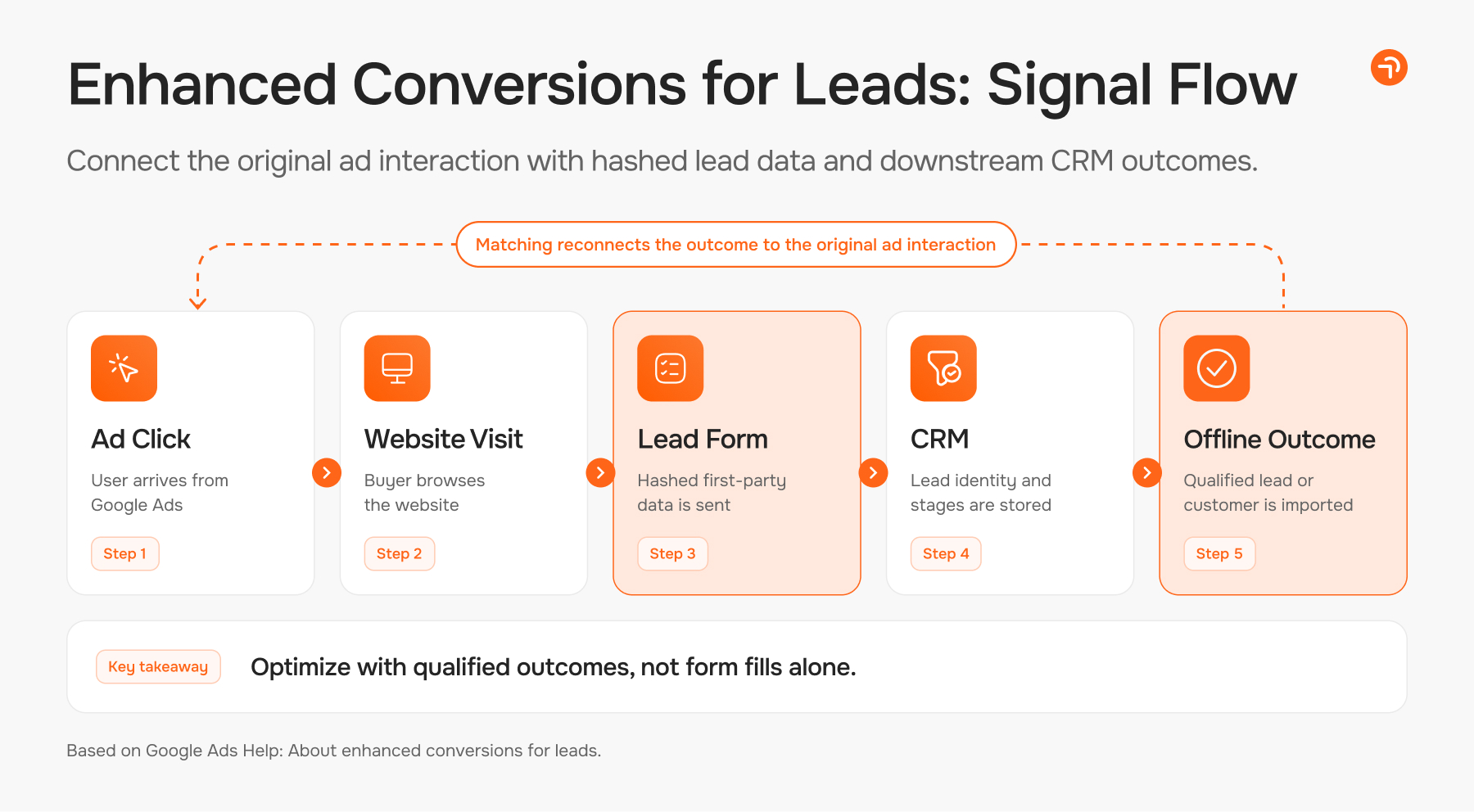
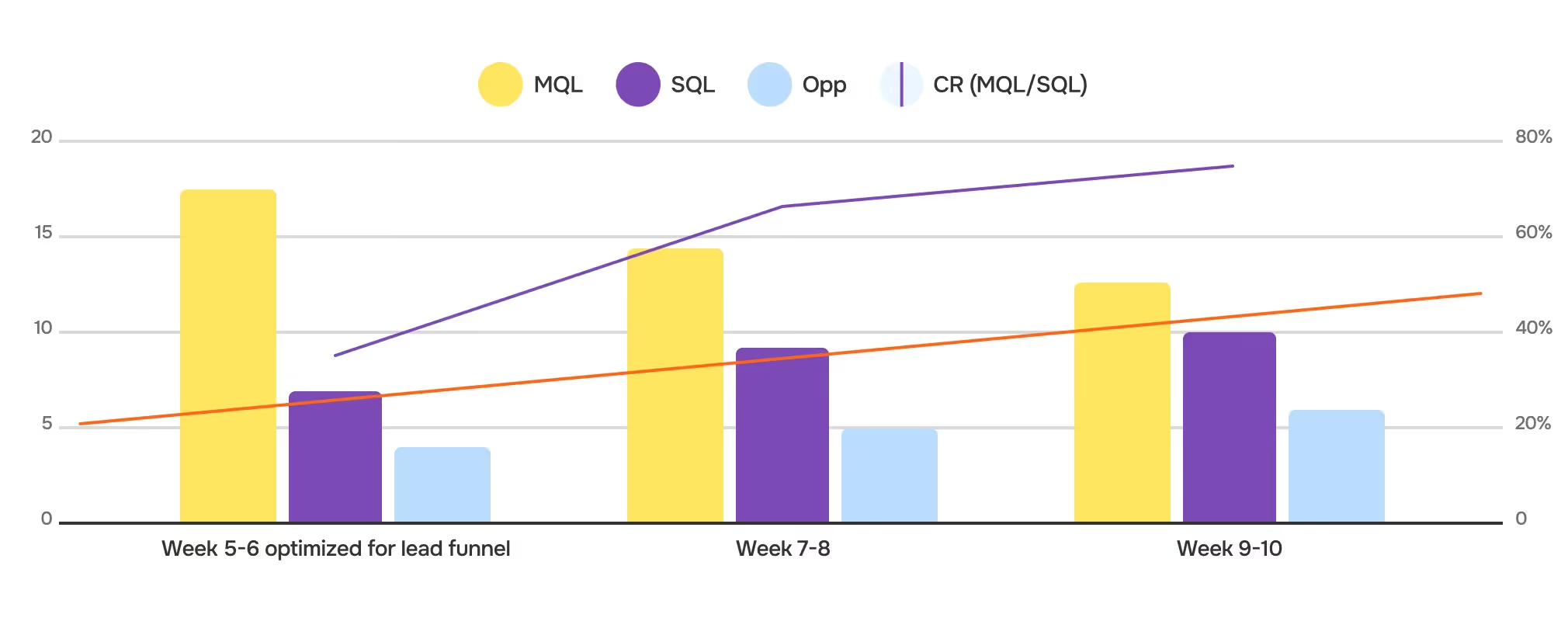
We used that approach with Cloudvisor. We mapped Form → MQL → SQL → Opportunity → Closed-Won, integrated HubSpot stages with Google Ads, and gradually moved optimization toward qualified outcomes. Four weeks after full-funnel implementation, MQL-to-SQL conversion was 130.3% higher than in the implementation week, and opportunity volume increased by 50%. Those results reflect the broader staged program, including cleaner definitions and campaign changes, rather than data integration alone.
Measure Every Handoff and Fix the Highest-Value Leak
Measure volume, conversion rate, and cost at every handoff, then prioritize the failure that removes the most qualified pipeline. The largest percentage drop is not always the most expensive business problem.
Platform metrics remain useful diagnostics. CTR can reveal message relevance, CPC can expose auction pressure, and CPL can show acquisition efficiency. CRM progression decides whether those costs create pipeline. Good B2B marketing analytics for SaaS keeps those systems connected without treating their numbers as interchangeable.
Track stage conversion as next-stage records divided by current-stage records, cost per stage as spend divided by records reaching that stage, and pipeline-to-spend as sourced opportunity value divided by paid spend. Label the last metric as potential pipeline output, not revenue or ROI. Report sourced and influenced pipeline separately.
Then work backward from allowable paid-media CAC, the share of acquisition cost available to advertising after sales, management, creative, landing pages, and tools. Maximum cost per SQL equals allowable paid-media CAC multiplied by the SQL-to-customer rate. Maximum cost per opportunity equals allowable paid-media CAC multiplied by win rate. These ceilings give the channel team a commercial constraint instead of an arbitrary CPL target.
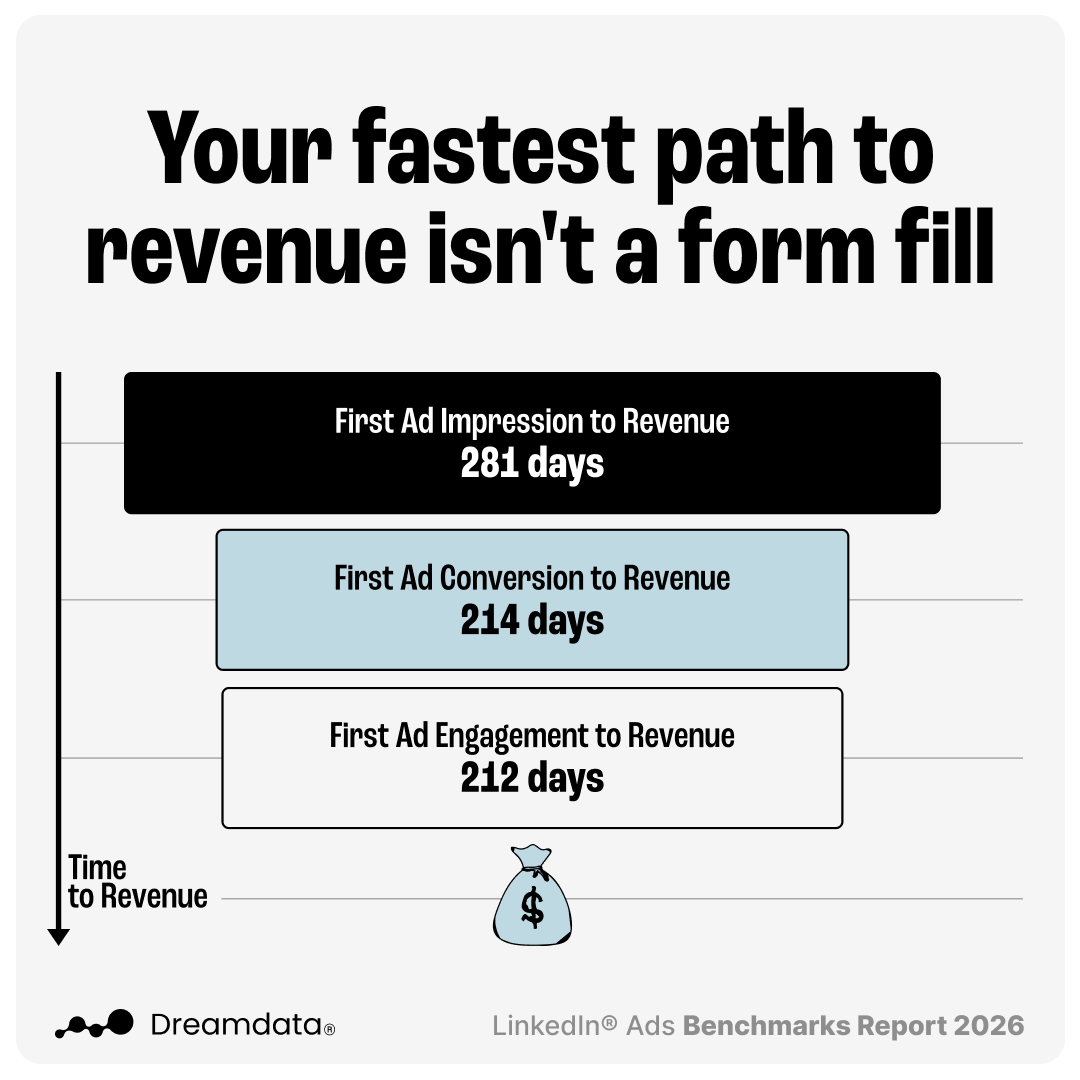
Revenue also arrives later than platform feedback. Dreamdata’s 2026 LinkedIn Ads analysis covered more than 66 million sessions and 3.5 million customer journeys and found an average of 281 days from first LinkedIn ad impression to revenue. That ad-specific interval is context, not a universal SaaS benchmark. Review traffic and conversion signals weekly, stage progression monthly, and CAC, win rate, and closed revenue in mature cohorts.
Paid Funnel Leak Diagnostic
Find the first stage where qualified progression breaks, then verify the cause in the system closest to that handoff.
Do not repair a metric merely because it moved in the wrong direction. If CPL rises while cost per opportunity falls, the funnel may be healthier. When the break is post-click, SaaS conversion rate optimization should connect page behavior with qualification and opportunity data rather than stop at form rate. Prioritize the leak with the greatest plausible effect on opportunity value.
Find the Biggest Leak in Your Paid Funnel
Before buying more traffic, check whether the funnel has earned it. At Aimers, we audit targeting, campaigns, offers, landing pages, conversion tracking, and CRM progression to show where paid acquisition stops producing qualified pipeline. If the ad dashboard looks healthy while sales sees something else, get a free PPC audit and let’s find the handoff costing you the most.
FAQs
A SaaS marketing funnel connects acquisition with qualification, opportunity creation, and pipeline. For paid media, it tracks qualified visits, meaningful conversions, MQLs or PQLs, SQLs, opportunities, and sourced pipeline. The exact qualification criteria should reflect the company’s sales motion and product model.

Paid traffic generates leads without opportunities when targeting, offers, qualification, routing, or sales acceptance preserve activity but lose commercial fit. Compare campaigns by MQL/PQL, SQL, and opportunity progression, then use structured CRM rejection reasons to locate the first weak handoff.
Optimize the stage where a plausible improvement would create the most additional qualified opportunity value. That may differ from the stage with the lowest conversion rate. Confirm the diagnosis with source-level evidence and consider sales capacity before shifting budget or increasing volume.
Preserve ad identifiers and first-party lead data, map consistent CRM stages, and return qualified outcomes through supported integrations. Google Ads uses Enhanced Conversions for Leads and Data Manager; LinkedIn supports Conversions API and CRM Sync. Monitor match quality, duplication, delays, and definition changes.
SaaS companies should review paid traffic, search terms, and landing-page conversions weekly; lead qualification and MQL-to-SQL progression monthly; and pipeline, CAC, win rate, and revenue across mature cohorts quarterly. The review cadence should reflect the sales cycle. For longer B2B sales cycles, use qualification and opportunity progression as leading indicators while waiting for closed-won results.
October 7, 2026
October 6, 2026