Retention Marketing for SaaS: Paid Campaigns for Expansion and Churn Reduction

October 21, 2026

Your CRM knows the customer. Product analytics knows what they use. Billing knows what they pay and when they renew. Yet paid media often loses that context after the contract is signed. The account either keeps seeing new-logo ads or disappears from paid programs altogether.
In our work at Aimers, post-sale paid media performs best when it responds to a verified customer state. An incomplete setup can justify onboarding support. Sustained usage may support an expansion case. A recorded churn reason can shape a credible win-back message. The same signals can also tell us to stop advertising: a low-usage account may need customer success, while an unresolved service failure should suppress promotion entirely.
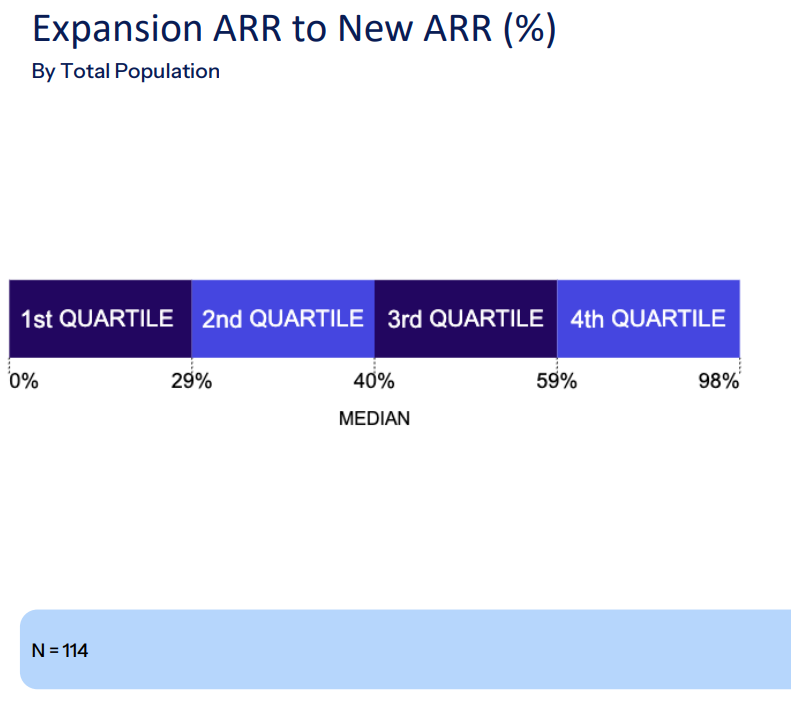
The commercial opportunity makes that discipline worthwhile. Benchmarkit’s 2026 study of 342 B2B SaaS and AI-native companies found that expansion generated 40% of net new ARR at the median. That does not make every customer an upsell opportunity or every ad-touched upgrade a media result.
Paid retention campaigns need a clear lifecycle job, reliable first-party customer data, useful exclusions, and measurement that separates influenced revenue from incremental impact. Get those four pieces right, and paid media can reinforce customer value without pretending to solve product, support, or billing problems it cannot fix.
Where Paid Campaigns Fit in Retention Marketing for SaaS
Paid media supports retention marketing for SaaS when it reinforces a useful post-sale action for a known customer or account. It extends product, email, customer success, sales, and billing communication into paid channels; it does not replace those systems.
Four jobs define the scope:
- Churn prevention: address a recoverable risk before cancellation or non-renewal.
- Expansion: grow recurring revenue through more seats, usage, plans, products, or add-ons.
- Win-back: re-engage a canceled or churned customer after a credible change in value.
- Involuntary churn recovery: resolve failed payments through billing and dunning first. Advertising usually has a limited role.
Customer marketing is different from prospect retargeting. A pricing-page visitor needs proof that the product fits a problem. A new customer needs help reaching first value. A power user approaching a plan limit may need an expansion path. Calling all three audiences “retargeting” hides different intent, economics, and success metrics.
At Aimers, we treat each row as a changing customer state, not a permanent list. A product event, support escalation, renewal, upgrade, or cancellation should alter what the account sees and what it stops seeing.
This distinction also separates post-sale programs from acquisition and demand generation. A SaaS retargeting agency working with customer audiences should be able to use CRM stages, product events, account-level exclusions, lifecycle timing, and retained or expanded revenue signals, not only website visits and ad engagement.
Paid media can amplify clear value and close a communication gap. It cannot repair weak onboarding, slow support, a poor price-to-value relationship, failed billing, or an unresolved security concern. We start with the customer behavior that needs to change, then decide whether another paid touchpoint can realistically help.
When Paid Retention Campaigns Make Sense
Paid retention campaigns are worth testing when a reliable signal identifies a valuable next action, paid media can reach someone the owned journey may miss, and the expected commercial value covers activation and measurement costs.
The economics belong at cohort level. A small group of high-value renewal accounts may justify tailored creative and coordinated account coverage. A large pool of low-value users may not, once matching, production, and measurement costs are included.
Sometimes our recommendation is to delay the campaign. Fixing the trigger, exclusions, destination, or measurement plan first is usually cheaper than running an always-on customer audience that cannot distinguish assistance from upsell.
Build the Data Foundation Before You Launch
A retention audience needs to answer four questions: who is eligible, why they are eligible now, what they should see, and when the campaign must stop. Most SaaS teams already hold the required signals. The operational challenge is making CRM, product, billing, customer success, support, and ad platforms agree on the customer’s current state.
Use a durable account ID or customer ID to connect those systems. Email addresses, phone numbers, cookies, and platform identifiers help with matching, but they should not be the business key. One B2B account may include users, an admin, a champion, finance, procurement, and an executive sponsor. Contacts change; the commercial relationship remains attached to the account.
Define lifecycle logic upstream, where marketing, RevOps, customer success, and product can review the same rules. Then send eligible identifiers to each platform and return exposure and downstream outcomes to the measurement layer.

Separate Permission From Hashing
Hashing protects identifiers during matching; it does not create permission to use them. Google’s Customer Match policy limits uploads to information collected in a first-party context and requires consent where law or Google policy requires it. For EEA users, Google requires granted signals for both ad_user_data and ad_personalization before records can be used for Customer Match ad personalization.
Google supports SHA-256 hashing before upload or through its upload process. LinkedIn likewise hashes contact-list emails in the browser or accepts SHA-256-hashed emails. Keep opt-outs, deletion requests, consent changes, and platform eligibility connected to every destination rather than updating the CRM alone.
Do not pass personally identifiable information in URLs, infer sensitive attributes, or place advertising tags on pages containing sensitive customer information. Platform policy is the minimum; legal and privacy teams should approve the operating rules for the company’s regions and data.
Define Entry, Exit, Suppression, and Refresh Together
Every audience needs:
- Entry: qualifying event, recency window, customer state, and value or health threshold.
- Exit: activation, upgrade, renewal, reactivation, or confirmed no-fit status.
- Suppression: acquisition audiences, open critical incidents, failed payments, active disputes, opted-out records, and completed actions.
- Refresh and deletion: the cadence for propagating changes and removing ineligible records.
- Ownership: the person responsible for sync failures, audience anomalies, and contradictory messages.
Refresh speed should match the decision. Renewals, cancellations, and support escalations may need daily updates; a slower feature-adoption program may not.
At publication time, LinkedIn requires at least 300 matched member accounts for an active ad set, and company-list uploads need at least 300 rows. Role filters can reduce delivery further. In the EEA and Switzerland, LinkedIn only matches members who have opted in, so list size can contract again. Check feasibility before producing creative rather than mixing incompatible lifecycle states to clear a threshold.
We also trace sample records through the full workflow before launch. A customer who renewed on Monday should not still receive a renewal ad on Friday.
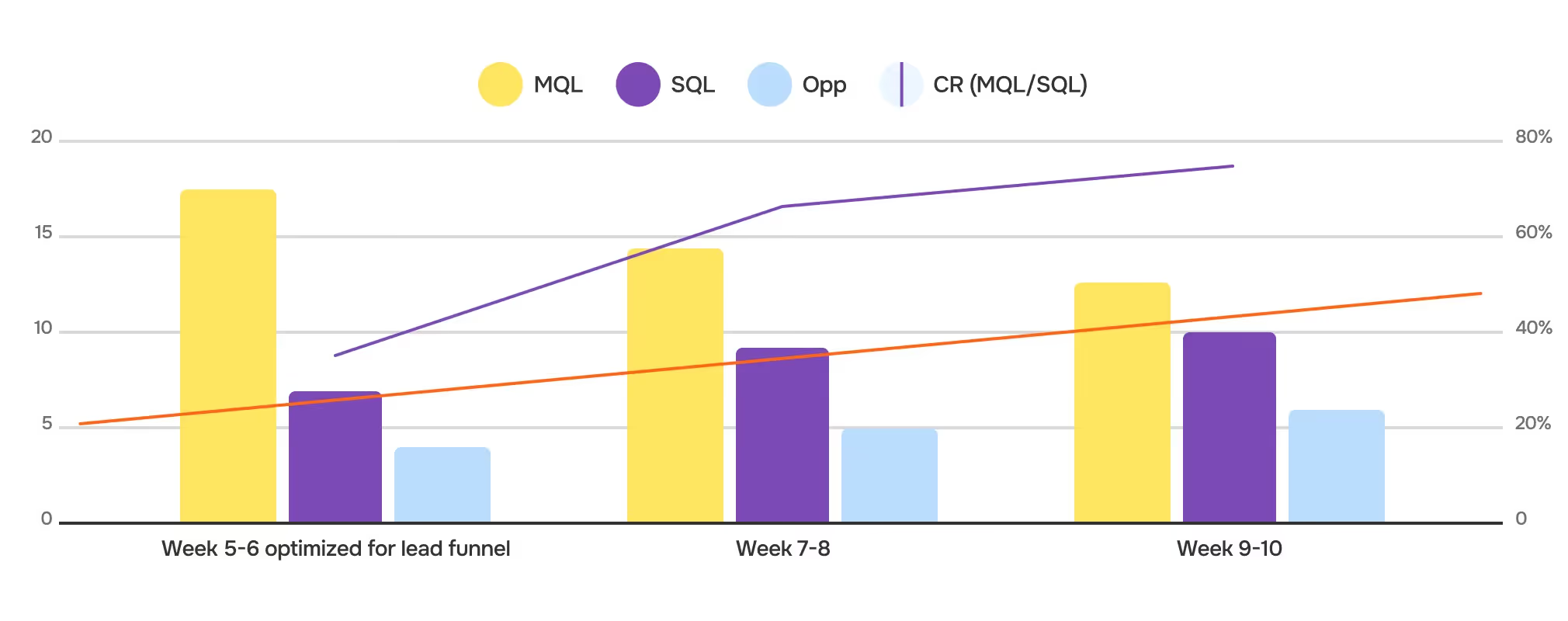
The same feedback-loop discipline matters beyond retention. In our work with Cloudvisor, we mapped Form → MQL → SQL → Opportunity → Closed-Won and returned HubSpot conversion stages to Google Ads. Four weeks after full-funnel implementation, MQL-to-SQL conversion was 130.3% higher than in the implementation week, while Opportunity volume increased 50%. This was an acquisition program, not a retention test. The transferable lesson is that platforms optimize more usefully when downstream business outcomes return to the system.
Segment Customers by Lifecycle, Usage, and Account Health
Start with lifecycle state, then refine the audience using product behavior, account economics, role, and risk context. This order keeps a valuable account with an unresolved service issue out of an expansion campaign and prevents every inactive user from becoming a churn signal.
Product signals are hypotheses, not diagnoses. A 30% usage decline could reflect seasonality, a completed project, a tracking change, a departing champion, an integration failure, or lost product value. Before launching churn prevention campaigns, validate the cause or require a second signal. High-value accounts may need human review.
Role matters just as much. Users need workflow help, admins need adoption and control, finance needs economics, and executive sponsors need outcome evidence. Our B2B retargeting ad examples show how behavior, recency, lifecycle, and offer change creative. Customer retargeting adds account role and post-sale outcome to that logic.
Seven Paid Campaign Plays for Retention and Expansion
Each campaign should specify a trigger, audience, message, CTA, exclusion, product metric, and revenue outcome before spend begins. We use that brief to keep customer marketing campaigns tied to a real lifecycle job rather than a platform audience label.

1. Activation and Onboarding Reinforcement
Trigger and audience: New customers who have not completed a meaningful activation event within the expected onboarding window, segmented by role and implementation path.
Message and CTA: Show one useful outcome. Ask the customer to complete setup, watch a short workflow guide, join office hours, or open the unfinished step.
Exclusion and risk: Remove activated users, planned implementations, and open critical support cases. Slow activation may reflect rollout timing rather than confusion.
Metrics: Activation rate and time-to-value lead; retained MRR for a mature cohort is the revenue outcome.
PLG example: A project management SaaS identifies paid workspaces that have not invited a second user within seven days. A short video demonstrates one collaborative workflow and deep-links to the invite screen. The audience exits when the invite event fires.
2. Feature Adoption
Trigger and audience: Healthy customers who use the core product but have not adopted a relevant capability.
Message and CTA: Connect the feature to a job they already perform. Direct them to the feature, a focused tutorial, or training.
Exclusion and risk: Exclude accounts where the feature is unavailable, irrelevant, already active, or blocked by an integration issue. Low use does not prove unmet demand.
Metrics: Feature activation and repeat use lead; renewal or expansion contribution follows only after a suitable observation window.
3. Seat or Usage Expansion
Trigger and audience: Healthy accounts approaching a genuine seat, storage, transaction, or capacity limit through sustained demand.
Message and CTA: Explain what additional capacity unlocks. Invite the customer to add teammates, compare plans, estimate value, or speak with the account owner.
Exclusion and risk: Suppress declining accounts, surprise overages, recent downgrades, billing concerns, and contract disputes. Never expose private usage in public ad copy.
Metrics: Activated seats and plan-comparison starts lead; expansion MRR or ARR, cost per expansion, and gross-margin-adjusted revenue decide value.
4. Cross-Sell and Add-On Adoption
Trigger and audience: Healthy customers whose profile and behavior indicate a credible adjacent job for another module, integration, or add-on.
Message and CTA: Show the incremental problem solved and how the add-on fits the existing workflow. Use a use-case page, integration setup, scoped demo, or account-team conversation.
Exclusion and risk: Exclude existing users, poor-fit accounts, and customers in recovery. A list of “customers without Product B” is not proof of demand.
Metrics: Add-on evaluation and activation lead; attach rate, expansion ARR, and gross-margin-adjusted revenue assess the result. These guardrails make upsell and cross-sell SaaS campaigns more defensible than a blanket product announcement.
5. Renewal Confidence and Value Recap
Trigger and audience: Accounts entering a defined pre-renewal window, especially when finance, procurement, or executive stakeholders rarely use the product.
Message and CTA: Make realized value visible with outcome recaps, implementation proof, or relevant roadmap context. Route the recipient to a value report, business review, or account owner.
Exclusion and risk: Suppress renewed accounts, sensitive negotiations, and unresolved service or security issues. Coordinate terms and timing with customer success and sales.
Metrics: Value-report engagement and business reviews lead; renewal rate, retained ARR, and contraction are the commercial outcomes.
Enterprise example: A security SaaS enters a 90-day renewal window with strong admin usage but weak executive visibility. LinkedIn reaches eligible finance and executive roles with an outcome recap, while accounts with open security incidents remain excluded.
6. Churn-Risk Recovery
Trigger and audience: Customers with a verified, recoverable decline in adoption, usage, or stakeholder engagement after service, billing, product, and tracking issues have been checked.
Message and CTA: Lead with help, training, or a useful return point. Ask the customer to resume a workflow, access a resource, or book a success review.
Exclusion and risk: Exclude failed payments, critical incidents, legal disputes, unsupported use cases, and accounts requiring direct human intervention. Seasonality and role changes are common false positives.
Metrics: Recovered activity leads; renewal rate, retained ARR, contraction, and incremental retained revenue determine whether the campaign supported SaaS churn reduction.
7. Win-Back After Churn
Trigger and audience: Former customers with an addressable churn reason and a material product, pricing, onboarding, or service change that responds to it.
Message and CTA: Explain what changed without pretending the original problem never happened. Offer a reason-specific update, restart assessment, scoped trial, or improved migration path.
Exclusion and risk: Suppress unresolved payment, legal, security, and service disputes, plus accounts that remain economically unviable.
Metrics: Product re-entry and restart completion lead; customer reactivation rate, reactivation MRR, and retained revenue after return show durability.
Win-back example: An analytics customer left because implementation required engineering support. Six months later, the vendor releases a no-code connector. Its SaaS win-back campaigns target only customers with that recorded implementation barrier and stop after reactivation or a confirmed no-fit response.
Choose the Right Paid Channel
Choose the channel after defining the customer state, stakeholder, and lifecycle job. We ask where the relevant person can be reached with enough context and volume to act, not simply where a list can be uploaded.
Google Customer Match can reach eligible customer lists across Search, Shopping, Gmail, YouTube, and Display, subject to account and policy eligibility. A practical Customer Match SaaS workflow still begins with customer state and consent, not the upload screen. Search answers active intent, video demonstrates a workflow, and Display provides reinforcement. A PPC remarketing agency for SaaS should coordinate list status, query themes, destinations, exclusions, and frequency rather than treat Customer Match as generic remarketing.
LinkedIn is often the stronger fit when admins, finance, procurement, or executive sponsors influence adoption, expansion, or renewal. Meta can provide broader reach for PLG audiences and simpler product education. The official Meta Customer List Custom Audiences Terms require the necessary rights, permissions, and lawful basis for uploaded data. A paid social agency for SaaS should adapt lifecycle logic to each platform instead of duplicating the same list and creative everywhere.
If a cohort cannot meet delivery requirements without combining incompatible customer states, do not force the campaign. More platforms are useful only when they add incremental reach or a different communication job.
Creative and CTA Rules by Customer State
Retention creative should make the next useful action obvious without revealing how much the company knows about the customer. Use private product, billing, health, and support signals to determine eligibility, not as ad copy.
Match proof to role. Users need workflow value; admins need adoption and governance; finance needs economics; executives need outcomes and risk reduction. Separate variants are useful only when the argument, CTA, or destination genuinely changes.
The click must preserve the same lifecycle logic. Existing customers should not submit a generic lead form to reach a team that already knows their account. An activation ad should open setup. An expansion ad should lead to the relevant plan or account owner. A recovery ad should connect the customer with help.
We saw the effect of destination friction in our A/B test for Upper Hand. Replacing a multi-step demo journey with one five-field form increased Page View → Customer conversion from 0.17% to 0.78%, a 4.6x lift over a 3-4 week test with a 50/50 traffic split. This was an acquisition CRO test, not a retention campaign. The same operational lesson applies after the sale: precise audience and creative work can be lost when the destination adds unnecessary steps.
Finally, manage frequency across the customer program, not one platform at a time. Creative rotation cannot compensate for an audience that should have exited. Once the customer activates, upgrades, renews, re-engages, or becomes ineligible, the campaign should stop.
Budget Paid Retention Campaigns by Expected Value
Set the budget from the value of the eligible cohort, not a standard percentage of acquisition spend. We work backward from the incremental outcome the campaign could plausibly create and the gross profit attached to it.
The confidence factor, between 0 and 1, discounts uncertainty in match rate, sample size, measurement, creative, and the lift assumption. Use the company’s own comparable cohort as the baseline; an external benchmark cannot reveal how many customers would have upgraded or renewed without the campaign.
Suppose an expansion test has these assumptions:
The ceiling is 210 × 0.02 × $5,000 × 0.5 = $10,500. After fixed costs, the media ceiling is $8,000. These are illustrative inputs, not benchmarks. If realistic delivery requires $15,000, the test does not pass the current value case.
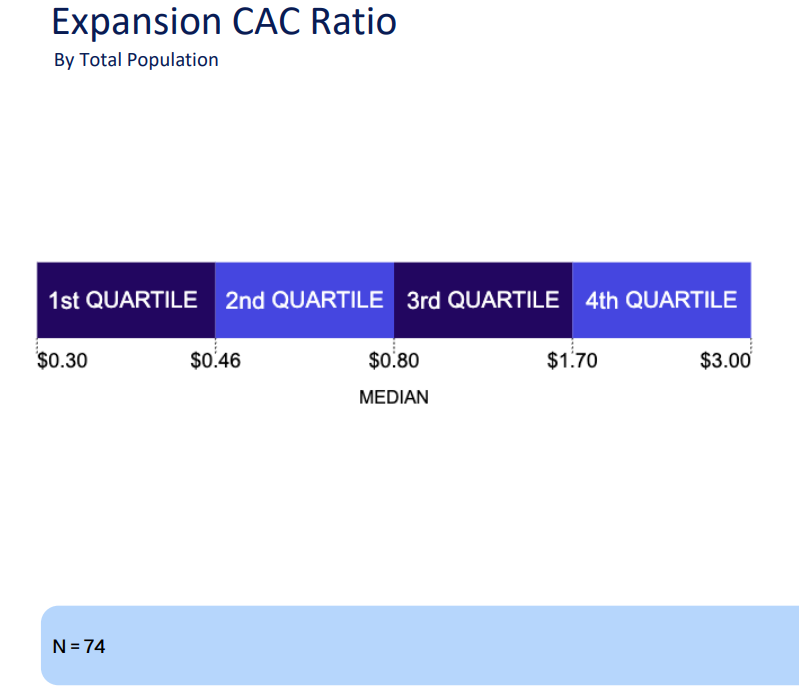
Use incremental value rather than all touched revenue. If 20 exposed accounts upgrade but 16 comparable accounts probably would have upgraded anyway, the relevant estimate is four incremental upgrades. Evaluate gross-margin-adjusted value over a defined observation window, not full lifetime value loaded with distant assumptions.
Before approving spend, confirm that the audience can deliver, frequency can remain controlled, the outcome can mature, a credible comparison is possible, and fixed costs do not consume most of the upside. Keep activation, expansion revenue campaigns, renewal, recovery, and win-back in separate budget models because their baselines and value differ.
Measure Expansion and Churn Reduction Without Over-Crediting Ads
Measure paid retention in layers: delivery, response, product behavior, recurring revenue, and incrementality. Platform metrics diagnose reach and attention; they do not prove that an ad created an upgrade, renewal, or retained customer.
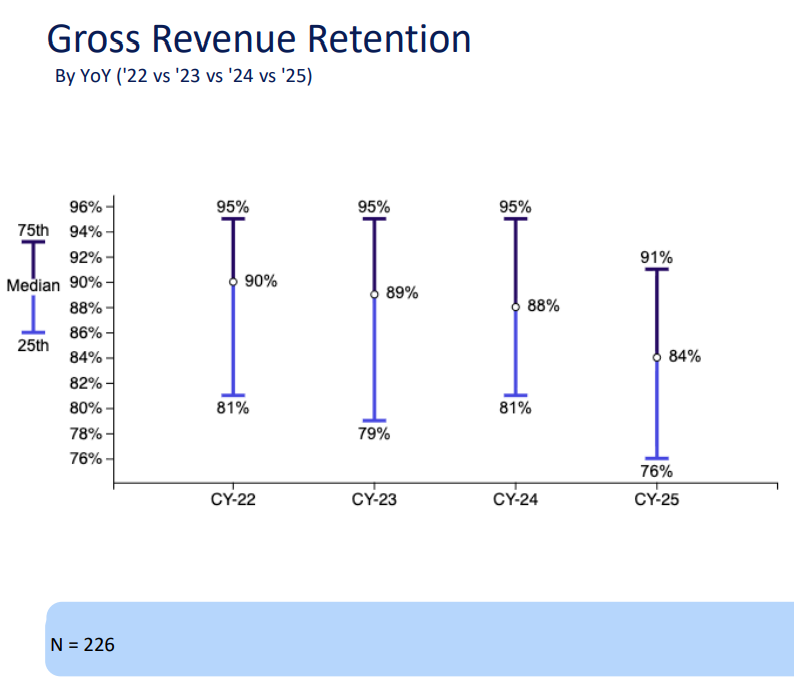
The commercial context is getting tougher. In Benchmarkit’s 2026 sample, median GRR fell from 88% to 84%, while the 75th percentile declined from 95% to 91%.
That raises the value of reliable retention measurement, not the value of every impression.
We review delivery and response early to catch audience or creative problems. Product and revenue outcomes determine whether the program deserves to scale.
Use Revenue Metrics With Consistent Cohorts
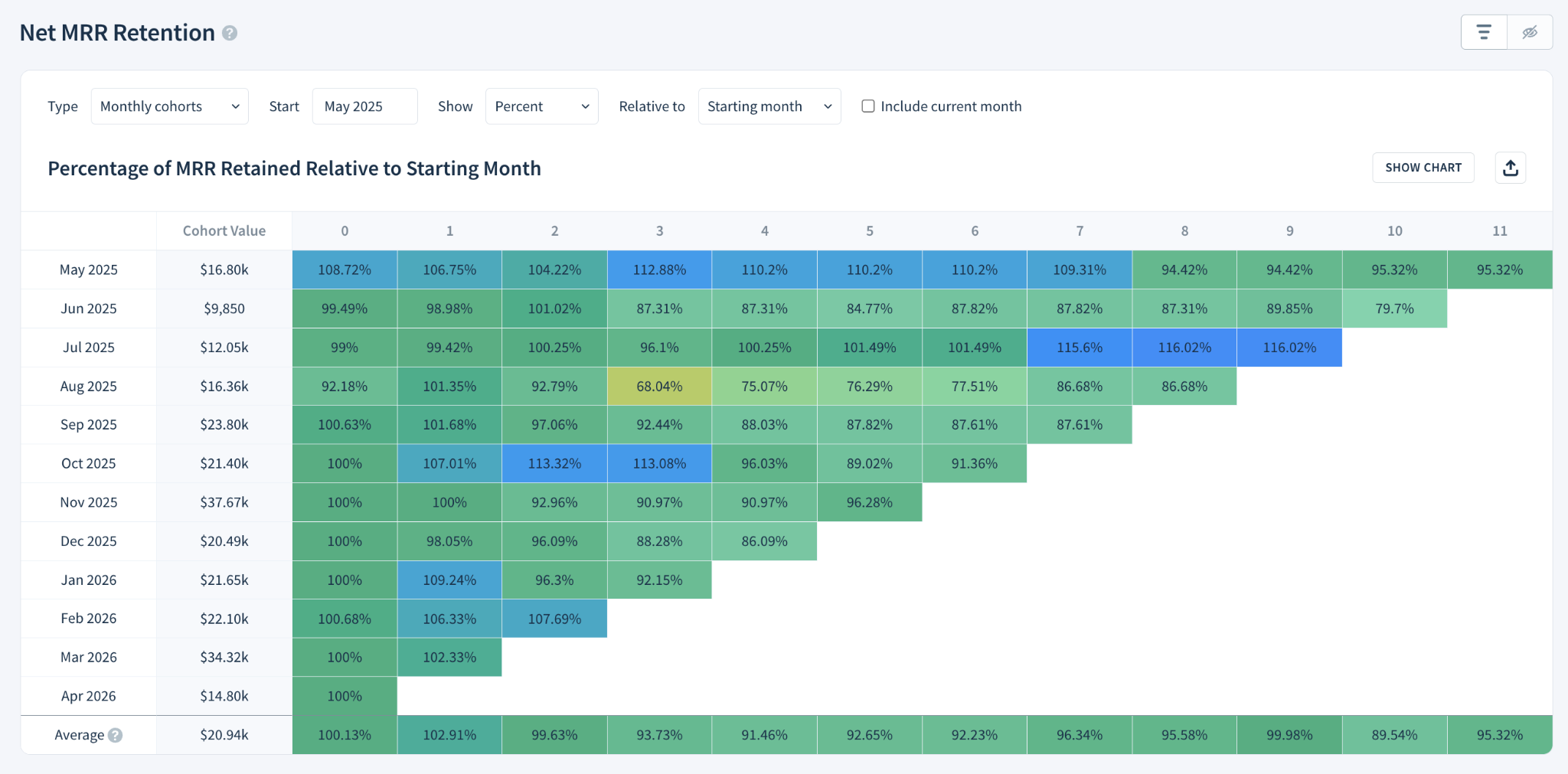
The ChartMogul definitions for NRR and GRR use the recurring revenue of the starting cohort and exclude new customers acquired during the period.
Revenue churn and customer churn answer different questions: one counts lost recurring revenue, while the other counts lost accounts. Report NRR and GRR together. Expansion can lift NRR while contraction and churn continue weakening the underlying base, which GRR exposes.
Document each formula, cohort, and observation window. Subscription systems may handle reactivation or timing differently, and a report is only useful when finance, RevOps, customer success, and marketing mean the same thing by each metric.
Keep Attribution and Causality Separate
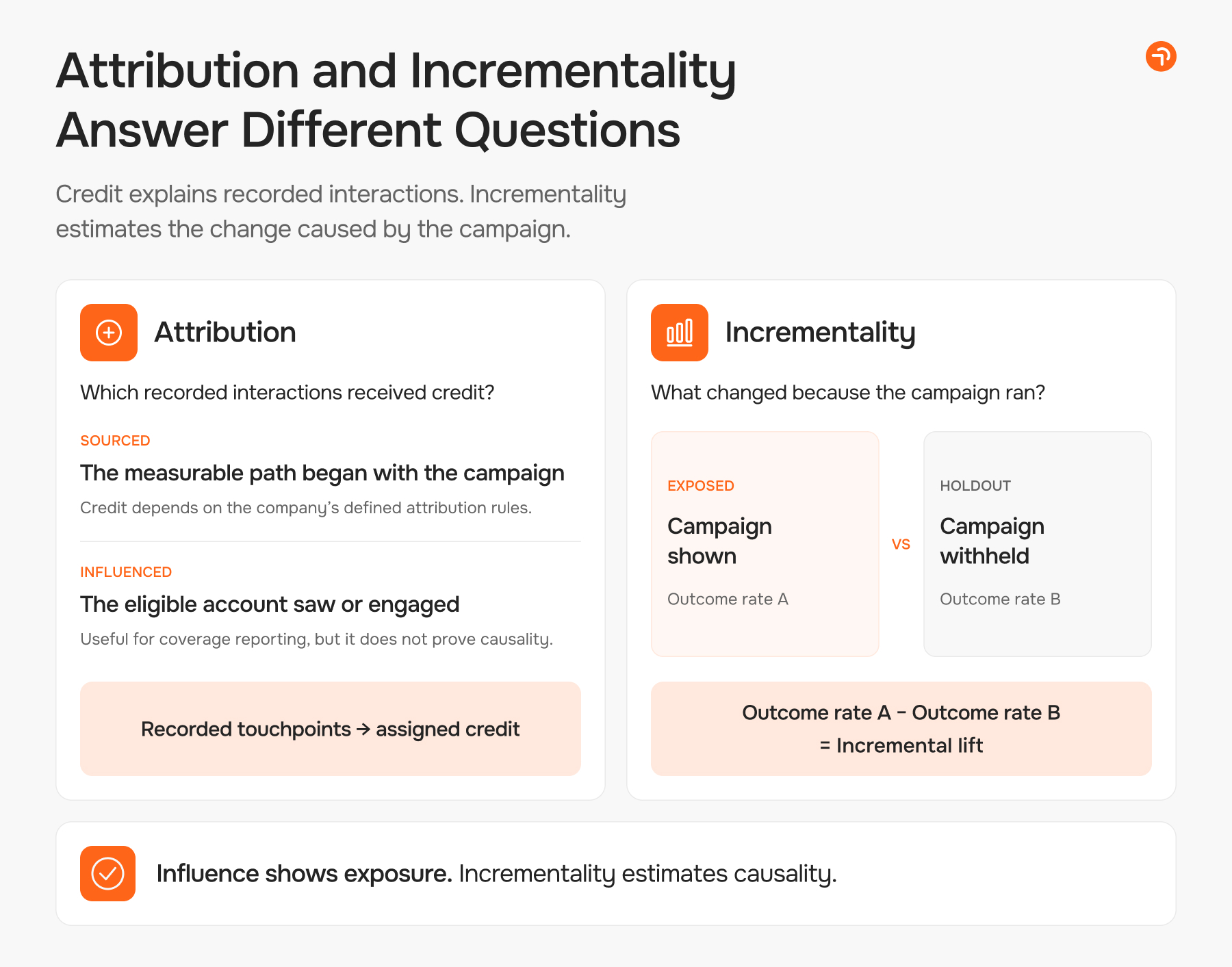
Attribution describes how the company assigns credit. Incrementality estimates what changed because the campaign ran.
- Sourced revenue: the customer entered a measurable expansion, renewal, or reactivation path through a campaign interaction under defined attribution rules.
- Influenced revenue: an eligible account saw or engaged with the campaign before the outcome. This shows coverage, not causality.
- Experimentally incremental revenue: exposed customers produced a measurable difference against a randomized or credible unexposed group.
A renewal after an impression may reflect product value, contract timing, customer success, or account management. Influenced revenue may be a reasonable label; claiming the entire renewal as campaign-created revenue is not. Our guide to B2B marketing analytics for SaaS explains how platform, CRM, product, and revenue data should connect before channel credit is assigned. A broader B2B revenue marketing view keeps expansion, retention, and media inside the same commercial system.
Use a randomized holdout when the audience is large enough. Smaller B2B cohorts can use matched accounts, a phased rollout, or a pre/post comparison with limitations stated plainly. Very small enterprise programs may require account-level review alongside customer success and sales context.
Preserve the account ID, lifecycle objective, audience version, exposure, product event, revenue outcome, and observation window. Review delivery and product response while the campaign runs; evaluate renewal, expansion, or retained revenue only after the cohort has had enough time to reach that outcome.
Make Paid Retention Earn Its Place
Paid retention deserves budget when it helps a clearly defined customer group take a useful next step and creates value the business can measure. Depending on the customer state, that may mean reaching first value sooner, adopting a relevant workflow, expanding a healthy account, recovering usage, or returning after churn for a credible reason.
At Aimers, we would not upload the entire customer base and hope an upgrade ad reaches the right people. We start with one lifecycle job, validate the audience and exclusions, connect the message to the right destination, and agree on how we will measure the outcome before spend goes live. That is what turns paid media into a controlled part of retention marketing for SaaS, rather than another channel competing for revenue credit.
If your customer data is spread across CRM, product, billing, and advertising platforms, our SaaS PPC agency can audit the audience logic, campaign setup, lifecycle creative, landing paths, and revenue measurement. Talk to our team to identify the first retention or expansion cohort worth testing.
FAQs
Retention marketing for SaaS coordinates customer data, lifecycle communication, and measurement to help customers activate, adopt, renew, expand, or return. Paid media is one distribution layer alongside in-product messaging, email, customer success, and account management.

Paid ads can support SaaS churn reduction when the risk is recoverable and the campaign directs customers to training, implementation help, or a valuable workflow. Ads cannot repair missing product value, unresolved support or security issues, contract disputes, or failed payments.
Seat and usage expansion, plan upgrades, cross-sell, and add-on adoption can support SaaS expansion marketing. Strong candidates are healthy customers whose product behavior indicates a credible need. Measure expansion MRR or ARR and gross-margin-adjusted revenue, not clicks alone.
Start with lifecycle state, then add product behavior, account economics, stakeholder role, and risk context. Every segment needs an entry rule, conversion-based exit, suppression logic, refresh cadence, and a useful action the recipient can take.
Compare exposed customers with a randomized holdout whenever volume allows. For smaller cohorts, use matched accounts, phased rollout, or a clearly qualified pre/post comparison. Keep influenced revenue separate from incremental retained revenue so impressions do not receive credit for outcomes that likely would have happened anyway.