
Product-Led Growth for SaaS: How It Works and When to Use It

Product-led growth is a go-to-market motion where the product becomes the main driver of acquisition, activation, conversion, retention, and expansion. Instead of asking every buyer to book a demo before they experience value, PLG lets users try the product, reach an aha moment, and decide whether it is worth paying for.
For SaaS companies, this can be powerful. A well-designed PLG motion can reduce friction, shorten time-to-value, create product-qualified leads, and help customers expand based on real usage. But PLG is not magic. It works only when the product is easy to understand, easy to start, and valuable before a sales conversation.
This guide explains PLG for SaaS: how it works, when it makes sense, what metrics matter, and how to build a product-led growth strategy without confusing PLG with a pricing model.
What Product-Led Growth Means for SaaS
Product-led growth means the product is not only what customers buy. It is also how users discover value, learn the workflow, invite teammates, upgrade, and expand. OpenView describes product-led growth as an end user-focused growth model where the product drives acquisition, conversion, and expansion. That framing is useful because PLG starts with users, not sales scripts.
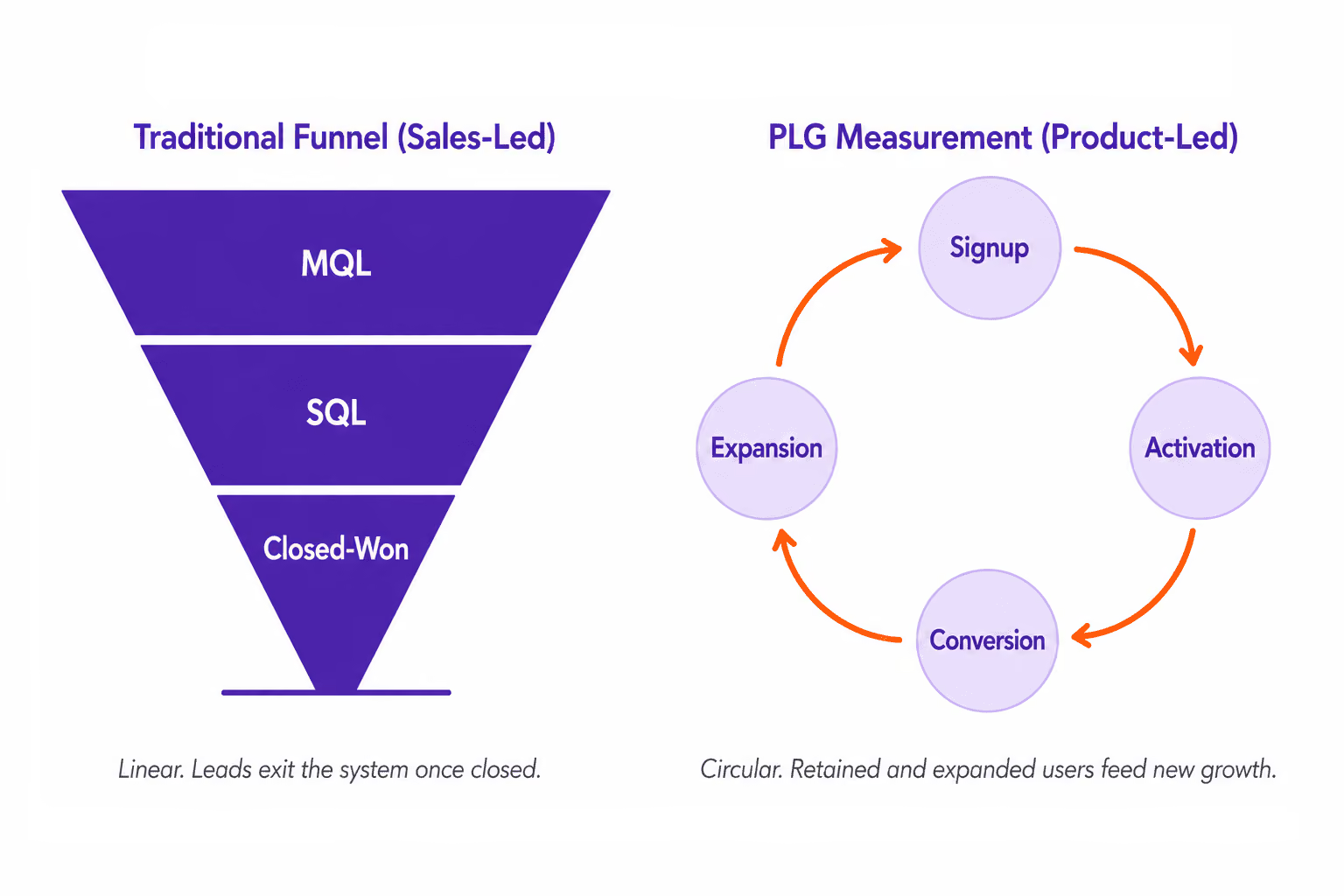
In a traditional sales-led motion, marketing creates leads, sales explains value, and customer success supports adoption after purchase. In a PLG SaaS motion, the product handles part of that job earlier. It explains value through onboarding, templates, empty states, usage prompts, help content, and in-product upgrade paths.
Product-led growth for SaaS usually depends on three conditions:
- The user can experience meaningful value without a long implementation
- The product can guide users toward the aha moment without heavy human support
- Usage data can identify who is ready to convert, expand, or talk to sales
That is why product-led growth is not only a free trial or freemium plan. It is a product, marketing, sales, and data system built around user value.
Why SaaS Companies Choose PLG Over Sales-Led Models
SaaS companies increasingly adopt PLG because software buyers want to experience value before committing to a sales conversation. Gartner’s 2025 Sales Survey found that 61% of B2B buyers prefer a rep-free buying experience. This makes self-serve evaluation an increasingly important part of modern SaaS go-to-market strategy.
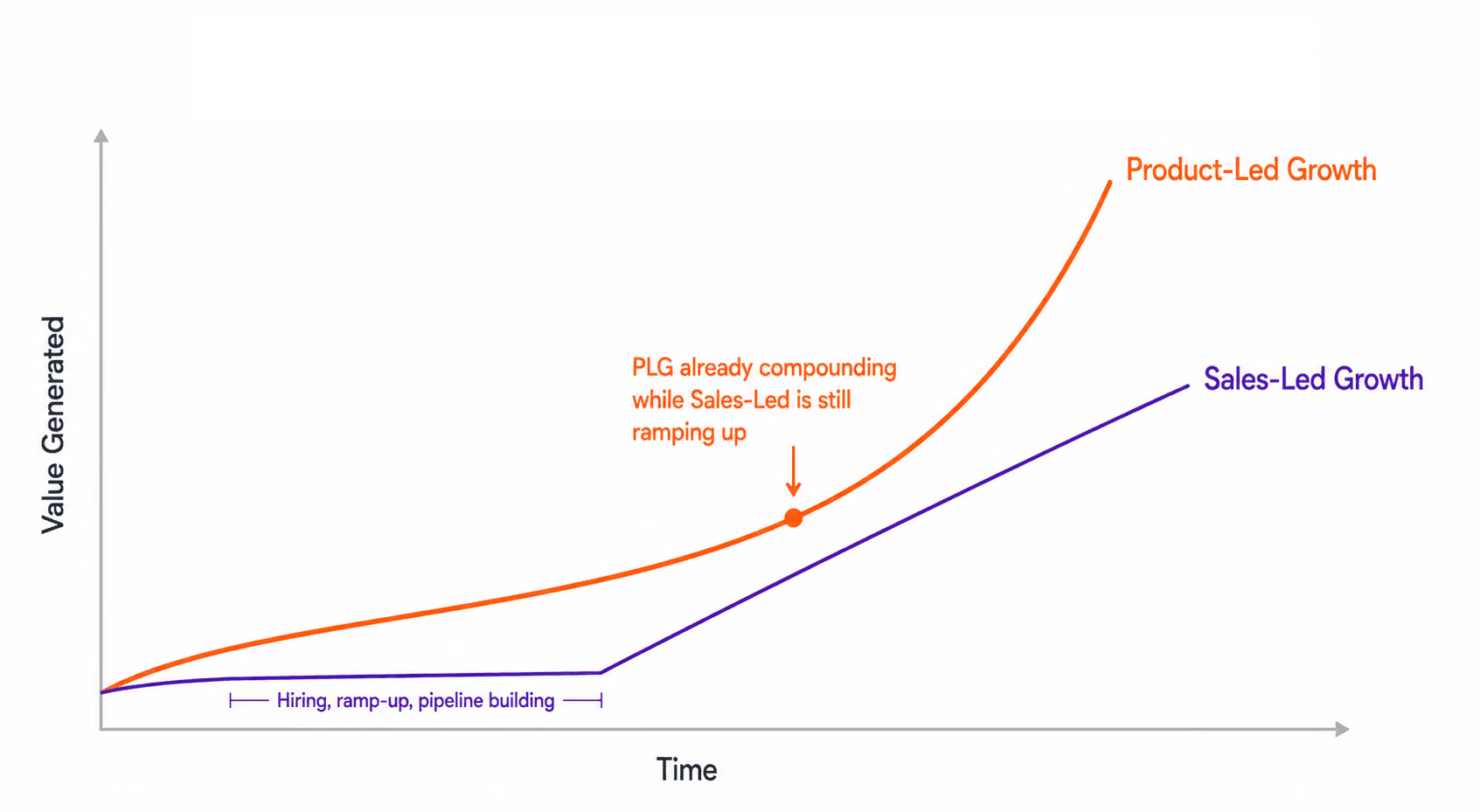
PLG supports that shift by letting the product demonstrate value through onboarding, activation, and real usage instead of relying only on demos or sales conversations. As Paddle explains, product-led growth is a model where the product supports acquisition, conversion, retention, and expansion. The goal is not simply to reduce the role of sales. It is to let users experience enough value to make the buying decision easier.
Lower CAC and Reduced Reliance on Sales Teams
PLG for SaaS reduces acquisition friction because users do not need to wait for a call, procurement conversation, or custom demo before experiencing the product. Marketing can drive visitors to a signup, free trial, template, or interactive demo, while the product itself demonstrates value.
PLG does not replace sales. It changes where sales creates the most value. Instead of spending time explaining basic functionality, sales teams can focus on product-qualified accounts, enterprise opportunities, and expansion. We’ve covered this approach in our SaaS PPC guide, where we explain why paid acquisition should connect traffic, landing pages, activation, and pipeline instead of optimizing for signups alone.
Higher Retention, Expansion Revenue, and NRR
PLG can also improve retention because customers who activate before paying typically understand the product better. When users adopt core workflows, invite teammates, and build habits, renewal depends less on promises made during sales and more on value they have already experienced.
Expansion often follows naturally as usage grows through additional seats, premium features, integrations, governance capabilities, or enterprise support. For PLG companies, product usage frequently becomes a stronger predictor of retention and expansion than early conversion metrics alone. That is why mature PLG teams monitor product engagement just as closely as website conversion.
Virality, Network Effects, and Organic Growth
Some products grow because users naturally bring other users with them. Collaboration tools, scheduling apps, shared documents, design platforms, and communication products often include built-in sharing loops where one user invites another, creating account-level expansion.
Network effects can accelerate PLG, but they are not a requirement. Many B2B SaaS products grow through reusable templates, public links, integrations, communities, review platforms, and customer advocacy rather than direct user invitations. The product does not need to go viral. It needs to make value easy to discover, share, and expand within the right accounts.
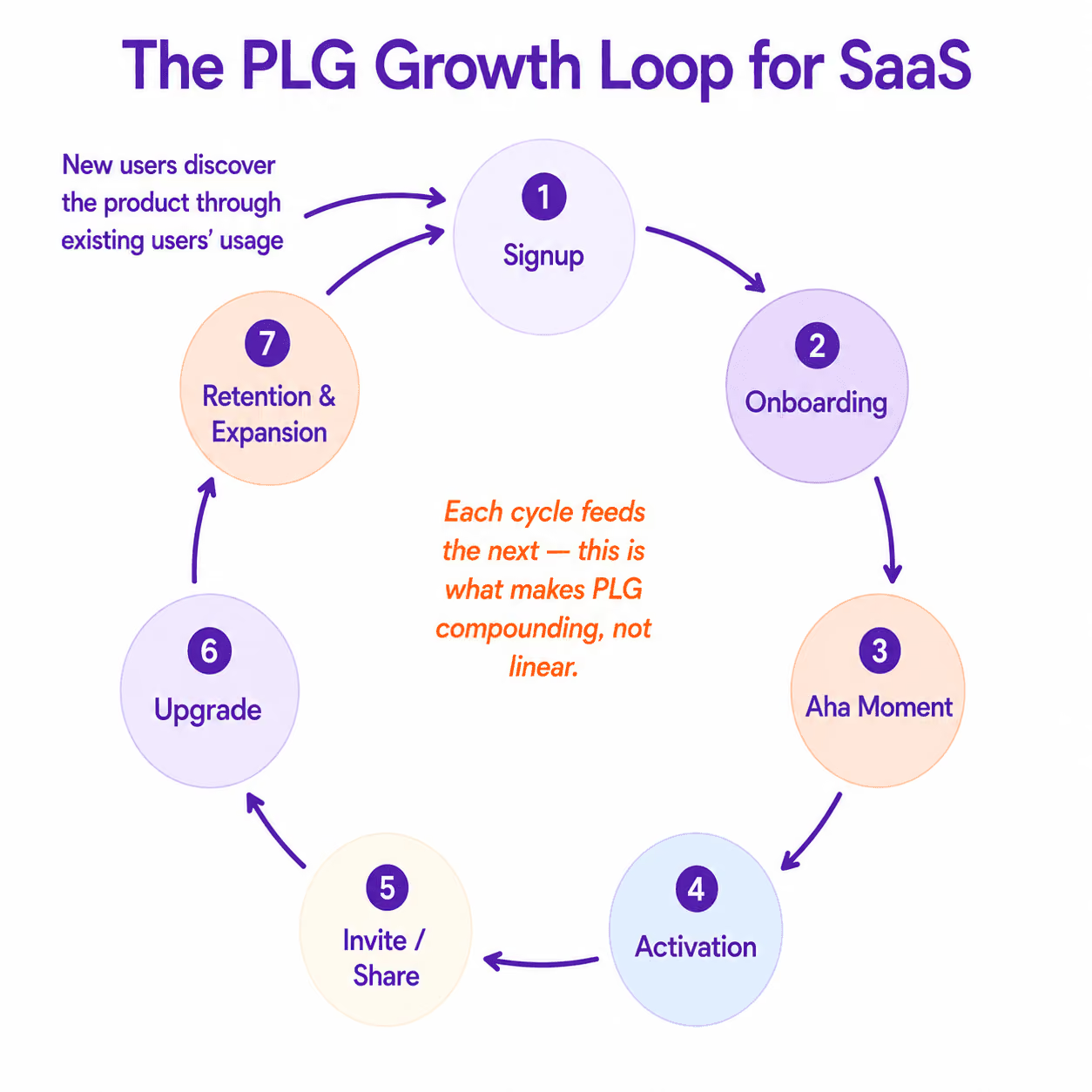
The Core Mechanics of PLG in SaaS: Freemium, Free Trial, and Self-Serve Onboarding
The mechanics of PLG SaaS are simple to describe and difficult to execute. Users need a reason to start, a smooth first session, a clear aha moment, and a reason to keep coming back.
Freemium vs. Free Trial: Which Model Fits Your Product
Freemium gives users ongoing access to a limited version of the product. Free trial gives users temporary access, often to a fuller feature set. Both can work, but they solve different problems.
Userflow's PLG guide highlights product adoption, onboarding, and user activation as central to PLG success. That is the real decision point. The right model is the one that gets users to value fast enough to support conversion.
Designing the Aha Moment and Reducing Time-to-Value
The aha moment is the first moment when users understand why the product matters. It might be sending the first invoice, publishing the first dashboard, inviting the first teammate, finding the first insight, or automating the first workflow.
To reduce time-to-value:
- Remove unnecessary signup fields
- Use onboarding questions to personalize the first experience
- Give users a sample project, template, or checklist
- Show progress toward activation
- Trigger guidance based on behavior, not generic tours
- Make the next best action obvious
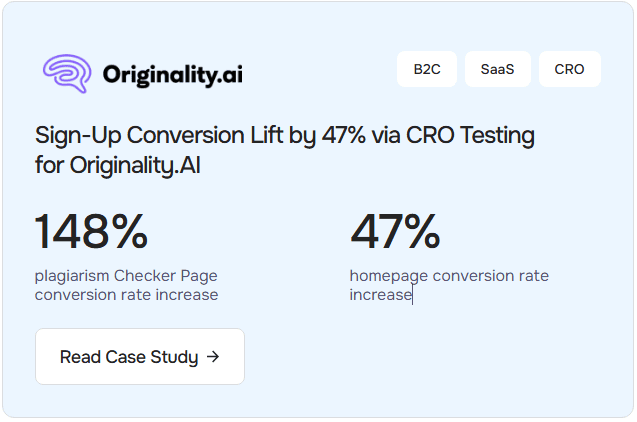
The post-click experience starts before the product. If a paid ad promises fast setup, the landing page, signup flow, and onboarding must all support that promise. A good example is our work with Originality.AI, where we optimized landing pages used in paid campaigns and increased sign-up conversion by 148% on the Plagiarism Checker Page and 47% on the homepage. The case shows why PLG teams should treat landing page clarity as part of the activation journey, not only as a traffic conversion layer.
Key PLG Metrics Every SaaS Team Should Track
Product-led growth requires a different measurement framework than a traditional sales-led motion. Signups alone reveal very little. A PLG SaaS team needs to understand which users reach value, which accounts show commercial intent, and which product behaviors predict conversion, retention, and expansion.
Activation Rate, TTV, and PQL Identification
Activation rate measures how many users complete the action that demonstrates meaningful early value. Time-to-value (TTV) shows how quickly they get there. Product-qualified leads (PQLs) identify users or accounts whose product behavior indicates they may be ready for a paid plan or a sales conversation.
Useful PLG metrics include:
The most valuable PLG metrics rarely work in isolation. They become much more useful when interpreted together:
- High signup volume with low activation usually points to onboarding friction or a weak first-use experience
- Strong activation with low free-to-paid conversion often suggests pricing, packaging, or upgrade friction rather than a product problem
- Healthy conversion with weak retention can indicate that users reach initial value but never build lasting habits
- High feature adoption with low expansion revenue may signal that customers use the core product successfully but see limited reasons to upgrade
Pendo's 2024 Software Product Benchmarks reinforce this idea. The report found that only 6.4% of product features generate 80% of all feature clicks, while best-in-class products achieve significantly higher feature adoption. For PLG teams, that means sustainable growth depends less on adding new functionality and more on helping users consistently discover the features that create value.
Free-to-Paid Conversion, NRR, and Expansion Revenue
Free-to-paid conversion is an important PLG metric, but it should never be optimized in isolation. A company can increase conversion by introducing paywalls earlier, yet still reduce long-term retention if users have not experienced enough product value before upgrading.
Track free-to-paid conversion alongside net revenue retention (NRR), expansion revenue, churn, CAC payback, and customer support load. As Maxio explains, PLG changes how SaaS companies think about growth, customer experience, and recurring revenue. The measurement framework should reflect that entire customer lifecycle rather than focusing only on the first payment.
We've covered this measurement layer in our analytics services, where we show how connecting acquisition data, product usage, and revenue metrics helps SaaS companies understand which programs generate long-term customer value instead of short-term conversion gains.
When PLG Works for SaaS and When It Doesn't
Product-led growth SaaS works best when users can experience value quickly, the product can onboard them without heavy support, and the market is large enough to support self-serve acquisition. It works less well when the product is deeply customized, the buying process is procurement-heavy, or value requires complex implementation.
Product Fit Criteria: ACV, Complexity, and Buying Behavior
PLG fit depends less on whether a company can offer a free plan and more on how quickly users can experience value without heavy human support. The table below helps separate products that are naturally suited for PLG from products that may need a sales-led or hybrid motion.
PLG vs. Sales-Led vs. Hybrid
The best model is often hybrid. PLG can create usage, data, and account intent. Sales can help larger customers navigate buying committees, security reviews, and rollout planning.
We’ve covered this broader GTM decision in our marketing strategy guide, where we explain how audience, positioning, messaging, channels, pricing, and measurement need to work together.
How to Build a PLG Strategy for Your SaaS Product
A successful PLG strategy starts with the user's job, not the pricing page. Before deciding how to monetize the product, identify the shortest path to meaningful value. The first question is not “How do we convert more users?” It is “What must users accomplish before they believe this product is worth returning to and paying for?”
Use this sequence:
- Define target users and paying customers separately.
- Identify the core use case and the aha moment that demonstrates value.
- Choose the right access model, whether that is freemium, free trial, reverse trial, or a hybrid approach.
- Design onboarding around the shortest path to value rather than around every product feature.
- Instrument activation, conversion, adoption, retention, and expansion events.
- Build lifecycle messaging around user behavior instead of fixed timelines.
- Create sales routing rules for product-qualified accounts.
- Continuously improve landing pages, pricing pages, onboarding flows, and in-product upgrade prompts based on product data and customer feedback.
The sequence matters because every stage builds on the one before it. Improving onboarding will not solve a weak value proposition. Scaling paid acquisition will not help if users never reach activation. Likewise, routing more accounts to sales creates little value if product engagement does not indicate genuine buying intent.
Product-led growth works best when marketing, product, sales, customer success, and analytics operate as one system. Marketing attracts the right users. The product demonstrates value. Sales supports high-intent accounts. Customer success drives adoption and expansion. We've explored this iterative approach in our guide to marketing tactics, where we explain why sustainable growth comes from continuously testing, measuring, and refining rather than relying on one-time optimizations.
PLG as a Growth Engine, Not Just a Pricing Model
Product-led growth is often associated with free plans and self-serve onboarding, but those are only tactics. The real advantage of PLG comes from building a business where product experience, marketing, sales, customer success, and analytics reinforce one another throughout the customer journey.
Successful PLG companies tend to share the same principles:
- Product removes friction and shortens the path to value.
- Marketing attracts the right users with clear expectations and relevant use cases.
- Sales focuses on accounts whose product behavior indicates genuine buying intent.
- Customer Success helps customers adopt the product, expand usage, and realize long-term value.
- Analytics connects acquisition, product usage, conversion, and revenue into one measurement framework.
PLG works best when the free or self-serve experience attracts the right users, proves value quickly, and creates clear signals for conversion or expansion. They are the ones making it easiest for the right users to discover value, build habits, and expand naturally over time.
If your team wants to connect paid acquisition, landing pages, onboarding data, and conversion quality into a stronger product-led growth system, contact Aimers to discuss where your PLG motion can improve fastest.
FAQs
What is product-led growth in SaaS?

What is the difference between PLG and sales-led growth?
Is PLG for SaaS only about freemium?
What are the most important PLG SaaS metrics?
When should SaaS companies avoid PLG?