
Best Google Ads Campaign Types for B2B SaaS

We continue to share our experience of using various PPCs in the B2B SaaS sector, and Google Ads is next in line. The effectiveness of the service is difficult to dispute, and there are good reasons for this. Google controls over 90% of global search traffic, and its search advertising provides access to existing demand. Both our case studies and independent research confirm this, noting that Google Ads provides an average ROI of around 200% in the B2B segment.
For many B2B companies, this performance is only achievable with a structured approach similar to what a specialized Google Ads management agency would apply, where campaign architecture and data quality matter more than sheer spend.
However, to achieve such results, it is important to implement different campaign types correctly. Launching them haphazardly may seem to work by generating clicks and MQLs. However, SQL metrics will remain the same. So let's talk about which types of Google Ads campaigns really influence the pipeline in B2B SaaS.
Which Google Ads Campaign Types Actually Work for B2B SaaS
- Dominance in search makes Google Ads the primary channel for capturing high-intent demand in B2B SaaS
- Search campaigns generate the majority of leads, thanks to their direct engagement with demand
- Demand Gen greatly enhances Search. This is facilitated by an increase in CTR and a decrease in blended CPL. However, Demand Gen cannot be considered an alternative to Search
- Performance Max is only suitable for mature accounts and works as an additional layer of scaling, not as a basic format
- Display and Video in Google Ads play a supporting role and are effective in retargeting and educating audiences, rather than in direct SQL generation
Search Campaigns Are Non‑Negotiable
Search remains at the heart of the entire paid strategy in the B2B SaaS sector and is the foundation of most Google ad campaign types. This format connects marketing directly to the sales pipeline. Unlike awareness formats, users here have already demonstrated a specific interest: they are searching for a product, comparing solutions, reading reviews, and looking for demos. This is the critical moment to capture their attention.
Why Search Is Particularly Important in B2B SaaS
In B2C, high-frequency queries work on a large scale, with volume replacing precision. In B2B, however, demand is limited, and each lead is expensive. This difference is central when evaluating campaign types in Google Ads for SaaS and enterprise products. B2B search volumes are smaller, but each click carries much more weight, especially for intent queries that signal readiness to buy.
Over 62% of B2B buyers begin their journey with a search, with 75% clicking on a link within 24 hours of commencing their research. This is why Google Ads search campaign types remain the backbone of lead generation in B2B SaaS.
Unlike in e-commerce, where queries often describe the product itself, the following patterns work in SaaS:
- Demo, trial, pricing
- Comparisons or alternatives
- Category or use case
In SaaS models where CAC and LTV are calculated at the unit level, these queries consistently generate the highest quality traffic. That is why search is considered one of the highest converting Google Ads campaign types for B2B SaaS. The CTR of such queries in Google Ads is 3.8%, with an average conversion rate of 3.75%.
Why Search Cannot Be Replaced by Other Formats
Search is the only channel where you have complete control over:
- Keywords
- User intent
- Ad text
- Landing page
- Bid
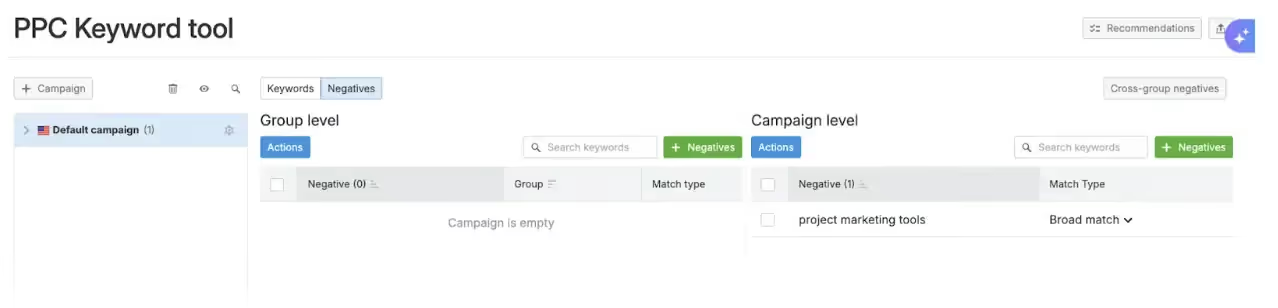
This level of transparency is accurately why many of the most profitable Google Ads campaigns in B2B SaaS are built around Search. When search underperforms, attempts to scale through other formats usually leads to deteriorating unit economics and rising Google Ads costs without a corresponding increase in SQLs. This is why choosing the right Google Ads campaign type always starts with search before expanding into other formats.
Algorithmic formats (such as Performance Max or Demand Gen) can generate volume, but they don't offer the same level of transparency or control. In Google Search, marketers can clearly see which keywords generated the lead. In B2B, this is critical for optimization and trust in the channels. Search intercepts existing demand instead of attempting to create it, which is why it remains the most reliable foundation for Google Ads campaign types for lead generation in B2B.
Search Campaign Overview for B2B SaaS
Demand Gen: Underrated and Often Misused
We can't emphasize enough that the sales cycle in B2B SaaS is much longer than in other sectors. This is why engaging with your audience is an essential part of your marketing strategy. Among the different types of campaigns in Google Ads, Demand Gen plays a mid-funnel role by warming audiences before intent-driven interactions occur.
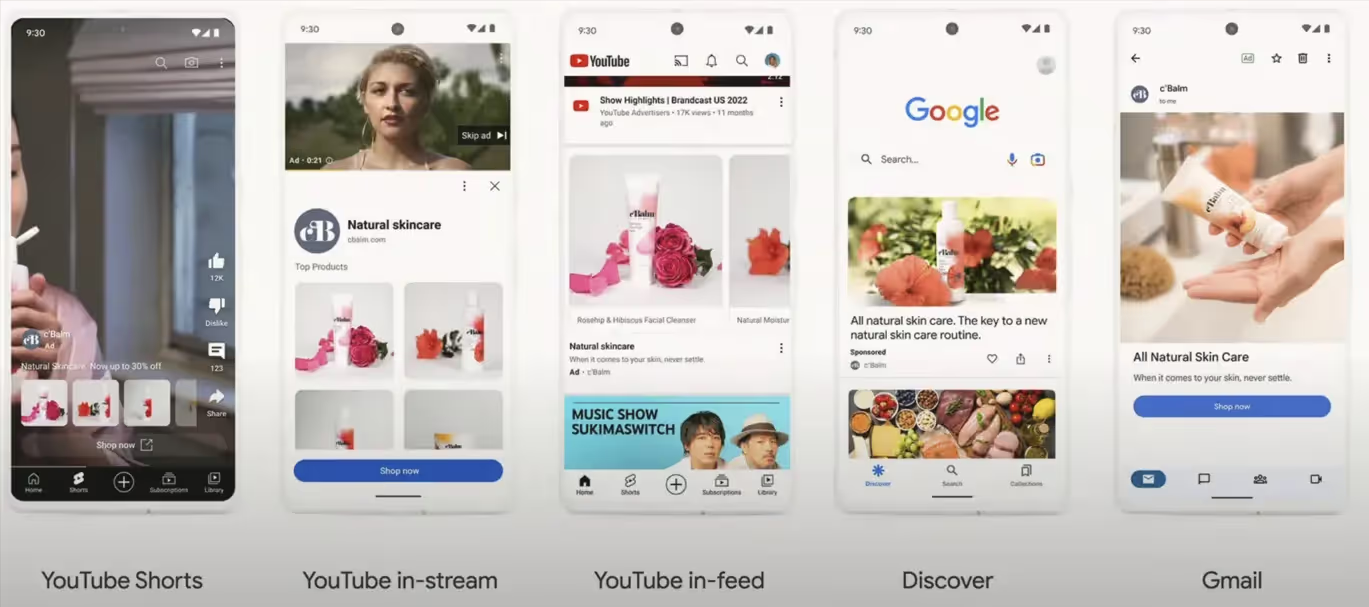
Demand Gen displays ads on Gmail, Discover, and YouTube. Unlike banners on the Display Network, these ads are integrated into users' familiar digital environments:
- YouTube, for example, is a channel for B2B training and reviews. Over half of IT and business executives watch videos before communicating with a salesperson
- Gmail ads are promotional emails in work inboxes that resemble regular email chains
- Discover is a personalized news feed on Android and Chrome mobile devices
This approach is particularly effective in the mid-funnel stage because it establishes soft communication. Rather than trying to get an SQL from the first click, it is wiser to use Demand Gen for:
- Category education: introducing a new category
- Problem framing: explaining the problem that the product solves
- Warming: preparing the audience before launching a search or mailing
- ABM outreach: reaching the right companies in Gmail and Discover through lists
Used correctly, Demand Gen strengthens search by increasing brand familiarity, improving CTR on later search interactions, and lowering blended CPL. This is why Demand Gen is often included among the best campaign types for B2B when paired with strong search execution.
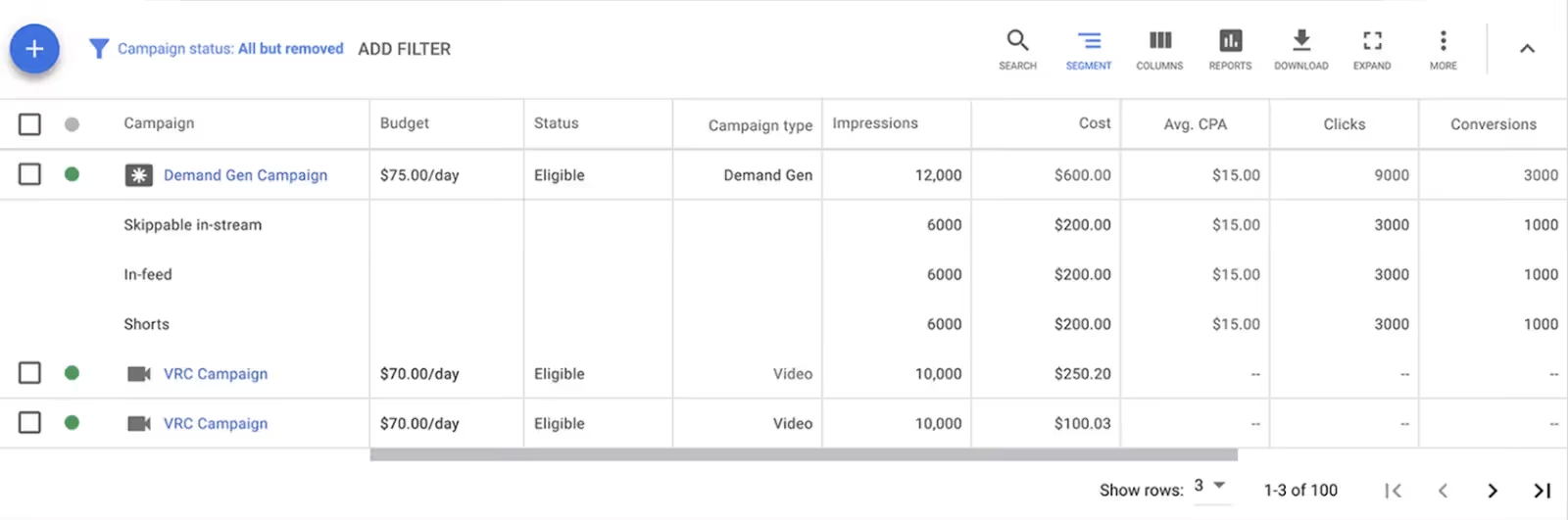
Demand Gen should never be the sole source of SQLs. It works best in tandem with Search, reinforcing brand familiarity and warming audiences before they convert through high-intent queries, within a broader Google Ads strategy for SaaS that prioritizes demand capture first.
How Demand Gen Differs from Display, Social Ads, and Performance Max
It's easy to confuse Demand Gen with other Google Ads formats, such as Display, Performance Max, and Social-like ads, which are all visual or automated. These formats use similar placements, such as YouTube, Gmail, and Discover, and they may appear similar in search results. However, each format is designed for different tasks, works at different stages of the funnel, and affects the bottom line differently.
Demand Gen Campaign Overview (B2B SaaS)
Performance Max Is Optional, Not a Default Choice
Performance Max (PMax) is an automated campaign type that allocates your budget across all Google channels: Search, Display, YouTube, Gmail, Discover, Maps, and Shopping, if applicable. Targeting and creative management are minimal. The algorithm decides where and to whom to show ads based on your conversion goals.
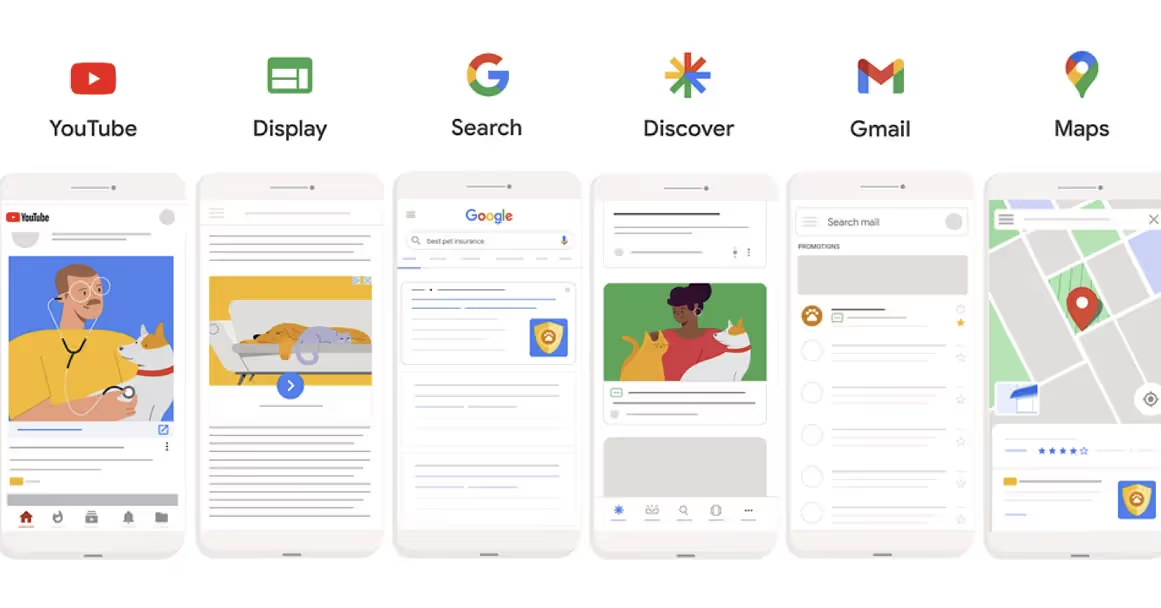
PMax is often perceived as a simple, universal solution. Set it up once, launch it, and receive immediate coverage across all Google channels. In reality, it's more complicated. Without proper preparation, Performance Max will not strengthen the funnel; rather, it will spread the budget across the cheapest signals, negatively affecting the quality of leads.
The problem is that, by default, the program is optimized for easy conversions. For example, it prioritizes website visits or low-quality forms. In B2B SaaS, where SQL and ICP validation are important, this results in poor-quality leads and a loss of control.
This is why PMax should be treated as an advanced layer rather than a default option, even though it is sometimes promoted as one of the best Google Ads campaign types 2026 for all businesses.
When PMax is beneficial in B2B SaaS
PMax is beneficial in B2B SaaS when three conditions are met:
- A mature account with an existing, functioning structure; well-established search and demand generation campaigns; and configured goals
- Clearly defined lead value signals, preferably from a CRM system (e.g., through offline conversion import or enhanced conversions for leads)
- Minimal noise in conversions. If you optimize your campaign for everything, PMax will chase volume rather than quality
Under these conditions, PMax can be used as an additional scaling layer. For example, it can be used to expand reach in categories where Search is already working.
At Aimers, we redesigned the Google Ads account structure for ReliableSite, a dedicated server provider. By reviewing conversions and eliminating brand cannibalization, we achieved the following results:
- Purchases from non-root keywords increased fourfold
- Brand expenses decreased by 64%
Results in Google Ads depend not on the inclusion of new campaign types but on the correct configuration of data and structure. Without clear CRM signals and conversion hygiene, PMax optimizes toward cheap volume instead of qualified demand. Teams that understand how to optimize Performance Max campaigns treat it as a scaling mechanism, not as a replacement for Search.
This distinction becomes especially clear when comparing Google PMax vs Search vs Display, where Search remains the only format fully aligned with SQL-driven growth.
Performance Max for B2B SaaS: Campaign Overview
Supporting Channels: Display and Video
Within Google Ads, Display and Video are the most extensive formats in terms of reach but not engagement quality. Display advertising consists of banners placed on Google's partner network sites, including media outlets, blogs, and forums. Video ads appear before, during, or after video content on YouTube, YouTube Shorts, Discover, and partner platforms.
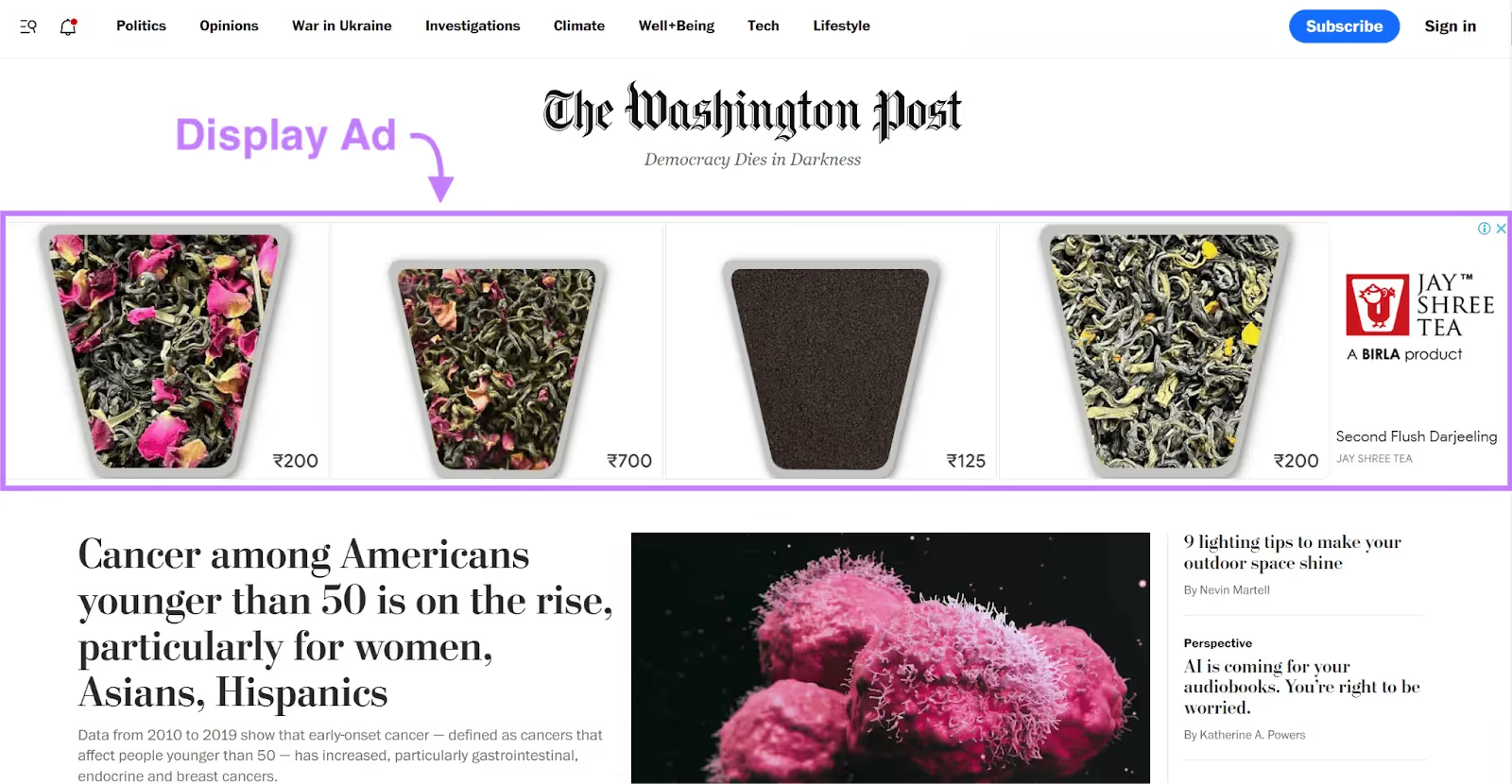
Using Formats in B2B SaaS
Search works with the user's existing intent, but Display and Video do not have access to formed demand. In these strategies, the brand initiates contact, resulting in the following specifics of these types of ads:
- Low percentage of relevant responses with cold targeting
- High risk of showing to users who do not influence the purchase
- Limited applicability for complex and expensive B2B products
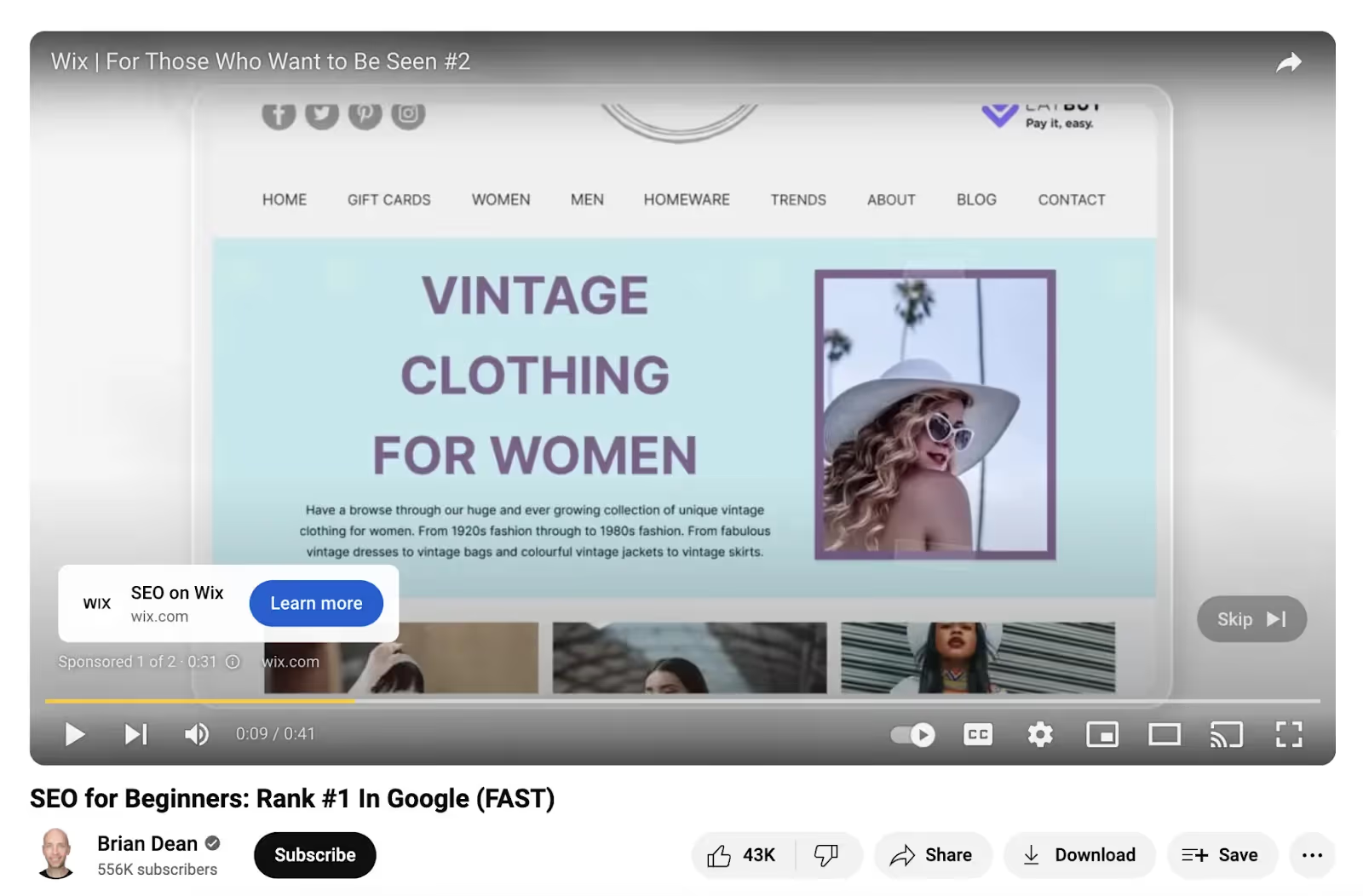
The average display CTR in B2B is 0.35%, and the conversion to a lead is about 0.8%-1.2%. Video shows similar values. In other words, these types of channels are supplementary. Their goal is to retain users and explain the product. Display is most effective in remarketing. For example, it is effective for working with users who:
- Visited pages with prices
- Opened an email with an offer
- Participated in a webinar or downloaded a white paper
In these cases, the CTR can increase to 1.2%, and leads can be 1.5 to 2 times cheaper than those from cold campaigns. A deliberate Google Ads remarketing strategy is what turns this supplementary channel into one of the cheapest sources of qualified leads in the account, rather than just an afterthought bolted onto Search. Unlike Display ads, Video ads can address an important issue for B2B SaaS: explaining the value of the product. This is especially relevant when:
- The product is complex
- Competitors seem the same
- You need to reduce onboarding/decision time
The most common use case is an explanatory video on YouTube (via In-Stream or In-Feed), which is up to 90 seconds long.
Aimers Team Experience
At Aimers, we helped Demio, a webinar platform, reduce its high customer acquisition costs. Search and social campaigns were already in place. Our team added display and YouTube ads as follow-up channels. Videos and banners communicated the product's value proposition and pain points to a warmed-up audience. These efforts helped achieve the following results:
- CPA in key audiences decreased by 28%
- Conversion from return traffic increased by 31%
Display and Video offer reach but limited intent. Within the landscape of Google AdWords campaign types, these formats are supplementary and work best for remarketing and education rather than direct acquisition.
Their role is not to replace search but to support it by reinforcing messaging and reducing friction later in the funnel. This makes them relevant mainly as supporting channels rather than core drivers of SQLs.
Display & Video Overview for B2B SaaS (Google Ads)
Want Help Structuring Google Ads for B2B SaaS?
If you are reviewing your account structure or planning a rebuild, a practical Google Ads checklist can help uncover gaps in tracking, bidding logic, and funnel alignment.
If you want a second opinion on your setup or need actionable Google Ads optimization tips, we are happy to review your account and share concrete next steps. Let's talk.
FAQs
Under what circumstances should B2B SaaS companies prioritize search campaigns over other Google Ads formats?

Why do search campaigns outperform other types of Google Ads campaigns in B2B SaaS?
Can Demand Gen replace search campaigns in B2B SaaS?
When does Performance Max make sense for B2B SaaS?
Why are display and video campaigns rarely effective at driving direct SQLs in B2B SaaS?