
Facebook Ads A/B Testing: How to Run Winning Tests

Facebook campaign optimization cannot rely on assumptions alone. Assuming that a new creative will outperform the existing one can waste budget quickly. As a result, you end up spending resources on what seems right rather than what actually works.
Facebook ads A/B testing helps you avoid this pitfall. It allows you to reliably compare two ad variations to the same audience at the same time. This helps you avoid mistakes that impact CPL and the pipeline as a whole. Today, we’ll explain how to turn A/B testing into a decision-making system that improves campaign learning, not just one result.
What Facebook A/B Testing Actually Tests, and What It Doesn’t
An A/B test on Facebook is not the same as running two ads in a single account to see which gets more clicks. Meta’s Experiments tool uses a different testing logic.
In controlled Facebook ads experiments, the Meta Experiments tool randomly splits the audience between the variants. Each user is assigned to only one group and sees only one ad variant. This eliminates audience overlap, making the comparison statistically valid. Both versions are tested under comparable conditions, so any difference in results is more likely due to the variable being tested than to random traffic distribution.
When manually duplicating campaigns, Meta does not isolate audiences and does not guarantee identical conditions for comparison. Even if the audiences appear identical, the algorithm may distribute impressions across different types of users. A Journal of Marketing study describes this as “divergent delivery”: a variant may win not because the creative is stronger, but because Meta showed it more often to a more responsive audience. Therefore, for proper testing, Meta recommends using the built-in Experiments tool rather than manually comparing campaigns.
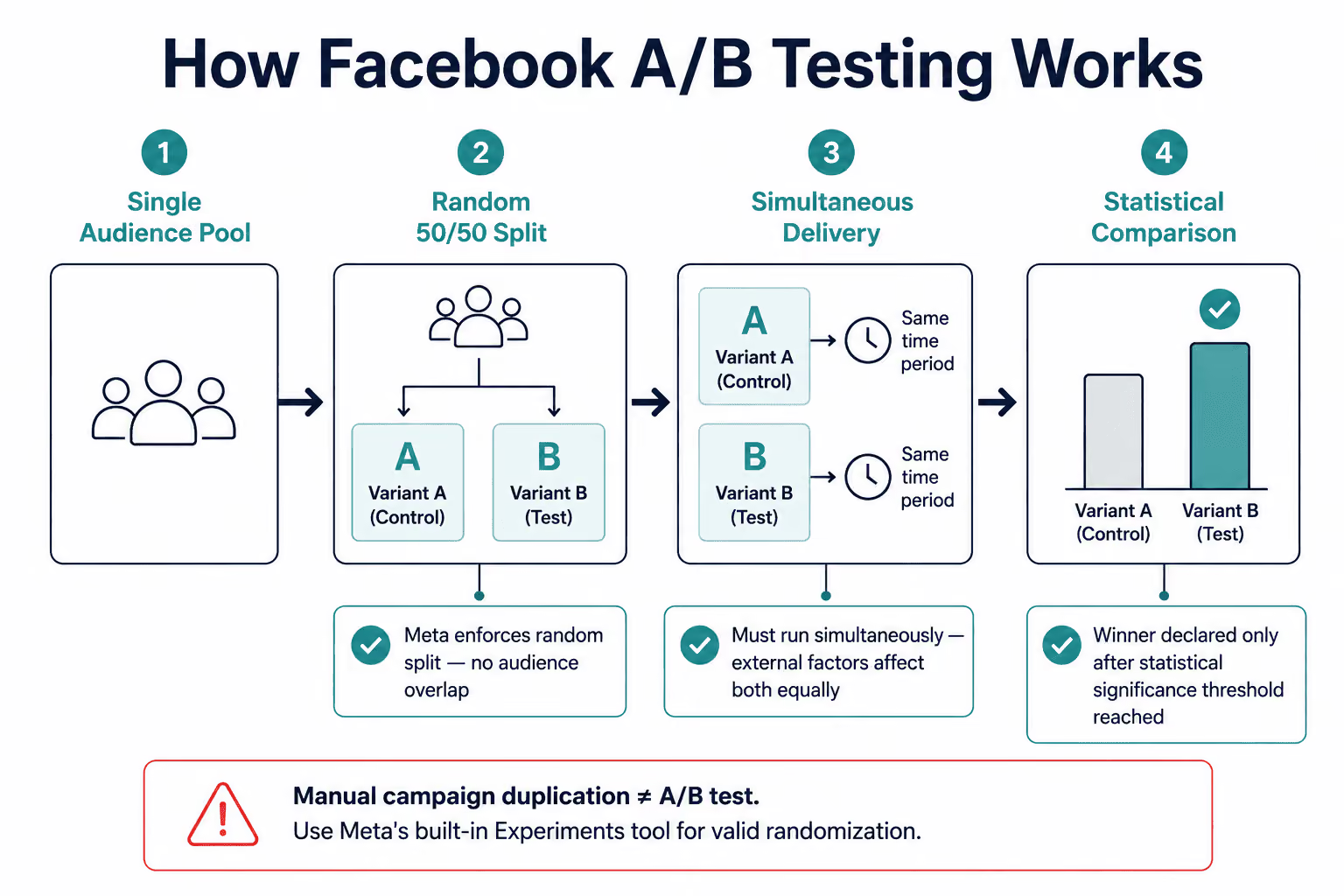
For better results, it’s also important to test one variable at a time. If you change the headline, image, and CTA all at once, the final result won’t reveal exactly what influenced performance. The purpose of an A/B test is to isolate a single change and measure its impact.
This approach still has limitations. While A/B testing shows which option performs better for a specific audience, offer, and time frame, it does not explain the reasons behind the results or establish universal rules for all B2B SaaS campaigns. However, it does not explain the reasons behind the results or establish universal rules for all B2B SaaS campaigns. The situation is further complicated by low conversion volume. Prospects submit demo requests and trial sign-ups much less frequently than users make e-commerce purchases, so achieving statistical significance requires more time and budget for tests.
Industry benchmarks often place B2B lead generation tests in the $3,000–$7,500 range compared to $500–$1,500 for low-ticket e-commerce. With low conversion volumes, top-of-funnel metrics help identify early signals before a significant number of core conversions have accumulated for statistical analysis.
What to Test First: Priority Variables for B2B SaaS Campaigns
A strong Facebook ads testing strategy starts with priority, not volume. Testing everything indiscriminately wastes your budget on data that doesn’t help you choose your target audience, offer, or next optimization step.
The B2B SaaS testing hierarchy is structured from greatest to least potential impact:
Audience and offer tests usually have the greatest impact on performance and provide the fastest answers to important business questions. HubSpot confirms that the most noticeable changes often occur through audience testing and ad set structure rather than through changes to headlines or design. For many teams, audience changes have a greater impact than individual ad-element tests.
This affects the testing order. If the audience hasn’t been validated yet, testing the text can lead to false conclusions. A new headline might show poor results not because the copy isn’t effective, but because the message is being shown to the wrong audience.
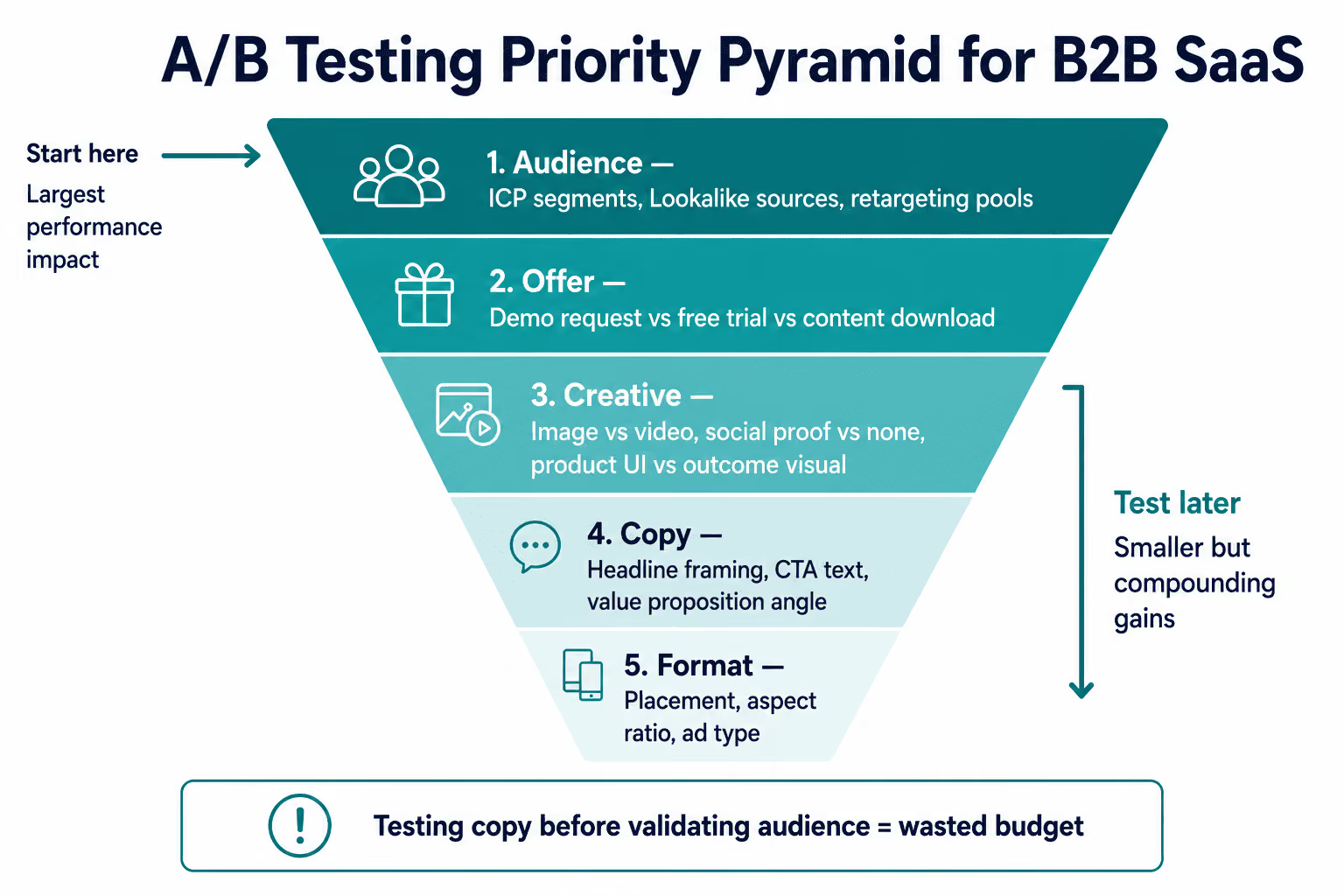
If your budget is limited and your audiences haven't been tested yet, we recommend not starting with headline tests. First, understand who is actually converting, and then optimize the wording and creative details.
How to Set Up a Facebook A/B Test in Ads Manager
Facebook ads campaign testing is usually won or lost before launch. Budget, duration, and evaluation criteria matter more than the setup interface itself.
Step 1: Choose Your Test Setup Method
To understand how to split test Facebook ads without audience overlap, start with the setup method. Meta offers three ways to launch an A/B test:
- Via the "Create A/B Test" toggle while creating a campaign
- Via the Experiments Tool for an existing campaign
- Directly from the Experiments section in Ads Manager.
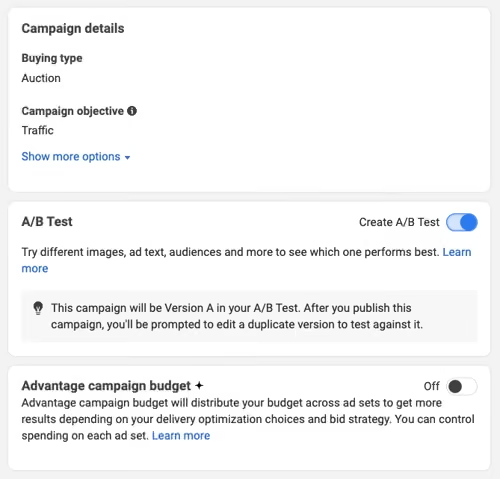
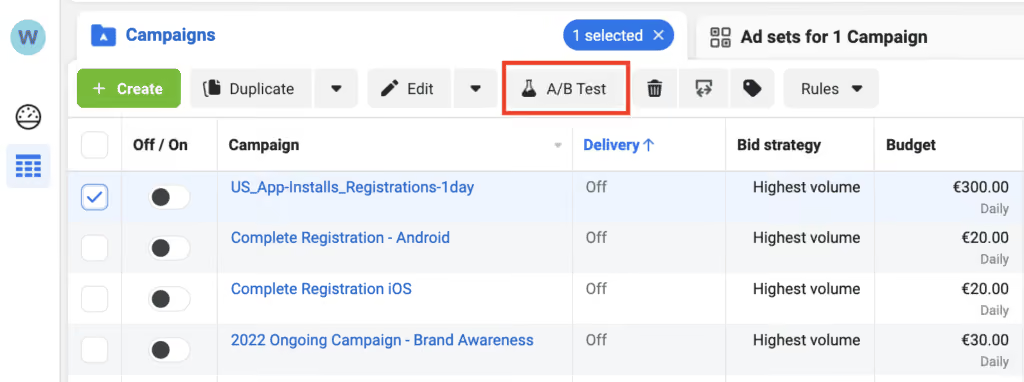
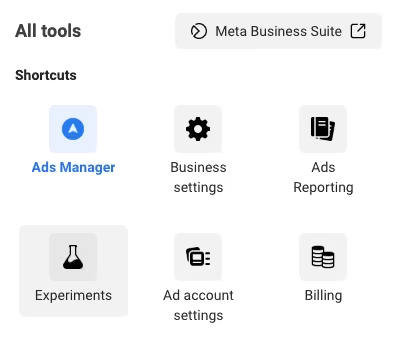
For most scenarios, the Experiments tool is the preferred option. It works as Meta’s native Facebook ads split testing software because it uses built-in random audience segmentation and reduces the risk of uncontrolled traffic distribution between variants.
Step 2: Calculate Your Budget Before Launching
In Facebook ad split testing, insufficient budget is one of the most common reasons tests fail. Meta recommends allocating at least $1,000 per experiment to obtain reliable results.
The basic formula is: Minimum Test Budget = Cost per Conversion × Number of Variants × Required Conversions.
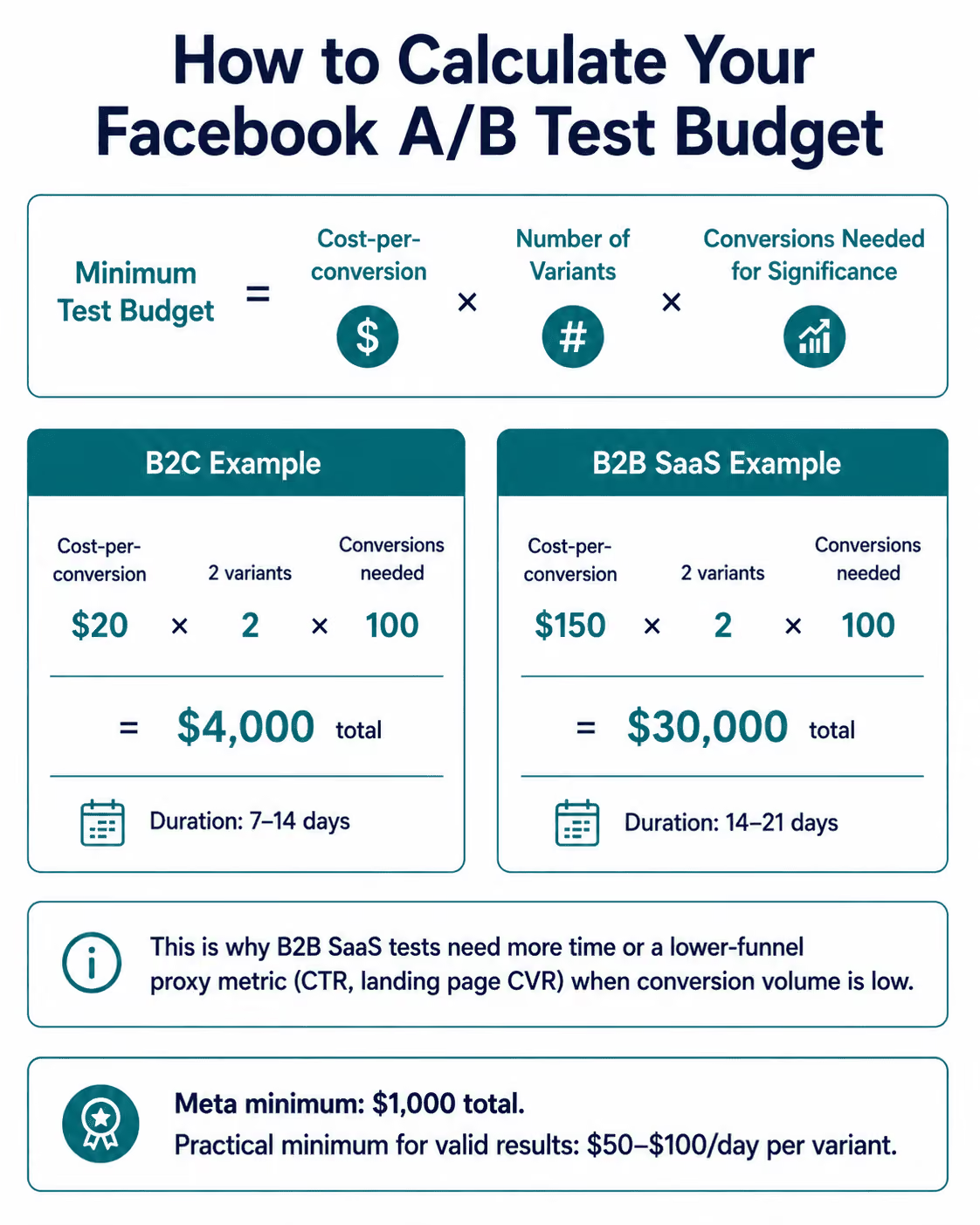
For B2B SaaS, this can be expensive. This is where Facebook ads price should be evaluated through test design, not only through CPM or CPC. For example, if a demo request costs $150 and the test includes two variants requiring 100 conversions each, the total budget would be around $30,000.
For BOFU scenarios with infrequent conversions , teams often use intermediate metrics: CTR, landing page conversion rate, or other top-of-funnel signals while evaluating lead quality separately.
Based on our experience, $50–$100 per day per variant is sufficient to obtain meaningful results within 7–14 days. Accounts with a monthly budget below approximately $3,000 often run tests that never reach statistical significance. This is one of the most common sources of false conclusions.
Step 3: Define Statistical Significance Thresholds
To ensure consistent learning, Meta recommends an average of 50 conversion events per ad set per week.
The following guidelines are typically used for a full-scale A/B test:
- 100+ conversions per variant for confident conclusions
- 25–50 conversions for preliminary directional signals
Smaller samples can provide directional signals, but they are rarely enough for final decisions.
Step 4: Set Test Duration
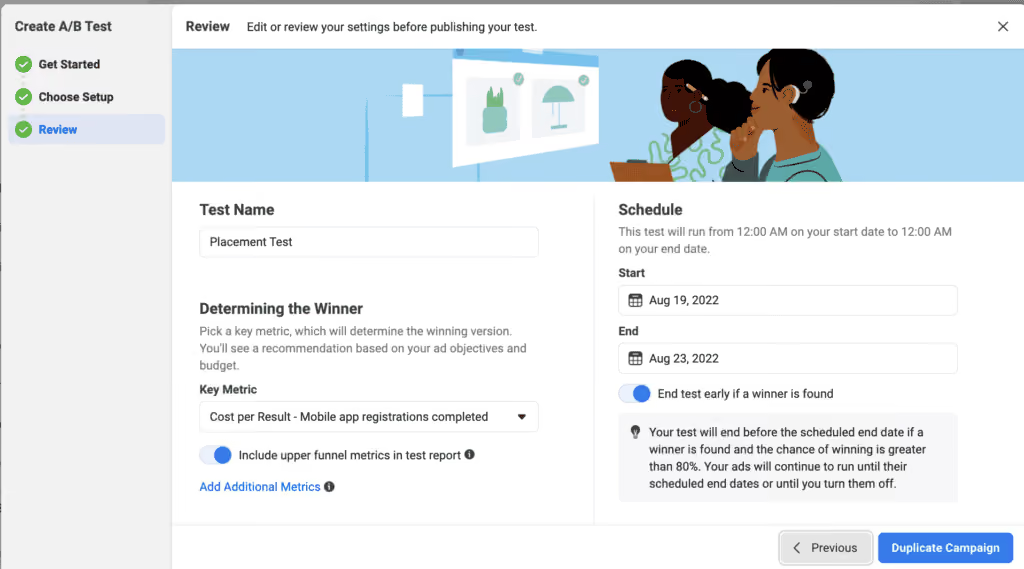
The minimum duration for most tests is seven days. This accounts for differences between days of the week and avoids distortions caused by short-term fluctuations.
For B2B SaaS with longer decision-making cycles, 14–21 days are more commonly used. In the first few days, the algorithm continues to learn and may distribute impressions unevenly.
Step 5: Split Budget Across Variants
For most tests, a standard 50/50 split is the best option. An asymmetric split (70/30) is justified if you want to limit exposure to a risky variant.
Step 6: Define the Winning Metric Before Launch
For Facebook ads conversion testing, the winning metric must align with the campaign’s goal. For B2B SaaS teams trying to generate leads on Facebook, CTR is rarely a sufficient metric. A variant with a higher CTR may attract more clicks, but it may also generate lower-quality leads. If the campaign’s goal is related to pipeline impact, the primary metrics are typically CPL, SQL rate, and lead quality rather than engagement alone.
Audience Testing: The Highest-Leverage Variable for B2B SaaS
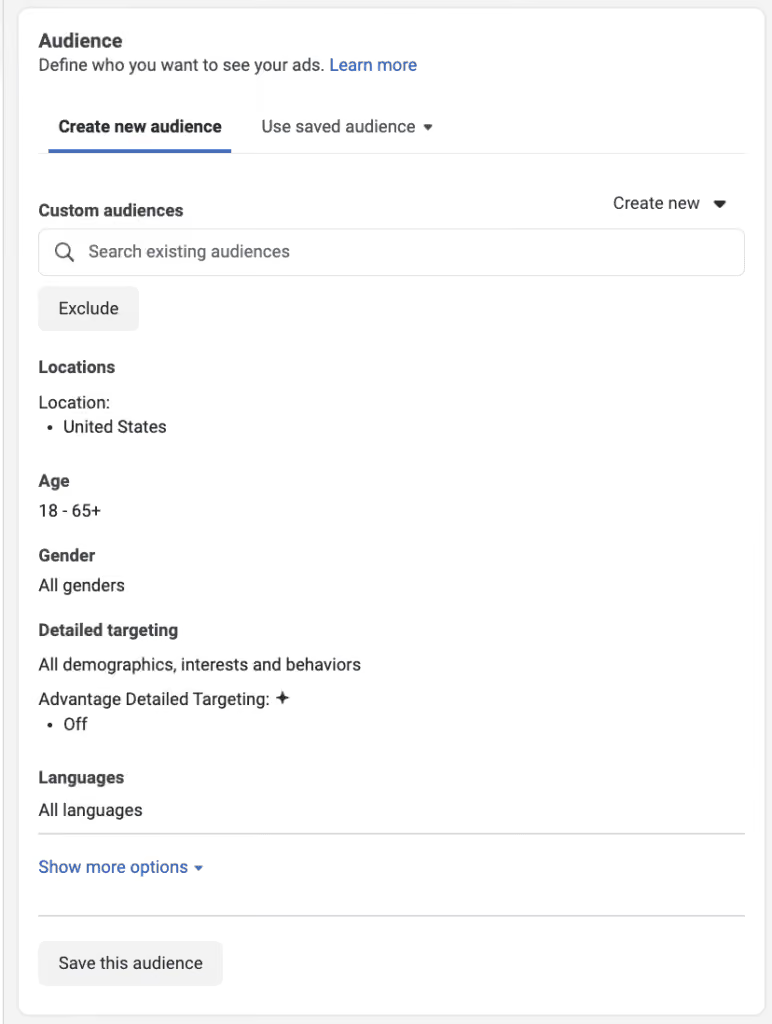
Based on our experience with various B2B SaaS campaigns, Facebook ads audience testing offers the greatest potential for improving performance. The first question is whether demand exists inside a specific audience segment. A Facebook ads agency should answer that before optimizing messaging, creative assets, or individual ad elements. For B2B SaaS campaigns, we typically test multiple audience types.
Different ICP Segments
If a product serves several roles, it’s best to test each role separately. For DevTools, for example, these roles might include the VP of Engineering, the DevOps Lead, and the Platform Lead. When multiple roles are combined into a single audience, the results become blended. Consequently, it becomes difficult to determine who is actually converting and which segment responds best to the offer. Once a strong audience segment is identified, it is usually split into separate campaigns with more personalized messaging.
Lookalikes Built from Different Seed Audiences
One common test is to compare a lookalike audience based on paying customers (1%) with a lookalike audience based on all website visitors (1%). Customer-based lookalikes consistently show stronger results. The difference comes from source-data quality. The algorithm learns from buyers, not from users who only visited the site once.
Retargeting Pools with Different Intent Levels
Not all website visitors are equally close to converting. his is why Facebook retargeting ads should separate high-intent visitors from general traffic instead of grouping everyone into one audience.
For example:
- Pricing page visitors over the last 30 days
- All website visitors over the last 30 days
Even within the same time frame, the intent level of these segments usually differs, which is often reflected in the CPL. For teams with limited budgets, this is one of the fastest tests because warm audiences produce signals faster. Benchmarks for audience testing show $500–$1,000 per variant for testing different interests or audience setups.
Creative and Copy Testing: What Moves the Needle for B2B SaaS
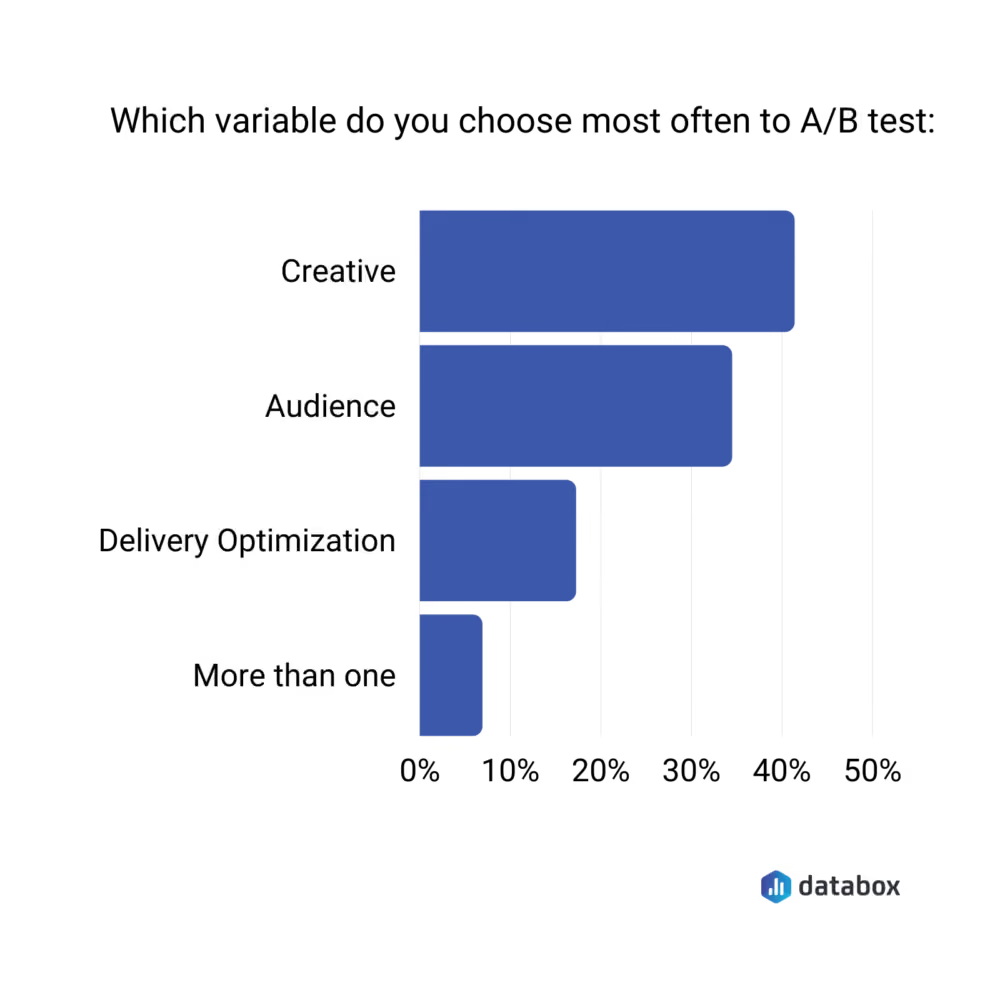
After audience and offer validation, Facebook ads creative testing becomes the next layer. Although changes in this area rarely have the same immediate impact as audience testing, this level of testing often yields incremental improvements that lower the CPL and increase conversion efficiency over time.
In practice, creative testing is usually categorized by budget size:
- Fast signal testing (CTR, hook rate): $50–$100 per creative. This is suitable for quickly assessing engagement and initial signals;
- CPA validation testing: $200–$500 per variant;
- Full statistical A/B testing: $500–$1,000 per variant.
For B2B SaaS, the strongest tests usually change the angle of the message, not just the design.
Product Screenshot vs. Outcome-Focused Visual
One of the more useful Facebook ads examples for SaaS testing is comparing a product UI against a visual representation of the expected outcome for the team. Instead of displaying the platform interface, show a message such as "Reduce reporting time by 40%" or display the final state of the workflow. This test helps determine what the audience responds to more strongly: product functionality or the promised outcome.
Social Proof vs. No Social Proof
For B2B solutions, social proof is often a separate variable for testing, such as client logos, G2 ratings, reviews, or specific customer examples. This is especially important for complex products. According to research, 97% of B2B buyers consider recommendations and reviews when making decisions.
Video vs. Static Image
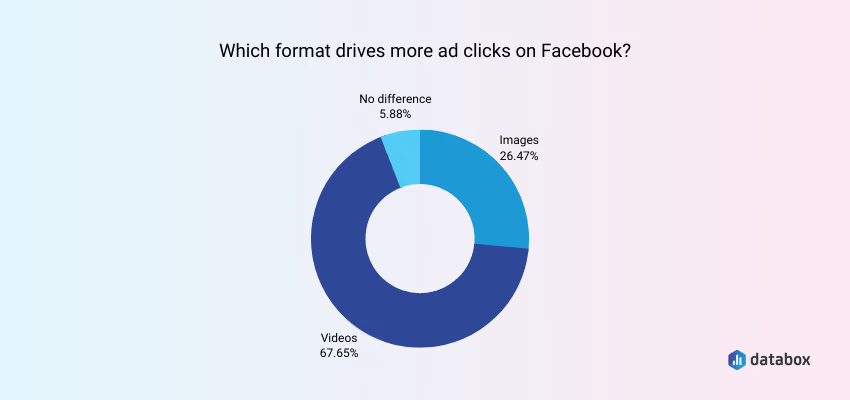
Not only do video and static images differ in visual format, but they also differ in the way content is consumed. Even when conveying the same message, video can impact attention span, engagement, and the depth of interaction. This makes video a high-value creative test for B2B SaaS.
Copy Testing Comes Later
It’s best to test headlines and messaging after validating the audience. For example, test pain-point versus outcome framing. It also makes sense to test CTA specificity separately. A more specific CTA does not always maximize CTR, but it better filters intent. For B2B SaaS, this is often more important.
If the conversion volume is too low for a full-scale A/B test, CTR and CPC can be used as interim metrics. However, final validation still happens further down the funnel. A higher CTR doesn't always mean a higher SQL rate or better lead quality.
Reading Results: How to Interpret Test Data Without Drawing Wrong Conclusions
Even a correctly configured test can fail during interpretation. A paid social ads agency should protect the account from premature conclusions, not just launch more variants. This occurs systematically and is often more costly than an incorrect setup because it leads to confidence in incorrect conclusions.
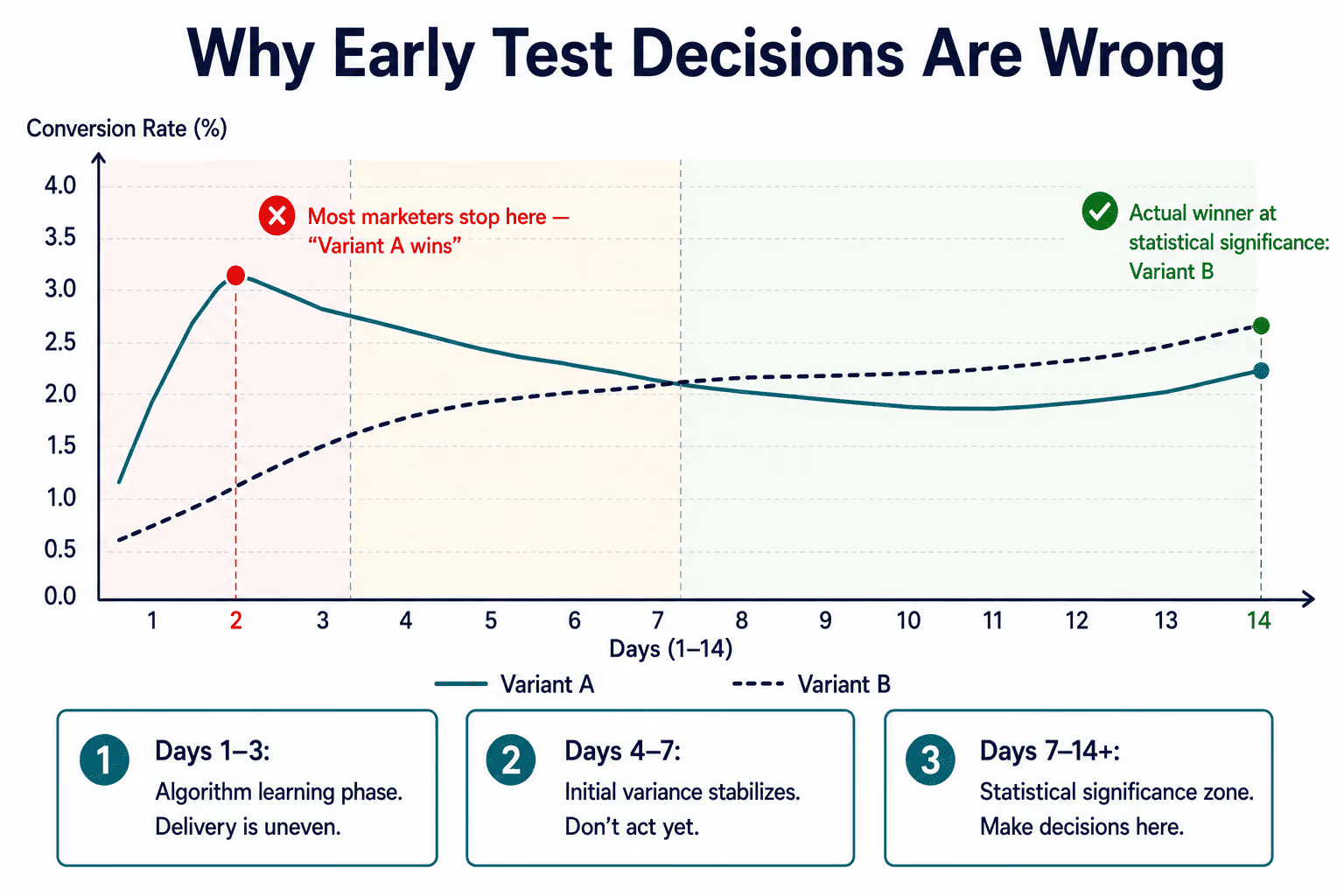
The most common mistake is stopping the test prematurely. For example, on the second day, Variant A shows a CTR of 3.2%, while Variant B shows a CTR of 2.8%. It seems obvious which option is better. However, two weeks later, performance drops. This can happen if you base your decision on short-term noise rather than consistent data.
Even 95% statistical significance does not guarantee certainty. In other words, roughly one in twenty statistically significant results can still be a false positive. For B2B SaaS, the risk is higher because demo requests and trial sign-ups occur less frequently, and small data sets are more susceptible to random fluctuations.
Divergent delivery adds another layer of complexity. Meta may distribute variants across different user types, even within a single test. Consequently, one variant may appear to perform better simply because the algorithm displayed it more frequently to a more responsive segment. Using Meta’s built-in Experiments tool helps reduce this risk.
It’s also important to properly analyze losing tests. A negative result doesn’t necessarily indicate a wasted budget. It eliminates a hypothesis that could have continued consuming budget in future campaigns.
The principle of replication is equally important. One successful test does not constitute a universal rule. If a hypothesis is significant enough, it’s worth testing on a different audience or in a different segment. Typically, a series of 10–15% improvements creates the noticeable impact across the account.
Finally, in Facebook ads performance testing the success metric must align with the business objective. For B2B SaaS, a low CPL does not necessarily indicate the best result. For example, a variant with a CPL of $80 and an SQL rate of 15% could be much stronger than an option with a CPL of $50 and an SQL rate of 5%, even though Meta’s standard report shows the latter as cheaper. The cheapest lead is not necessarily the best; what matters is the impact on the pipeline.
From Test to Scale: Building a Continuous Testing System for B2B SaaS
A single test answers one question. A practical Facebook ads testing framework helps you identify patterns, such as which audiences, offers, and approaches consistently work for your product at different stages of the funnel.
For B2B SaaS, split testing Meta ads does not work well as a series of random experiments. It is more useful to treat testing as a continuous cycle: hypothesis, test, result, decision, and next hypothesis. A useful testing system needs three things: documentation, priorities, and budget discipline.
Keep a Structured Testing Log
For teams deciding how to optimize Facebook ads beyond one-off wins, documentation matters. Without recording results, tests quickly turn into a series of isolated runs that don't build knowledge.
A simple testing log can use this structure:
After 10 or more documented tests, recurring patterns usually begin to emerge. These patterns reveal which audiences consistently deliver the best conversion rates, which offers perform better, and which formats generate the most high-quality leads for your product.
Build Testing Cycles by Quarter
A SaaS digital marketing services provider should organize tests by phase rather than run disconnected experiments. For B2B SaaS, it’s helpful to organize tests by phase:
- Q1: Audience and offer validation
- Q2: Creative optimization on validated audiences
- Q3: Copy and CTA testing
- Q4: Format testing and scaling winners
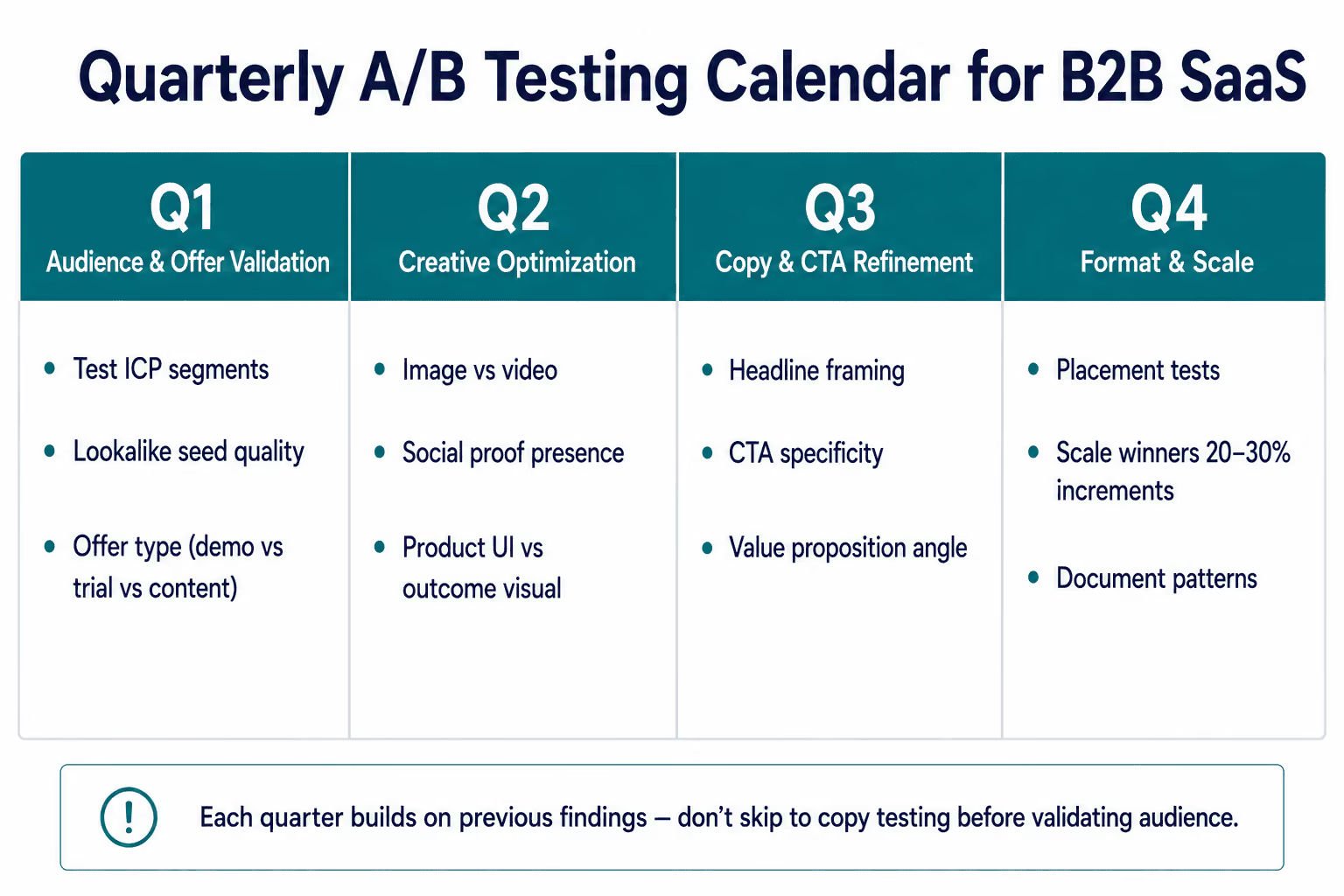
This approach helps prevent the mixing of multiple levels of hypotheses at the same time.
Scale Winners Gradually
Increase budgets gradually, usually by 20–30% per step. Scaling up too quickly can send the campaign back into the learning phase, which can temporarily worsen performance.
Protect Statistical Quality
Insufficient budget is one of the most common causes of false conclusions. Teams with less than $3,000 per month often run too many parallel tests that fail to reach statistical significance. As a result, they draw conclusions that appear convincing but are not supported by the data. If the budget is limited, one well-designed test is usually more useful than several underpowered experiments. This is one of the least visible best practices in Facebook ads, but it protects the account from scaling decisions based on weak data.
FAQs
How to A/B test Facebook ads correctly?

When should B2B SaaS teams split test Facebook ads?
Is ab testing Facebook ads the same as duplicating campaigns manually?
What should you test first in Facebook Ads A/B testing?
How long should a Facebook Ads A/B test run?