
Top 10 SaaS Branding Agencies in 2026

April 8, 2026

The best SaaS branding agency depends on your stage and the problem you need solved. Shortlist Koto or BASIC/DEPT for enterprise brand systems, Ramotion or Clay for brand tied to product UI, Motto or Emotive Brand for a strategy reset, The Branx for seed to Series B startups, and Ironpaper for brand plus demand generation. Superside is a design subscription, not a branding agency.
This guide compares 10 SaaS branding agencies on pricing, fit, pros, and cons. A SaaS branding agency defines how a software company is positioned and presented: audience, messaging, tone of voice, and visual identity. SaaS buyers research before talking to sales, so generic positioning loses deals early.
At Aimers, we manage paid acquisition for 100+ SaaS accounts and often see strong campaigns stall on homepages that miss the ad’s promise, which is where landing page design and conversion rate optimization make the difference.
SaaS Branding Agencies Comparison Table: Pricing, Fit, and Strengths
All 10 agencies side by side. This is not a ranking: the right agency depends on your stage, budget, and the problem you are fixing. "Not published" means expect a scoped quote.
What Separates a Great SaaS Branding Agency from a Generic One
Brand Strategy vs. Visual Identity, Why B2B SaaS Needs Both
Most people conflate branding with visual design. Understandable, because the visual output is what you can point to in Figma or show in a board meeting. But the positioning, the messaging architecture, the tone of voice, that's where the actual work happens, and it's where most generic marketing agencies cut corners.
B2B SaaS has constraints that most branding frameworks weren't designed for. Your buyer is rarely one person. There's a champion, a skeptic, a CFO with a spreadsheet, and sometimes a procurement team that shows up late and slows everything down. A beautiful SaaS brand built on vague positioning is just expensive wallpaper. Agencies that genuinely get B2B SaaS make things mean something to the specific person sitting across from your sales team.
How to Choose the Right Branding Agency for Your SaaS Company
Every agency claims to "specialize in SaaS." Most have one fintech case study stretched into a niche. The real filter: can they explain why brand decisions were made, not just what was made? Can they connect past work to pipeline, churn, or retention? If a saas branding agency can't answer those questions clearly, they're selling you a portfolio, not a process.
At Aimers, brand and performance marketing are parts of the same system. Brand shapes how paid search campaigns land; performance data reveals what the brand needs to say. Treating them as seperate budgets is one of the costliest mistakes SaaS teams make. And if you're already running campaigns, a PPC audit often surfaces exactly where brand messaging is breaking down.
Questions to Ask Before Signing a Contract
Before committing to any agency, get real answers to these:
- Have they worked with companies at your stage and in your specific category?
- What does their discovery process look like, and how long does it genuinely take?
- How do they define success, in design terms or business terms?
- What's the post-launch support? Is the relationship over when you recieve the brand guide?
Those answers tell you fast whether you're talking to a deliverable shop or a real strategic partner.
10 Top SaaS Branding Agencies to Know in 2026
This isn't a ranked list. The right choice depends too much on your stage, budget, and what you're actually trying to fix. What we looked at: portfolio quality, depth of SaaS experience, strategic rigor, and evidence that the work moved a real business metric, not just won a design award.
1. Koto Studio

Global creative company founded in London in 2015, with studios in New York, Los Angeles, Berlin, and Sydney. Clients include Microsoft (agency of record), Amazon, and Airbnb, and it created the LA28 Olympic identity. It acquired Stereo Creative in September 2026 to start a global studio network.
Best For:
Growth-stage and enterprise tech companies that need a brand system across many markets and teams.
Pricing:
Not published. Expect the premium end.
Pros:
- Distinctive output without chasing trends
- Studio infrastructure for multi-market work
Cons:
- Likely more agency than an early-stage company needs
- Confirm who will staff your project as the group grows
2. Ramotion
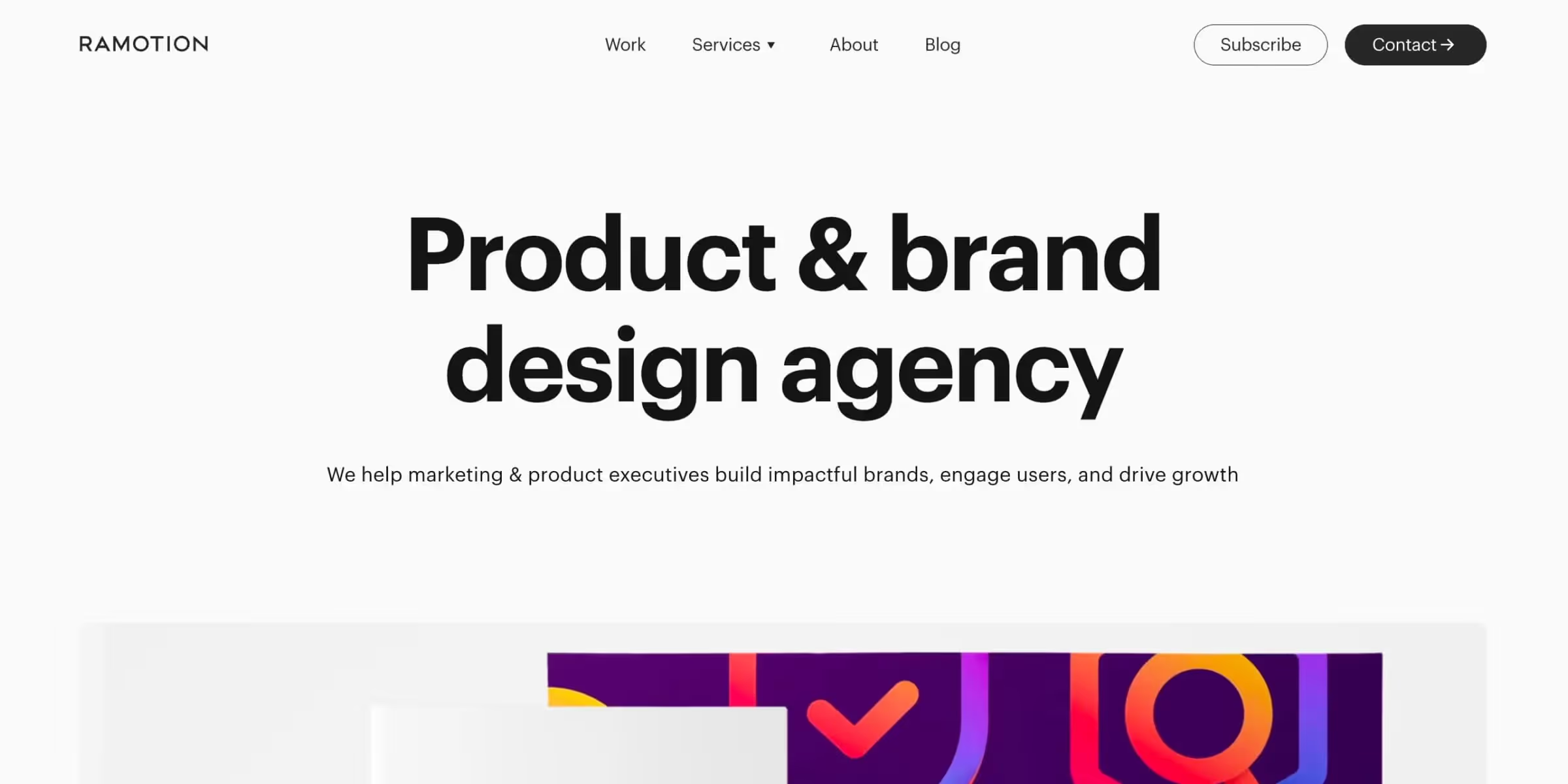
San Francisco agency combining brand identity, marketing websites, and UI/UX design, with a focus on SaaS, fintech, and developer tools. It publishes startup packages, which is rare at this level.
Best For;
Funded SaaS, fintech, and developer-tool companies, seed through growth, that want brand and product design to feel like one thing.
Pricing:
Packages reported at about $60K to $85K; another roundup cites a $50K minimum.
Pros:
- Brand and product design under one roof
- Published packages make budgeting easier
Cons:
- Some Clutch reviewers wanted more competitive pricing
- Less suited to research-heavy positioning work
3. Motto
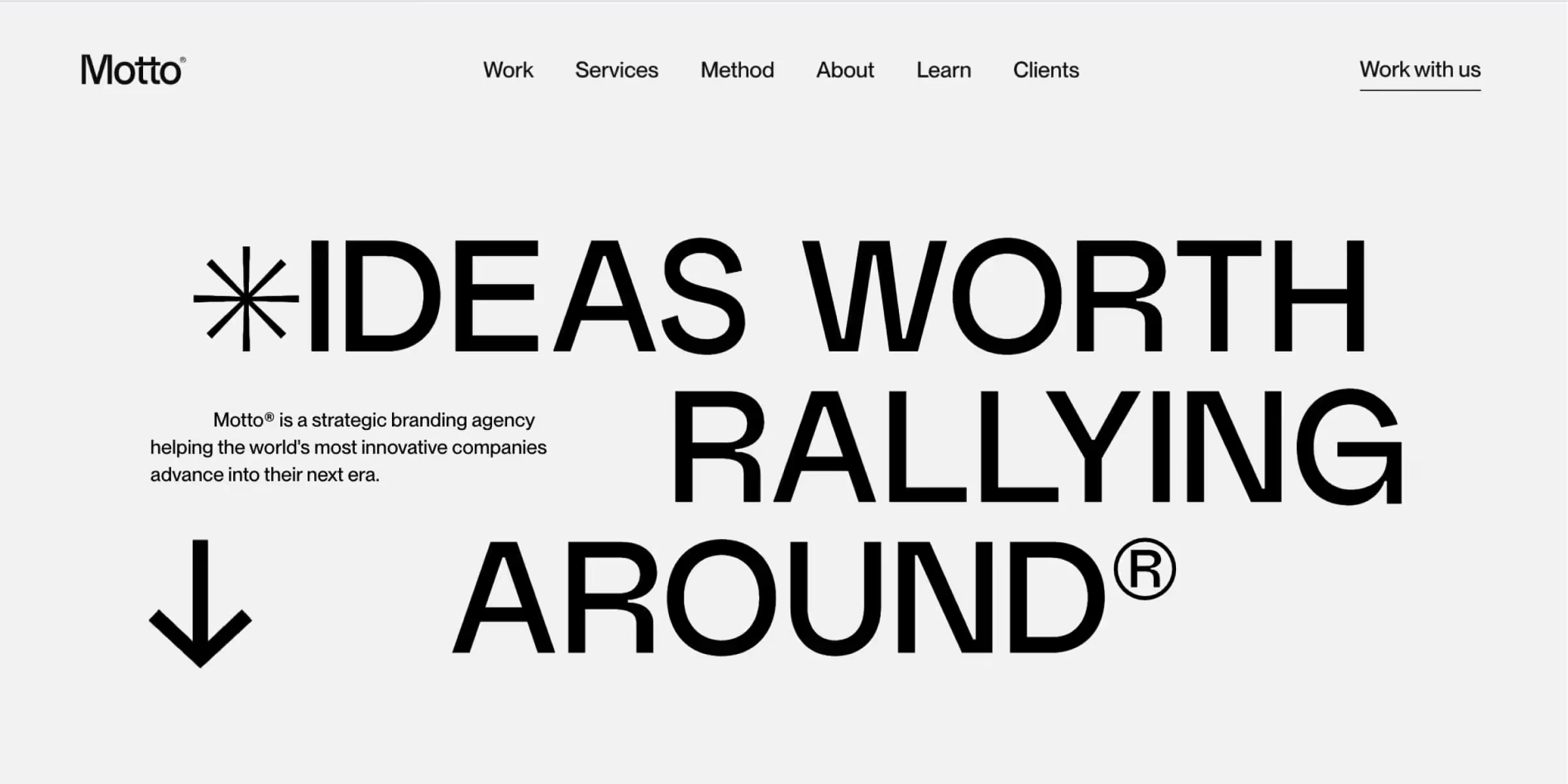
New York strategic branding agency founded in 2005, building "Ideas Worth Rallying Around." Reported clients include Google, Virgin Voyages, and Goodnotes. Discovery is deep and visual work comes late by design.
Best For:
Companies at a real inflection point (new leadership, a pivot, or a market the old story no longer explains) that need a strategic reset.
Pricing:
Not published.
Pros:
- Surfaces positioning problems other agencies avoid
- Aligns leadership, not just the visual layer
Cons:
- Not the fastest option
- Heavy if you only need a visual refresh
4. Unfold
Independent creative agency covering campaigns, original content, media, production, immersive experiences, and digital products. Its focus is entertainment, gaming, and consumer brands rather than B2B tech.
Best For:
Consumer-facing brands that need culture-driven campaigns and content, not SaaS buyer-journey work.
Pricing:
Not published.
Pros:
- Broad production capability, from content to immersive experiences
- Strong fit for brand-led, high-visibility launches
Cons:
- No visible B2B SaaS positioning or SaaS case studies on the homepage
- Ask for relevant B2B work and who would be on your day-to-day team before shortlisting
5. Clay
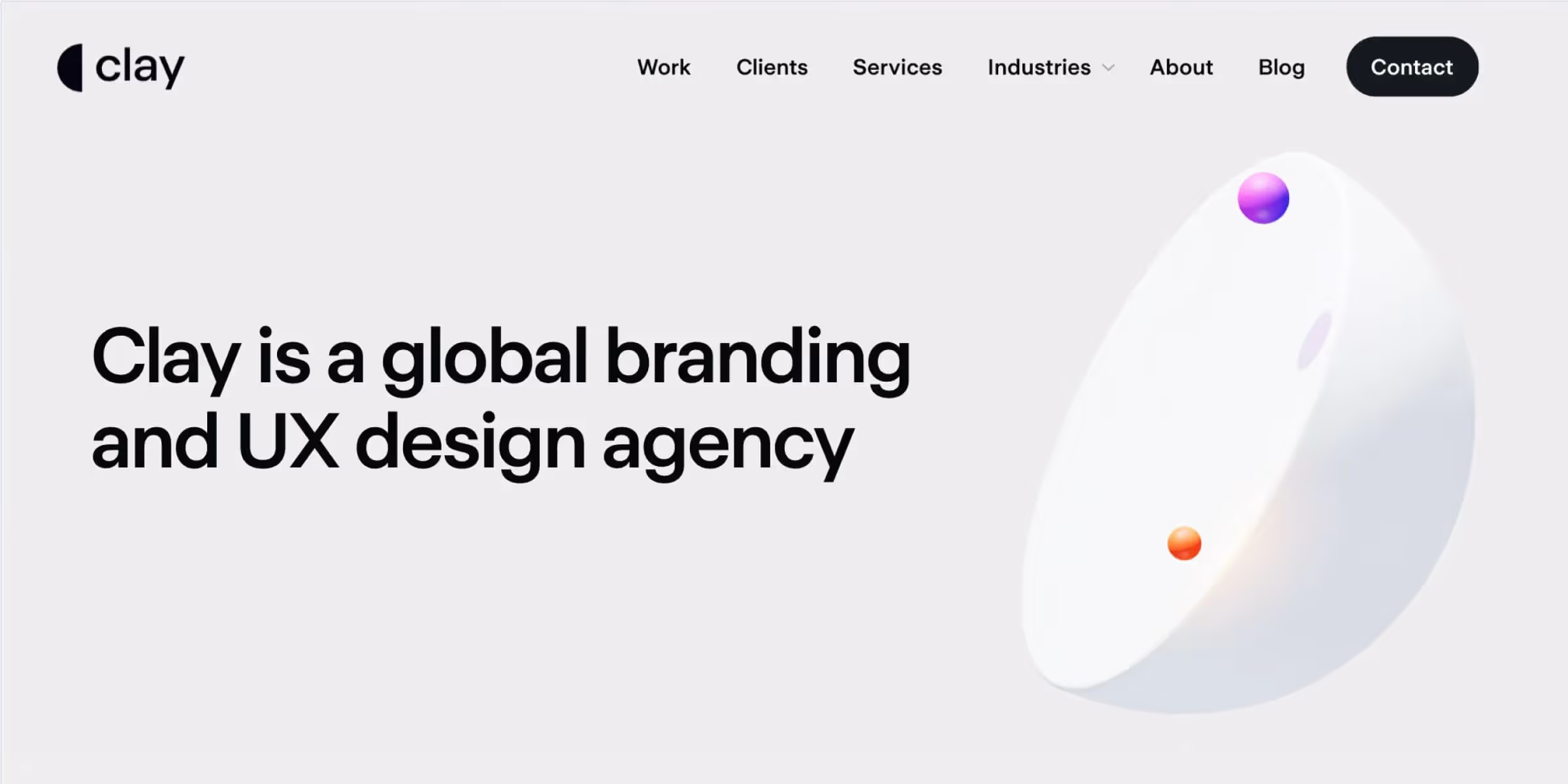
San Francisco agency covering branding, product UI/UX, websites, development, and generative AI work. Its site lists clients including Meta, Google, Stripe, Slack, Coinbase, and Cisco.
Best For:
Product-led SaaS companies where brand, UI/UX, and design systems must be built together.
Pricing:
Reported at about $10K to over $150K, a range that mostly reflects scope.
Pros:
- Identity and product design from one team
- Reviewers praise project management and execution
Cons:
- Clutch reviewers note pricing can feel high
- Some mention friction with overseas development staff, so clarify who is on your day-to-day team
6. BASIC/DEPT

San Diego branding and digital design agency (about 120 employees) acquired by Amsterdam-based DEPT in December 2020. Coverage then named clients including Google, Airbnb, and Patagonia. It now draws on DEPT's global production network.
Best For:
Larger companies running rebrands that must hold up in high-stakes rooms on a fast timeline, such as before a fundraise, expansion, or acquisition.
Pricing:
Not published; likely premium.
Pros:
- Production depth and network resources
- Comfortable with complex enterprise approvals
Cons:
- Network scale can mean more layers and less founder-level intimacy
- What we could verify dates from 2020, so ask who leads your engagement and which recent SaaS work they can show
7. Superside
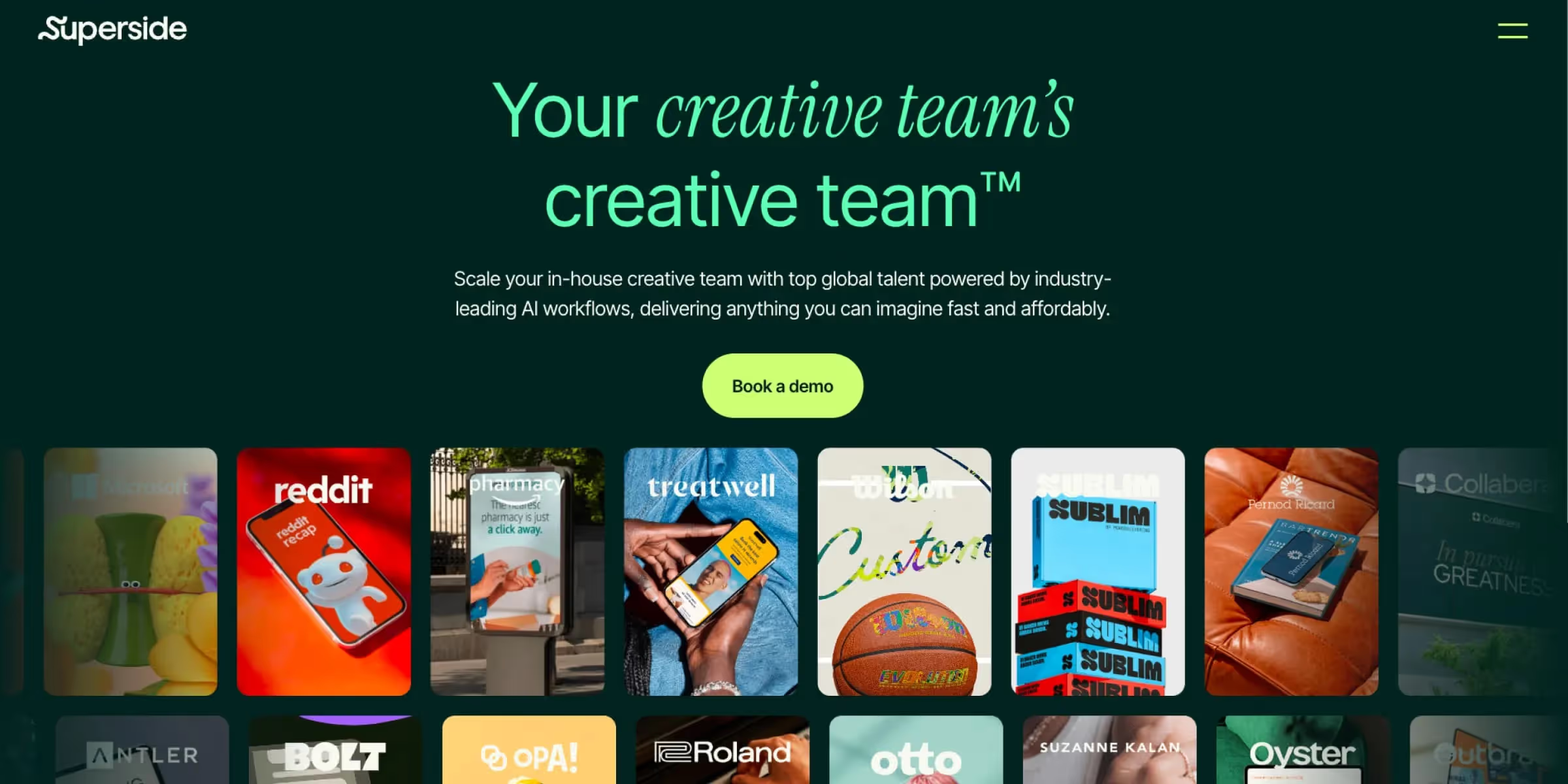
Design-as-a-service subscription, not a traditional branding agency. It covers design, motion, and video in one plan.
Best For:
Teams whose brand falls apart at volume (ad creative, LinkedIn carousels, decks, content) and already have finished guidelines.
Pricing:
From $15,000 per month on an annual term plus a $1,000 monthly software fee, roughly $192K over the first year (as reported August 2026). Older roundups quote lower entry points, so check the current page.
Pros:
- Consistent quality across high-volume production
- Many formats in one subscription
Cons:
- Annual commitment and a high entry point
- It will not define your positioning, so bring a finished strategy
8. Emotive Brand
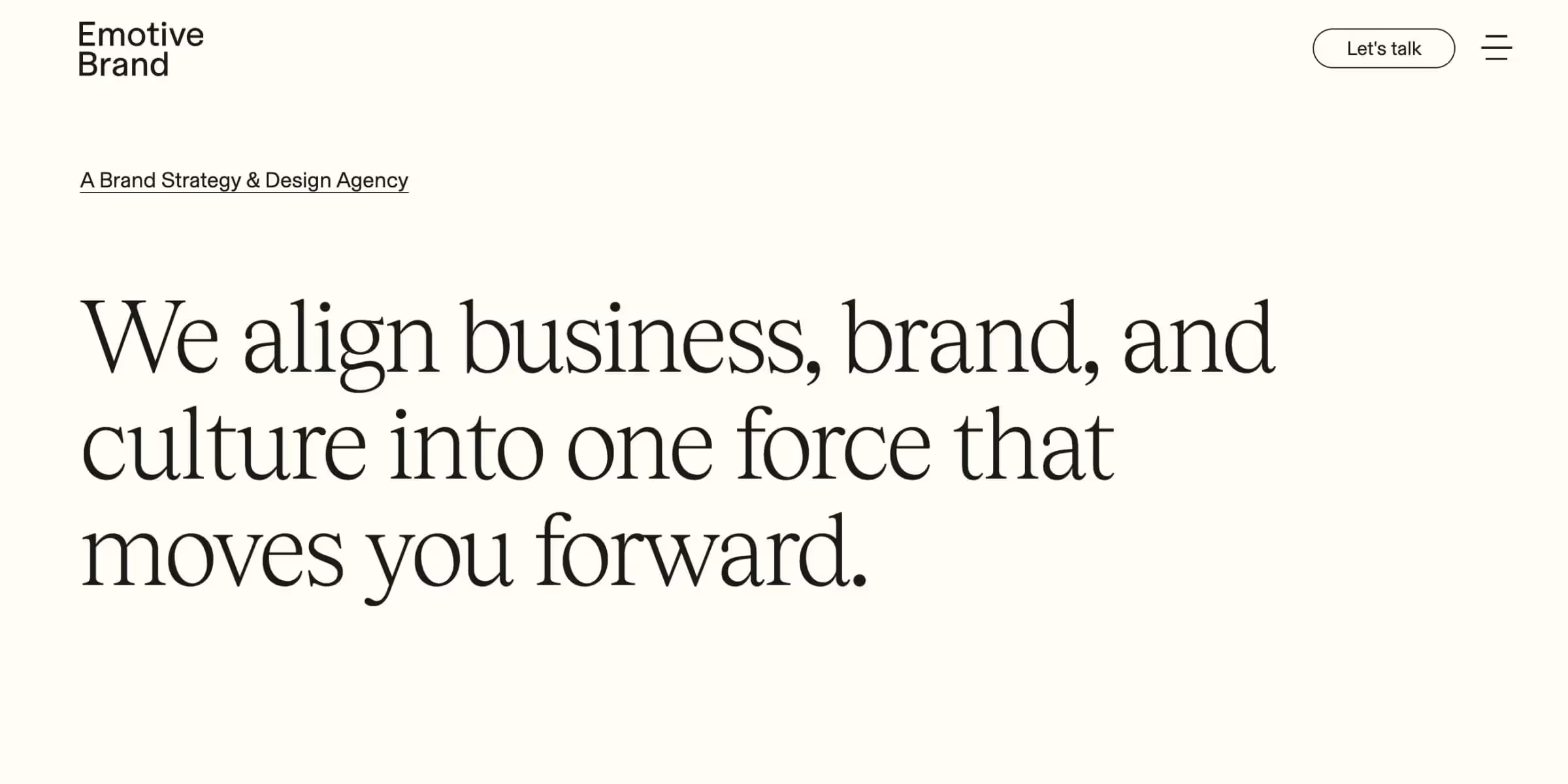
Oakland brand strategy and design firm founded in 2009 for "product-proven B2B technology and AI companies." Its proprietary Emotional Acceleration method spans positioning, narrative, verbal and visual identity, and employer branding.
Best For:
Crowded B2B tech and AI categories where product differentiation is thin and trust is the real differentiator.
Pricing:
$25K+ minimum project size on Clutch; real scopes are likely higher.
Pros:
- Positioning built around buyer psychology
- Employer branding available in the same engagement
Cons:
- Strategy-heavy, so check production support
- Proprietary language needs translating into measurable outcomes
9. Ironpaper
Part brand agency, part demand generation shop, which tends to produce work that stays grounded in commercial thinking rather than floating free of it. They ask what most branding agencies skip: how does this positioning change conversion rates, lead quality, and sales cycle length?

New York B2B growth agency founded in 2002 for companies with complex sales cycles. It combines demand generation, design and brand strategy, and enterprise website builds, which keeps the work commercially grounded.
Best For:
Teams that want brand decisions tied to conversion rates, lead quality, and sales-cycle length, instead of hiring a branding agency and a demand gen agency separately.
Pricing:
Not published.
Pros:
- Commercial thinking built into the brand process
- Fewer handoff gaps
Cons:
- Check how much is identity craft versus demand programs
- A combined offer can be less deep than a specialist
10. Matchstic
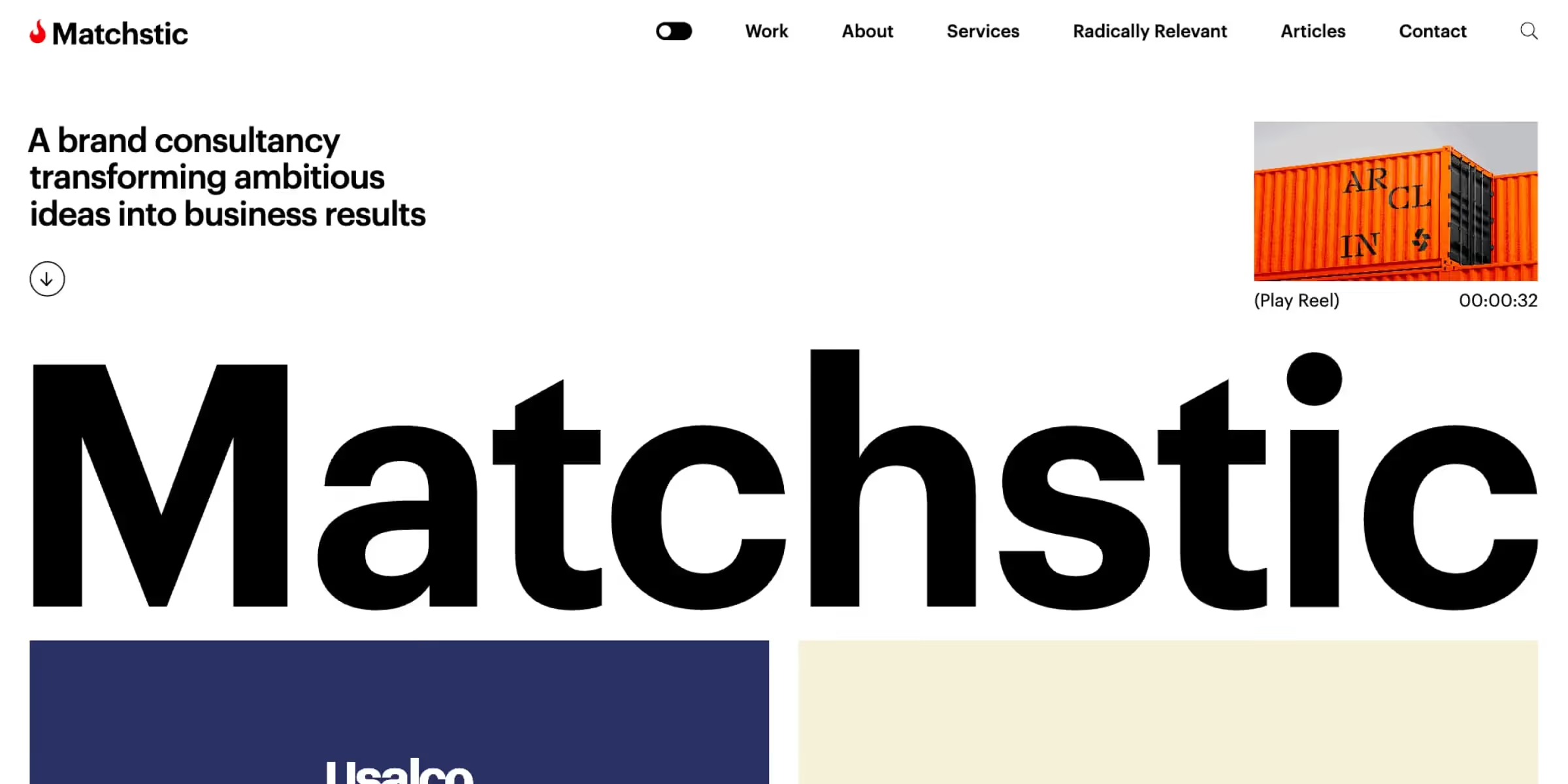
New York B2B growth agency founded in 2002 for companies with complex sales cycles. It combines demand generation, design and brand strategy, and enterprise website builds, which keeps the work commercially grounded.
Best For:
Teams that want brand decisions tied to conversion rates, lead quality, and sales-cycle length, instead of hiring a branding agency and a demand gen agency separately.
Pricing:
Not published.
Pros:
- Commercial thinking built into the brand process
- Fewer handoff gaps
Cons:
- Check how much is identity craft versus demand programs
- A combined offer can be less deep than a specialist
What Every Agency on This List Gets Right About SaaS Branding
There's a pattern across every agency on this list worth naming. They all treat brand as operational reality, something that has to work inside a real org with real constraints, not just something that photographs well for a case study.
See how some of our clients handled brand and performance together in our case studies.
Red Flags to Watch When Vetting Marketing Agencies for Your SaaS Startup
Real discovery can't be compressed into a sprint. What comes out of a two-week "strategy session" looks like a deliverable.It doesn't move your numbers.
Final Thoughts, Picking a SaaS Branding Agency That Grows With You
There's no universally right answer. The best branding partner depends on your stage, your category, your existing brand equity, and what you're realistically trying to fix in the next 12 to 24 months.
What we've seen at Aimers, working with SaaS companies across every growth stage, is that companies investing in brand deliberately and not reactively consistently outperform the ones that don't. Paid campaigns run more efficiently. Sales cycles shorten. Retention holds in ways that are hard to attribute cleanly but are real nonetheless.
Brand is infrastructure. The companies that treat it like decoration tend to find that out the hard way, usually right around the time they're wondering why a well-funded campaign isn't converting.
A Note Before You Go
Brand lays the foundation, and performance marketing turns it into pipeline. Aimers has helped 100+ SaaS companies scale through paid ads, CRO, and landing pages, with $30M+ in ad spend managed and a 4.93/5 rating on Clutch, G2, and GoodFirms.
If you're wondering where your ad budget is silently leaking, book a short strategy call with Aimers. No pitch involved, just an honest look at what's working and what isn't.
FAQs
More than most founders expect. It starts with brand strategy: positioning, messaging, tone of voice, and design systems that work across product, marketing, and sales. Visual identity comes after that foundation is in place, not before.

Boutique firms start around $30,000 to $80,000. Larger agencies run $150,000 and above. Design-as-a-service platforms like Superside operate on subscriptions. Scope drives price significantly, a messaging engagement costs very differently than a full identity system.
Earlier than most founders think. Serious brand work before you have ICP clarity is premature, but waiting until Series B means years spent building on a wrong foundation. Late seed to Series A is usually the right window.
Yes, more directly than most expect. Across our accounts at Aimers, companies with coherent brand identities consistently show better CTRs, stronger landing page conversion, and lower CPAs. The ad gets the click; the brand closes the gap.
A refresh updates colors, logos, and typography. A rebrand is strategic. The clearest signal: your salespeople are improvising positioning in every call, or you look at your top competitors and realize you all sound identical. A new color palette won't fix that.
October 7, 2026
October 6, 2026