
SaaS Conversion Rate Optimization: Key Trends for 2026

January 8, 2026
.avif)
The playbook for conversion rate optimization for SaaS has completely flipped in the last year. What worked earlier, polished landing pages, generic testimonials, and gated demos, isn't cutting it anymore. Today's B2B buyers demand transparency before they'll even consider filling out a form.
If you're wondering what is a good conversion rate for SaaS or how to boost SaaS conversion rates in this new environment, you're not alone. The average SaaS lead conversion rate hovers around 3-5% for most companies. But top performers are hitting 10-15% by using radical shifts in how they present, price, and personalize their products.
SaaS CRO in 2026 isn't about tweaking button colors or running endless A/B tests. It's about fundamentally rethinking how you build trust, reduce friction, and meet buyers where they actually are. In this guide, we're breaking down the CRO trends 2026 that are moving the needle for conversion rates for SaaS companies right now, strategies we're implementing for clients managing over $30M in ad spend across Google Ads, LinkedIn, and paid social channels.
Our CRO expert Ann Gerasimovich broke down all trends with real data in our guide below.
Summary of Conversion Rate Optimization for SaaS
Before we get into the weeds, here's what you need to know about SaaS conversion optimization in 2026:
- Show, don't tell, Interactive demos convert 2x better than static screenshots; leads close 20-25% faster
- Radical pricing transparency, Dynamic calculators and clear "hero" plans combat decision paralysis
- AI-driven personalization, Industry-specific landing pages and LLM-powered chatbots drastically lower bounce rates
- Video-first approach, Raw, founder-led videos outperform polished explainer content
- Verifiable social proof, G2 reviews and real tweet embeds are replacing generic testimonials
The conversion rate optimization for saas formula has evolved beyond simple math (visitors ÷ conversions). It's now about understanding user intent, removing psychological friction, and providing value before asking for anything in return. For a deeper breakdown of this evolution, check out our guide on 13 steps to improve your SaaS conversion rate.
Strategic Shifts (Show, Don't Just Tell)
Nobody wants to hand over their email to "Book a Demo" anymore. The era of gatekeeping your product behind forms is over. SaaS user experience optimization now starts with radical transparency, the kind that makes traditional marketers uncomfortable.
Interactive Demos Over Static Screenshots
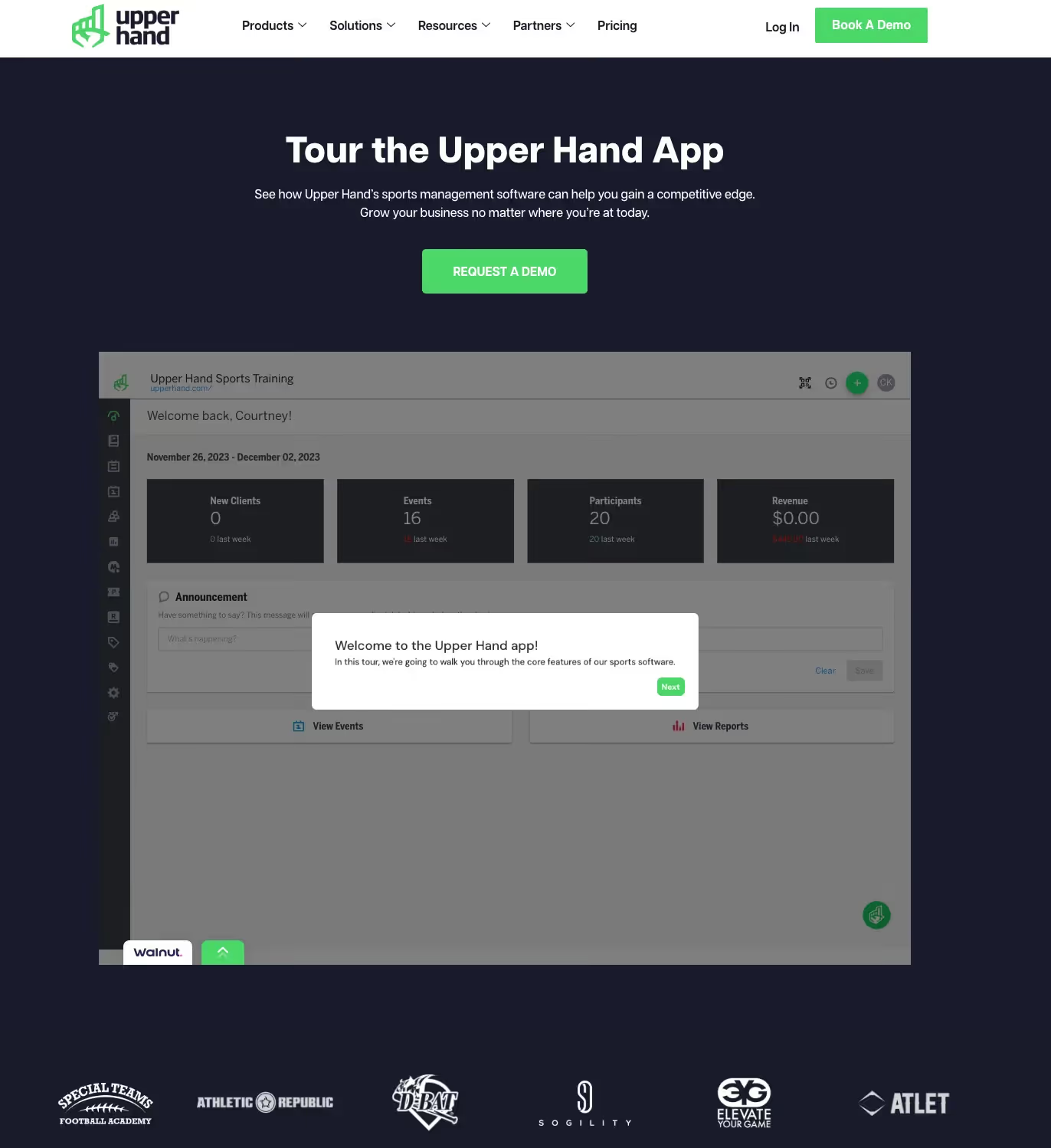
Here's a conversion rate optimization for a SaaS example. UpperHand, one of our clients, replaced their traditional "Request a Demo" CTA with an ungated interactive tour built on Navattic. We worked with them on the landing page design to position the tour prominently. The result? A 127% increase in qualified leads and a 23% reduction in sales cycle length.
This approach works for SaaS growth optimization because it respects the buyer's journey. Interactive demos using platforms like Navattic, Arcade, or Storylane provide a hands-on experience without the commitment anxiety of a full sign-up. According to Gartner's research on B2B buyer behavior, buyers spend only 17% of their time meeting with potential suppliers, they want to self-educate on their own terms.
What to implement: Position a "Take a Tour" button alongside your "Start Free Trial" option. This dual-CTA approach captures both high-intent converters and exploratory researchers. Interactive demos generate 2x higher engagement than video walkthroughs, and these leads close 20-25% faster because they've self-educated through the product.
Community-Led Trust Signals
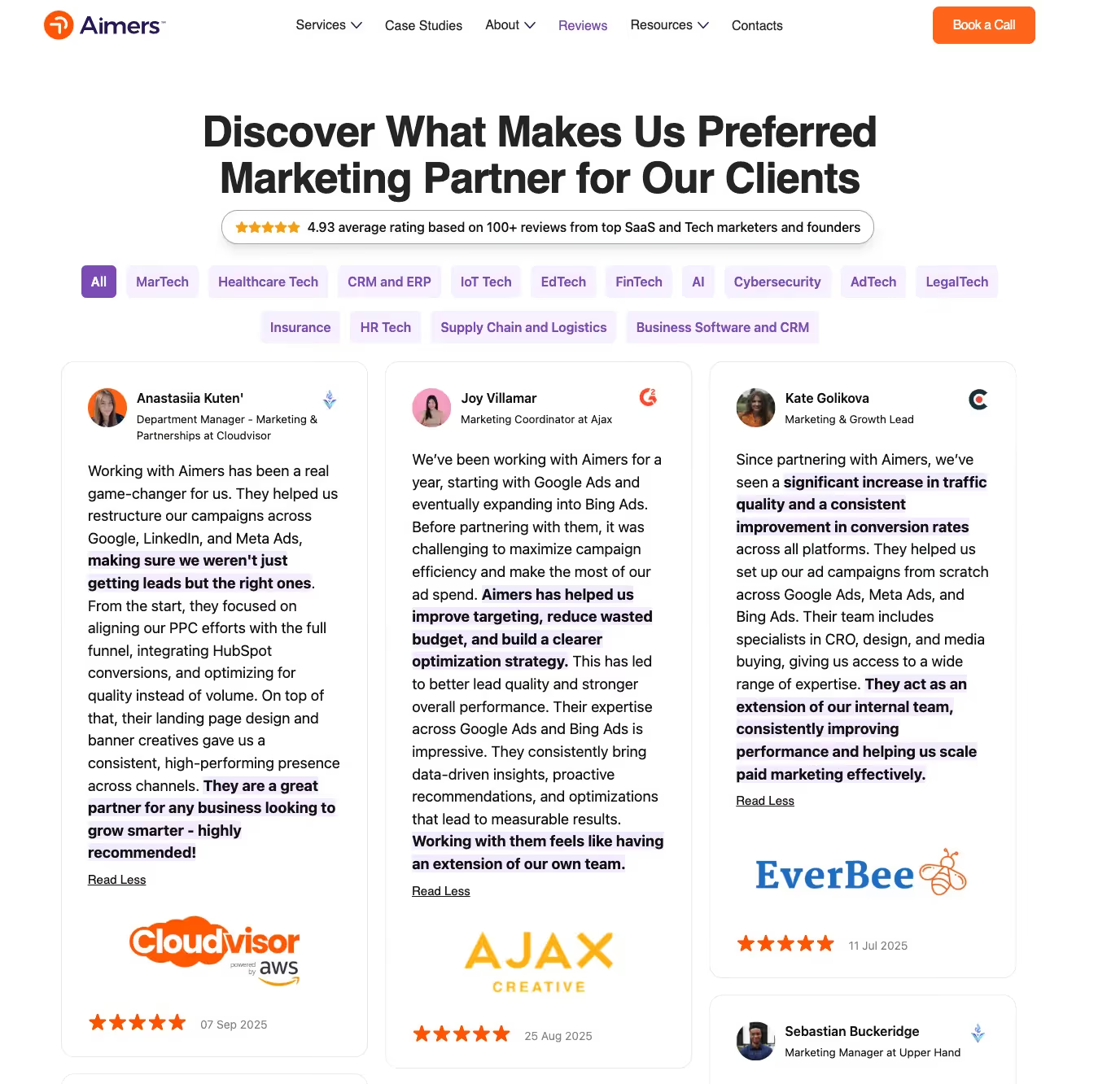
Buyers in 2026 are hunting for unbiased, verifiable proof. That's why companies like Aimers are embedding live review feeds directly from G2 and Capterra onto their landing pages. These widgets pull real-time ratings and link directly to reviewer profiles, no more "this could be fake" skepticism.
Your tactical move: Create a "Wall of Love" section featuring embedded tweets from actual users. Keep the typos, the casual language, the real profile pictures. This messiness signals legitimacy in a way polished marketing copy simply can't.
For SaaS funnel optimization, place these trust signals at multiple touchpoints, homepage, pricing pages, feature pages, and especially in your checkout flow where last-minute doubts creep in.
Pricing Page (Dynamic & Transparent)
If you're serious about how to improve SaaS conversion rates, your pricing page deserves obsessive attention. It's often the second-most visited page and the last stop before a buy decision.
We see this constantly in our CRO audits. Companies drive thousands of visitors to their pricing page through paid campaigns, but conversion rates sit at 5-8% when they should be hitting 15-20%. Our team has compiled conversion rate optimization best practices that address exactly these issues.
Interactive Pricing Calculators
If your pricing model is usage-based (per seat, per API call, per email sent), static pricing tables create confusion. And confusion kills conversions.
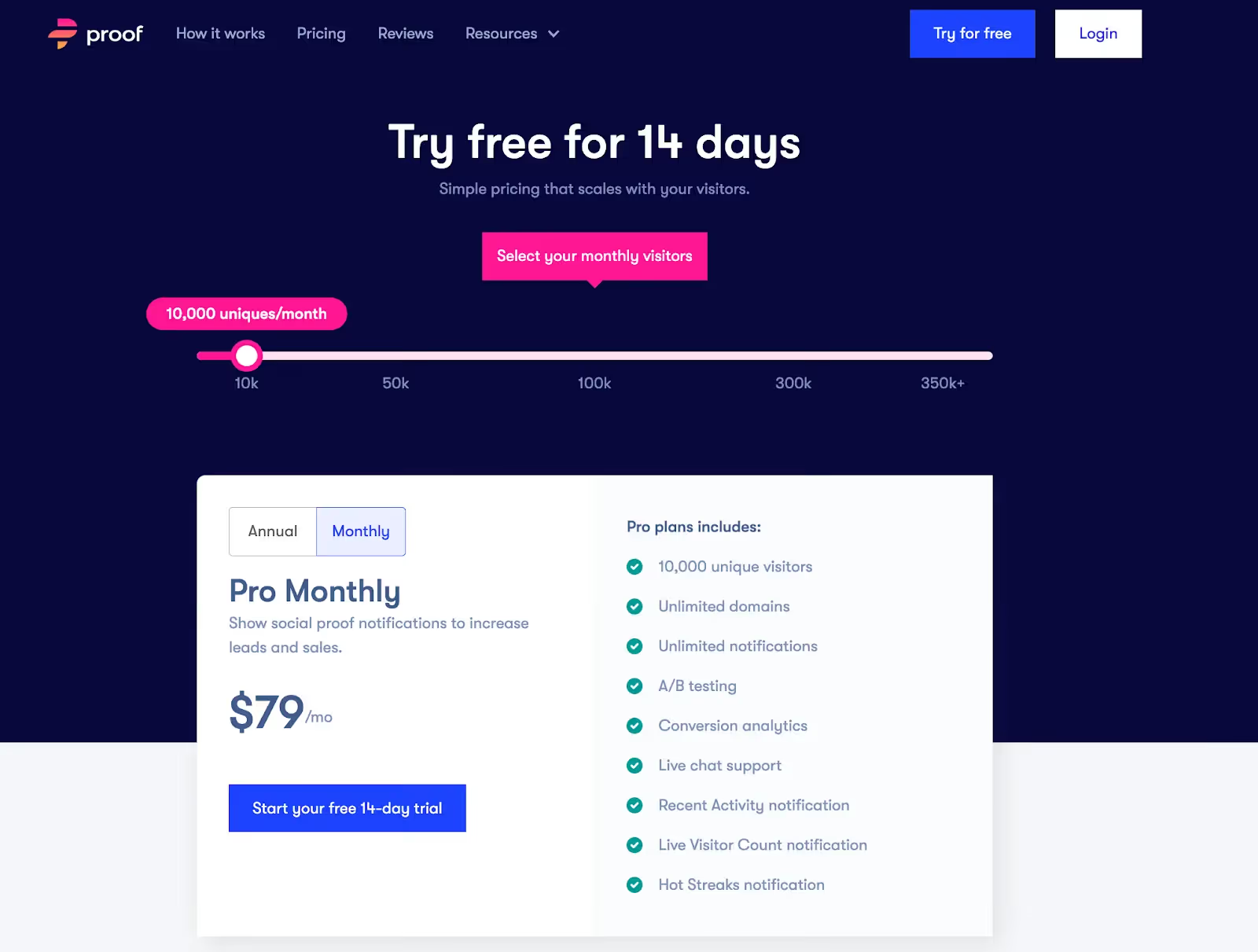
UseProof solved this with a dynamic calculator that lets visitors input their expected usage and see real-time cost projections. When buyers can visualize their specific costs upfront, they move from "Is this too expensive?" to "Is this worth it for my use case?", a much easier objection to overcome.
The "Hero" Plan
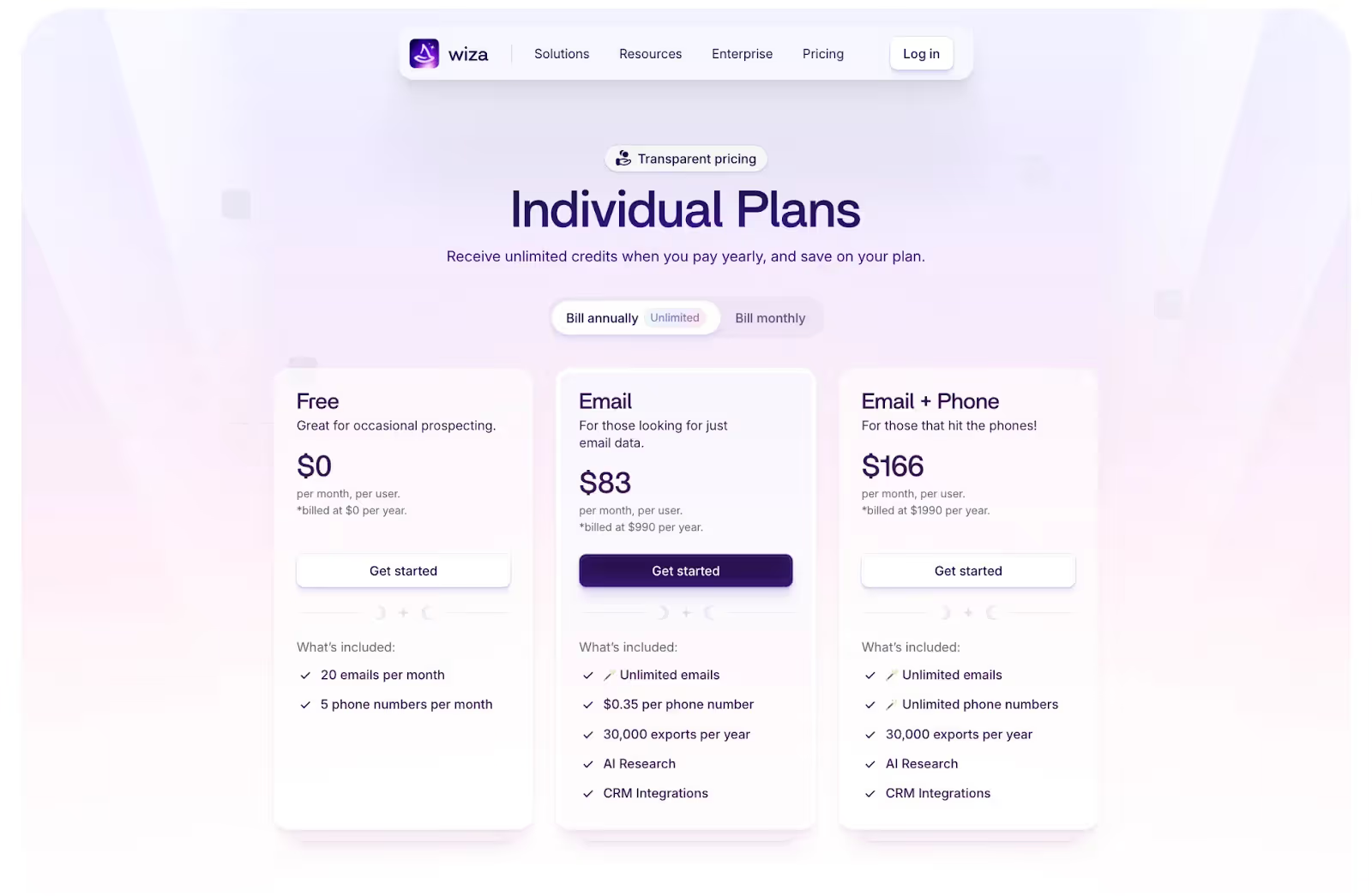
The Paradox of Choice is real. Wiza nails this with aggressive visual hierarchy, their mid-tier plan features a distinct border, drop shadow, and "Most Popular" badge. It's pre-selected if you toggle between billing cycles. That's smart product-led growth CRO.
Analyze which plan has your best retention metrics and lowest churn, that's your hero plan. Give it visual prominence. Companies doing this see 15-20% lifts in conversion to paid plans simply by reducing cognitive load.
Direct-to-CTA Trust Signals
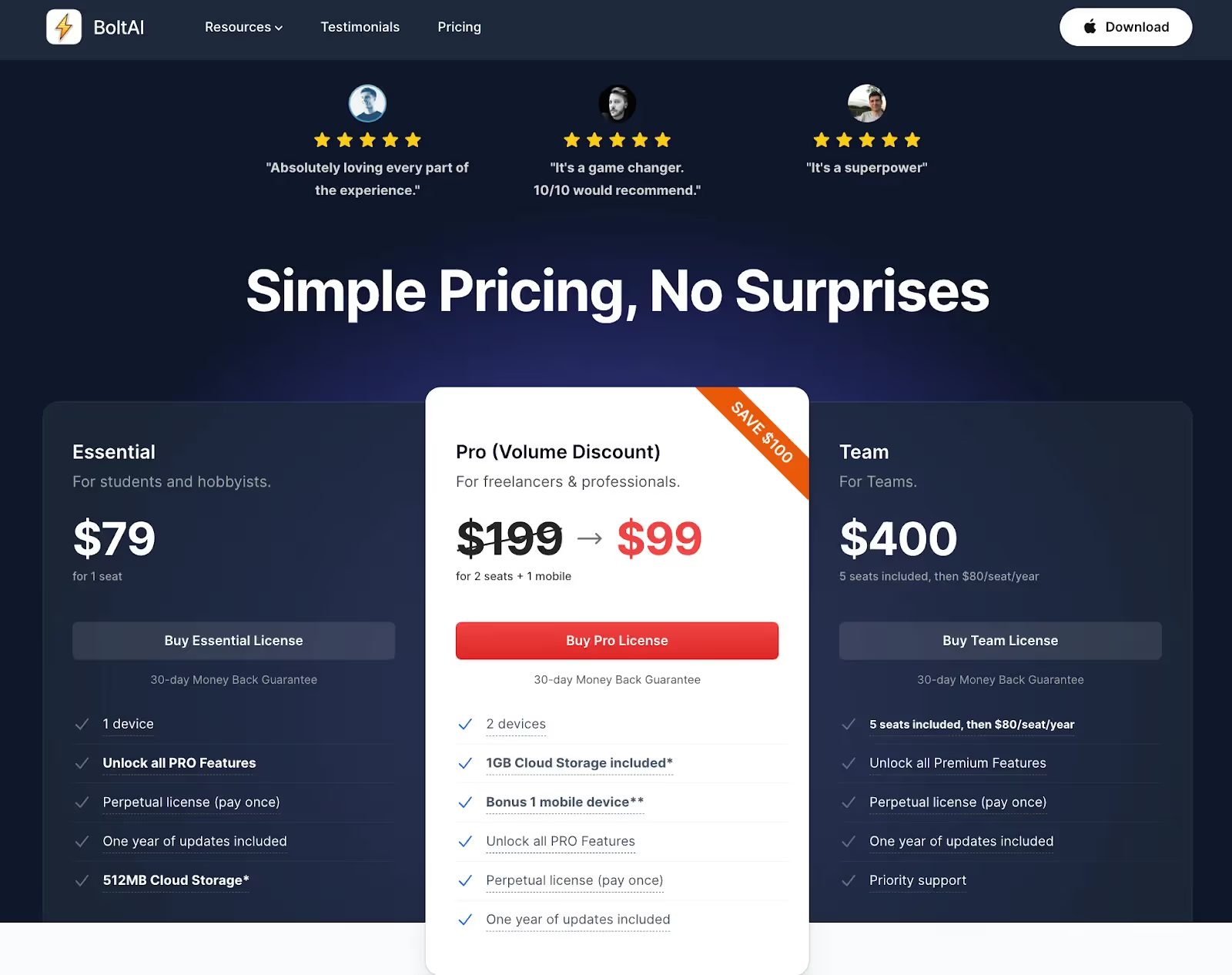
BoltAI clusters security badges (SOC2, GDPR) and friction-reducing copy ("No credit card required," "Cancel anytime") directly beneath their pricing CTAs. These signals need to be visible at the exact moment of decision, not buried in the footer.
AI-Driven Hyper-Personalization
AI-driven CRO isn't future-talk anymore, it's table stakes for product-led growth CRO strategies in 2026. We're talking about fundamentally reshaping what a visitor sees based on their intent and context.
Dynamic Landing Pages
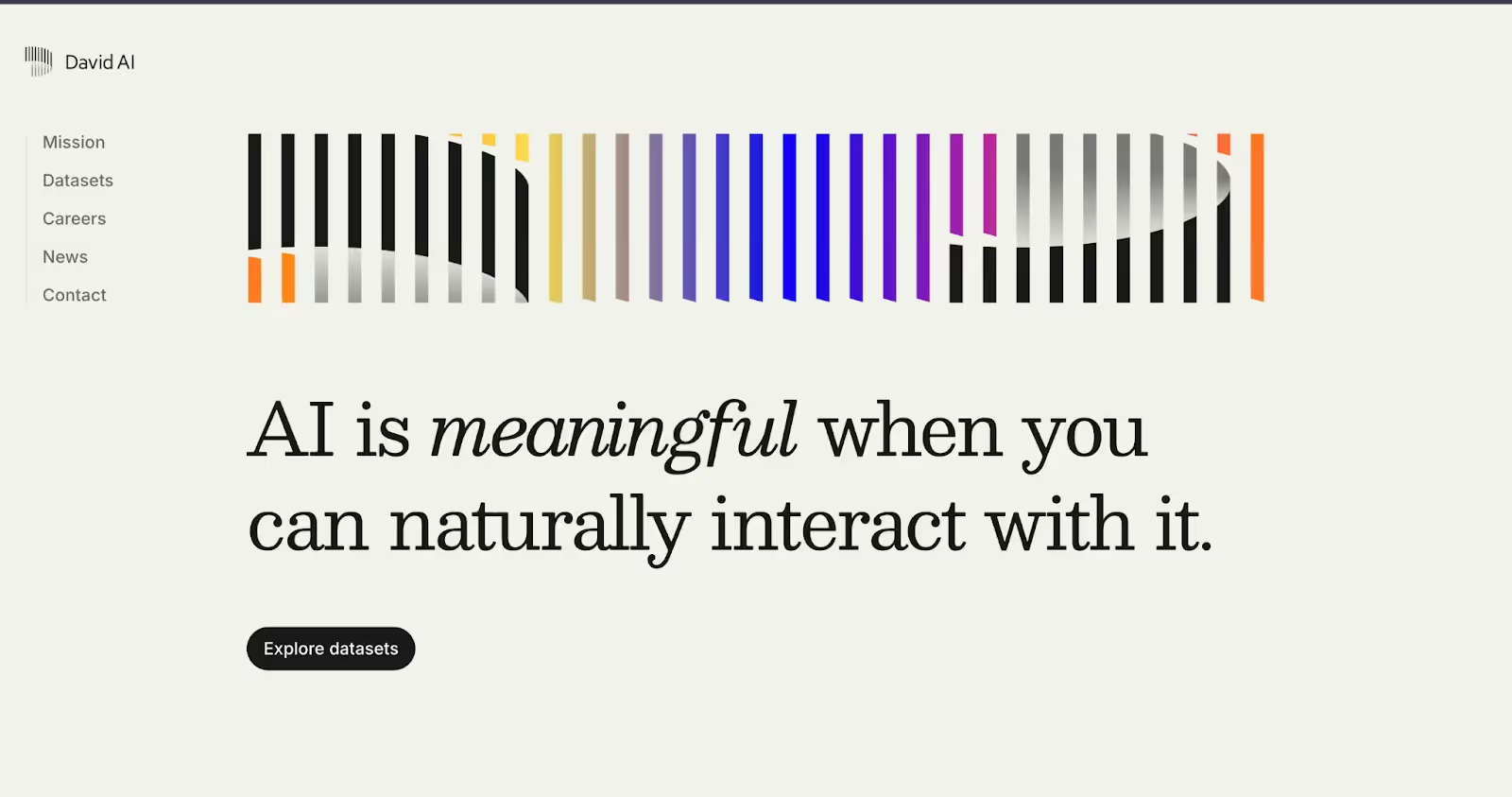
David.AI pioneered this approach. Visitors from healthcare companies see healthcare-specific headlines, case studies, and imagery. Real estate visitors see a completely different page, all on the same URL.The result? A 42% reduction in bounce rates and a 31% increase in demo requests.
Start small: If you're running Google Ads or LinkedIn campaigns, create industry-specific ad groups and serve corresponding landing page variants. Use tools like Mutiny or Dynamic Yield to automate content swaps. For more tactical advice, our post on 7 critical SaaS landing page elements covers what matters most. This is where SaaS conversion optimization gets interesting, one smart page that adapts like a chameleon.
AI-Powered Chatbots (The "Concierge")
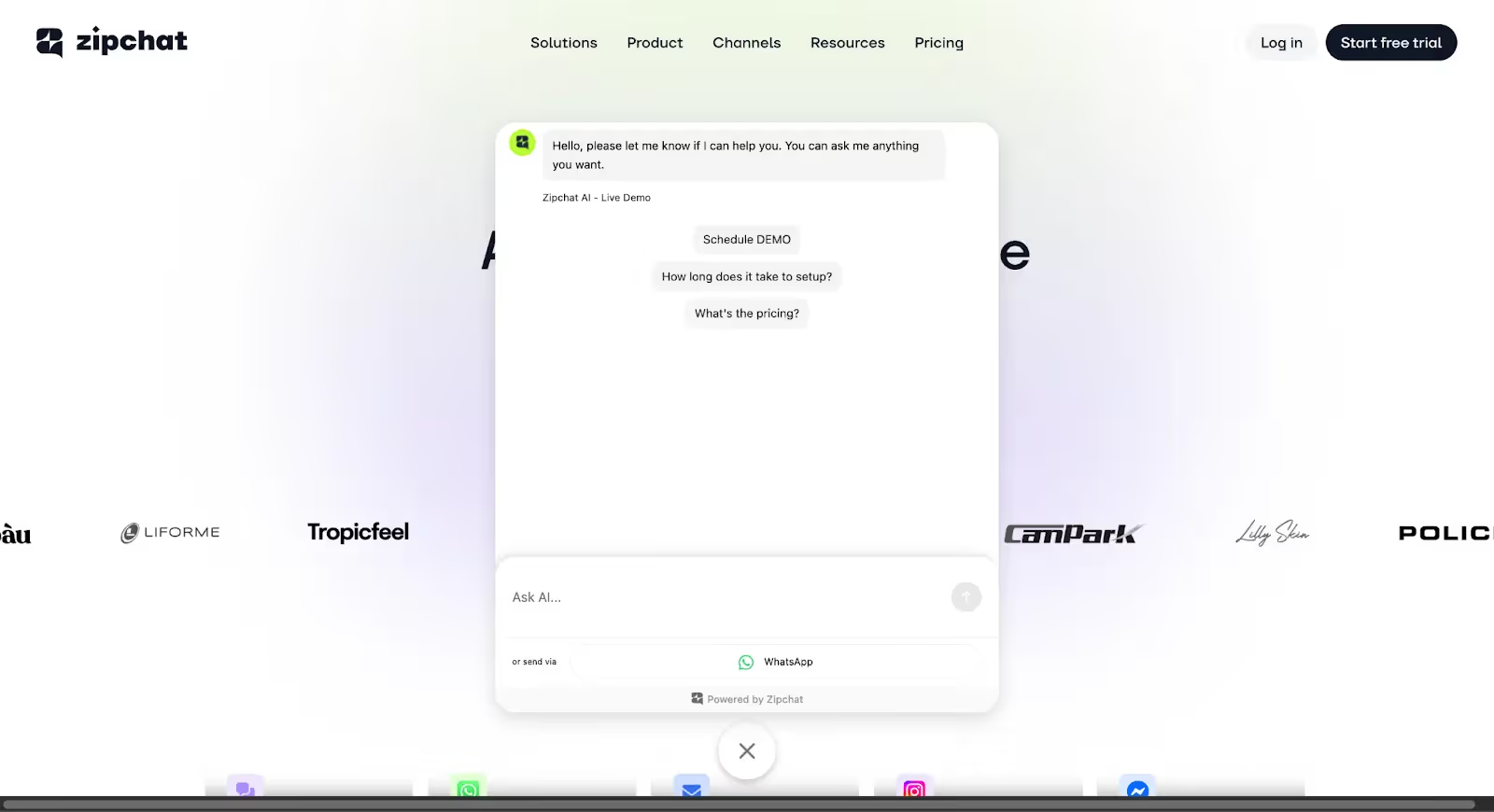
Modern AI chatbots have replaced basic chat setups with LLM agents trained on help documentation, pricing structures, and integration specs. Companies are seeing 3x increases in qualified meetings booked directly through chat widgets, plus major reductions in unqualified demos wasting SDR time.
The Rise of "Video-First" CRO
Text is losing. Video is winning. That's the blunt reality of how to boost SaaS conversion rates in an attention-scarce environment.
The "Founder Mode" Welcome (Low-Fi Beats Hi-Fi)
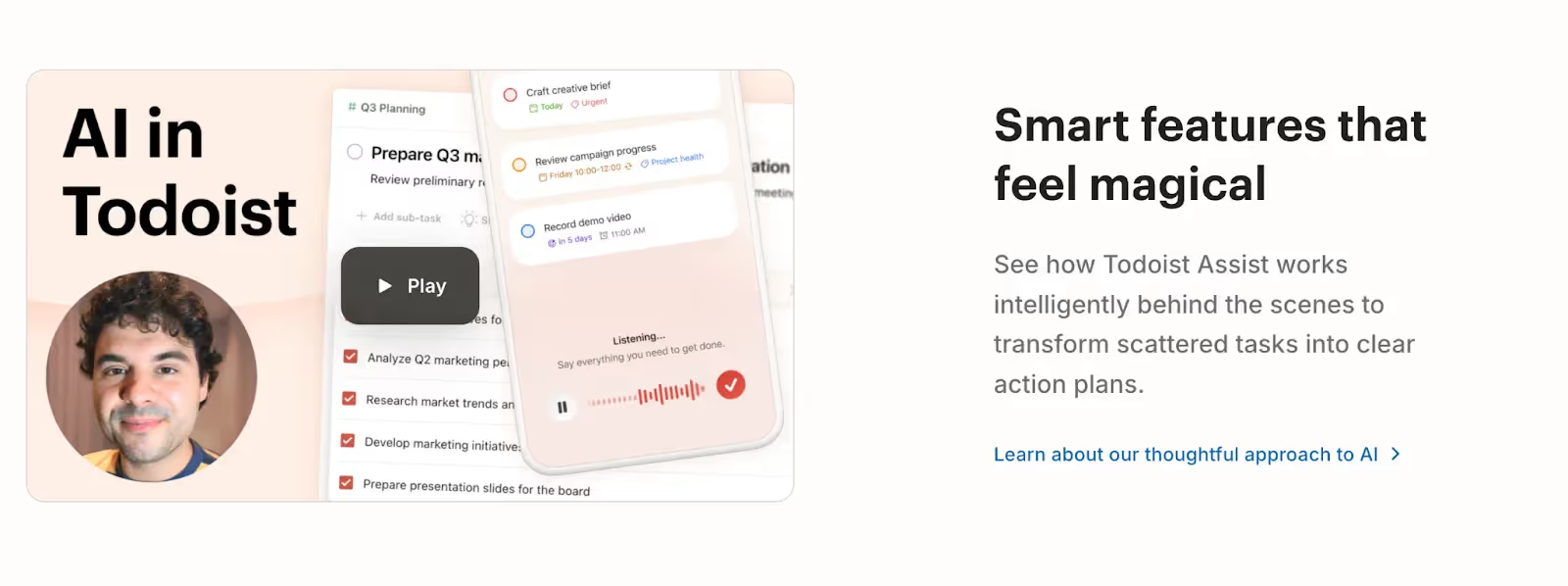
The highest-converting approach in 2026? A raw, Loom-style recording where the founder or product lead looks directly at the camera and explains the value proposition in 45-60 seconds. Todoist does this brilliantly, simple, authentic founder video that feels like a 1:1 call.
This signals, "We're real people, not a faceless enterprise." In a world drowning in polished SaaS marketing, authenticity cuts through. Wyzowl's State of Video Marketing report reveals that 91% of businesses use video as a marketing tool, but the authentic, low-production videos consistently outperform polished content for B2B conversions.
Critical detail: Add burned-in captions. Most office workers watch videos on mute.This single detail can boost engagement by 25-30%.
Vertical & Short-Form Loops
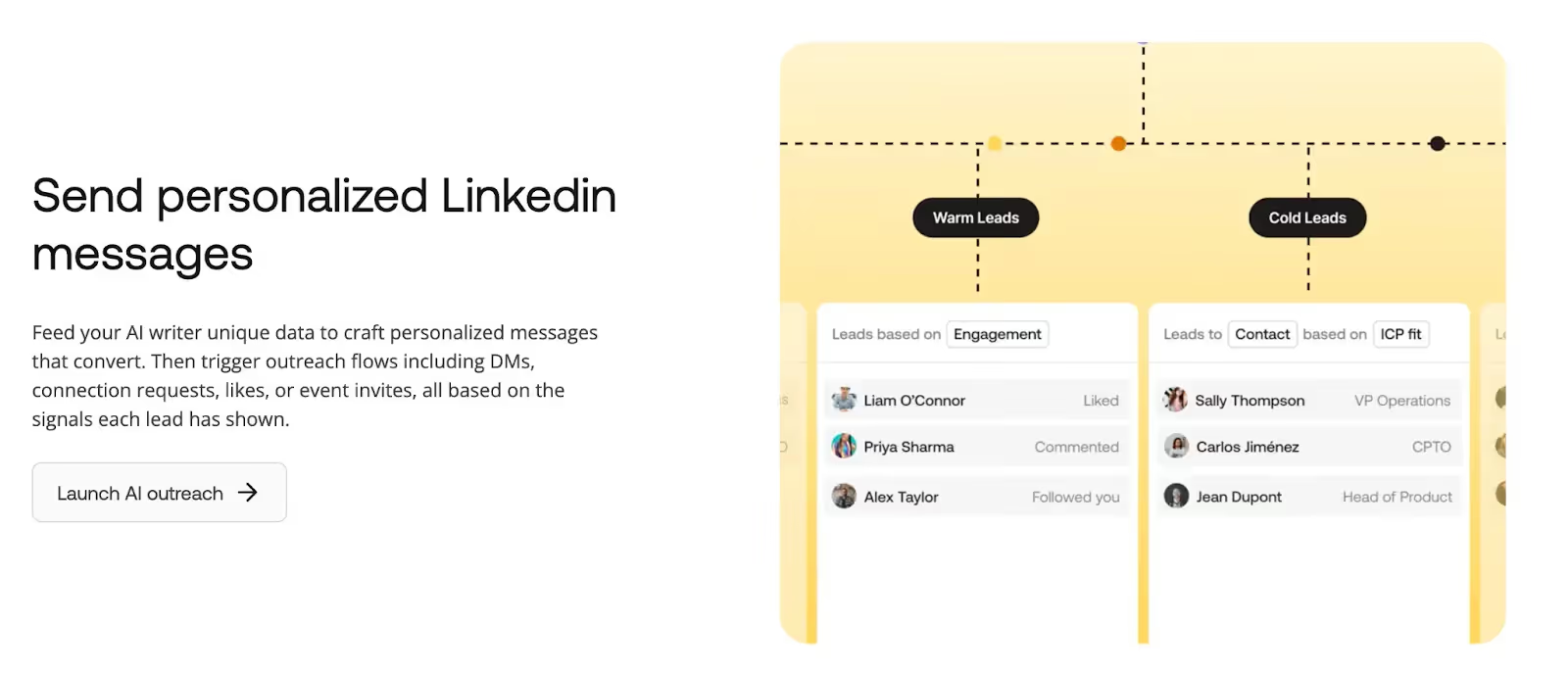
The "TikTok-ification" of B2B is real. Smart SaaS companies are replacing static feature icons with micro-looping 3-5 second videos showing exact features in action. This approach cuts through skepticism by literally showing the product working, no exaggeration, just proof.
Video Testimonials (Social Proof 2.0)
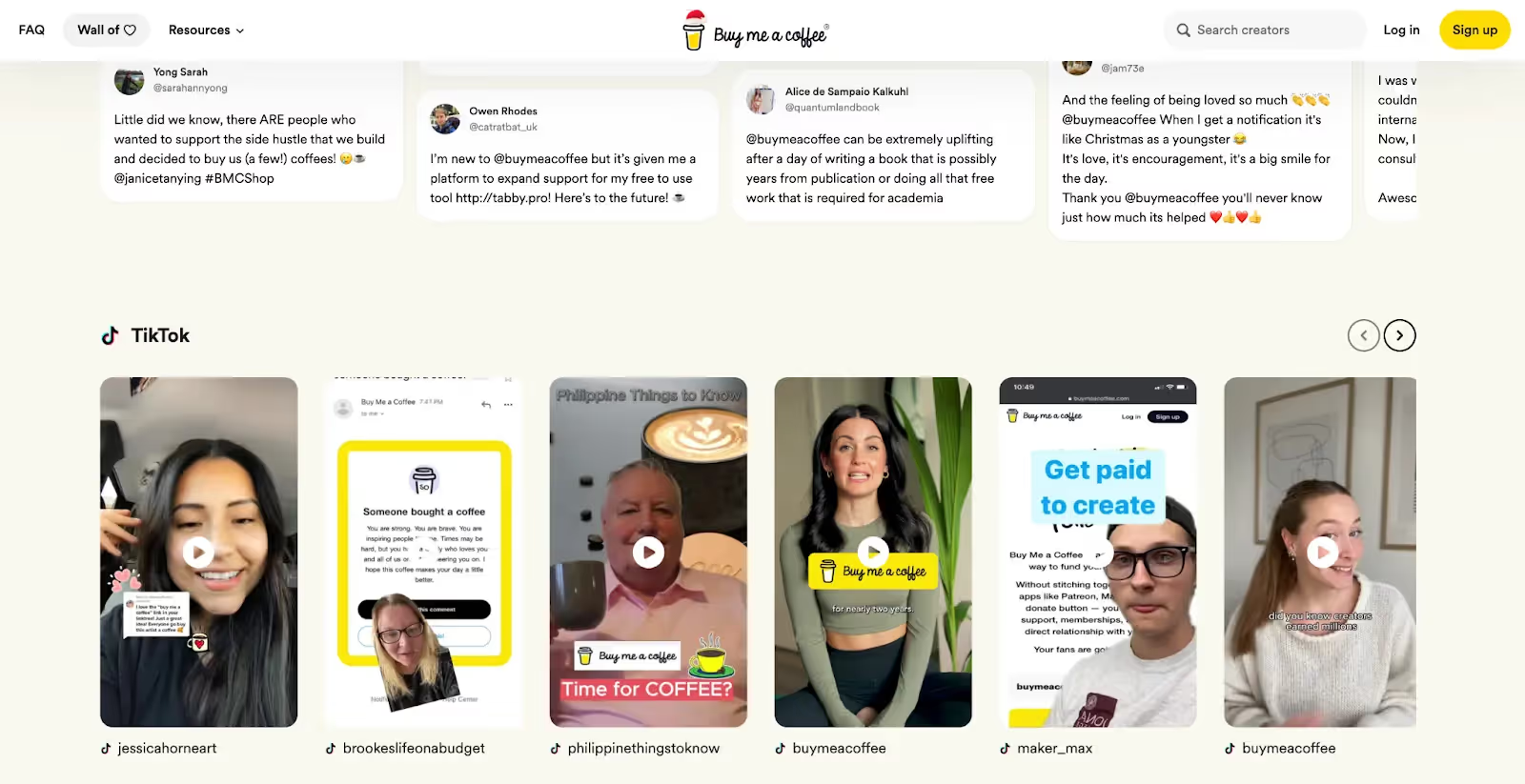
Buy Me a Coffee embeds authentic customer video testimonials collected via Senja. These aren't professionally lit studio recordings, they're shaky webcam clips of actual users explaining specific problems the product solved. A VP of Sales saying "This saved my Q4" on video converts better than any logo carousel ever will.
What the Data Actually Tells Us About SaaS Conversion Rates
When clients ask us "what is a good conversion rate for SaaS," here are the SaaS conversion metrics that matter:
- Homepage to trial sign-up: 2-5% is average; 7-10% is excellent
- Trial to paid conversion: 10-15% is typical; 25%+ indicates strong product-market fit
- Pricing page visit to purchase: 15-20% is the target
- Demo request to closed deal: 20-30% for SMB; 10-15% for enterprise
Companies implementing these trends are seeing 5-8% overall funnel conversion, more than double the 1-3% baseline. For additional tactics to push these numbers higher, explore our post on 13 ways to hack conversion rate optimization.
Something we tell clients constantly: marketing rarely fails because of low traffic. The real leak is often deeper in the funnel, usually at the landing page, pricing page, or trial-to-paid stage. That's why our analytics and tracking setup focuses on identifying exactly where users drop off. We also recommend checking out the best conversion rate optimization tools to support your efforts.
Final Thoughts (Optimize SaaS Conversions by Removing Friction, Not Adding Features)
The biggest mistake in SaaS conversion metrics analysis? Companies keep adding more CTAs, more pop-ups, more "book a demo" prompts, when the real problem is fundamental friction in how they present value.
CRO trends 2026 point to one principle: remove barriers between your visitor and their "aha" moment. Whether that's through interactive demos, transparent pricing, AI personalization, or authentic video, let people experience value before you ask for commitment.
The conversion rate optimization for the SaaS formula isn't complex math. It's human psychology applied at scale. It's understanding that trust takes time, that skepticism is healthy, and that the most effective way to convert someone is to genuinely help them first. Our comprehensive guide on how to double your trial-to-paid conversion rate walks through this philosophy in detail.
Even the best paid search campaign can't save a broken landing page or unclear value proposition. That's why we always start with an audit, because fixing the foundation matters more than increasing ad spend.
Ready to Boost Your SaaS Conversion Rates?
At Aimers, we've fine-tuned conversion funnels for companies like Mixpanel, ShipBob, UpperHand, and Orion Labs. We're managing over $30M in ad spend with measurable results. You can see more of our work in our case studies.
If you're wondering where your ad budget is silently leaking, whether it's at the landing page, pricing page, or somewhere else in your funnel, let's talk.
Book a free call and we'll analyze your funnel, identify your biggest conversion leaks, and show you exactly how to fix them.
FAQs
What is a good conversion rate for SaaS companies?

How can I improve my SaaS conversion rates without a massive budget?
What's the difference between SaaS CRO and traditional e-commerce CRO?
Should I gate my product demo or make it freely available?
How do AI-driven CRO tools actually impact conversion rates?

.png)