
LinkedIn Ads Best Practices for B2B SaaS Marketers


LinkedIn isn't another social platform you throw budget at and hope for the best. With over 1 billion professionals on the network, including 65 million decision-makers and 180 million senior-level influencers, it's one of the few channels where a VP of Engineering or a CFO might actually stop scrolling because your ad said something that hit. That's genuinely rare in paid advertising, and applying best practices for LinkedIn Ads correctly is what makes the difference between burning money and building pipeline.
We've managed campaigns for 100+ SaaS clients at Aimers, and the pattern we keep seeing is always the same: teams that carry over habits from Facebook or Google, without adjusting anything, almost always end up confused about why their spend isn't converting. This guide to LinkedIn advertising, and really, a proper guide to LinkedIn Ads in general, is our attempt to put the real lessons on paper, the ones from actual accounts, not conference slides. What follows is what we actually consider LinkedIn advertising best practices worth following.
Why LinkedIn Actually Works for B2B
Context is everything here. People open LinkedIn at their desks, between meetings, thinking about work. They're not half-watching TV while scrolling. That focused, professional headspace changes how they respond to ads completely, and it's a big reason why LinkedIn generates 80% of B2B social media leads, according to the platform's own data.
The targeting is what really sets it apart, though. Job title, seniority, company size, industry, specific company names, you can get surgical in ways that Google and Meta simply don't allow. If you've compared Google Ads vs LinkedIn Ads side by side, you know they're built for different moments. Google intercepts buyers mid-search, already aware of a problem. LinkedIn reaches buyers before the search even starts. Both matter, but for mid-market SaaS going after enterprise buyers, LinkedIn sits in a category of its own.
A 2026 Socialinsider study found engagement on the platform was up 44% year-on-year. More brands are showing up, spending more, posting more. The window is narrowing.
The Ad Formats Actually Worth Knowing About
Any serious LinkedIn advertising strategy starts with knowing what you're working with. LinkedIn offers around 11 ad types, and honestly, most accounts don't need all of them at the same time.
For SaaS, lead gen forms paired with a real offer consistently outperform most alternatives. Carousels carry mid-funnel storytelling well; looking through LinkedIn carousel examples from live campaigns is a fast way to calibrate before you build your own. And LinkedIn video ads best practices are increasingly worth understanding, competition in the feed keeps growing, and ignoring video is harder to justify every quarter.
Seven Things That Actually Move the Needle
What separates best performing LinkedIn ads from the ones quietly burning budget in the background? We've run campaigns for companies ranging from scrappy 10-person startups to teams managing millions annually. The gaps are almost always the same ones. Here's what we actually do.
1. Get Your Targeting Right Before Touching the Creative
Most campaigns fall apart here. Quietly, without obvious warning signs, until you look at the numbers.
LinkedIn's targeting is precise; that's undoubtedly why imprecision is so costly. CPCs are already higher than most platforms. Layer a fuzzy audience definition on top, and you're paying premium rates to reach people who will never buy. It's a bit like running a print ad in a magazine your customers don't read, except it costs five times more.
Start with a concrete ICP. Then build your audience from a combination of targeting facets (job title plus seniority plus company size is a reliable foundation). Check the audience forecast tool in Campaign Manager before launch. It shows estimated reach and composition, and it takes two minutes. Two minutes that save many painful post-mortems.
Things we always do before a campaign goes live:
- Exclude students, entry-level roles outside your buyer profile, and competitors where it makes sense
- Save audience configurations as templates so we can replicate and adjust without rebuilding cold
- Test different combinations across campaigns rather than casting wide from the start
One thing worth understanding separately: the LinkedIn Audience Network. It extends reach into partner sites beyond LinkedIn's native feed. CPCs can drop, but so can audience quality. Toggle it on with your eyes open.
2. Use Lead Gen Forms but Bring a Real Offer
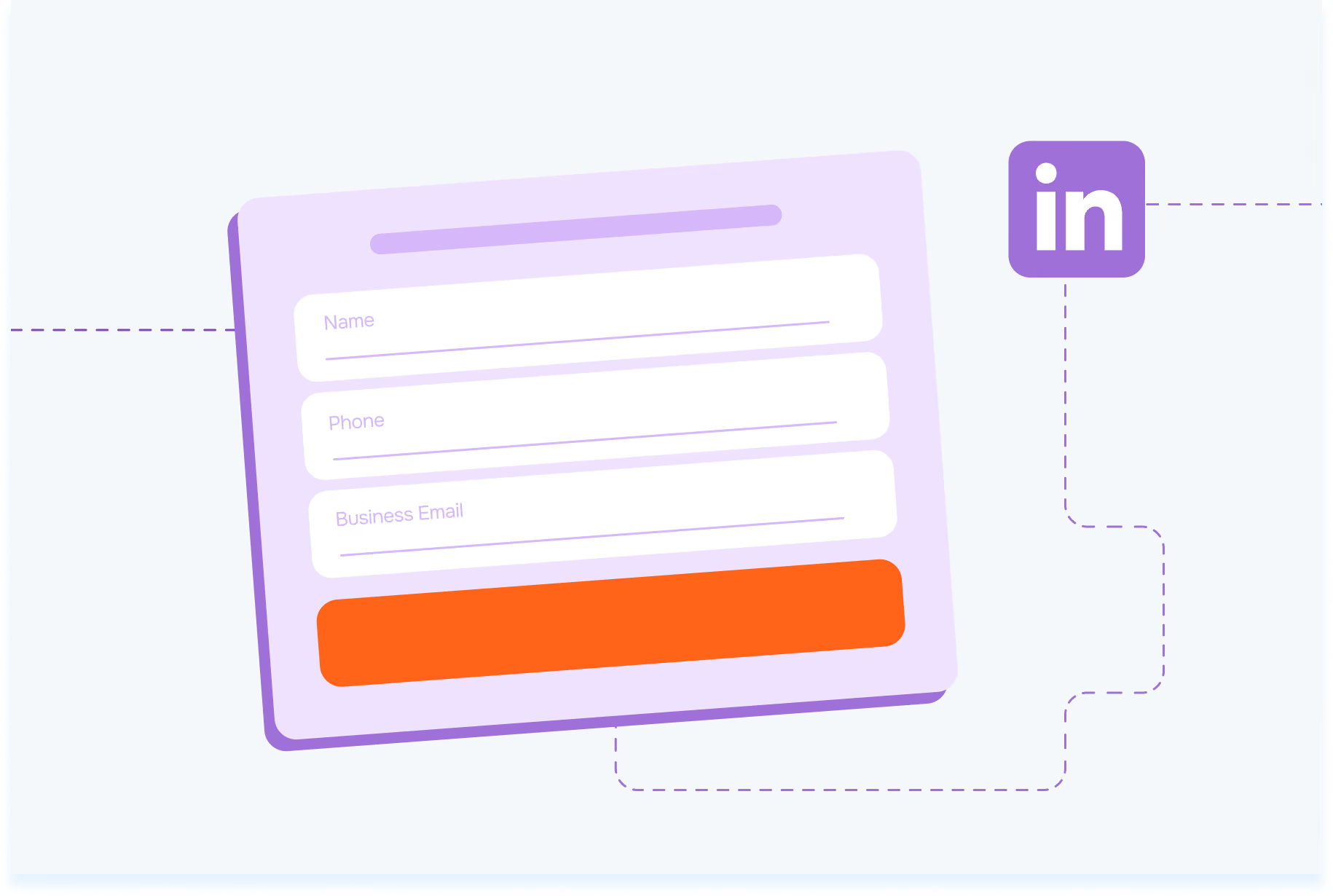
Lead Gen Forms are consistently among the strongest setups for SaaS lead generation. The form pre-fills with the user's LinkedIn data, there's no redirect, and the friction basically disappears. That's the appeal.
The catch (and there's always a catch) is that quality is entirely dictated by what's behind the form. "Schedule a demo" with no supporting context tends to underperform. "Get a free audit of your ad account" or "Download the 2026 SaaS acquisition cost report" is the kind of thing worth submiting a form for. The offer has to carry real weight. You know what's also easy to overlook? Those lead lists feed your remarketing audiences and email sequences downstream, so they're worth more than the initial conversion alone.
3. Write to the Problem, Not the Product
Applying LinkedIn creative best practices starts with a simple shift: the gap between ads that land and ads that get scrolled past is almost always about relevance, not production quality. Allow me to explain what that means in practice.
Your audience is reading your ad at 2:30pm between back-to-back calls, inbox full, three Slack threads open. A feature list does nothing for them in that moment. What lands is the feeling of being seen.
CAC climbing? Retention sliding? Pipeline that looks full on paper but converts like it's mostly noise? Name it. Then connect it to what you do. Vague lines like "we help companies grow faster" are placeholders, not claims, and people skip them without registering a single word. Specific beats general every time. Test short-form copy (two or three lines) against longer body copy too, because the winner genuinely varies more than you'd expect depending on the audience.
4. Run Multiple Ad Variations Per Campaign
Running one ad per campaign is like A/B testing your pricing page with a single version. Pointless.
We start every campaign with at least 3-5 variations: different headlines, different visuals, different CTAs. More importantly, set ad rotation to "Rotate evenly," not "Optimize." LinkedIn's algorithm will crown a winner based on early engagement signals if you let it, and early signals are noisy. You'll miss what actually performs over time.
Following LinkedIn marketing best practices here means one thing above all: the algorithm can't tell you what works better than data you collected yourself. Run the test, then decide.
5. Budget to Actually Get Data
Underfunding is a quiet campaign killer, possibly the most common one we see.
LinkedIn recommends a minimum of $50/day to move through the learning phase at a useful pace. With CPCs often landing between $5 and $15 depending on your audience, that's not much headroom for real testing. A campaign running at $20/day against an audience of 50,000 is going to produce data too thin to act on. We've written a full breakdown of LinkedIn ads pricing if you want to understand the cost structure first. Budget for real conclusions, or don't expect to draw any.
6. Track Properly With Insight Tag and UTMs
Understanding how to run LinkedIn Ads effectively is as much a measurement problem as a creative one.
Install the LinkedIn Insight Tag on your site and configure conversion events for what actually matters (form fills, demo requests, trial signups). Then add UTM parameters to every ad so you can cross-reference in GA4 or whatever analytics setup you're running. LinkedIn's native attribution is useful but limited; it doesn't show you what happens after the click, how leads progress, or where they stall.
HubSpot's B2B marketing research consistently shows that teams with multi-touch attribution visibility make better channel investment decisions over time. The Insight Tag setup takes an afternoon. The clarity it gives you lasts the entire duration of your campaigns.
7. Weekly Reviews, Not Monthly
LinkedIn can shift quickly, especially in competitive verticals.
A weekly review rhythm catches audience fatigue before CTR falls away, spots overspend before it compounds, and gets new creatives in before the decline shows up in the numbers. Monthly reviews are just too slow. Set a recurring calendar block (thirty minutes works), same day every week, and protect it. That habit, more than any individual tactic, separates accounts that steadily improve from those that plateau and go sideways.
The Numbers Worth Paying Attention To
No LinkedIn advertising guide is complete without talking about measurement. Here's what we track on every account and what each number is actually telling you:
When CTR drops over two or three weeks, creative fatigue is the usual culprit. When CPL climbs but CTR stays flat, the problem sits in the offer or the post-click experience, not the ad itself. Isolating the variable is the whole game. Change everything at once and you'll never know which fix worked.
One More Thing Worth Mentioning
All of this takes real time to do well. If your team is stretched thin, the honest question is whether in-house management is the right call. Hire a digital marketing agency that knows LinkedIn and you can cut through the learning curve fast, the cost of wasted spend during that curve is often higher than the agency fee itself.
Our LinkedIn advertising services cover full campaign management, creative testing, audience strategy, and reporting, built specifically around what SaaS and tech companies actually need.
Running LinkedIn Ads well takes more than flipping a switch. If you're not sure your current setup is pulling its weight, or you want a second opinion from people who run these campaigns every day, we offer free account audits at Aimers. We'll tell you honestly what's working, what isn't, and where the real opportunities are.Get in touch, and we'll get back to you fast.
FAQs
What are the best practices for LinkedIn Ads?

How much should I budget for LinkedIn Ads as a SaaS company?
Which LinkedIn ad format works best for lead generation?
How often should I refresh LinkedIn ad creatives?
Is LinkedIn advertising worth it for early-stage SaaS companies?