
Facebook Ads Best Practices for 2026: Proven Strategies for SaaS and B2B

March 13, 2026

Following Facebook Ads best practices has a reputation problem in the SaaS world, and most of it is self-inflicted. Ask any B2B founder and you'll get the same story: burned through budget, saw nothing, switched to LinkedIn, and paid four times the CPL.
At Aimers, a marketing agency for SaaS, we've seen this pattern for years. These companies treated Facebook like Google Search, expected bottom-funnel intent from cold audiences, and panicked after 48 hours. That's not the channel failing, that's not knowing how it works. When set up correctly, Facebook delivers a real pipeline. But 2026 has changed enough that some old playbooks are now actively counterproductive.
Why Facebook Still Makes Sense for SaaS (Even If You've Been Burned Before)
3.2 billion monthly active users. Your buyers are in there, the reach was never the question. What is relevant for B2B is targeting depth: job titles, company size, industry, CRM uploads, lookalikes from your best customers. LinkedIn offers the same targeting for roughly four times the CPL. Before settling on a channel mix, our comparison of Facebook Ads vs Google Ads for lead generation is worth a read, they serve different parts of the funnel, and treating them as interchangeable is expensive.
The algorithm also changed. Meta rolled out Andromeda in late 2024, and Social Media Examiner covered it well, your creative now tells Meta who to find, not the other way around. Generic creative finds a generic audience. Cause and effect.
10 Best Practices for Facebook Ads That Actually Work in 2026
Most guides hand you a checklist and call it a day. That's not wrong, it's just not enough, and in 2026, half the picture will cost you real money.
The algorithm thinks differently than it did two years ago, the creative rules have changed, and the old playbooks are somewhere between outdated and actively harmful. What follows is what we actually apply across SaaS client accounts at Aimers, the stuff that keeps showing up as the difference between campaigns that generate pipeline and campaigns that generate invoices from Meta.
1. Build a Funnel Before You Spend Anything
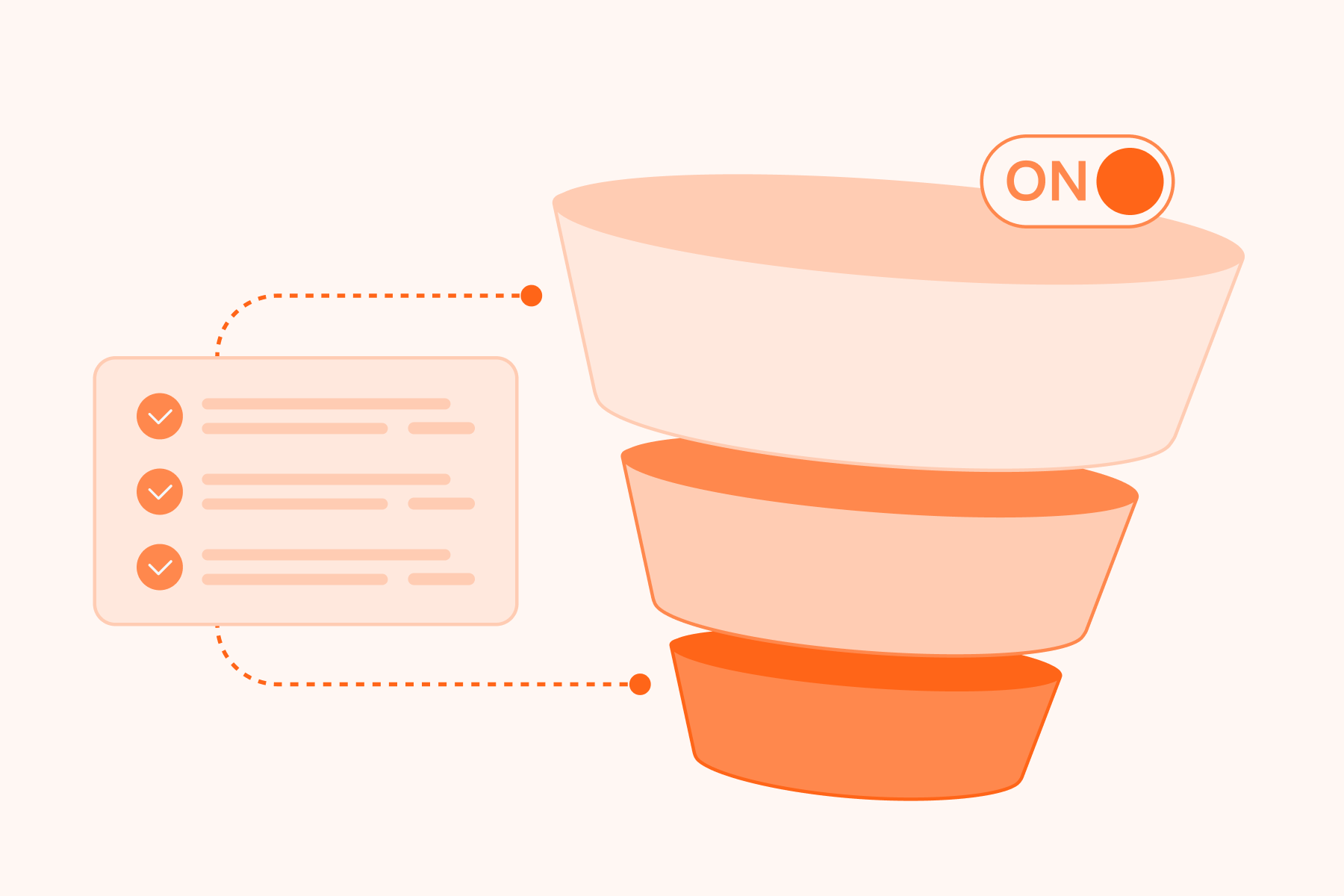
A solid Facebook Ads funnel strategy starts before you touch Ads Manager. Cold audiences and warm audiences are not the same people. This feels obvious when you say it out loud, but the number of accounts we've audited where every campaign is running to the same broad audience with the same message. It's staggering.
TOFU, MOFU, BOFU
Awareness, nurture, close. Someone who's never heard of your product needs completely different messaging than someone who's been sitting on your pricing page for a week and just hasn't pulled the trigger. Running one campaign that tries to speak to both of them simultaneously speaks to neither.
That said, and this is where it gets a bit counterintuitive, Andromeda has made broad targeting more viable than it used to be. Some advertisers are consolidating everything into single campaigns and letting the algorithm figure out the segmentation automatically. We've tested this with several clients, and the results are mixed; it works better for simpler products with shorter sales cycles. For complex SaaS with a six-month enterprise deal cycle, you still want deliberate separation. Don't just believe the hype about "full broad" being the answer to everything.
Frequency caps matter too. Keep TOFU under 2 impressions per user. Above that, you're just annoying people who don't know you yet. MOFU can go higher, up to 4-5. BOFU is the one place where you can push frequency, but watch your negative feedback rates. If people start hiding your ads, that's the algorithm's early warning system telling you something's wrong. Don't ignore it.
2. Leave the Learning Phase Alone
This is the one that causes the most unnecessary damage to accounts, and it's entirely preventable. Ignoring it is one of the costliest Facebook Ads optimization tips mistakes we see.
The best Facebook Ads strategy for 2026 starts with patience. When you launch a campaign, Meta needs at least 50 optimization events since the last significant change to figure out who to show it to. Budget edits, targeting changes, creative swaps, bid adjustments all reset the learning phase. Every single time.
We've seen clients who were basically in a permanent learning phase for months because someone kept tweaking things every few days. The campaign never actually got to optimize. It just kept starting over. If you can't commit to leaving a campaign alone for at least a couple of weeks, you probably shouldn't launch it yet.
3. Creative Is Doing More Work Than You Think
Following Facebook Ad Creatives best practices matters more now than it ever did. Under Andromeda, your creative isn't just what users see, it's what tells the algorithm who to find. This is genuinely different from how things worked before, and most advertisers haven't fully adjusted to it yet.
Generic creativity finds a generic audience. A static image of a laptop with a vague headline about "streamlining workflows" doesn't give the algorithm much to work with. But an ad that opens with a very specific problem ("Your engineering team just spent another Friday afternoon manually migrating customer data") gives the algorithm a signal. It can find people who that sentence lands with.
Facebook video Ads best practices start with one rule: 15-30 seconds for cold audiences. Hook in the first 3 seconds, not the first 10. Caption everything. 85% of Facebook video is watched on mute, per Meta's research, which is a slightly depressing stat about how people use the internet but is nonetheless true and relevant. Show the product doing something real, or open with a pain point that makes the right person stop scrolling.
When it comes to Facebook carousel best practices, carousels are having a real moment right now, which tracks with what we're seeing in accounts. Social Media Examiner flagged them as a standout format under Andromeda, and the SaaS use case is obvious: each card is a separate argument, a different angle, another reason to care. As for Facebook carousel Ad best practices specifically, card one stops the scroll. Cards two through four make the case. The last card is a CTA. Don't overthink it, but do keep the visual style consistent. Inconsistent design across cards reads as "small operation" and B2B buyers are looking for reasons to trust you, not reasons to bounce.
One thing: static images still drive the majority of conversions on Meta, somewhere in the 60-70% range by current data. Video is exciting, but it's not the whole story. Check what's actually working in practice with our collection of successful Facebook Ads examples before overhauling your full format mix.
4. The Сopy Problem
Facebook Ads copywriting tips start with one uncomfortable truth: there's a wave of AI-written ad copy flooding the Facebook feed right now, and buyers have developed an almost immediate immune response to it. Not consciously, they're not sitting there thinking "this was written by a large language model." They just scroll past it. It doesn't register. It feels like nothing.
The tell is usually the vocabulary. "Streamline your workflows." "Empower your team." "The all-in-one solution for modern businesses." These phrases have been used so many times, across so many ads, that they've become invisible. They're the ad-copy equivalent of elevator music.
Applying Facebook Ads copywriting best practices means doing the opposite of what most SaaS companies do:
- Start with the problem, and be specific about it. Not "manage projects better" but "still using a shared spreadsheet to track your engineering sprints?"
- Numbers. Specific ones. "Cut onboarding from three weeks to four days" is a sentence with weight. "Improve onboarding" is not.
- The first line is often the only line. Write it like it has to carry the whole ad.
- Cut the SaaS vocabulary. If your copy has "leverage," "streamline," or "empower your team," rewrite it. These words have been diluted to nothing.
Storytelling still works in B2B, probably more than most people give it credit for. Not "storytelling" in the branded-content sense, just a specific, textured description of a situation your buyer recognizes. That recognition is what makes someone slow down.
5. Social Proof That Actually Proves Something
"Trusted by 500+ companies" isn't social proof. It's a number that means nothing without context. 500 companies that did what, exactly? Bought a $29/month plan and cancelled after 60 days?
Specific outcomes tied to recognizable names, that's what actually builds trust. "How [Client Name] reduced their customer churn by 22% in one quarter" stops someone because it's falsifiable, specific, and relevant. A testimonial screenshot from a real person with a real job title works. A 30-second video of a customer describing a before/after. Even better. See our breakdown of social proof Facebook Ads tactics if you want to go further with this.
6. Retargeting: Segment It or Don't Bother
Applying Facebook retargeting best practices is where you'll find your lowest CPL. That's almost always true. But retargeting on Facebook Ads as a single undifferentiated audience is a waste of what should be your best-performing campaign type.
Someone who watched 80% of your explainer video is not the same as someone who hit your homepage once six weeks ago from an organic post. Pricing page visitors are not the same as blog readers. The person who started your trial signup and abandoned on step two is the most valuable person in your entire retargeting pool, and most companies serve them the same awareness-level ad they're showing to everyone else.
Match the message to the behavior:
- Trial abandoners: Offer a free trial extension or a one-on-one onboarding call. They wanted the product, something got in the way.
- Pricing page visitors: Hit them with a specific comparison, a discount, or a "talk to us" CTA. They're evaluating, not browsing.
- Blog readers: Still warming up. Serve them a case study or a webinar invite, not a hard close.
- Demo no-shows: Follow up with a low-friction reschedule offer. These are warm leads, not lost ones.
They know what you do. They're stalling. Give them a specific reason to stop stalling. Segmenting by behavior like this is the core of any real Facebook retargeting strategy, the audience split does the work that a generic "remarket to everyone" campaign never will.
7. The Attribution Problem Nobody Wants to Talk About
Your Ads Manager is almost certainly showing you more conversions than your CRM has on record. This is normal. It's also a problem if you're making budget decisions based on those numbers.
The gap usually comes from attribution model differences, post-view conversions get lumped into the default performance column alongside click-based ones. Someone saw your ad, didn't click, later Googled your product name and converted. Meta takes credit for that. Sometimes rightfully so. Sometimes not. Search Engine Land covered Meta's updated click and engage-through attribution models, and the new options give you more ways to actually understand what's happening.
Use Breakdown in Ads Manager. Compare attribution windows. Build custom reports segmented by placement, age, geo, device. Following proper Facebook Ads Manager keyword selection best practices means cross-referencing against what's in your CRM too. The gap between the two numbers is where your real story is, and if you're not looking at it, you're probably optimizing toward something that isn't actually generating pipeline.
8. Testing With Some Discipline
Any Facebook Ads agency worth working with will tell you to test constantly, and applying solid Facebook Ads best practices for lead generation means doing exactly that. But it's also possible to test in a completely chaotic way that tells you nothing, changing three variables simultaneously, judging results before the learning phase is over, shutting down ads that "aren't working" after four days.
One variable at a time. Define success before the test runs. Use the Meta Ad Library to see what's already running in your niche, it's free and it'll shortcut a lot of early hypotheses. Our Facebook Ads optimization checklist is a decent starting point for structuring your review process once campaigns are live.
9. Dynamic Creative: Use It, But Read What It Writes
Dynamic Creative for lead gen and Flexible Creative for sales both let you upload a batch of assets and let the algorithm mix and match for each user. It works. Upload your proven images and videos, add two text variations, two headlines, and let it run.
Just read the AI-generated copy variations before you go live. Seriously. In regulated verticals (fintech, healthtech, anything touching legal or medical), Meta's generative features will occasionally write something that would make your compliance team age five years in real time. Check it.
10. Keep the Page From Looking Abandoned
B2B buyers click through to your page before booking a demo. A page with three posts from 2023 quietly kills conversions, it signals "small operation" to anyone doing due diligence.
Post occasionally, share something worth reading, respond to comments. Not glamorous, but it's often the difference between someone trusting you enough to reach out and someone deciding you're not worth the risk.
If your Facebook campaigns are underperforming and you're not sure why, or you're starting from scratch and want to follow best practices for Facebook Ads without the expensive trial and error, talk to us at Aimers. We'll look at what's actually running and give you a straight answer about what's worth keeping. And if the ads are working but the landing pages aren't, our conversion rate optimization agency team can help with that part too.
FAQs
What actually changed with Facebook Advertising in 2026 that SaaS companies need to care about?

How much do you actually need to spend to see results?
What formats are working right now?
Why is Ads Manager showing way more conversions than our CRM?
At what point is it reasonable to bring in an outside agency?
February 4, 2026
.avif)