

How We Turned LinkedIn Ads into 730% ROAS for mdeg, a MedTech B2B SaaS

mdeg is a Certified Cloud & Connectivity Solutions provider for medical and diagnostic devices and Healthcare AI. The company helps startups and SMBs build, deploy, and maintain secure infrastructure for connected medical devices - from the first prototype to a global launch.
increase in ROAS
Challenge
At the start, the client already had a steady stream of inbound LinkedIn leads, but the core pain point was simple:
“We get a lot of leads—but most of them don’t convert into demos or revenue.”
So the issue wasn’t top-of-funnel volume. It was quality and funnel progression: leads were coming in, but they weren’t turning into opportunities and meetings.
Solution
1) Rebuilt lead gen campaigns around product value
We launched Single Image Ads and Video Ads in LinkedIn Lead Gen, focusing on a clear offer and strong product specificity:
- Real-time, encrypted data transmission for medical devices
- Compliance: ISO 13485, ISO 27001, HIPAA, GDPR
- Instant Connectivity: mdeg ConnectBox
- A simple next step: leave contact details and start the conversation
Why this mattered: In complex B2B/regulated industries, “generic” messaging often brings cheap but weak leads. We intentionally made the message more specific and “heavier” to filter the audience through value—not vague promises.
2) Tested different ads inside every campaign
In each campaign, we tested 4–5 ads simultaneously to:
- compare different “value → USP → wording” combinations
- understand what drives demos
- capture insights and build the next hypotheses based on data
3) Reworked creatives and identified what truly drives demos
We tested multiple creative directions and got a clear takeaway:
Converts into demos better:
- banners and videos featuring real medical devices
- visuals showing documents/lead magnet pages
.avif)
Converts worse:
- creatives with people, abstract charts, small icons
This insight is especially relevant in medical/diagnostics: specificity (hardware/documents/compliance) builds trust faster than “generic marketing visuals.”
4) Tested lead magnets as a “warm-up + remarketing” system
We launched lead magnets based on case studies, interviews and checklists that worked in two ways at once:
As remarketing:
We saw that people who had already submitted a lead form were also downloading materials—helping warm them up and increasing engagement, which improved the chance of reaching a demo.
As awareness for future demand:
Some leads explicitly said they “don’t have a product yet,” but they remembered mdeg and were open to coming back later—meaning the brand was being anchored in a niche with a long sales cycle.
Additional note: Our team redesigned the lead magnets based on Word documents (interviews and articles) provided by the client. We turned raw material into a polished asset people could confidently download and share internally.
.avif)
5) Optimized lead forms to increase completion rates
We didn’t treat the form as “just a form”:
- wrote custom form copy for each campaign to logically guide users to completion
- aligned the form text with the exact value proposition from the ad to avoid expectation mismatch
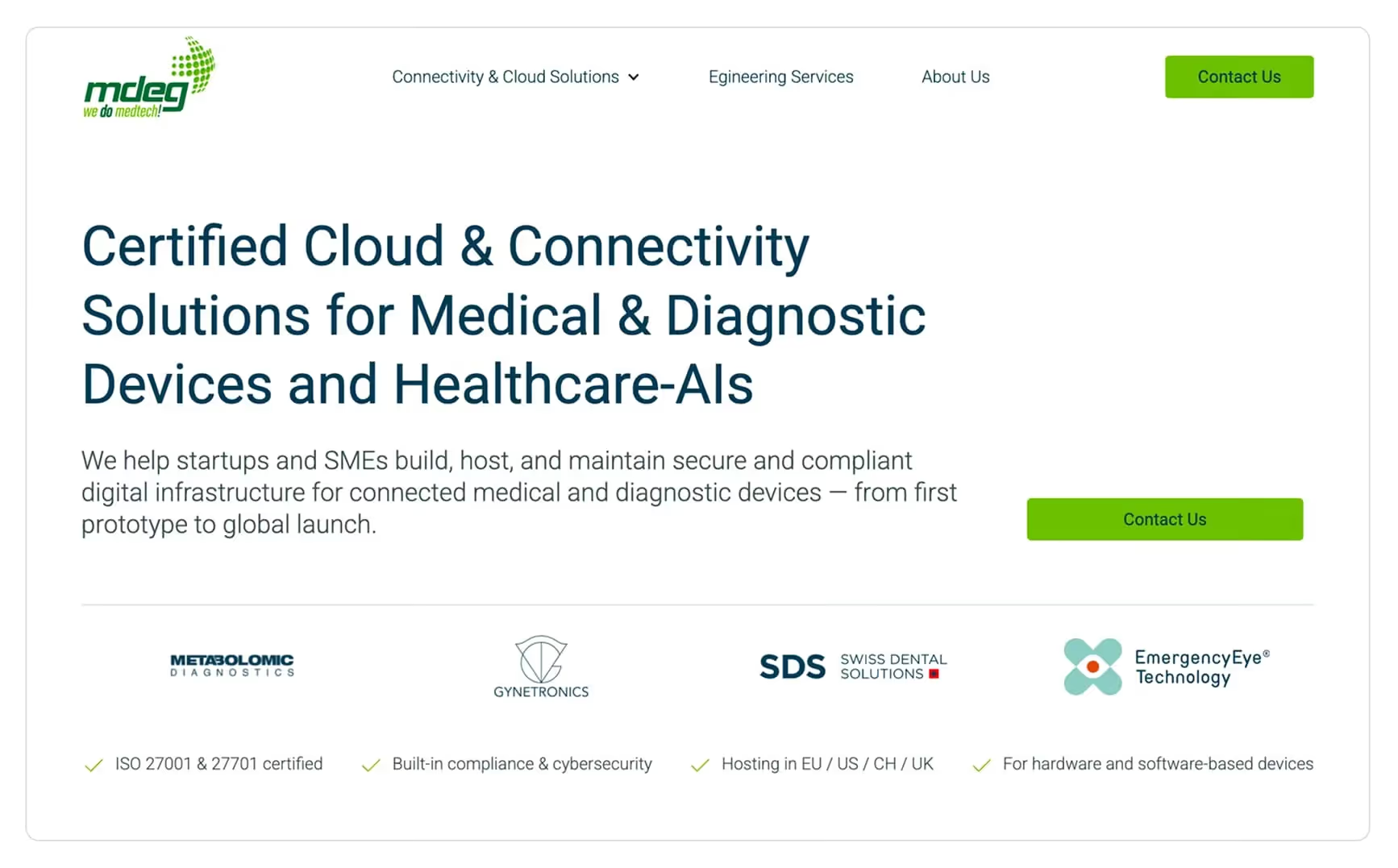
6) Updated the website to help leads understand the product faster
In parallel, our team updated the mdeg’s website (https://www.mdeg-digital.com) so that someone who clicked or saw an ad could quickly:
- understand who mdeg is and who it’s for
- see trust markers (compliance, certifications, regulated-industry context)
- clearly understand the next step
7) GEO & audience optimization: test → filter → scale what works
To find the best-performing GEO and audience setup, we:
- Built an initial GEO shortlist based on the client’s priorities, our experience, and industry benchmarks.
- Set MedTech-focused targeting as the core audience to keep relevance high from day one.
- Refined targeting for ICP fit:
- Excluded large enterprises, since the client prioritizes medical startups and SMBs over tech giants.
- Removed Entry-Level seniorities (Entry, Training, Unpaid), as these roles rarely influence vendor selection and are typically not part of the decision-making group.
- Tested and validated performance, then reviewed results by GEO and Job Title.
Kept only the segments driving conversions/demos and paused everything else to concentrate the budget on what consistently works.
Why it worked
We didn’t “inflate lead volume.” We built a system where:
- the ad message itself filters and attracts the right segment;
- creatives build trust through specificity (devices/documents/compliance);
- lead magnets warm up prospects and help them reach a demo;
- targeting excludes obviously irrelevant layers of the audience;
- the form and website don’t break the funnel at the last step.
Results
- Higher lead quality: leads became more relevant and better matched to the ideal customer profile.
- More Book a Demo conversions: leads started moving to the next step instead of “getting stuck” at the form stage.
- Revenue impact: the client closed multiple deals from LinkedIn-generated leads.
Key outcome
ROAS 730% - some demos converted into profitable deals that paid back LinkedIn ad spend multiple times over. In other words, LinkedIn stopped being a source of “just leads” and became a channel that generates measurable revenue.
Explore More Success Stories


Check out Our Additional Services
Our targeted campaigns on Google Ads and Microsoft Ads ensure that your brand stands out at the right moment.
We run powerful campaigns on Facebook, Instagram, LinkedIn, and X to build your brand’s presence.
We optimize your site to maximize conversions, ensuring every visitor has the best chance to become a paying customer.
Our landing pages are designed to convert traffic into leads with engaging content and clear calls to action.