

What Is Account-Based Marketing? ABM Guide

June 24, 2026

In B2B marketing, activity can easily be mistaken for progress. A campaign may generate leads, the report may look healthy, and CPL may stay within the expected range. Yet sales still may not see enough qualified pipeline, while the best-fit accounts remain outside meaningful funnel progression.
Account-based marketing helps close this gap between lead volume and revenue. ABM helps the team stop seeing the market as a stream of separate contacts and start working with companies that can realistically become valuable customers.
Instead of asking, “How many leads did we get?”, ABM asks harder but more useful questions: “Which accounts are engaged?”; “Who inside the buying committee has already been reached?”; “Which messages are moving them through the funnel, and how does that connect to pipeline?”
This guide explains what is account-based marketing, how it differs from demand generation and lead generation, which ABM types exist, how to build an account-based marketing strategy, and which metrics matter more than MQL volume.
What Is Account-Based Marketing?
Start with the basic terminology.
Account-based marketing (ABM) is a focused B2B approach where sales and marketing define a list of high-fit companies with strong revenue potential, then build marketing campaigns around those accounts instead of chasing the widest possible lead volume.
Instead of targeting a broad audience and waiting for individual leads to convert, ABM starts with a target account list. The team then builds personalized campaigns for the companies most likely to become valuable customers.
Optimizely defines the approach: account-based marketing concentrates resources on a set of target accounts within a market rather than maximizing broad reach.
But ABM differs from standard marketing not only in targeting. In a traditional lead generation model, marketing often starts with individual people: someone who fills out a form, downloads an asset, or becomes an MQL. In an account-based marketing process, sales and marketing first agree on the accounts, then map the buying committee, shape messaging for different roles, and coordinate outreach. The focus shifts from an individual lead to the account, the buying group, and potential revenue value.
That is why ABM is especially relevant for B2B companies with high average contract value, long sales cycles, multiple stakeholders, a clear ICP, a limited number of high-fit accounts, and strong expansion potential. In this context, lead volume on its own can mislead the team: many leads do not mean the right accounts are moving toward pipeline.
This logic also changes measurement. In ABM, the team needs to look beyond form fills or MQLs and evaluate account quality, engagement depth, and revenue impact. 6sense describes ABM metrics as metrics that measure marketing influence on specific target accounts, not individual leads.
A useful way to frame the relationship is this:
- Demand generation creates market-level demand
- Lead generation captures individual intent
- ABM concentrates resources around the accounts sales can realistically win
ABM vs. Demand Generation vs. Lead Generation: Key Differences
Account-based marketing, demand generation, and lead generation are often treated as competing approaches. In reality, most B2B companies use all three at the same time because each one solves a different problem and supports a different stage of pipeline creation.
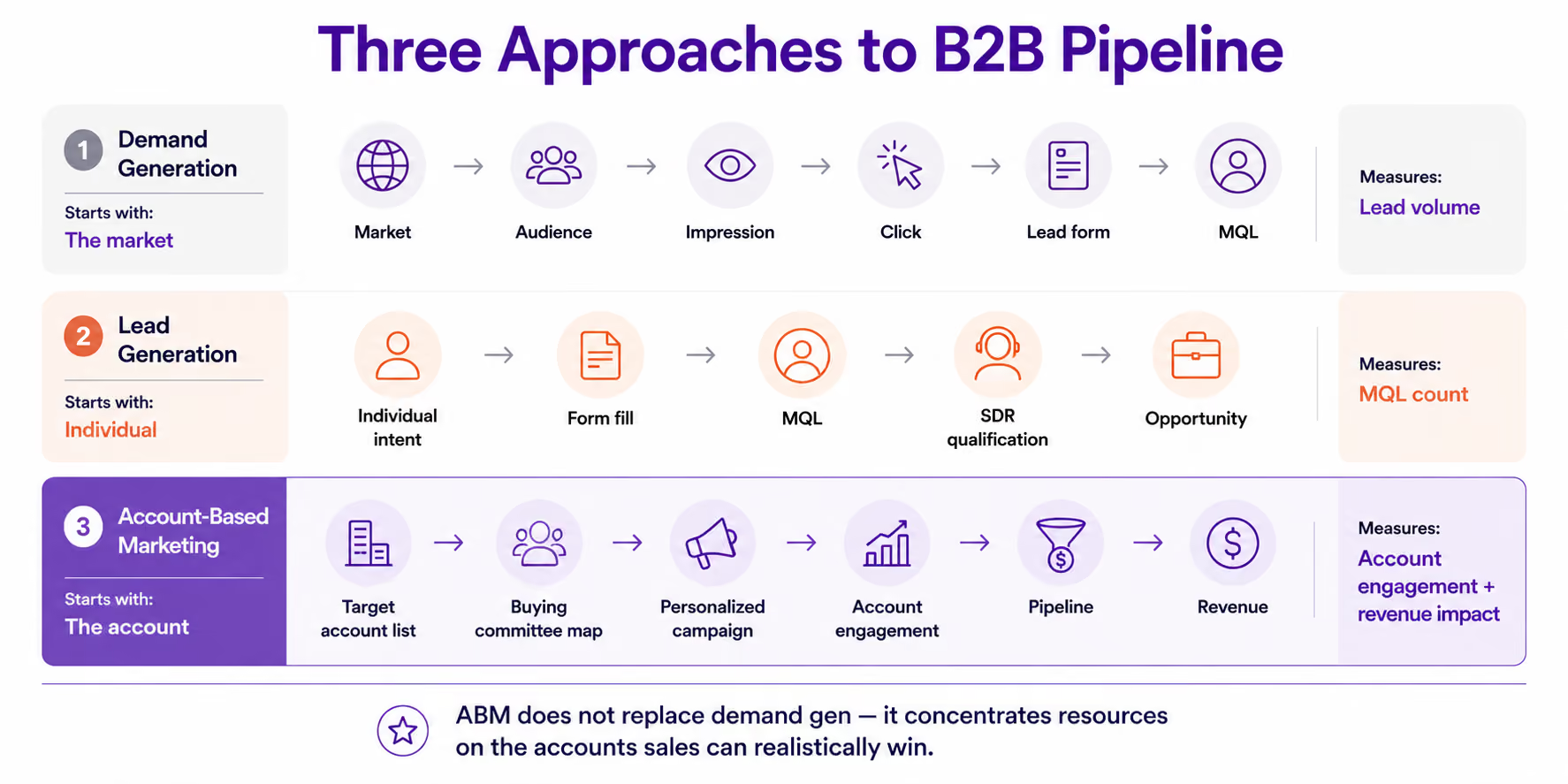
Lead generation
Lead generation focuses on collecting contact data from potential buyers. Its performance is usually measured through form fills, leads, MQLs, CPL, and conversion rate. This approach helps identify interested users, but it often stays focused on individual contacts rather than the companies behind them.
Demand generation
Demand gen works at a broader level. Its role is to create awareness, trust, and interest across the market. It helps shape future demand and keeps relevant audiences entering the pipeline. Demand generation does not always show up as immediate conversions, but it creates the foundation for future sales.
Account-based marketing
ABM changes the focus. Instead of working with the widest possible audience, the team selects specific companies and builds coordinated programs around them. In ABM, an account with several engaged decision-makers can be more valuable than hundreds of low-intent leads from companies that will never become customers.
This is especially important in complex B2B sales. According to Forrester, the average B2B purchase involves around 13 participants, and almost 89% of decisions involve multiple departments. In this environment, a large number of leads does not guarantee that the team is influencing the decision-making process inside the target account.
Why Most B2B Companies Need All Three Approaches
Most B2B teams need all three approaches. Demand generation creates market-level demand. Lead generation helps capture and process emerging intent. ABM focuses resources on the accounts with the strongest fit, deal potential, and likelihood to close.
The difference is not only in the metrics but also in the operating model. ABM requires tighter alignment between sales and marketing, more precise targeting, deeper personalization, and account-level measurement. That is why ABM programs are usually evaluated through account engagement, buying committee coverage, pipeline contribution, and revenue impact, not only MQL count.
In SaaS, these three approaches usually work together more often than separately. Demand generation creates awareness and trust, lead generation identifies active demand, and ABM directs marketing and sales resources toward the accounts with the strongest potential to grow revenue.
The Three Types of Account-Based Marketing
There are three common types of account-based marketing:
- One-to-one
- One-to-few
- One-to-many
This typology is usually associated with the pioneers of the ABM approach, ITSMA, now Momentum ITSMA. It separates ABM programs by two dimensions: depth of personalization and scale of coverage.
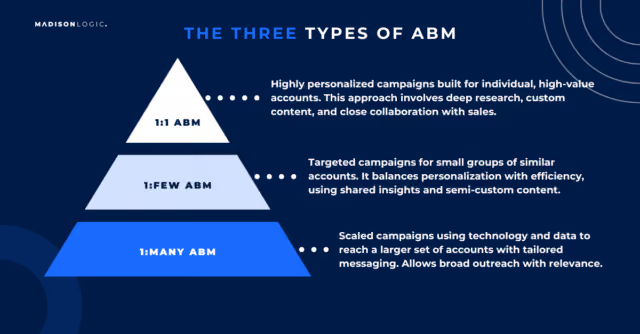
Strong ABM programs rarely choose only one format. They usually combine several levels: the highest-value enterprise accounts receive a one-to-one approach, similar account groups fall into one-to-few motions, and a broader target account list is covered through programmatic ABM. This structure helps the team avoid spending the same level of effort on accounts with very different potential value. Below, we break down each type.
One-to-One ABM (Strategic ABM)
One-to-one ABM, also called strategic ABM, is the most personalized format. The team creates a separate program for one high-value account and adapts the campaign strategy to that company, its business priorities, buying committee structure, and potential deal value.
This type of program can include custom landing pages, account-specific reports, executive events, personalized direct mail, bespoke ROI analysis, tailored demos, and content built around the account’s specific priorities. At the same time, personalization needs to be substantive, not decorative: the goal is not just to insert the company name into a creative asset, but to show an understanding of its market, constraints, internal roles, and buying triggers.
One-to-one ABM makes sense when the potential revenue justifies the effort. For example, it works for a short list of enterprise SaaS accounts where each deal could be worth six or seven figures annually. Salesforce also describes ABM as a strategy for high-value customer accounts where the company treats the account as a “market of one.”
The main tradeoff is scale. A team cannot create deeply personalized programs for hundreds of accounts without losing quality. One-to-one ABM should be reserved for accounts where the potential upside is large enough to justify the time from marketing, sales, leadership, and customer success.
One-to-Few ABM (ABM Lite)
One-to-few ABM focuses on clusters of similar accounts. Instead of building a custom campaign for one company, the team creates tailored messaging for a small group of accounts that share an industry, use case, business problem, growth stage, or technology stack.
For SaaS companies, this is often the most practical starting point because it balances relevance and scale. The team moves beyond generic broad-market messaging, but does not yet spend resources on a fully individual program for every account.
The content is still personalized, but personalization happens at the segment level. For example, one cluster may include fintech SaaS companies scaling RevOps; another may include enterprise healthcare platforms with a long procurement cycle; a third may include PLG companies that need a more precise paid acquisition model. This approach makes messaging more specific without overloading the team with manual customization.
One-to-few ABM also works well for testing. The team can see which segment, pain point, or offer moves account engagement and pipeline before shifting the most promising accounts into a one-to-one motion.
One-to-Many ABM (Programmatic ABM)
One-to-many ABM uses technology to personalize outreach across a broader account list. It usually relies on account-based advertising, CRM data, marketing automation, website personalization, firmographic filters, technographic signals, and intent data.
This approach works when a company has a large target account list but still wants to avoid generic broad-market campaigns. Gartner defines ABM platforms as software that helps B2B marketing and sales teams run ABM programs at scale, including account discovery and selection, planning, engagement, and reporting.
The main risk in one-to-many ABM is confusing programmatic targeting with real personalization. If every account sees the same message with only the company name or industry changed, the campaign may be account-targeted, but it is not truly account-based.
Effective programmatic ABM requires more than technology. It needs strong segmentation logic. The team has to understand how account groups differ by pain point, buying committee role, maturity stage, intent signals, and potential value. Without that, one-to-many ABM becomes a regular paid campaign with more expensive audience filters.
How to Build an Account-Based Marketing Strategy Step by Step
A strong account-based marketing strategy does not start with channels, creatives, or tools. It starts with clarity around which accounts truly matter, why they matter, who inside those accounts influences the decision, and which business problem the campaign needs to help solve.
A strong ABM strategy answers three questions:
- Which accounts have strong fit and revenue potential?
- Which roles inside the buying committee need to be engaged?
- Which messages, channels, and proof points can move the account toward pipeline?
If the team does not answer these questions upfront, ABM quickly turns into a regular paid campaign with narrower targeting.
Defining Your ICP and Building a Target Account List
The first place to start is the Ideal Customer Profile. In ABM, it is not enough to begin with a broad description such as “B2B SaaS companies with 100+ employees.” That ICP may help with basic targeting, but it does not explain which accounts truly deserve a separate ABM program. A useful ICP includes firmographic, technographic, behavioral, and business-fit signals.
The criteria can also include:
- Industry and sub-industry
- Company size and revenue range
- Geography
- Funding stage or growth stage
- Current tools and integrations
- Pain points the product or service solves
- Sales cycle fit
- Expected contract value
- Expansion potential
- Existing relationships or warm paths into the account
After defining the ICP, the team needs to build a target account list. Sales should not simply hand marketing a list of desired logos. Marketing should not build the list alone based only on data enrichment. The best account selection process combines sales insight, CRM history, customer data, win/loss analysis, paid media data, and market signals.
Tracking and reporting are especially important here. Without clean data, the team may select accounts that look attractive based on firmographics but do not show real commercial intent. For example, Aimers’ analytics services can support the account-level visibility ABM needs.
This is clear in our Healthcare AI SaaS case. The client wanted to increase healthcare lead volume, but CRM and ad data showed that the most obvious executive titles did not always produce the strongest MQL results.
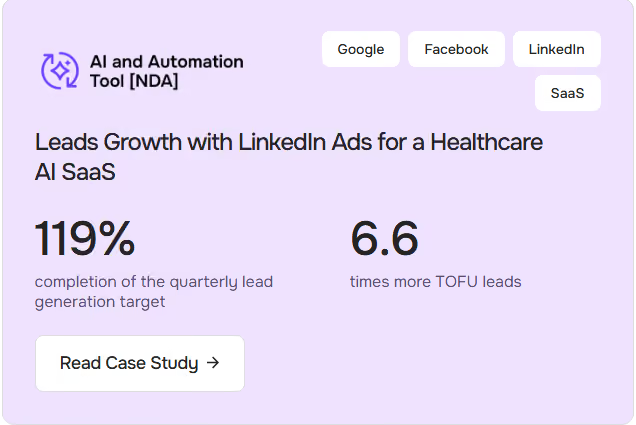
In that case, Billing Manager became a strong lead source, while CEO and Owner showed low conversion into leads and MQLs. After analyzing the data, our team refined the ICP, rebuilt LinkedIn targeting, and helped the client reach 119% of the quarterly lead generation target, generate 6.6 times more TOFU leads, and produce 9 times more MQLs from TOFU campaigns compared with MOFU.
For each account, it helps to check three things:
- Why does it fit the ICP?
- Is the potential deal large enough to justify ABM effort?
- Can the team realistically reach the right roles through controllable channels?
If the answer is weak, the account may remain in demand generation, but it should not enter a high-touch ABM motion.
Mapping the Buying Committee
Accounts do not buy software. The people behind them do. In B2B, those people rarely act alone.
According to Forrester’s 2026 State of Business Buying, a typical B2B decision involves 13 internal stakeholders and 9 external influencers, and the number can be higher for more complex or strategic purchases. LinkedIn also describes the buying committee as a group of stakeholders from different business functions, including finance, IT, management, and operations, who evaluate a purchase from different angles.
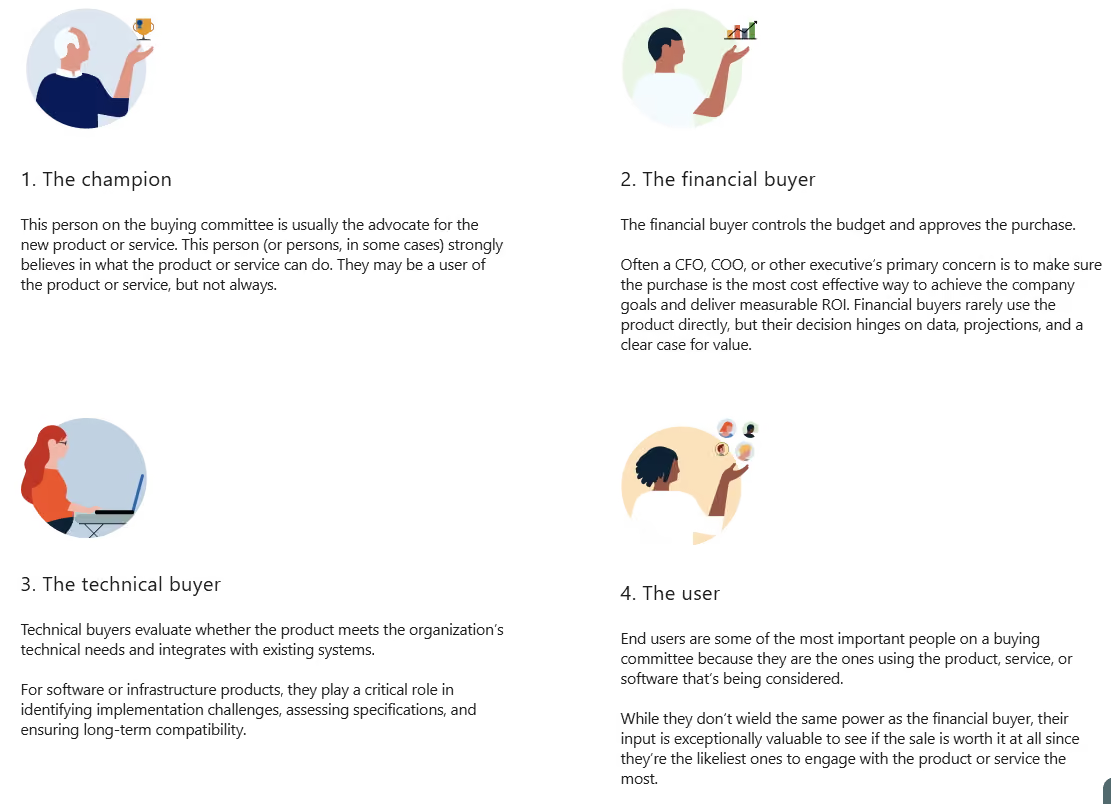
Most B2B purchases involve multiple stakeholders with different priorities. Effective ABM programs adapt messaging, proof points, and content to each role within the buying committee
That is why buying committee mapping is one of the most important parts of the account-based marketing process. In B2B SaaS, a deal may involve the CMO, head of growth, demand generation lead, RevOps manager, CFO, security reviewer, procurement specialist, legal, IT, and end users.
Each stakeholder evaluates the deal through a different set of risks and priorities. The CMO cares about pipeline and revenue impact. The head of growth looks at speed and scalability. RevOps cares about attribution and reporting. Finance evaluates payback and budget risk. Security and IT check integrations, compliance, and technical constraints. End users think about workflow, adoption, and the product’s day-to-day value.
Hidden buyers also matter. LinkedIn and Bain describe Hidden Buyers as influential members of the buying group who often sit in procurement, finance, legal, and operations. They may not click ads, download content, or leave intent signals, but they still influence approval, trust, and risk evaluation.
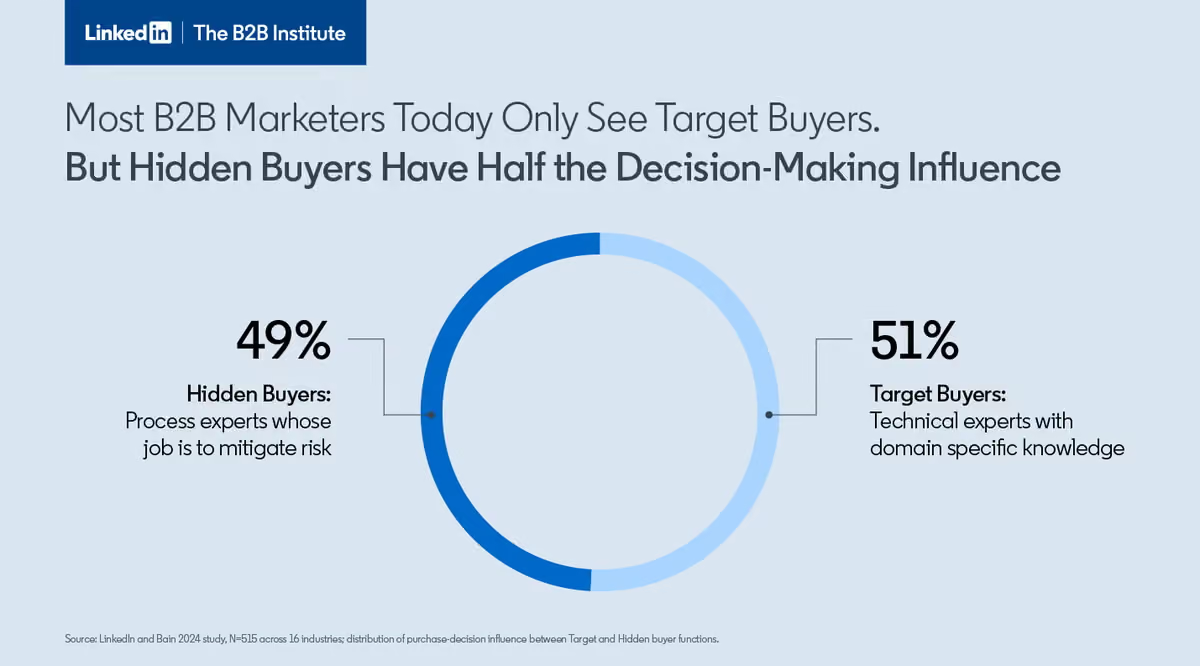
This changes ABM messaging. One generic “Book a Demo” ad will not answer the questions of the full buying committee because different roles need different arguments. For the champion, the key points are business outcomes and internal momentum. For the CFO, they are ROI, payback, and cost control. For the security reviewer, they are compliance, data protection, and implementation risk. For end users, they are adoption, workflow, and practical value.
ABM works better when messaging reflects these differences. Role-specific messages, proof points, and content assets help the team avoid relying on one champion and gradually expand influence inside the account.
Personalizing Campaigns and Executing Across Channels
Personalization in ABM should mean more than inserting a company name into an email. Useful personalization connects the message to the account’s industry, business model, maturity, current tools, growth stage, buying committee role, and likely pain points.
Common ABM channels include LinkedIn Ads, account-based display, personalized landing pages, role-specific email, webinars, sales outreach, retargeting, and custom ROI content. But channels work only when they support the same account strategy. If a LinkedIn ad focuses on reducing operational risk, the landing page should continue that angle, and the sales follow-up should not return to a generic product pitch.
For SaaS teams, LinkedIn is often one of the strongest ABM channels because the platform can target companies, roles, seniority, and job functions. We cover this in more detail in our guide to account-based marketing on LinkedIn and in the overview of our work as a LinkedIn Ads agency.
LinkedIn Conversation Ads can also support personalization. In ABM, they do not work as a mass-message format, but as a way to build a more controlled path for different roles inside the buying committee: one scenario for decision-makers, another for operators, and a third for accounts with higher intent.
It is also important to account for the way B2B buyers increasingly want to move through part of the journey without direct contact with sales. Gartner notes that 75% of B2B buyers prefer a rep-free sales experience, although fully self-service purchases are more often associated with buyer regret. This means ABM content, landing pages, retargeting, and role-specific assets need to work before the sales conversation, not only after it.
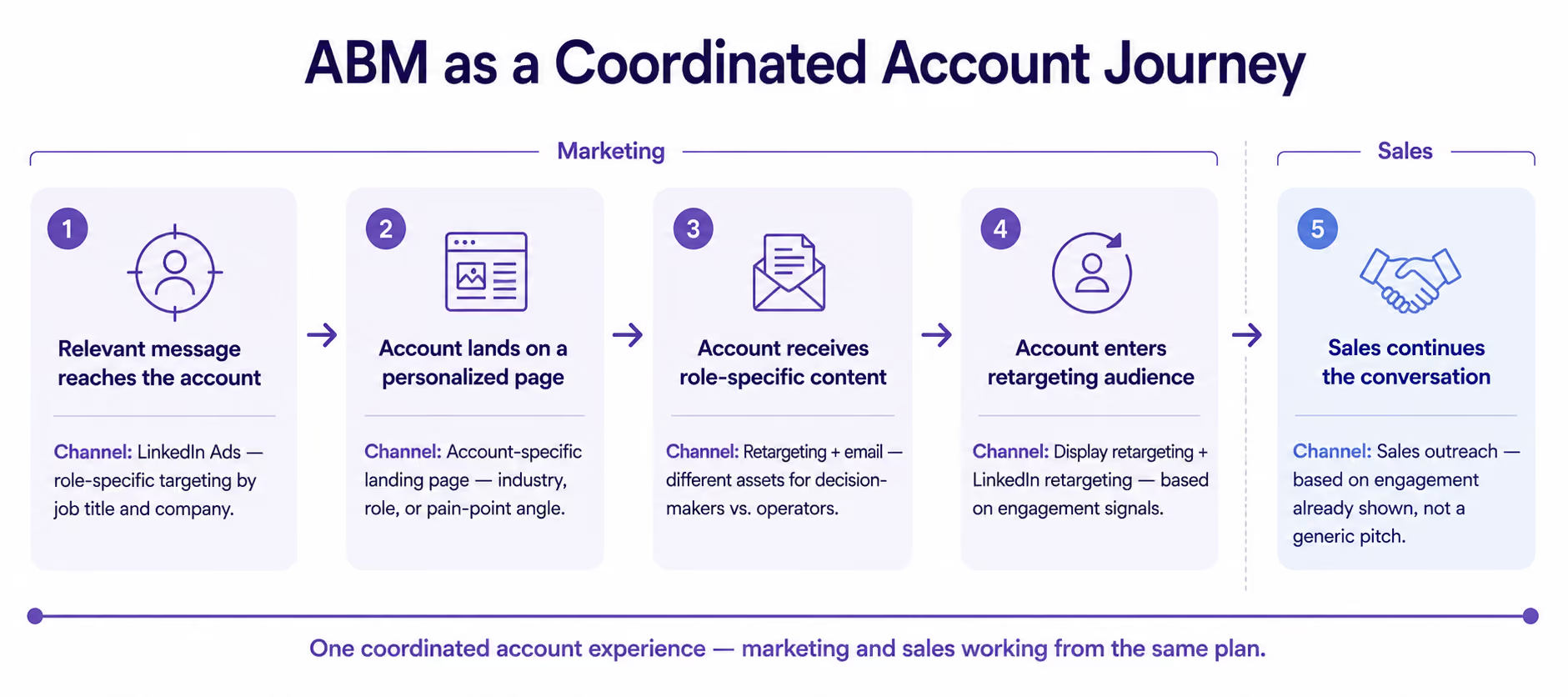
The experience also needs to be coordinated. If marketing launches account-based ads and sales follows up with a generic pitch, the account experience breaks down. ABM requires shared planning, shared definitions, and shared follow-up rules. As a result, ABM execution should work as a coordinated account journey, not as a set of disconnected channels:
- The target account sees a relevant message in LinkedIn Ads
- It lands on a personalized landing page
- It receives role-specific content
- It enters a retargeting audience
- Sales continues the conversation based on the engagement already shown
Account-Based Marketing Tools and Technology
ABM can start with a relatively simple stack, but the right technology becomes more important as the program grows. The goal is not to buy every account-based marketing platform on the market. The goal is to support the account-based marketing process, improve coordination between sales and marketing, and create more accurate account-level visibility.
That distinction matters. Many companies start choosing tools before they define the ICP, target account list, or account qualification criteria. As a result, technology starts replacing strategy instead of supporting it. Salesforce also notes that ABM effectiveness depends heavily on how well sales and marketing work from shared account data and coordinate interactions with selected accounts.
Useful ABM tool categories usually include:
- CRM and customer data platforms
- Marketing automation
- Account intelligence and intent data
- Advertising platforms
- Website personalization
- Analytics and attribution
- Sales engagement tools
- Reporting and orchestration platforms
Gartner defines ABM platforms as solutions that help B2B teams identify and prioritize accounts, coordinate engagement between marketing and sales, manage account engagement, and measure program influence on pipeline and revenue.
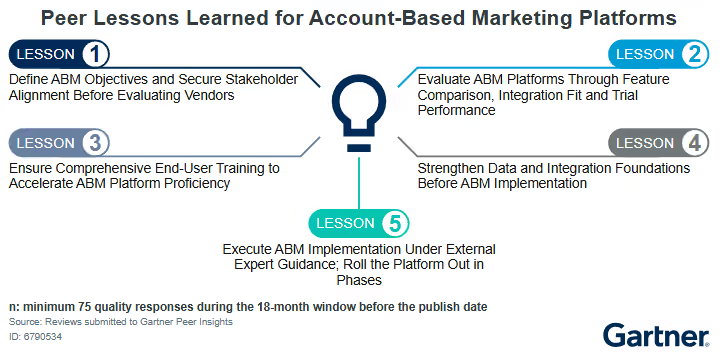
Different tool categories solve different problems. CRM supports account visibility and interaction history. Advertising platforms help scale account-based outreach. Analytics and attribution show which accounts are actually moving toward pipeline. Intent data and account intelligence help detect active demand before a potential buyer fills out a form or contacts sales.
The stack also needs to support a strong post-click experience. If ABM traffic lands on generic pages, the campaign quickly loses context. The user sees a relevant message in the ad, but after the click, lands on a page that speaks to everyone at once. In ABM, personalization should continue after the first interaction. That is why many mature ABM programs use account-specific landing pages, tailored offers, role-based messaging, and CRO approaches for different audience segments.
The tool stack should also match ABM maturity. For a first pilot, CRM data, LinkedIn Ads, a landing page builder, analytics, and tight sales follow-up are often enough. A more mature team may need account intelligence, intent data, website personalization, orchestration, advanced attribution, and account-level reporting.
If a company is just starting to evaluate available tools, it helps to remember that a strong ABM program usually develops in stages. First, the team builds the ICP, account selection, and measurement framework. Only then should it expand the technology stack. This approach helps avoid implementing expensive platforms before there is a clear process for using them.
How to Measure ABM Success: Metrics and KPIs That Replace MQL Volume
ABM measurement should not be built around MQL volume. In an account-based model, fewer leads can be a good sign if the right accounts become more engaged and move toward revenue. 6sense describes ABM metrics as metrics that measure marketing influence on specific target accounts, not individual leads. In this logic, volume and quantity matter less than account quality, engagement depth, and revenue impact.
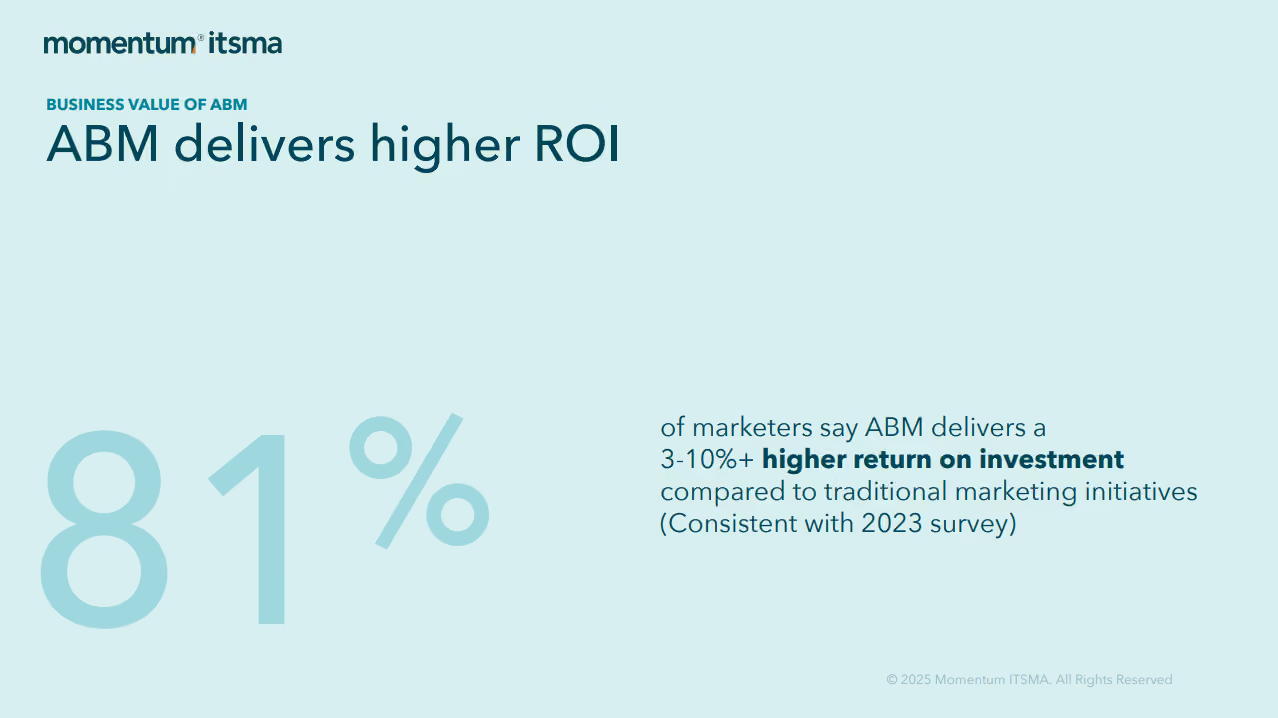
This difference is especially important for leadership. MQL volume shows activity, but it does not always explain business quality. Account-level reporting shows which priority accounts are engaged, how deeply the buying committee is covered, whether target account pipeline is being created, and how ABM affects revenue. According to Momentum ITSMA 2025, 81% of marketers report that ABM delivers higher ROI compared with traditional marketing initiatives.
Instead of MQL volume, teams should track account-level and revenue-connected metrics:
For leadership, this type of reporting works better because it connects marketing activity to commercial outcomes. “We generated 500 leads” shows volume, but it does not explain which companies moved closer to buying. In ABM, the report should sound different: “27 target accounts showed meaningful engagement, 11 buying committees expanded beyond one contact, 6 opportunities were opened, and $820K in target account pipeline was created.” That format immediately shows account quality, buying committee movement, and pipeline contribution.
For paid media teams, this also changes the optimization logic. Campaigns cannot be evaluated by CPL alone. A LinkedIn campaign with a higher CPL may still be more efficient if it reaches the right accounts, expands buying committee coverage, and influences qualified pipeline. Before launching or scaling ABM, it is important to check tracking, audience structure, and funnel issues. Aimers’ PPC audit can help identify these problems before the team starts spending budget on account-based campaigns.
This logic is also clear in our Mixpanel case. The Aimers team rebuilt paid acquisition and LinkedIn campaigns so optimization was not centered only on lead volume, but on qualified leads and downstream performance. As a result, Mixpanel increased qualified leads by 164% in the first 6 months of the partnership, while CPL decreased by 67%. For ABM and complex B2B campaigns, this is a strong example of why data quality, campaign structure, and CRM connection matter more than isolated CPL.
When ABM Makes Sense
ABM will not fix a weak ICP or replace sales strategy. Its value is that it helps focus marketing, advertising, and sales effort on accounts where the company has a real chance to create pipeline and revenue.
In practice, the strategy comes down to several principles:
- Select accounts with strong fit and revenue potential
- Work with the full buying committee, not one contact
- Adapt messaging to different roles and buying stages
- Coordinate marketing and sales around shared accounts
- Measure success through account engagement, pipeline, and revenue, not only MQL volume
The last point is especially useful for many SaaS and tech companies. It explains why the existing funnel may fall short of revenue goals. The funnel can keep generating leads while still failing to show which accounts have real fit, where the buying committee is expanding, and which opportunities are moving toward pipeline.
ABM does not require a complex technology stack from day one. It is usually more effective to start with a small list of priority accounts, build the process between marketing and sales, and then gradually scale what has already proven effective.
If you are thinking about adding ABM to your paid acquisition strategy, we at Aimers can help build a system where targeting, messaging, post-click experience, and measurement work together to support pipeline growth and revenue.
FAQs
Account-based marketing is a B2B strategy where sales and marketing focus on specific high-value companies instead of broad lead volume. The team selects target accounts, maps the buying committee, personalizes campaigns, and measures success by account engagement, pipeline, and revenue.

Lead generation starts with individual contacts and measures leads, MQLs, CPL, and form fills. ABM starts with target accounts and measures account coverage, buying committee engagement, pipeline, win rate, and revenue.
The three main types are one-to-one, one-to-few, and one-to-many ABM. One-to-one is highly customized, one-to-few targets small account clusters, and one-to-many uses technology to personalize campaigns across a larger account list.
Start by defining your ICP, building a target account list, aligning sales and marketing, mapping buying committees, and choosing the channels where you can reach decision-makers. Do not start with tools before strategy is clear.
ABM teams should track target account coverage, buying committee coverage, account engagement, target account pipeline, pipeline velocity, win rate, expansion revenue, and cost per engaged account.
.png)