
Top 11 SaaS Content Marketing Agencies in 2026

October 6, 2026

The best SaaS content marketing agency depends on what you are buying. In 2026, Aimers fits teams that want content tied to paid search and conversion work. Skale, Omniscient Digital, Flying Cat Marketing and Quoleady fit organic and AI-search growth. Animalz fits editorial thought leadership, and Directive fits full-funnel performance programs.
If paid search already drives most of your pipeline, the order of operations changes. A SaaS PPC agency that also owns landing pages and tracking will often show results sooner than a conten-only retainer, and organic content can follow once the offer and the funnel convert. Aimers sits in that camp. Most of the rest of this list is organic-first.
Comparison Table: 11 SaaS Content Agencies at a Glance
How to Choose B2B SaaS Content Marketing Agency: 7 Selection Criteria
Score every shortlisted agency from 1 to 5 on these seven points. The weights below suit a typical B2B SaaS buyer with a long sales cycle. Change them if your cycle or channel mix is different.
1. Pipeline link, not traffic (25%).
Reports should tie articles to demo requests and opportunities, as in a pipeline-first approach to B2B SaaS content strategy. Ask: "Show me one article tied to an opportunity." Red flag: every chart ends at pageviews.
2. SaaS depth (20%).
Someone on the account should have run or marketed software. Ask: "Who on my team has used a product like mine?" Red flag: case studies from ten unrelated industries.
3. Attribution setup (15%).
Last-click says little on six-month cycles. The agency should work inside your CRM and analytics stack. Weak spot? See our marketing analytics agencies for B2B SaaS. Red flag: "we report on last-click."
4. Conversion path (15%).
Someone must own the page after the click. Ask who fixes a page that ranks but does not convert, and whether they cover conversion rate optimization and landing page design. Red flag: the job ends at "publish."
5. AI-search readiness (10%).
Buyers research in ChatGPT, Perplexity and Google AI Overviews too. Ask how citations and brand mentions are measured. Red flag: "GEO" that is a renamed SEO audit.
6. Senior involvement (10%).
Ask who writes, edits and joins the weekly call. Red flag: seniors on the sales call, juniors on the account.
7. Contract and exit terms (5%).
Terms run from month-to-month to 12 months, and some retainers charge a buyout. Read the exit clause first.
What SaaS Content Marketing Costs in 2026
SaaS SEO and content retainers span roughly $3,000 to $25,000 a month, according to one 2026 pricing breakdow
Top SaaS Content Marketing Agencies
Three things are usually outside the retainer: ad spend, design and video, and tools. Ad spend alone can be several times the agency fee. If paid media is the bigger line item for you, compare options in our list of the best B2B SaaS paid media agencies.
1. Aimers

Aimers is a performance marketing agency for SaaS and tech, and a Google Premier Partner. Content at Aimers works as part of a paid, landing page and analytics program. Published results include a 210% conversion lift and 100% more purchases for Originality.AI, a 55% conversion increase for ShipBob, 164% more qualified leads at 67% lower cost per lead for Mixpanel, and a 65% lower cost per acquisition for RecMan. More examples are in the Aimers case studies.
Best for
SaaS teams where paid search, paid social and the landing page carry the pipeline, and content has to support them.
Pros
10+ years in SaaS, $30M+ in managed ad spend, 100+ SaaS accounts, a 4.9 average rating across 100+ reviews, and one team across ads, CRO and tracking. It also runs demand generation and lead generation programs.
Cons
Not built for high-volume editorial output or long-form thought leadership. Paid coverage is Google Ads, Microsoft Ads, LinkedIn Ads and Meta Ads.
2. Skale

Skale calls itself an AI-search-first organic growth agency for SaaS and tech. Its work spans Google, Reddit, YouTube and AI search engines, with a dedicated SEO team of 3 to 7 people and in-house writers trained on SaaS. Public case claims include Jitter growing AI brand coverage from 22% to 55% in four months. Those numbers are self-reported.
Best for
SaaS brands that want organic growth and AI-search visibility handled by one specialist team.
Pros
SaaS-only focus, in-house writers, link acquisition and technical SEO under the same roof, and a clear attribution story for AI search.
Cons
Organic and AI search only, so no paid media or CRO.
3. Quoleady
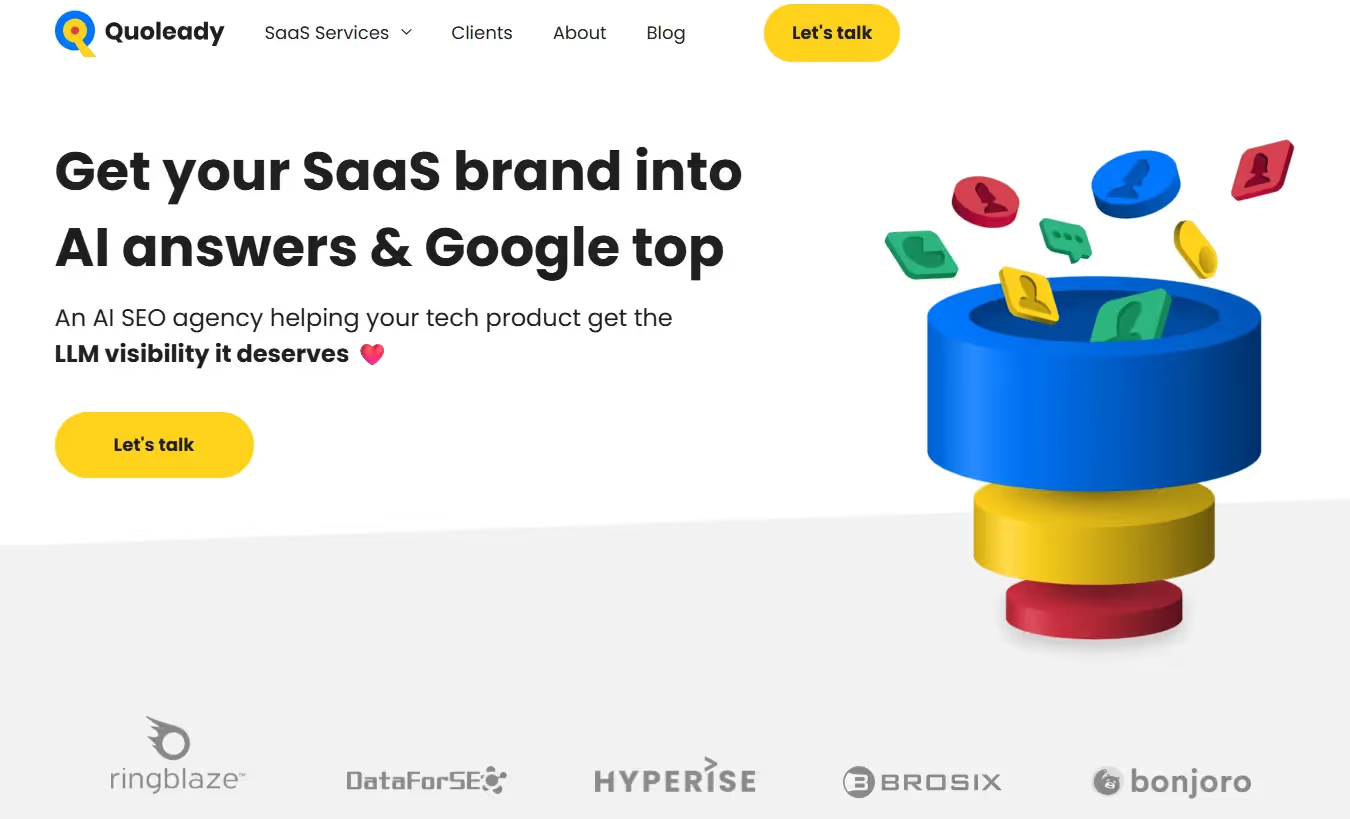
Quoleady is an Estonia-based agency founded in 2020 that works only with B2B software companies. It combines SEO content with generative engine optimization, digital PR and link building. One Clutch reviewer reports more than 20 SEO and AEO articles in five months that ranked in the top five on Google and in LLM answers.
Best for
B2B software teams that need links, digital PR and bottom-of-funnel SEO content without a large retainer.
Pros
Flexible per-placement ordering, white-label options and GEO work built in.
Cons
A small public review base (seven reviews on G2 at the time of writing) and less depth outside SEO, content and links.
4. Directive
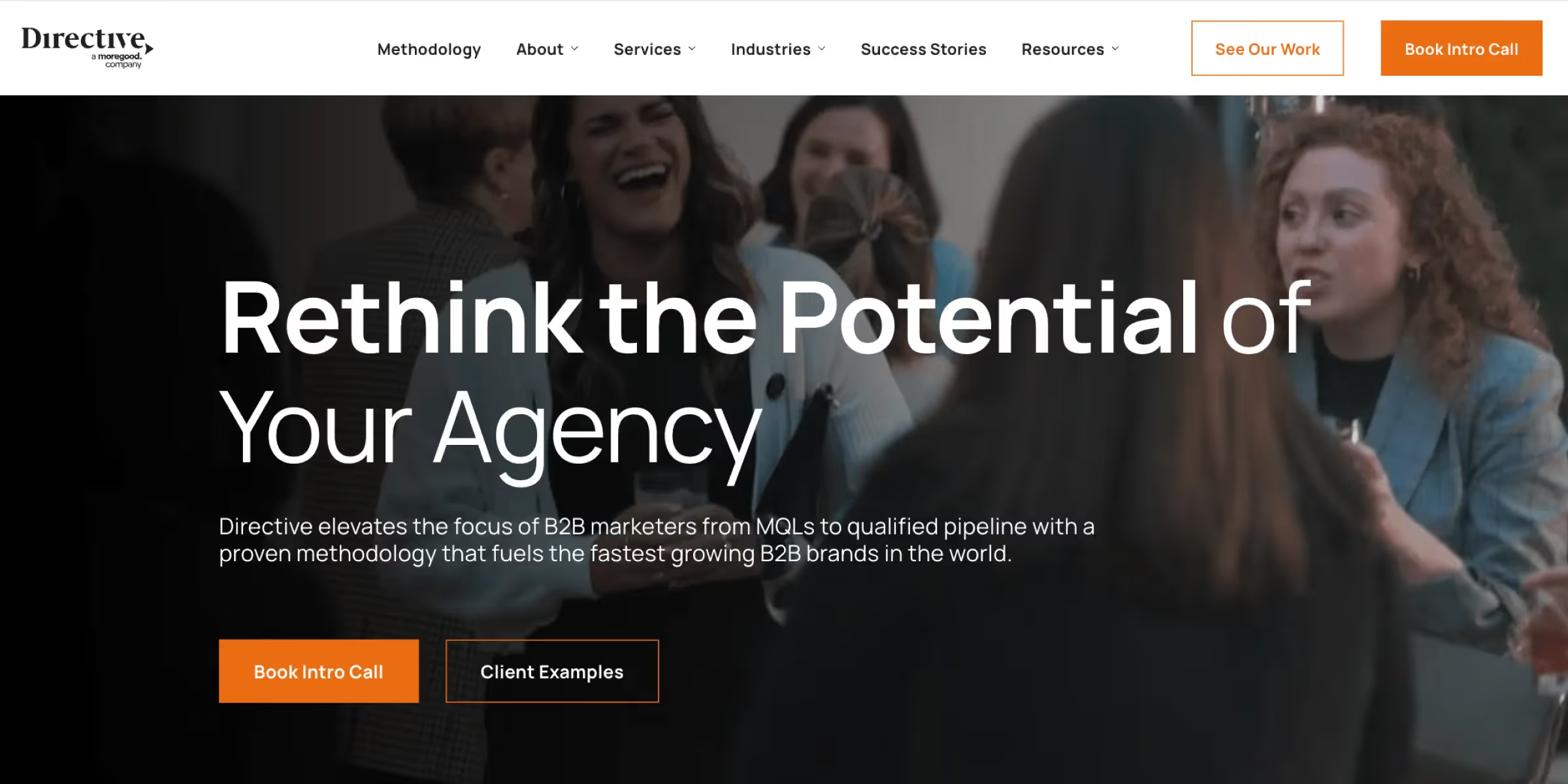
Directive is an Irvine-based performance marketing agency that serves only B2B SaaS and tech. It covers paid media, SEO, content, creative and RevOps, built around what it calls its Customer Generation method. It holds a 4.8 average on Clutch from 56 verified reviews.
Best for
SaaS companies with ad budgets of roughly $20,000+/month that want paid, SEO and content from one vendor.
Pros
Full-funnel coverage, pipeline-tied reporting and SaaS-only focus.
Cons
Premium retainers, long terms and a mid-market-and-up fit. Smaller teams can find it heavy.
5. Iron Horse
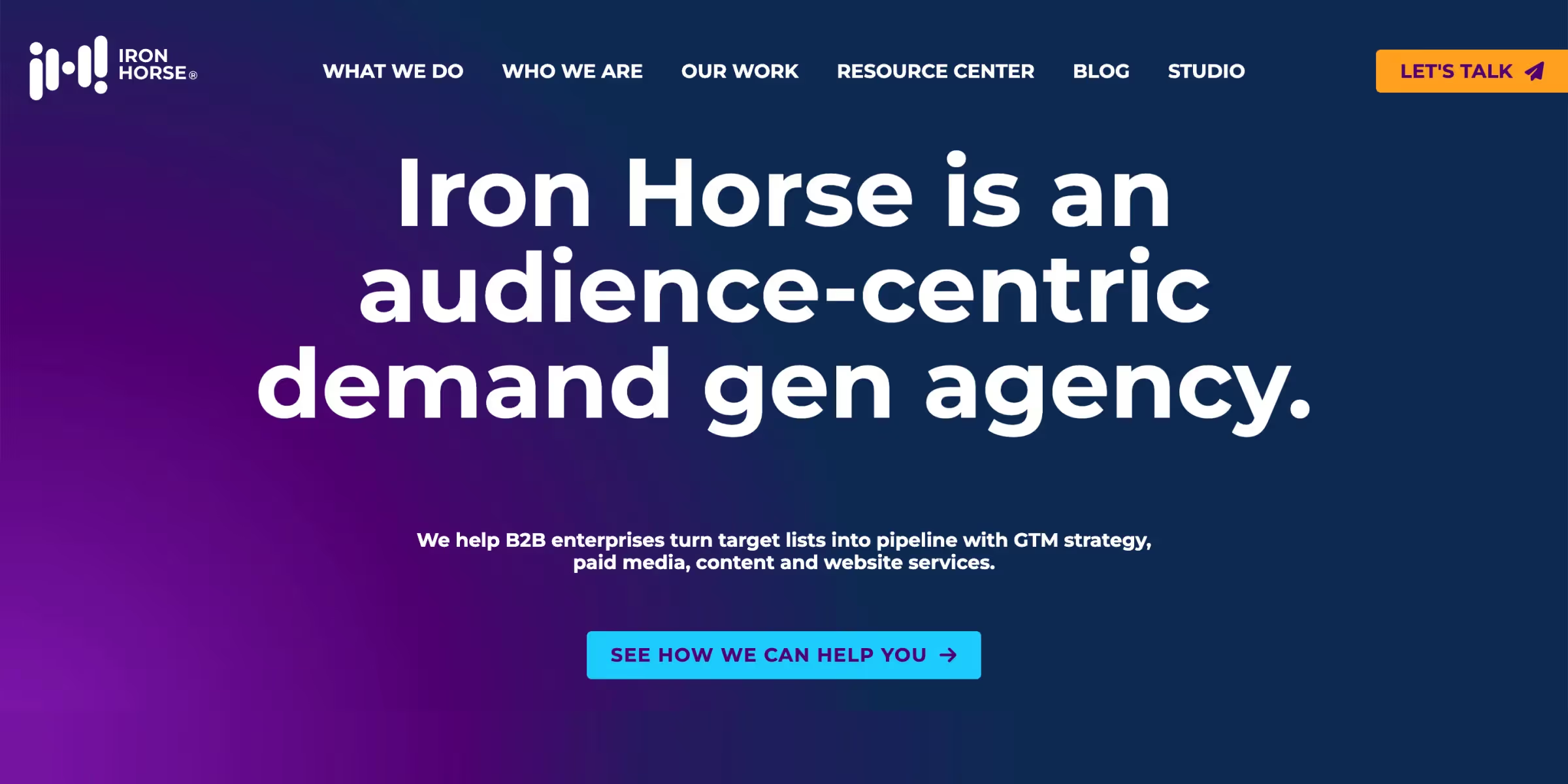
Iron Horse is a B2B demand generation agency founded in 2001 and based in San Ramon, California. It offers go-to-market strategy, content strategy and creation, paid media and web work, and was named Demandbase's 2025 Agency Partner of the Year. Its integrated demand programs typically run 8 to 12 weeks.
Best for
Enterprise and emerging-growth B2B companies running account-based marketing, especially on Demandbase.
Pros
Deep ABM and martech experience, plus analytics support for sales and marketing alignment.
Cons
Content serves account programs rather than leading them. It is a weak fit if you want an SEO blog engine.
6. Flying Cat Marketing
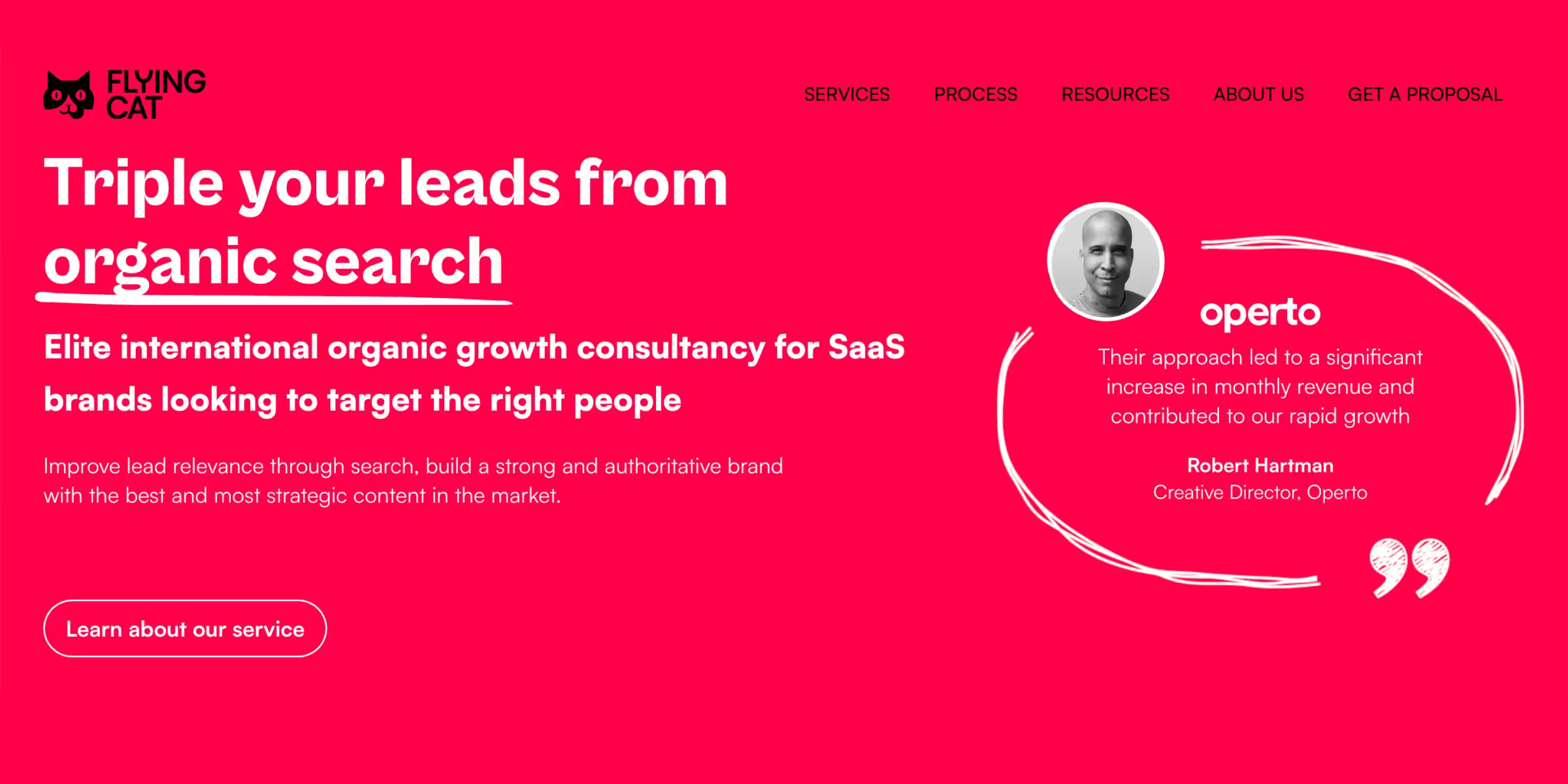
Flying Cat Marketing is a SaaS SEO and content agency that works with B2B SaaS companies in competitive verticals. Its focus areas are competitor content gap analysis, intent-based keyword strategy, funnel-wide content and technical SEO. It also builds content campaigns that combine comprehensive guides, supporting blog series, social amplification and email nurturing. Its team includes former SaaS founders and marketers.
Best for
B2B SaaS companies that want to rank for competitive keywords while turning organic traffic into leads.
Pros
Competitor gap analysis, intent-based keyword work, technical SEO and multi-format campaigns.
Cons
Paid media, CRO and AI search are not described in the source.
7. Omniscient Digital

Omniscient Digital is an organic growth agency for B2B software. It runs SEO, content, programmatic SEO, digital PR and, more recently, GEO. Its "barbell" content strategy mixes product-led pages with editorial pieces. Clients cited in third-party profiles include Jasper, SAP and Loom.
Best for
Growth-stage and mid-market SaaS with budget for sustained organic investment. Directories describe the typical client as a B2B brand with $10M in ARR or $10M raised.
Pros
Revenue-focused reporting, strong editorial quality and a fast move into AI-search work.
Cons
Premium pricing, few public reviews and no paid media.
8. Animalz
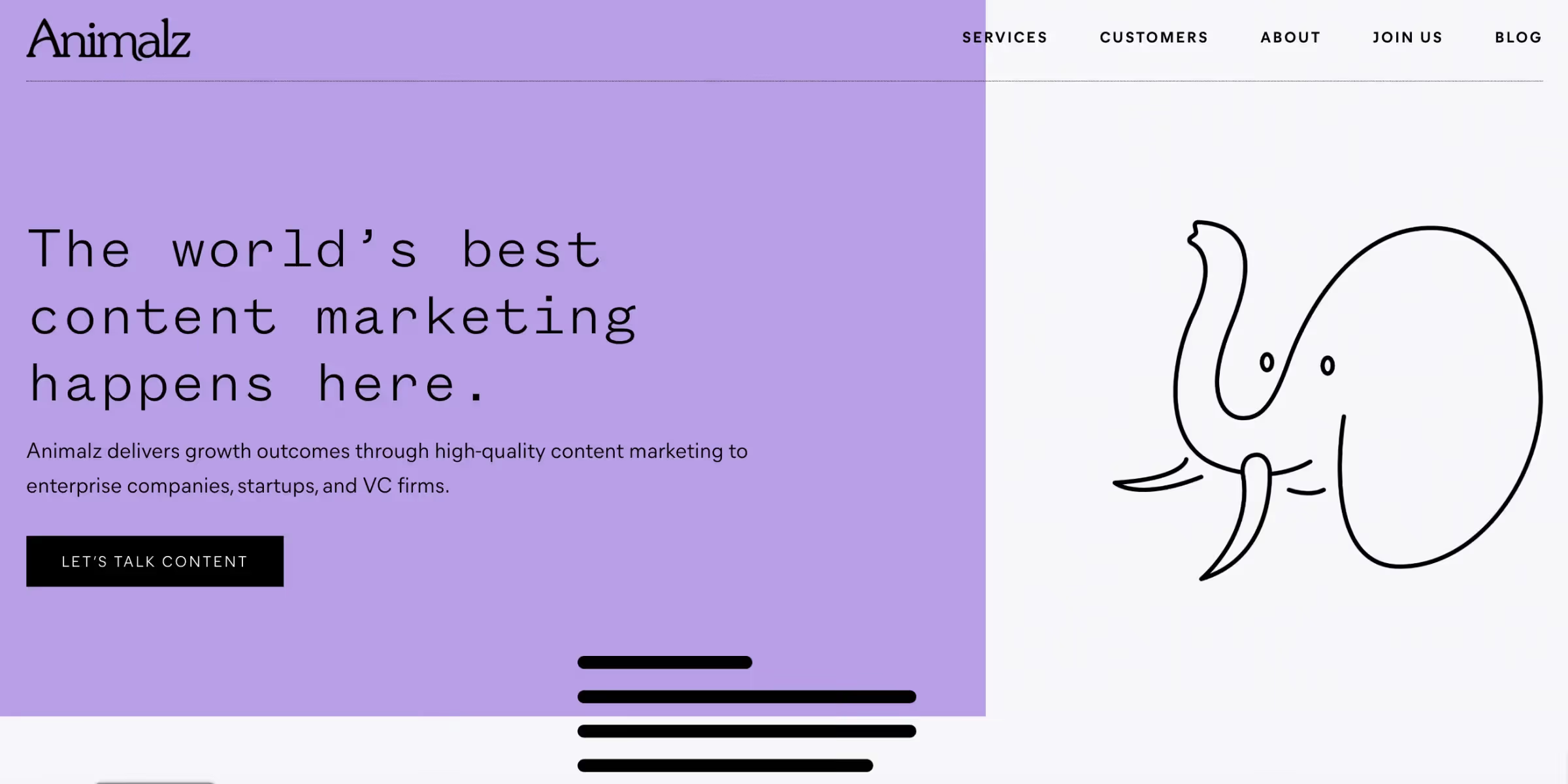
Animalz is a digital marketing agency built around SaaS content marketing, with a focus on explaining complex software to busy executives. It favors fewer, higher-quality resources over frequent posting, aiming for pieces that prospects bookmark and share. It connects content to newsletter sequences, social amplification and sales enablement materials.
Best for
SaaS companies that want a small number of in-depth, high-impact content pieces rather than high volume.
Pros
A quality-first philosophy, strength in explaining technical products, and email nurturing linked to content performance.
Cons
A low-volume approach may not fit SEO programs that depend on publishing at scale. Paid media and CRO are not described.
9. Foundation

Foundation is an AI visibility and generative engine optimization (GEO) agency for B2B tech, SaaS and enterprise companies. Its work runs through four stages: research, content creation, distribution and optimization, aimed at getting brands cited across ChatGPT, Gemini, Claude, Perplexity and AI Overviews. It also offers a Reddit marketing practice, LLM advertising, digital PR, thought leadership, demand generation, paid media, conversion optimization and attribution. The agency says it has generated more than 220 million organic visits and AI citations for B2B brands. That number is self-reported.
Best for
B2B SaaS and enterprise tech companies that want AI search visibility, Reddit and distribution work, and pipeline programs from one agency.
Pros
GEO as the core offer, a dedicated Reddit playbook, LLM advertising, and paid media, CRO and attribution available alongside organic work.
Cons
Pricing is not published. The service list spans many channels, so depth in any single one is harder to judge from the site.
10. Scripted
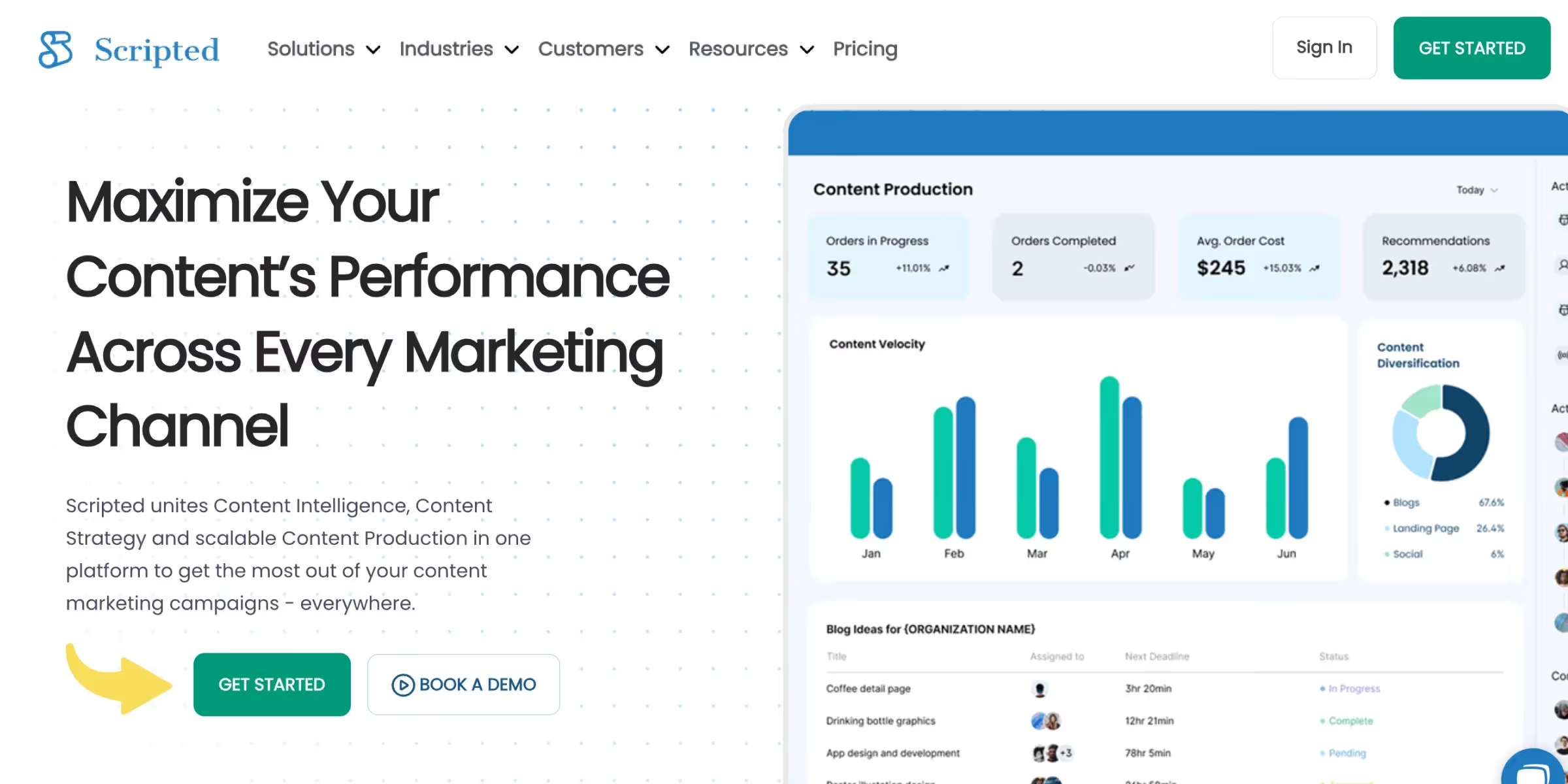
ScriptedPlatform describes itself as a pioneer of content-as-a-service. It combines strategy, creation and optimization in a scalable platform. Its services include executive thought leadership programs, industry report creation and promotion, podcast and video production, and content repurposing across formats. It optimizes content using performance data.
Best for
SaaS companies that need consistent, high-volume content across multiple formats, including thought leadership.
Pros
Multi-format production, scalable operations and data-driven optimization.
Cons
A platform model may offer less hands-on collaboration. Paid media, CRO and AI search are not described.
11. Rock Content - Marketing for SaaS Companies Expert
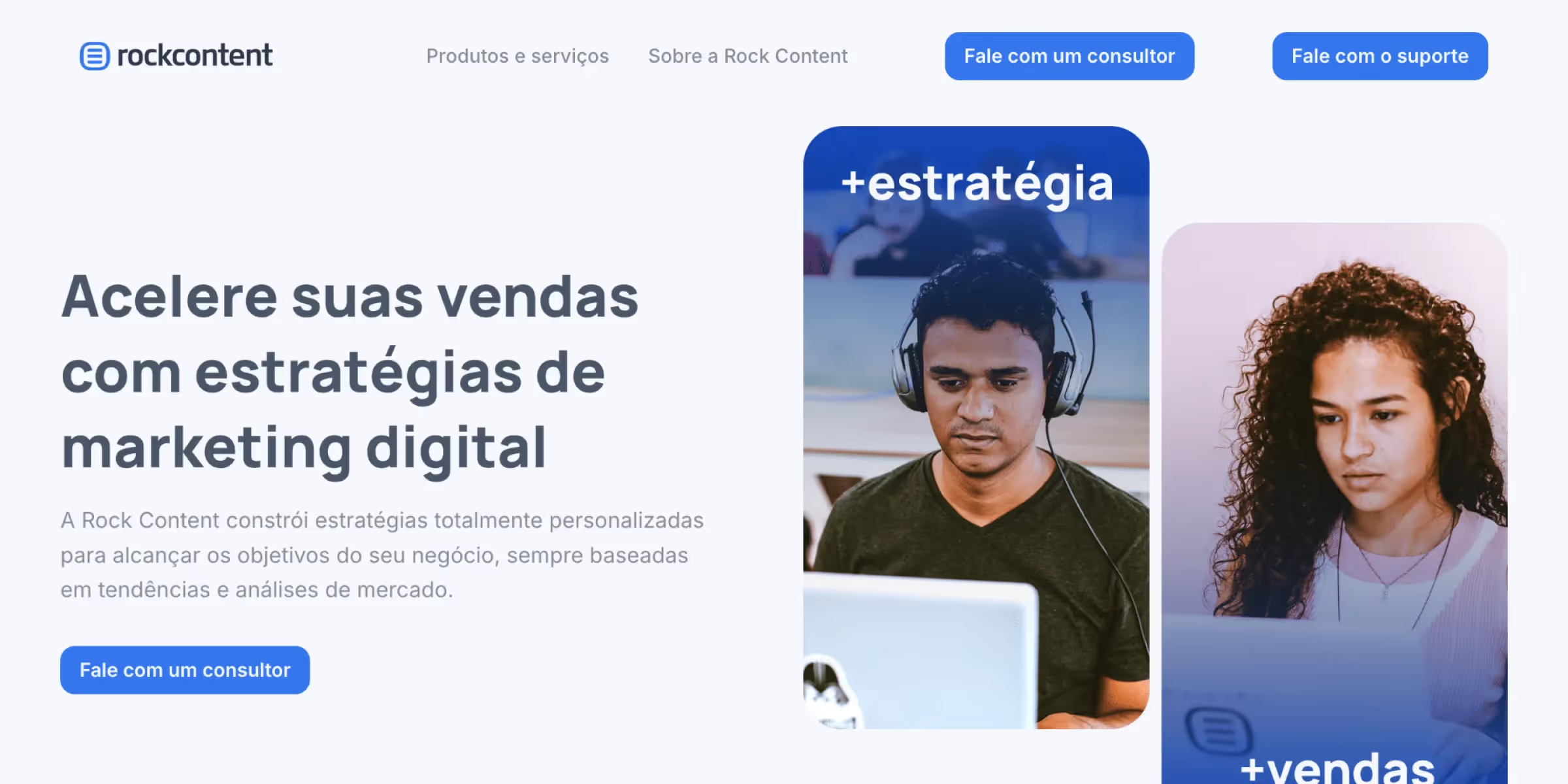
Rock Content brings enterprise-level content marketing to mid-market SaaS companies. Its strength is repeatable, systematic content creation across multiple markets and languages.
Best for
SaaS companies expanding internationally that need consistent content output in several languages.
Pros
Multi-market and multilingual capability, and a process built for consistency at scale.
Cons
A systematized approach may suit teams that want custom, experimental content less well. Paid media, CRO and AI search are not described.
The Aimers Take: Three Checks Before You Sign
We run paid programs for SaaS teams every day, so we see where content spend leaks. These are the checks we would run on any agency on this list, including us.
One of our strategists puts it simply: marketing rarely fails because of low traffic. The leaks are usually deeper in the funnel.
- Borrow topics from your paid data. Converting search terms, competitor comparisons and objection-style queries in a Google Ads account show what buyers already pay to find. A good agency will ask for that data. A weak one will build topics from a keyword tool alone.
- Start with money pages, then the blog. Comparison, alternative, pricing and use-case pages usually deserve the first budget. Forty top-of-funnel posts can wait.
- Set a 90-day test. Pick five pages that should produce pipeline, define what counts as a win, and review them together. If nobody can say what a win looks like, the retainer is too early.
Final Thoughts
There is no single best SaaS content marketing agency, only the best fit for where your buyers convert. The list above shows who does what, so the real work is testing your shortlist.
Whoever you pick, ask every agency three questions: which article they tied to a real opportunity, who fixes a page that ranks but does not convert, and how they measure AI-search citations. Vague answers tell you most of what you need to know.
Then start small. Pick five pages that should produce pipeline, define what a win looks like and review after 90 days.
Wondering if your content strategy drives pipeline or just keeps you busy? At Aimers, we integrate SaaS content marketing with performance marketing for measurable SaaS growth. Book a strategy call to see where your biggest opportunities are hiding.
FAQs
Most SaaS companies invest 15-25% of their marketing budget in content marketing. For early-stage startups, expect $5K-15K monthly for a comprehensive content program. Growth-stage companies typically invest $15K-50K+ monthly depending on scope and market complexity.

SaaS-focused agencies understand unique challenges like long sales cycles, complex buying committees, product-led growth mechanics, and technical subject matter. They know how to create content that nurtures prospects through 6-month decision processes and speaks to multiple stakeholders with different priorities.
Expect 3-6 months for initial SEO traction and lead generation. Meaningful pipeline impact typically appears within 6-9 months. Content marketing is a compound investment - results accelerate over time as your content library grows and domain authority improves.
Early-stage companies (pre-$5M ARR) usually benefit more from agencies due to immediate expertise and lower overhead. Post-$10M ARR, hybrid approaches work well - in-house team for strategy and brand voice, agency for specialized skills and capacity. Consider your timeline, budget, and hiring challenges.
Track content-assisted conversions, pipeline velocity, cost per qualified lead from content channels, and trial-to-paid conversion rates for content-driven signups. Set up proper attribution tracking to connect content touches to closed deals. Focus on revenue metrics, not just traffic or engagement.
October 7, 2026
October 6, 2026