
The CPL Trap: How Cheap Leads Quietly Eat Away Your Profit

February 16, 2026
Imagine a typical morning for a marketer at a SaaS company. They brew a cup of tea, open their dashboard, and see that the CPL has dropped 40% over the past week, while the number of leads has grown by 50% — success! But after a closer look at the data, it turns out there are plenty of leads, yet almost none are high-quality, and the conversion rate to actual deals is nearly zero.
This is what's called the CPL trap. In the pursuit of impressive numbers in the ad account, we often forget that real PPC effectiveness is measured by the profit ads generate for the business, not the number of forms filled out. This is especially true for B2B SaaS marketing, where deal cycles are long and mistakes at the lead generation stage can lead to significant financial losses down the line.
In this article, we'll explore why "more leads" doesn't always mean success and how to restructure PPC work so that ads generate real profit, not just form submissions. The secret to high-quality lead generation lies less in campaign settings and more in how closely different teams (PPC, marketing, sales) collaborate and communicate.
Why More Leads ≠ More Money
In classic marketing, growing the number of submissions while reducing their cost is often considered a good result. However, in B2B SaaS, a high number of leads can be an illusion of success. Real ad effectiveness is measured not by filled forms but by the net profit ads bring to the business.
Let's look at concrete examples where excellent metrics in the ad account can hide a lack of real sales.
Case 1: The Illusion of Scale
At first glance, intermediate results looked like a textbook success:
- Number of trials: increased 2.5x compared to the previous reporting period.
- CPA dropped by 43%.
Everything seemed perfect. But digging deeper into the funnel revealed a different picture: the conversion from trial to purchase had halved. Partly, this could be explained as a scale effect — when traffic volume grows, the conversion to purchase naturally drops. However, here, despite the large number of new registrations, the ads simply stopped being profitable.
Case 2: Long Funnel, Short Returns
Another project had a long sales funnel, so the main task for our Google Ads agency was to generate high-quality leads that could be converted from "Book a Demo" into deals (MQL + SQL).
The results initially looked great:
- Lead volume grew by 70% compared to the previous period.
- CPL dropped by half.
The problem surfaced when analyzing lead quality: most leads were invalid according to one criterion or another. Despite the volume, these leads added no real value to the business.
Where to Look for the Problem
If leads are getting cheaper but sales remain stagnant, the issue usually lies in one of two areas:
PPC issues: Leads may be unqualified due to wrong targeting or overly broad offers. For example, if 60% of leads fail to match the ICP, it's a sign to revisit campaign settings.
Business-side issues: Leads may be high-quality but fail to move through the funnel or close deals. Slow sales response or a poorly structured funnel can kill even the hottest lead.
To make ads profitable, shift the focus from volume to quality, using sales data as the main benchmark for traffic optimization. Tools to filter out irrelevant users at the click stage will be discussed in the next section.
PPC Levers (How to Filter Traffic at the Entry Point)
Once we accept that lead volume isn't the ultimate goal, the question becomes: how do we control the quality of the lead flow? PPC specialists have three main levers that act as sequential filters.
Lever 1: Traffic & Semantic Core
Keywords are the first and roughest filter. In B2B SaaS, it's critical to separate casual browsers from high-demand audiences.
- At campaign launch, exclude queries containing words like "free," "how to," "what is," "wiki," "template", etc. Users searching these terms are usually looking for information or free templates, not professional software.
- Prioritize keywords with commercial intent, e.g., pricing, software, tools, solutions, vendor alternative.
- Exclude your current clients from targeting to avoid wasting budget.
Lever 2: Use Offers in Ads as Pre-Qualification
An ad is not just a way to attract clicks; the offer itself can pre-qualify your audience.
- Include pricing and conditions in the ad to filter out users with irrelevant budgets before they click.
- If your product is for enterprise clients, use markers like "for Enterprise" or "B2B only" to filter out SMBs and B2C users.
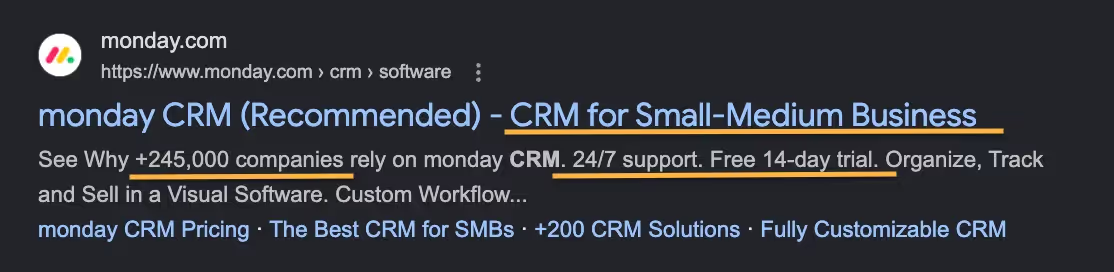
Example: Companies like monday.com or Paperpal clearly indicate their target segment in headlines, e.g., "for Small-Medium Business" or "for Students," so users immediately know if the product fits their needs.

Lever 3: Landing Pages as the Final Filter
The landing page is the final stage of filtering. For it to work effectively, it must meet three criteria:
- Deliver what the ad promised.
- Show that the product solves problems at the user's level, e.g., through case studies or integrations.
- Build trust through social proof and product specifications to overcome final objections.
If each step filters out mismatched users, you'll end up with high-quality leads, not just filled forms. But to convert these leads into revenue, messaging matters more than settings. The role of emotions and creative in ROI will be discussed next.
Creative & Offer: Emotions vs. Dry Numbers
If keywords and campaign settings are the sieve, then creative and offer are what make the right user stop and click. In B2B SaaS, advertisers often make the mistake of selling features instead of solving problems.
Many companies describe products by listing technical specs and unique features, forgetting the key question: what value does the product provide, and why should the user pay now?
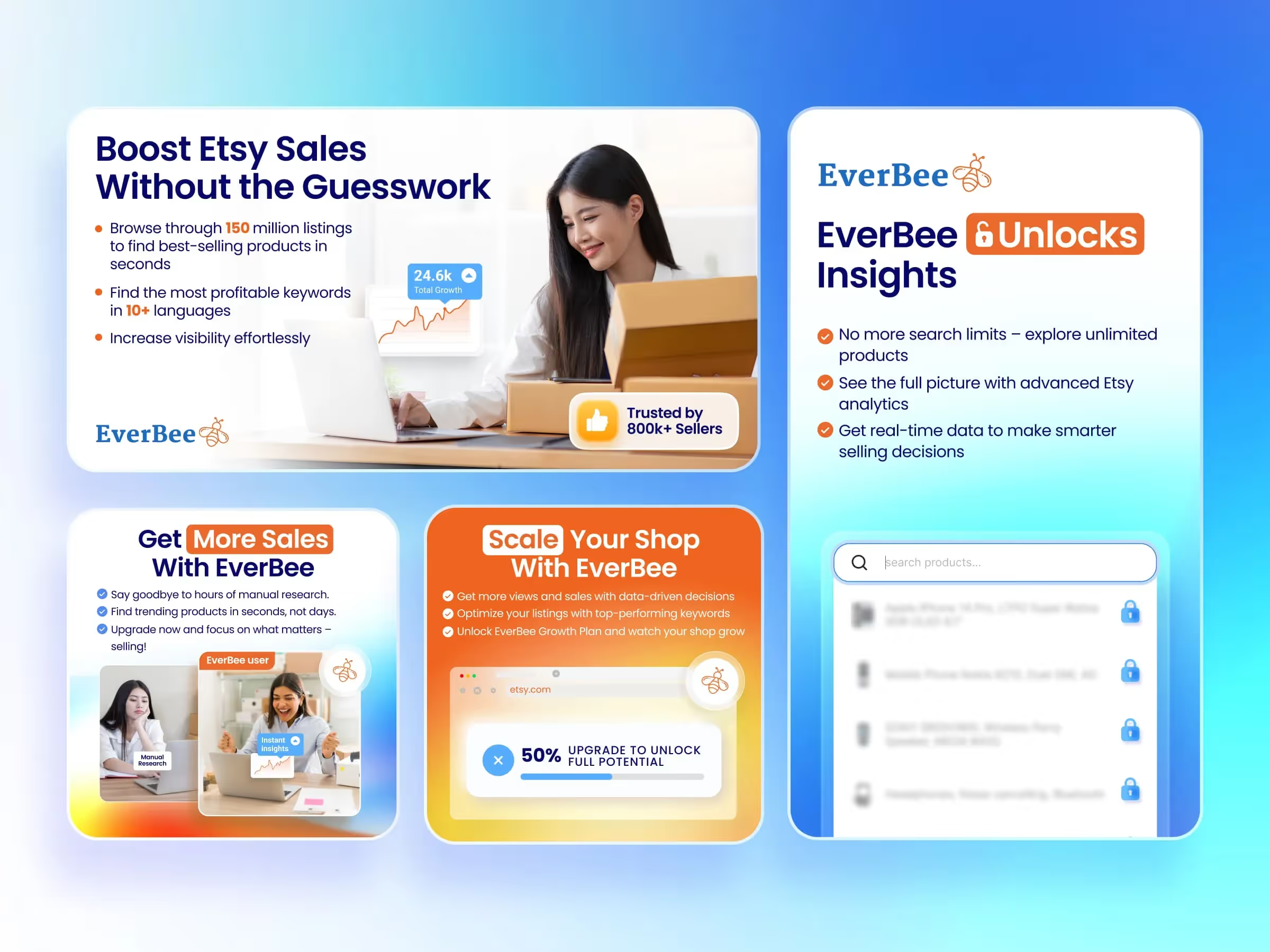
Case 1: Storytelling & the Human Touch
Campaign experience shows that dry product-focused ads often lose to emotional context:
- Ads focusing solely on data and charts may spark curiosity but rarely motivate a purchase.
- Creatives showing success stories or real people build trust. Seeing a human face makes a complex tech brand more understandable and approachable.
Key takeaway: Engagement without emotional context and meaningful offer rarely converts to sales. Check out our ad examples for SaaS in our blog to see what works in practice.
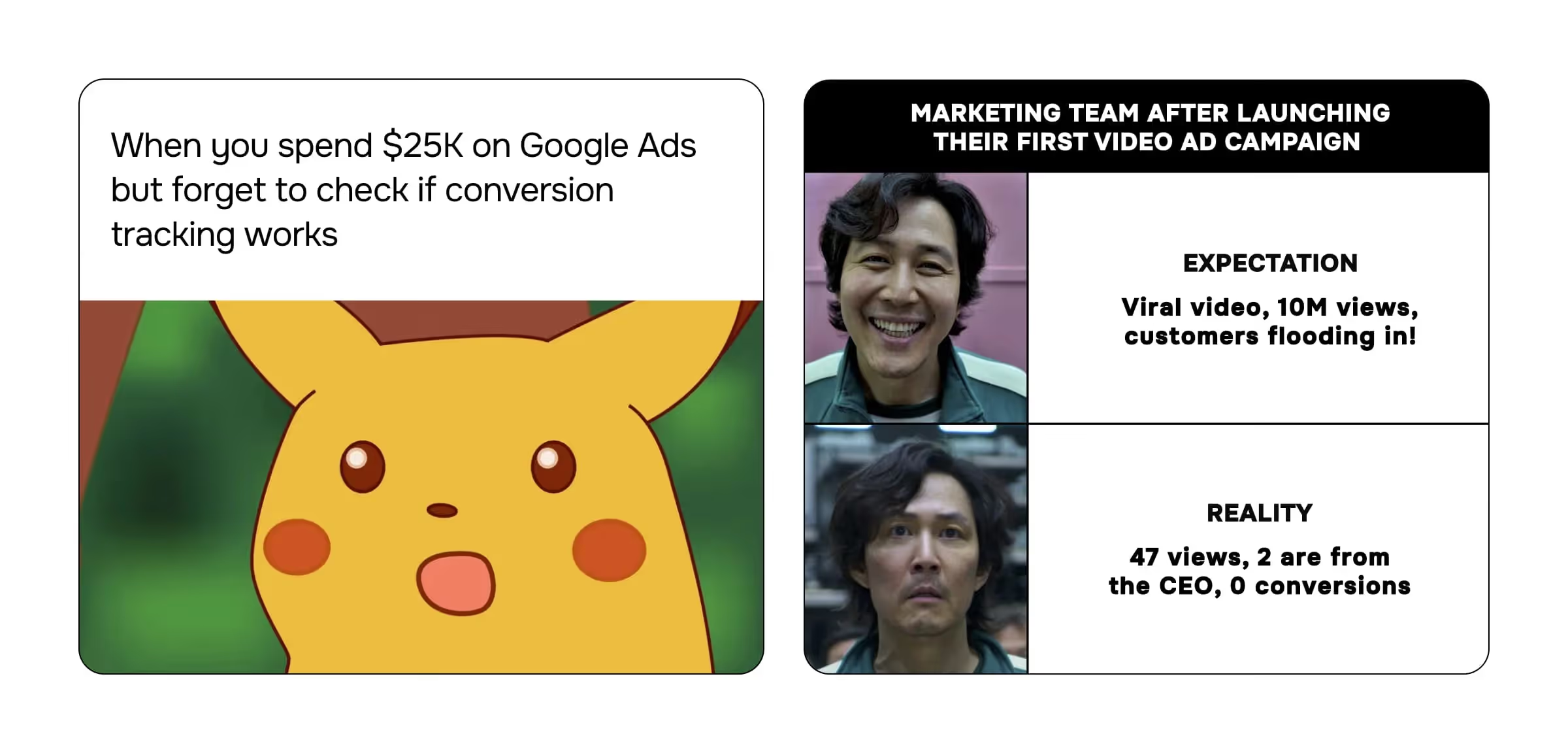
Case 2: Humor in Serious Business
Many avoid memes or jokes in B2B, thinking it's unprofessional. Tests show the opposite:
- Appropriate humor helps break ad blindness and stand out in the feed.
- In one project, adding memes significantly increased lead flow while lowering CPC and CPA.
Tip: Keep humor subtle and audience-appropriate for maximum effect.
Where Your Money Disappears: Checklist for Performance Marketers
Even with perfect campaign settings and bright creatives, leads can disappear before becoming deals. Sometimes the audience is wrong, sometimes they're not nurtured properly. Here's a checklist to identify weak points in your funnel:
- ICP check: Are you targeting people who can't afford your product or don't fit the profile?
- Positioning: How quickly does the user understand product value on the landing page?
- Response time: How fast does sales contact incoming leads? In SaaS, a delay of a few hours can cost a client.
- Funnel length: Are there unnecessary barriers to demo or trial?
- CRM-Marketing sync: Can marketers see what happens to leads after form submission?
The most valuable feedback for optimizing PPC and marketing is "Why Lost" status in CRM:
- If leads don't convert due to company mismatch → fix targeting/settings.
- If leads stall at MQL → examine sales processes further down the funnel.
Closing the Loop: From CRM Back to Paid Traffic
Many treat PPC as a one-way process: launch ads and report lead counts to sales. This leads to inevitable budget loss. To generate real profit, you must analyze data continuously, provide feedback, and test new hypotheses.
Key insight: The magic pill is feedback.
The process should be a continuous cycle: from incoming traffic and form submission to sales analysis and generating new hypotheses based on real deals. Constant data exchange between agency and client is crucial — performance marketing specialists need to know not just the number of leads but their quality.
Campaign optimization often focuses on form submissions, but that's just the tip of the iceberg. Using tools like Zapier, HubSpot, or Salesforce, you can track lead progress through the funnel back to the ad account. This allows optimization directly for SQL/SQO, improving lead quality and conversion rate optimization services. Feedback on lost deals becomes a tool for analysis and new opportunities.
Conclusion
Effective lead generation in 2026 is about close partnership between marketing and business. It's vital to gather details, get honest feedback from sales, and not fear initial poor results. Even a failed ad launch is valuable if it provides data to adjust course and test new hypotheses.
At Aimers, we believe the "magic pill" for success is continuous dialogue, turning raw data into actionable insights for campaign optimization and discovering new solutions.
FAQs
How do I know if I'm stuck in the CPL trap?

What's the difference between MQL and SQL, and why does it matter for PPC?
Should I really use humor and emotions in B2B SaaS ads?
How fast should sales respond to incoming leads?
What data should I be sharing between PPC and sales teams?