

Best Demand Generation Tools: Paid Channels, Automation & Analytics

July 13, 2026

Demand generation is where marketing gets expensive if the stack is messy.
One tool brings traffic. Another captures leads. A third sends emails. A fourth claims attribution. Sales has its own CRM view. Leadership wants pipeline. And somewhere in the middle, the marketing team is trying to answer a very normal question: which campaigns are actually creating demand we can turn into revenue?
That is why choosing demand generation tools is not just a software-shopping exercise. For SaaS and B2B teams, the right stack should help you do three things well:
- reach the right accounts and buyers through paid channels;
- capture and nurture interest without dropping leads between systems;
- measure impact beyond clicks, impressions, and form fills.
Below is a curated list of demand generation tools across paid channels, automation, and analytics. Some are ad platforms. Some are marketing automation systems. Some are attribution and revenue intelligence tools. The point is not to use all of them. The point is to build a stack where each tool has a clear job.
Quick Comparison of the Best Demand Generation Tools
1. Google Ads - Best for Capturing and Creating Demand
.avif)
Google Ads is still one of the most important demand generation tools because it covers both high-intent search and visual demand creation.
For SaaS teams, Search campaigns are usually the obvious starting point. People search for alternatives, comparisons, pain points, integrations, and category terms. That is demand capture. But Google also offers Demand Gen campaigns across YouTube, YouTube Shorts, Discover, and Gmail, which are built to reach users with richer visual creative before they actively search.
Best for: SaaS teams that want to combine search intent with broader demand creation.
Why it stands out:
- Search campaigns capture active demand.
- Demand Gen campaigns help create new demand across YouTube, Discover, and Gmail.
- Performance Max can extend reach across Google inventory.
- Conversion imports and offline conversion tracking can help optimize toward qualified pipeline, not just lead volume.
Watch out for: Google Ads can spend very efficiently in the wrong direction if tracking is weak. Before scaling, make sure you know which conversions are actually valuable.
2. LinkedIn Ads - Best for B2B Audience Targeting

LinkedIn Ads is often expensive, but for B2B SaaS it can be worth the price because the targeting is built around professional identity.
You can reach buyers by job title, seniority, function, company size, industry, skills, groups, matched audiences, and company lists. That makes LinkedIn useful for demand generation when the goal is not just more traffic, but more of the right traffic.
Best for: B2B SaaS teams selling to specific roles, buying committees, or target accounts.
Why it stands out:
- Strong professional targeting.
- Lead Gen Forms reduce friction on mobile.
- Matched Audiences support retargeting and account-based campaigns.
- Sponsored Content, Document Ads, Conversation Ads, and video formats work well for educational demand gen.
Watch out for: LinkedIn can punish vague offers. If the message is weak, the channel will simply make that weakness expensive.
3. Demandbase - Best for ABM Advertising and Account-Based Demand
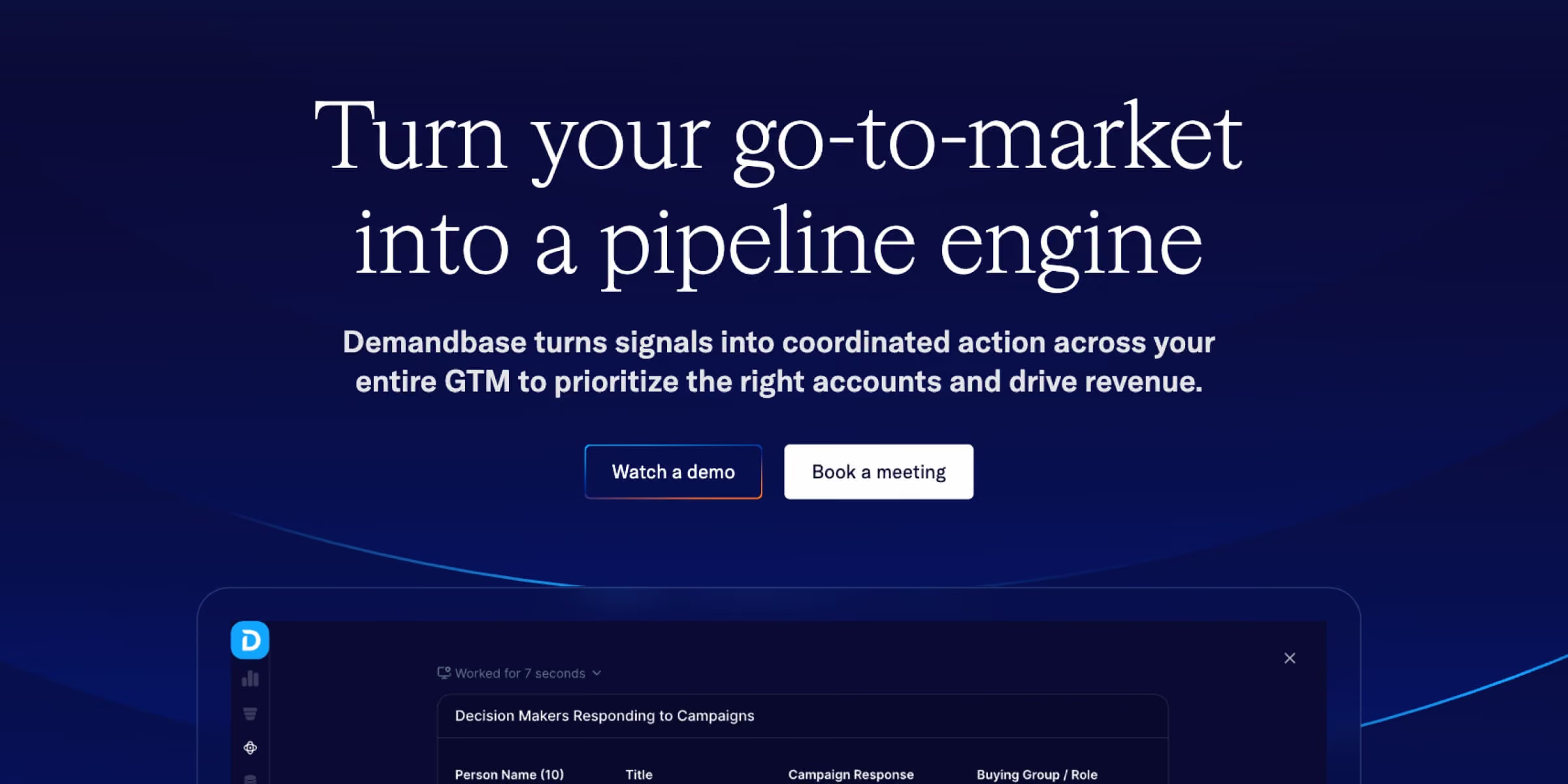
Demandbase is built for B2B account-based marketing. It combines account intelligence, advertising, intent data, sales intelligence, and measurement in one platform.
For demand generation, Demandbase is useful when your team knows which accounts matter and needs a better way to reach, prioritize, and engage them. Instead of only asking "which leads converted?", it helps teams think at the account level.
Best for: Mid-market and enterprise B2B teams running ABM programs.
Why it stands out:
- Account-based advertising.
- Intent and account intelligence.
- Sales and marketing alignment features.
- Useful for long sales cycles with buying committees.
Watch out for: Demandbase makes more sense when you already have a clear ICP and target account strategy. It is probably too much for early-stage teams still defining their market.
4. 6sense - Best for Predictive Account Intelligence
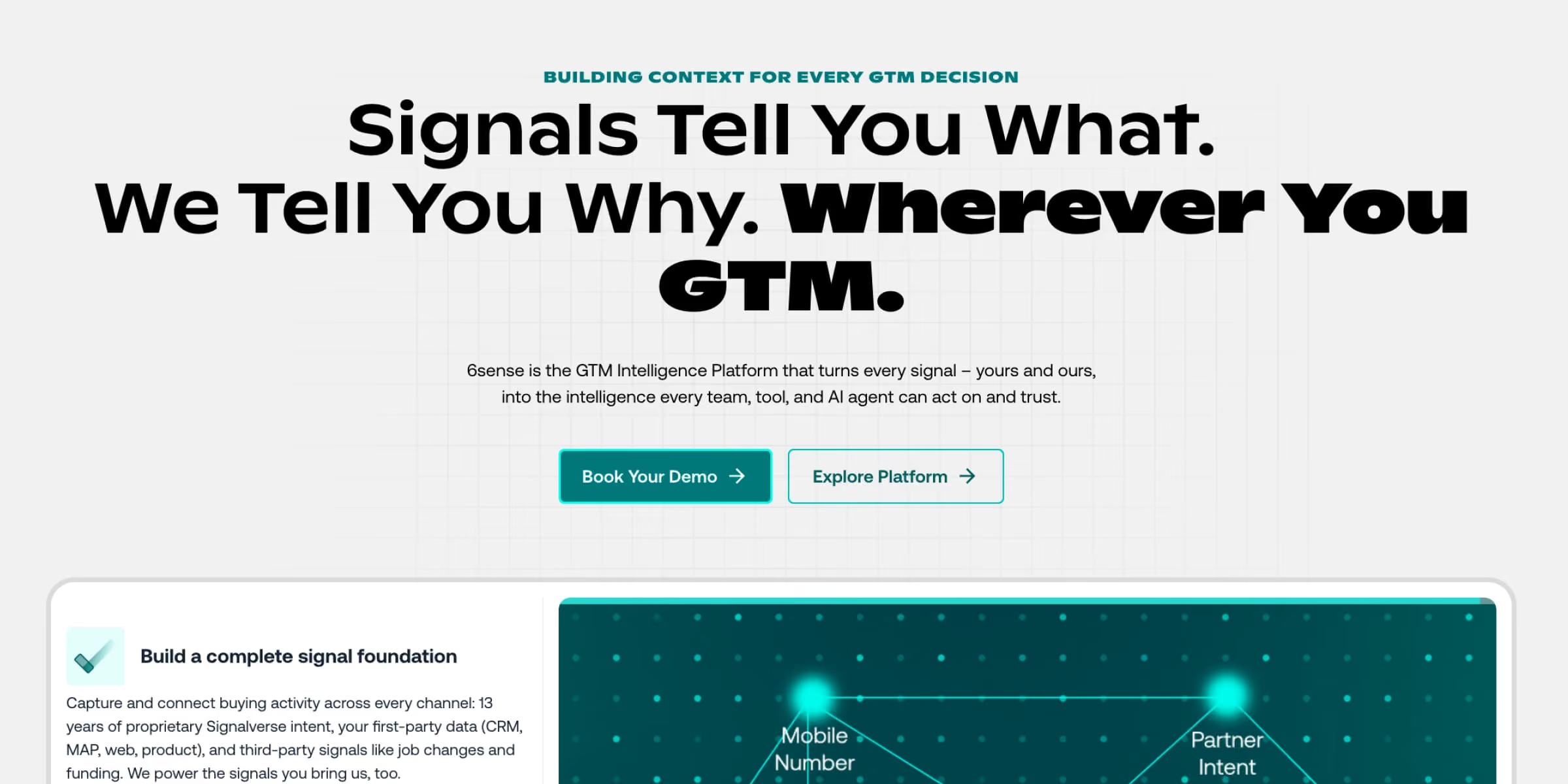
6sense is another major B2B revenue platform, focused on account identification, intent, predictive analytics, and revenue-stage targeting.
It is useful when demand gen has moved beyond simple lead capture and into account prioritization. The platform helps teams identify which accounts may be in-market, what they care about, and how sales and marketing should act on those signals.
Best for: B2B teams with mature sales motions and account-based go-to-market strategies.
Why it stands out:
- Predictive account scoring.
- Intent data and account identification.
- ABM advertising and sales intelligence.
- Useful for prioritizing outreach and campaign focus.
Watch out for: Like any intent platform, 6sense is only as useful as the plays you build around it. Signals without action do not create pipeline.
5. HubSpot Marketing Hub - Best All-in-One Demand Gen Platform
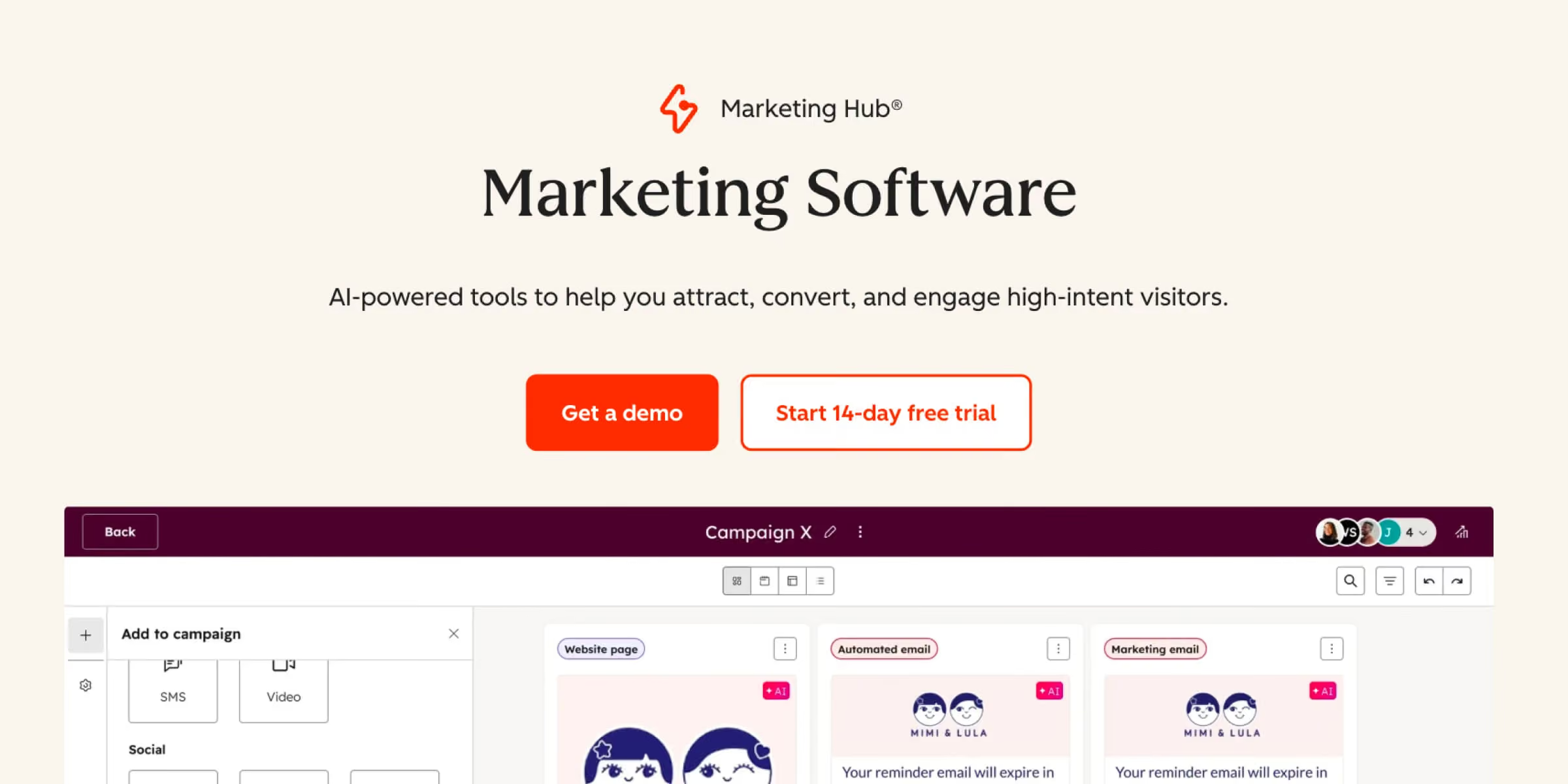
HubSpot Marketing Hub is one of the most practical demand generation tools for small and mid-market SaaS teams because it combines CRM, forms, landing pages, email, automation, ads, audience segments, and reporting.
HubSpot is rarely the most advanced tool in every individual category. Its strength is that it keeps core demand gen work connected. That is useful for teams that do not have a large marketing ops function.
Best for: Startups and mid-market SaaS teams that want one connected system.
Why it stands out:
- Easy lead capture and CRM connection.
- Marketing automation without heavy implementation.
- Built-in ads and audience tools.
- Useful dashboards and campaign reporting.
Watch out for: Costs can rise as contacts, seats, and advanced features grow. Plan the CRM and lifecycle setup carefully before importing everything.
6. Adobe Marketo Engage - Best for Enterprise B2B Automation
.avif)
Adobe Marketo Engage is a mature marketing automation platform for enterprise and larger B2B teams.
Marketo is strong when demand generation requires complex lifecycle programs, lead scoring, nurture streams, event follow-up, sales handoff, and multi-touch campaigns. It is less plug-and-play than lighter tools, but it gives experienced marketing ops teams a lot of control.
Best for: Enterprise B2B companies with complex lead management and nurture needs.
Why it stands out:
- Advanced marketing automation.
- Lead scoring and lifecycle management.
- Strong fit for larger B2B databases.
- Good for multi-step nurture and sales handoff workflows.
Watch out for: Marketo needs operational discipline. Without clean data, governance, and clear lifecycle definitions, it gets messy quickly.
7. Clay - Best for Data Enrichment and GTM Workflows
Clay has become popular with growth, outbound, and RevOps teams because it helps build enriched prospecting and account workflows.
For demand generation, Clay is useful when you need to turn account lists into more useful segments: enrich companies, find contacts, personalize outreach, identify signals, and push data into other tools.
Best for: Growth teams that want flexible enrichment and GTM automation.
Why it stands out:
- Strong data enrichment workflows.
- Useful for account research and list building.
- Helps connect signals with outreach.
- Flexible enough for custom GTM experiments.
Watch out for: Clay is powerful, but it can encourage over-engineered workflows. Start with one clear use case before building a giant system.
8. Apollo.io - Best for Sales-Led Demand Generation
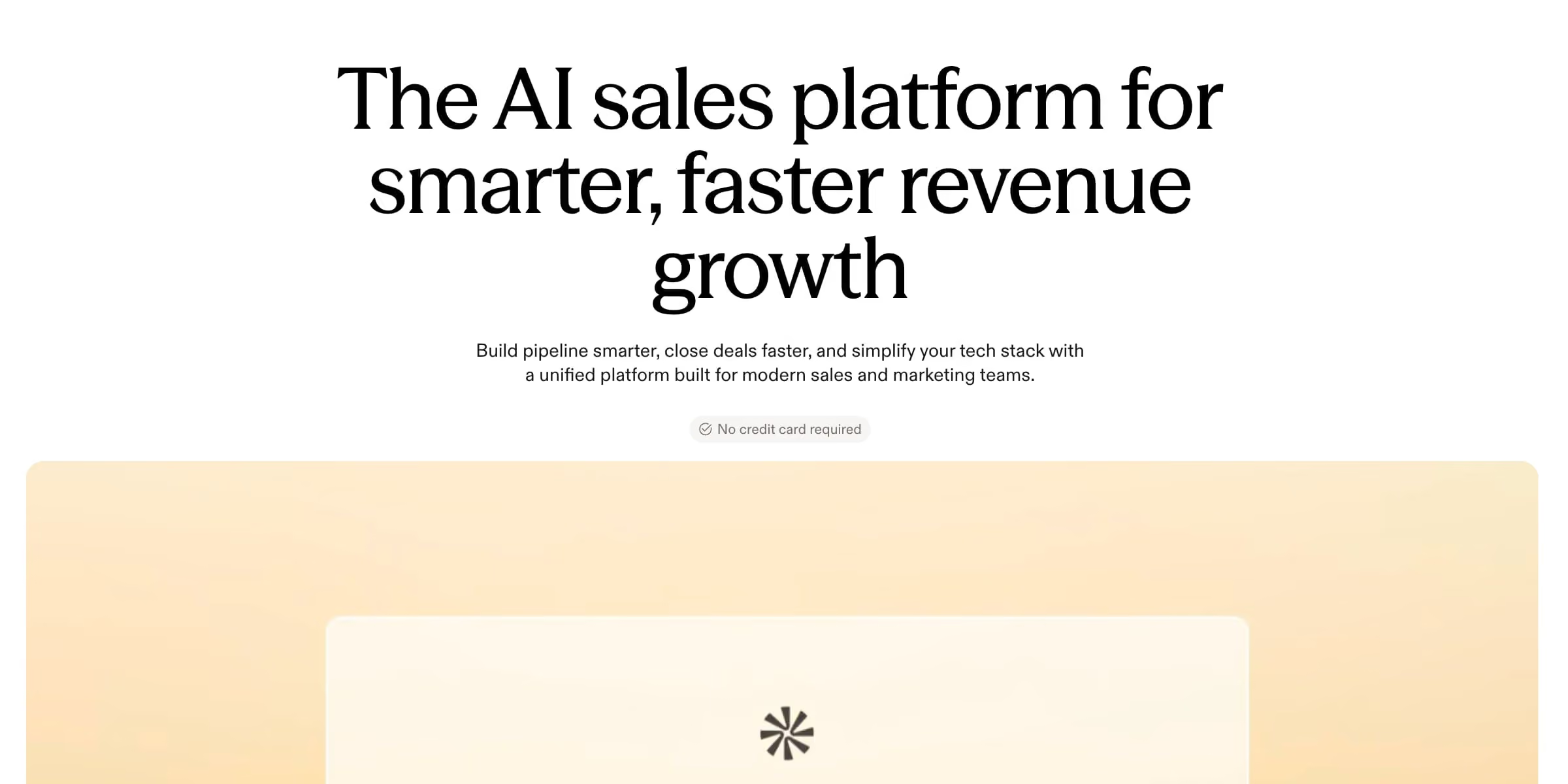
Apollo.io is often thought of as a sales prospecting platform, but it can support demand generation when marketing and sales work from the same ICP.
It helps teams find contacts, build lists, enrich data, and run outbound sequences. For SaaS teams, Apollo can be useful when paid demand gen needs to be supported by sales-led outreach to the same account segments.
Best for: Teams combining demand generation with outbound sales motions.
Why it stands out:
- Large contact and company database.
- Prospecting and enrichment.
- Sales engagement features.
- Useful for account list building.
Watch out for: Outbound volume is not demand generation by itself. The messaging still needs to be relevant, timely, and tied to a real buyer pain.
9. Dreamdata - Best for B2B Attribution and Customer Journey Mapping
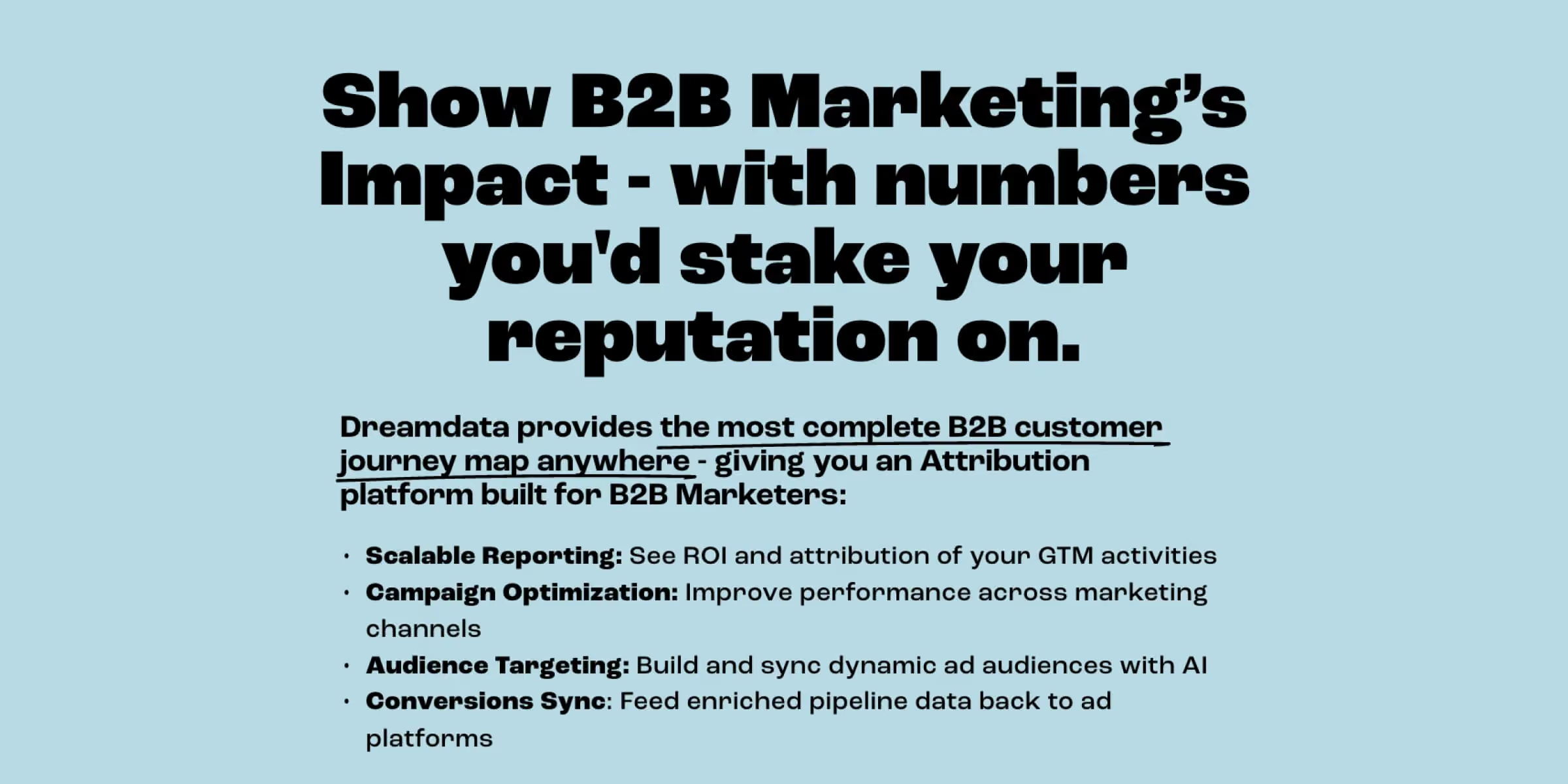
Dreamdata is a B2B attribution platform built to map the customer journey and connect marketing activity to revenue.
Its product focuses on customer journeys, performance attribution, revenue analytics, audience activation, and syncing pipeline data back to ad platforms. That makes it useful for teams that need to understand how paid, content, organic, and sales touchpoints work together.
Best for: B2B SaaS teams that need revenue attribution across a long buyer journey.
Why it stands out:
- B2B customer journey mapping.
- Performance attribution and revenue analytics.
- Audience sync back to ad platforms.
- Useful for optimizing channels based on pipeline, not only form fills.
Watch out for: Attribution tools need clean data. If CRM stages, UTMs, and offline conversions are unreliable, fix that first.
10. HockeyStack - Best for Full-Funnel GTM Analytics

HockeyStack positions itself around modern attribution and GTM analytics for B2B teams.
It brings marketing and sales data into one view, helping teams analyze the buyer journey from first touch to closed-won. For demand gen leaders, the value is in seeing how campaigns influence pipeline, account engagement, and revenue.
Best for: B2B teams that want GTM analytics across marketing and sales.
Why it stands out:
- Full-funnel attribution.
- Account intelligence.
- Marketing revenue impact reporting.
- Useful for aligning sales and marketing around shared data.
Watch out for: Like any analytics platform, HockeyStack works best when the team has agreed definitions for MQL, SQL, opportunity, pipeline, and revenue.
11. Factors.ai - Best for ABM Analytics and Visitor Identification
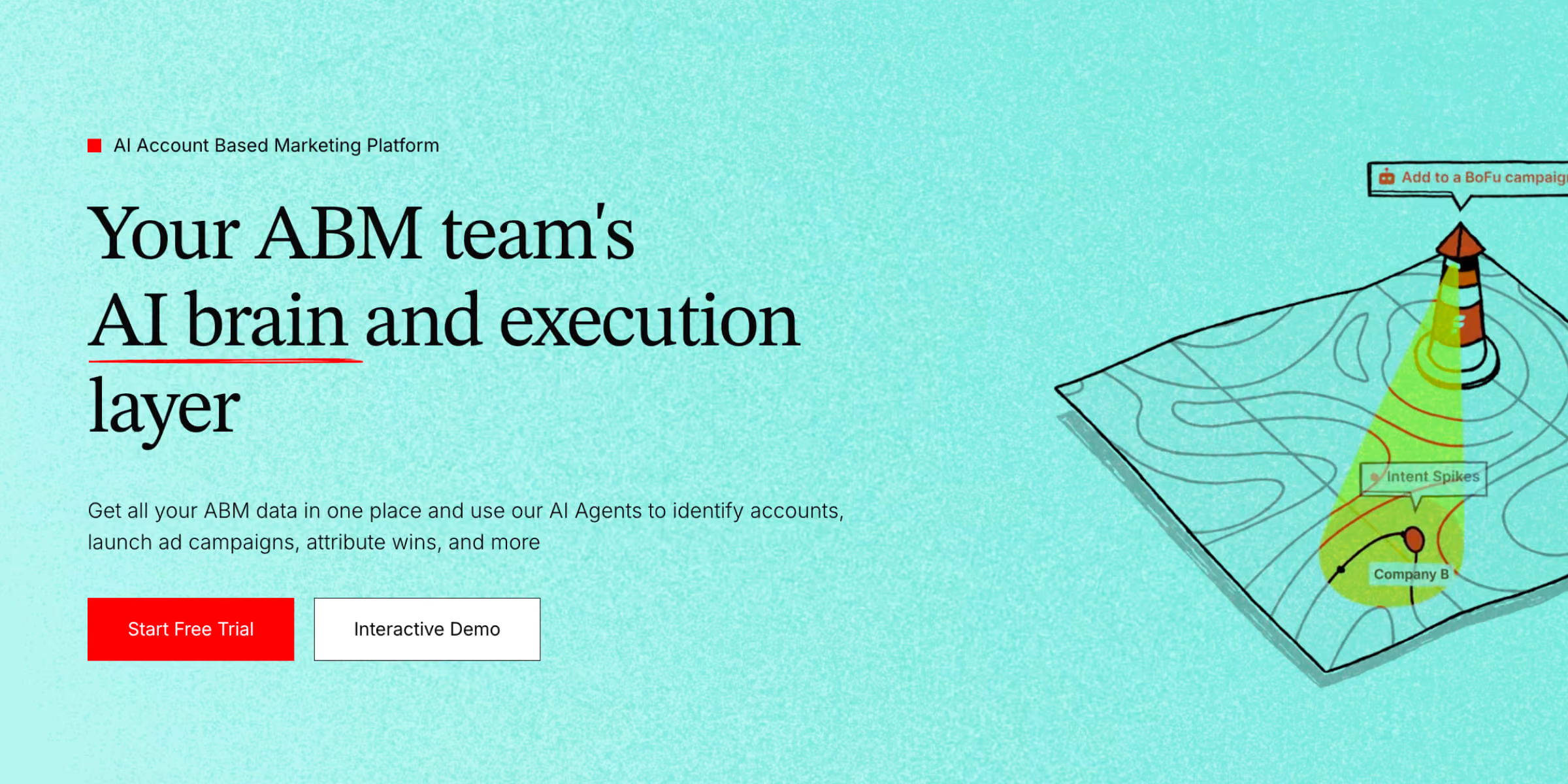
Factors.ai is an ABM and marketing attribution platform for GTM teams. It focuses on account identification, campaign attribution, funnel analytics, and intent signals.
For demand generation, Factors.ai can help reveal which companies are visiting your site, what campaigns brought them in, and which accounts are showing signs of interest.
Best for: B2B teams that want account-level analytics and website visitor intelligence.
Why it stands out:
- Account identification.
- Campaign attribution.
- Funnel and journey analytics.
- Useful for ABM and sales follow-up.
Watch out for: Visitor identification is directional, not magic. Use it as a signal, then validate with CRM and sales context.
12. Microsoft Clarity - Best for Landing Page Behavior Insights
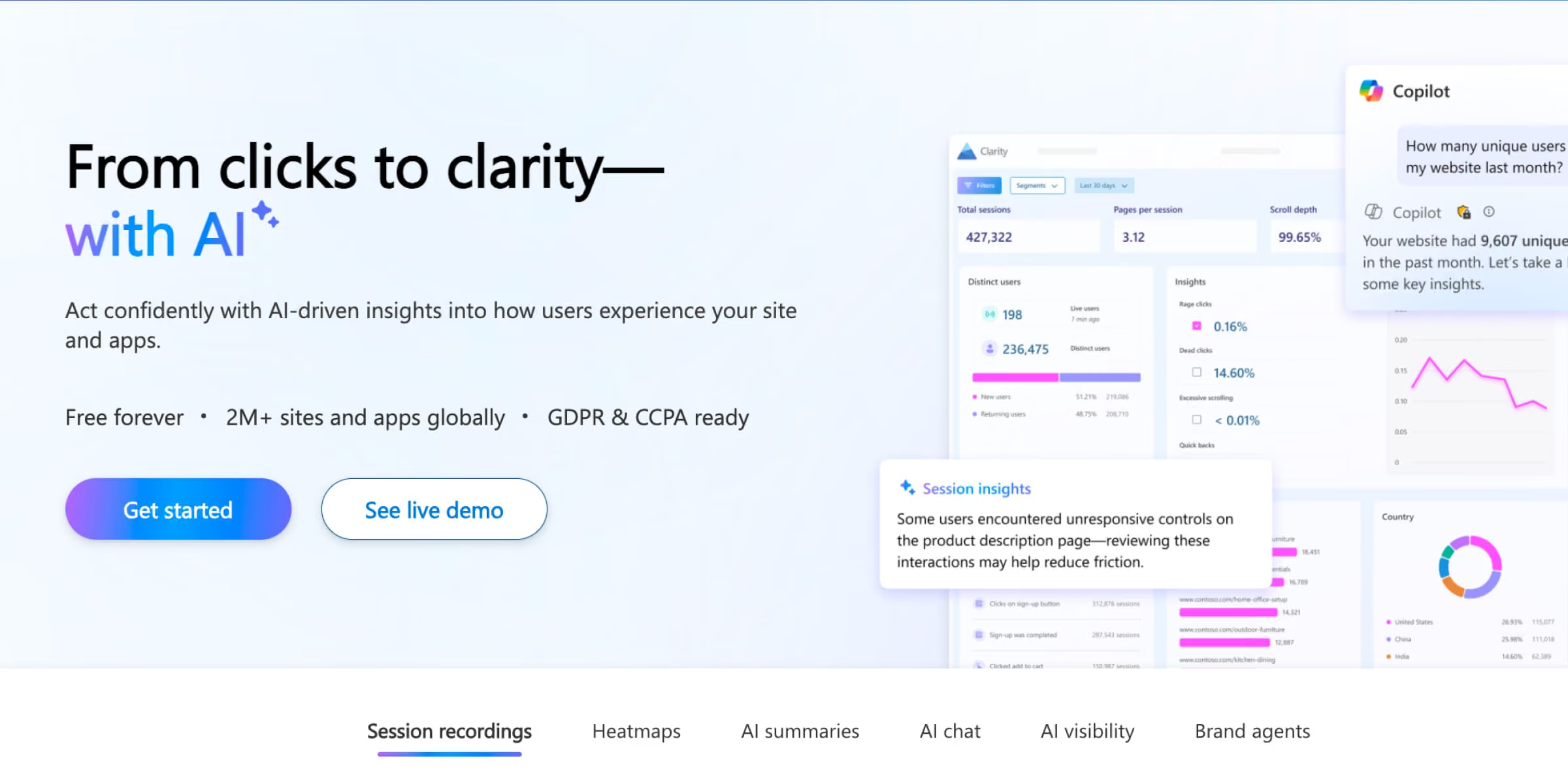
Microsoft Clarity is a free behavior analytics tool with heatmaps and session recordings.
For demand generation, it helps answer a simple question: what happens after paid traffic lands on the page? If visitors hesitate, rage-click, miss the form, or drop before the CTA, Clarity can show patterns that campaign reports will never reveal.
Best for: Landing page diagnostics and conversion research.
Why it stands out:
- Free heatmaps and session recordings.
- Useful for CRO and landing page reviews.
- Helps explain why traffic does not convert.
- Easy to add alongside other analytics tools.
Watch out for: Do not overreact to one recording. Look for patterns across sessions, pages, and traffic sources.
How to Choose the Right Demand Generation Tools
The easy mistake is buying tools by category: one ad platform, one automation system, one analytics tool, one ABM platform, one dashboard tool. That can work, but only if each tool has a clear role.
Start with the problem you need to solve.
For SaaS, the most important question is not "which tool has the most features?" It is "which tool helps us move the right buyer to the next stage?"
Sometimes that means more reach. Sometimes it means better nurture. Sometimes it means admitting that the campaign is fine, but the landing page, offer, or analytics setup is broken.
A Simple Demand Generation Stack for SaaS
If you are building from scratch, keep it simple:
- Paid acquisition: Google Ads and LinkedIn Ads.
- CRM and automation: HubSpot or Marketo, depending on company size.
- ABM and intent: Demandbase or 6sense once you have a clear target account strategy.
- Revenue attribution: Dreamdata, HockeyStack, or Factors.ai once the buyer journey gets complex.
- Data and GTM workflows: Clay or Apollo.io when outbound and demand gen need to work from the same account view.
- Landing page diagnostics: Microsoft Clarity.
That is enough to start. You can add ABM platforms, enrichment tools, and advanced attribution later, once you know which part of the funnel needs help.
Where Aimers Fits Into the Demand Gen Tool Stack
Tools do not fix demand generation by themselves. They need tracking, creative, landing pages, constant optimization, demand generation strategy and execution.
That is where Aimers can help. The team works across Google Ads, LinkedIn Ads, Facebook Ads, landing page design, CRO, and analytics for SaaS and tech companies.
If your tools show traffic but not enough qualified pipeline, the issue may not be the platform. It may be the campaign structure, audience quality, offer, post-click experience, or tracking setup.
Final Thoughts
The best demand generation tools are not the ones with the longest feature lists. They are the ones your team can actually use to create, capture, nurture, and measure demand.
For SaaS teams, a good stack usually starts with paid channels like Google Ads and LinkedIn Ads, adds automation through HubSpot or Marketo, then matures into ABM, enrichment, and revenue analytics with tools like Demandbase, Clay, Dreamdata, HockeyStack, or Factors.ai.
But the stack only works if the strategy is clear. Before buying another tool, ask what is missing: reach, audience quality, conversion rate, nurture, sales handoff, attribution, or revenue visibility.
If you are not sure where your demand gen system is leaking, book a short strategy call with Aimers. A better tool might help. A better setup might help even more.
FAQs
Demand generation tools help marketing teams create awareness, attract qualified prospects, capture leads, nurture interest, and measure revenue impact. They can include ad platforms, marketing automation software, CRM tools, ABM platforms, analytics systems, attribution tools, and workflow automation apps.

There is no single best tool for every SaaS company. Google Ads and LinkedIn Ads are strong paid channel foundations. HubSpot is often a good all-in-one choice for smaller and mid-market teams. Marketo fits larger enterprise teams. Dreamdata, HockeyStack, and Factors.ai are useful when attribution and revenue visibility become harder.
Lead generation focuses on capturing contact information. Demand generation is broader. It includes creating awareness, educating the market, building trust, influencing buying committees, nurturing interest, and turning demand into qualified pipeline.
For B2B SaaS, the strongest tools usually include Google Ads, LinkedIn Ads, HubSpot or Marketo, and a revenue attribution platform such as Dreamdata, HockeyStack, or Factors.ai. ABM teams may also need Demandbase or 6sense, while teams combining inbound and outbound may add Clay or Apollo.io.
Not always. Early-stage SaaS teams usually need clear positioning, good landing pages, reliable tracking, and a few strong channels before investing in ABM software. ABM platforms become more useful when you have a defined ICP, target account list, sales process, and enough data to act on account signals.
.png)