

Best AI Tools for SaaS PPC in 2026: 10 Tools for Smarter Campaigns

September 9, 2026

Running pay-per-click advertising campaigns without a solid pre-launch game plan is the most efficient way to burn your cash. That is even more true for B2B SaaS, where long sales cycles, rising CPCs, and high CAC leave little room for vague targeting or untested messaging.
This is where AI tools can help. The best ones do more than automate tasks: they help SaaS teams clarify ICP segments, validate value propositions, monitor competitors, forecast budgets, generate creative variations, personalize landing page journeys, and connect campaign performance to business outcomes.
But not every AI tool deserves a place in your stack. For SaaS PPC, the right tool should solve a specific bottleneck before it turns into wasted spend: unclear audience, weak message-market fit, slow creative testing, poor budget allocation, or messy post-click analysis.
If your team needs strategy and execution support, Aimers' SaaS PPC agency helps B2B SaaS companies build paid acquisition systems around qualified leads, CAC optimization, and revenue feedback, not just clicks.
Quick Comparison
How We Chose These AI Tools
- They support a real SaaS PPC workflow, not just generic AI content generation.
- They help reduce risk before budget is spent, by improving ICP clarity, messaging, forecasting, creative, or measurement.
- They give marketers useful inputs for human strategy instead of pretending to replace strategy.
- They fit B2B SaaS realities: long sales cycles, multiple stakeholders, high CPCs, and pressure to prove pipeline quality.
1. Clay — Find Your Real ICP

Clay combines enrichment with automation, pulling from sources like LinkedIn, Crunchbase, and Clearbit to build high-quality lead lists. You can set complex filters, score accounts, and trigger updates as new data rolls in.
🧠 Why it matters: Everyone defines an ICP — but turning that into a list of real, reachable accounts? That’s where things get messy. Clay helps teams go from a slide deck to a usable audience, without the usual back-and-forth or data wrangling.
2. Wynter — Test Ad Messaging with Real B2B Audiences

Wynter lets you run message tests on your ad copy, landing pages, or positioning statements — and get feedback from verified professionals in your target market. You see what lands, what doesn’t, and why.
🧠 Why it matters: Waiting for campaign data to learn what’s unclear or confusing? Too slow — and too expensive. Wynter gives you honest reactions before launch, so you can refine messaging while there’s still time.
3. Aomni — Track Competitor Messaging and Buyer Signals

Aomni tracks shifts in your competitors’ messaging, ad copy, SEO moves, and even funding announcements. It also aggregates buyer pain points from forums and reviews into digestible summaries.
🧠 Why it matters: Great messaging starts with listening. Aomni makes it easier to spot what buyers are really frustrated with — and what your competitors are missing.
4. Recast — Forecast Paid Channel ROI Before You Launch

Recast uses AI to simulate how your budget will perform across different paid channels — like Google, Meta, LinkedIn, and YouTube. It builds a marketing mix model (MMM) that helps you plan spend based on expected CAC, revenue, and conversion impact.
🧠 Why it matters: Choosing where to spend is one of the hardest calls pre-launch. Recast gives you a data-backed forecast, so you’re not just guessing where your next dollar should go.
5. HeyGen — Create Video Ads Without a Production Team
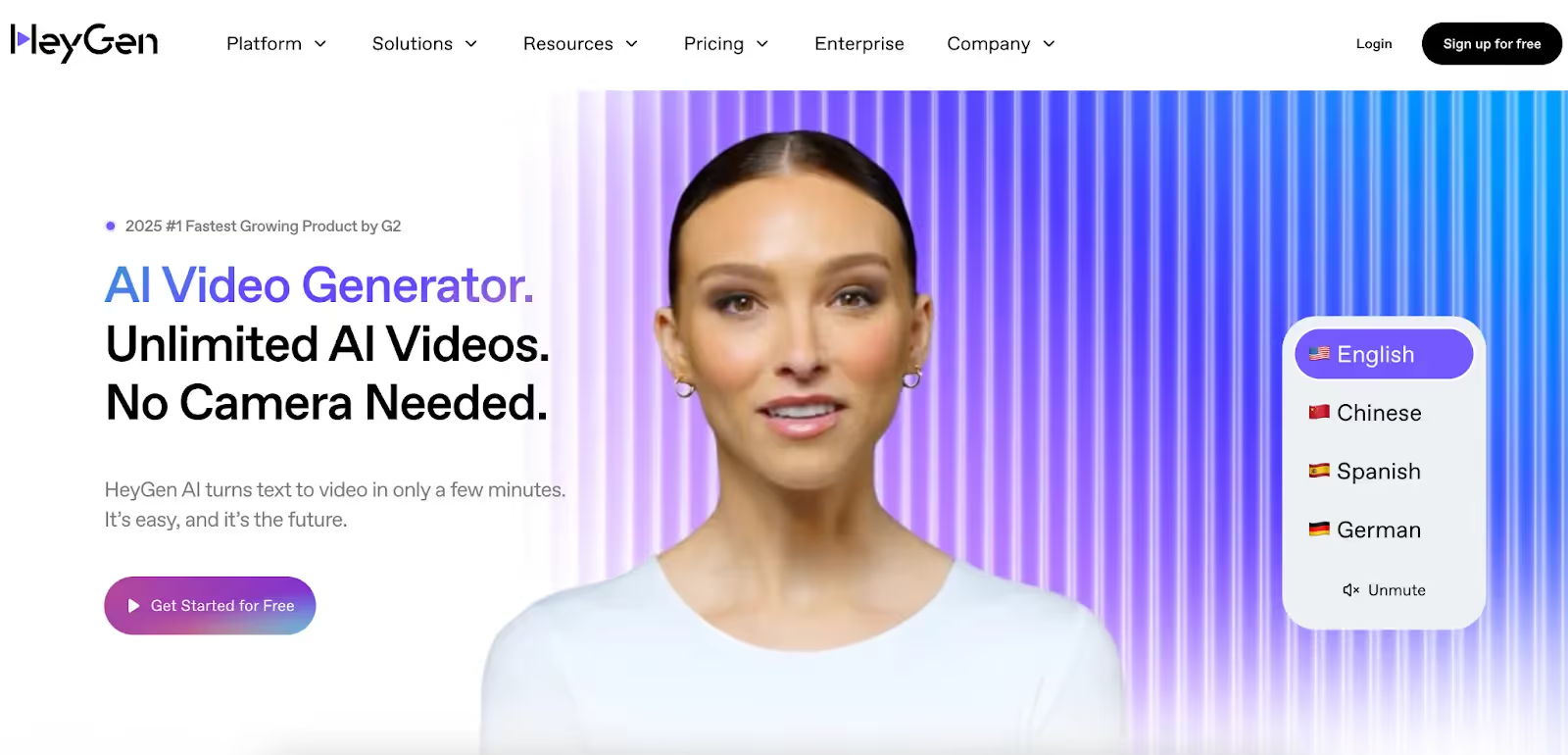
HeyGen lets you produce high-quality video ads using AI avatars, voiceovers, and templates — no cameras, crews, or editing tools required. Perfect for product explainers, onboarding flows, or performance creatives for paid social.
🧠 Why it matters: Video ads convert — but they’re usually expensive and slow to produce. HeyGen helps SaaS teams test video early, without blowing the whole budget on one asset.
6. Insider — Personalize Landing Pages in Real Time
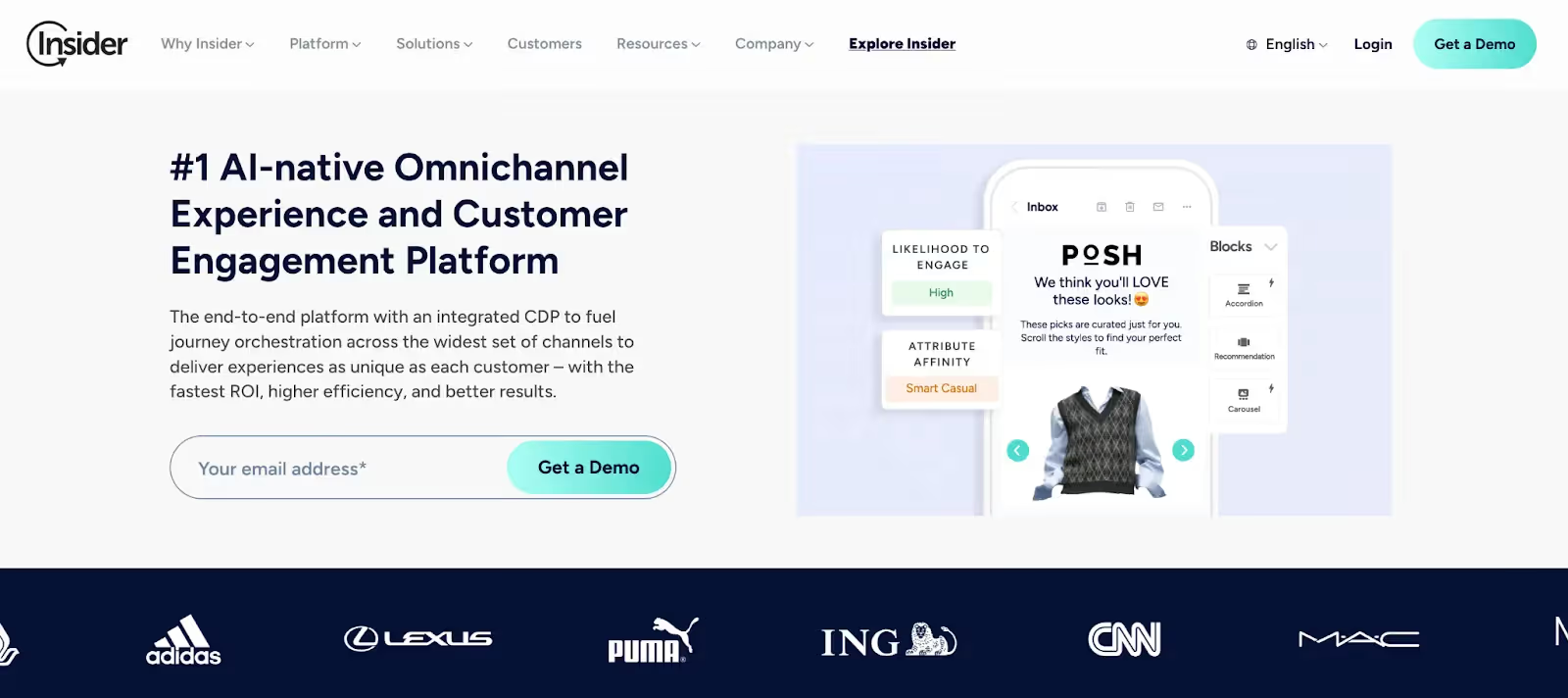
Insider uses AI to adjust on-site experiences based on visitor behavior — from changing CTAs to reshaping landing page flows. It works across web, mobile, and email to keep journeys relevant without constant manual tweaks.
🧠 Why it matters: Most visitors bounce if the page doesn’t feel relevant. Insider helps tailor each experience in real time, so more clicks turn into real results.
7. Browse AI — Monitor Competitor Pages for Key Content Changes

Browse AI scrapes your competitors’ landing pages, pricing tables, CTAs, and more — and alerts you when something changes. It’s like Google Alerts, but for high-intent competitor behavior.
🧠 Why it matters: When competitors shift messaging or test new offers, you want to know before your audience does. Browse AI helps you stay ahead — and adjust faster.
8. Optmyzr — Account Management for the AI and Automation Era of PPC

Optmyzr helps PPC teams monitor, optimize, and safeguard Google Ads, Microsoft Ads, and Performance Max workflows. For a deeper PPC automation stack, readers can also compare the workflow ideas in Aimers' AI-powered SaaS ad campaign automation guide.
🧠 Why it matters: As ad platforms automate more decisions, small issues can burn through budget before anyone notices. Optmyzr helps PPC teams catch problems early, protect performance, and scale automation without giving up control.
9. AdCreative.ai — Generate High-Performing Ad Creatives

AdCreative.ai uses machine learning to generate static and social ad creatives based on your input — product, audience, and campaign goal. It also predicts which variants are likely to perform best across Meta, Google, and LinkedIn.
🧠 Why it matters: Creative is often the first bottleneck in SaaS PPC — you need volume, variation, and speed. AdCreative.ai helps teams build and test more ad concepts, faster, without draining design resources.
10. Delve AI — Turn Website Traffic into Live Buyer Personas
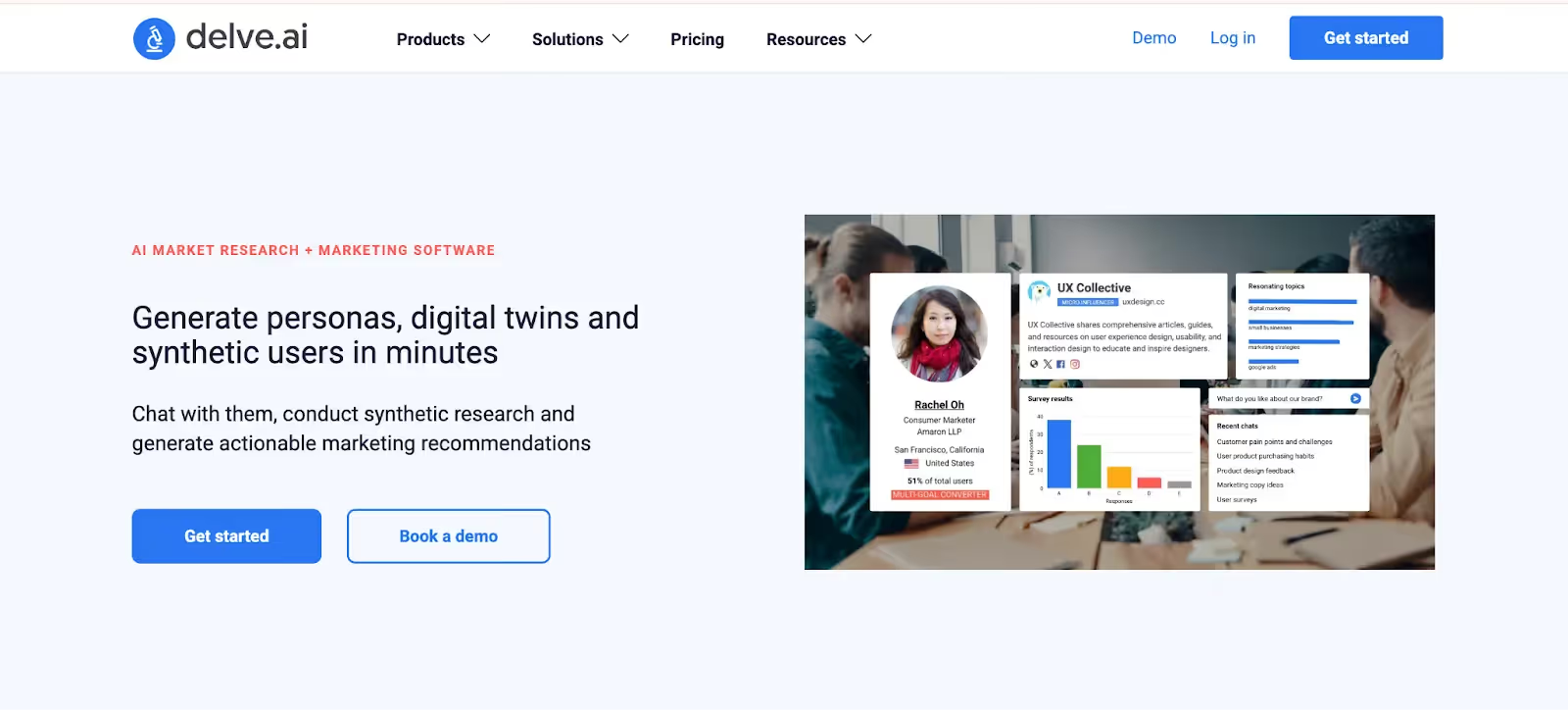
Delve AI turns your website and analytics data into dynamic buyer personas — with segments based on actual behavior, goals, and user paths. It updates automatically and even maps overlaps with your competitors’ audience.
🧠 Why it matters: When you're moving fast, you don’t always have time for full-on persona research. Delve AI helps you get a working picture of your audience early — without weeks of workshops or internal guesswork.
Takeaways:
- AI tools support your PPC strategy. They help teams move faster, test smarter, and find better signals, but they do not decide your positioning, channel mix, budget logic, or pipeline goals for you.
- Pick tools by bottleneck, not by hype. If the issue is audience quality, start with ICP and enrichment. If conversion is low, test messaging and landing pages. If budget confidence is weak, improve forecasting and measurement.
- Connect tool outputs to revenue data. AI recommendations are only useful when they improve qualified pipeline, CAC payback, sales feedback, or customer quality.
For the broader market context behind automation, higher CPCs, and pipeline-focused optimization, see Aimers' State of SaaS PPC in 2026.
Work with Aimers
The best tools do not make the best campaigns. The right strategy, tracking, creative system, and optimization cadence do.
At Aimers, we help SaaS companies turn insights into performance. Our SaaS PPC agency team builds full-funnel paid strategies, tests creative fast, and optimizes campaigns around qualified leads, CAC, and pipeline, not vanity metrics. Let’s talk — we’ll show you what a high-performance paid engine can look like.
FAQs
The most useful AI tools for SaaS PPC depend on the bottleneck. Clay helps with ICP and audience building, Wynter with message validation, Recast with forecasting, HeyGen and AdCreative.ai with creative testing, Optmyzr with PPC management, and Delve AI with persona and research inputs.

Yes, but only when they are tied to a clear workflow. AI tools can reduce waste by improving audience quality, validating messaging before launch, monitoring competitor changes, generating more creative variations, and helping teams optimize toward qualified pipeline instead of surface-level conversions.
AI helps SaaS teams move faster by automating research, creative production, personalization, and analysis. This allows marketers to test more ideas quickly while making decisions based on real behavioral data.
No. AI can speed up research, production, monitoring, and analysis, but SaaS PPC still needs human judgment around ICP, positioning, offer strategy, campaign structure, conversion quality, and sales feedback.
Start with the biggest performance blocker. If targeting is weak, choose data and ICP tools. If messaging is unclear, choose research and testing tools. If scaling is slow, choose creative and PPC workflow tools. If reporting is messy, choose analytics, attribution, or forecasting tools.



.png)